.webp&w=384&q=75)

Loading, please wait...
Loading, please wait...
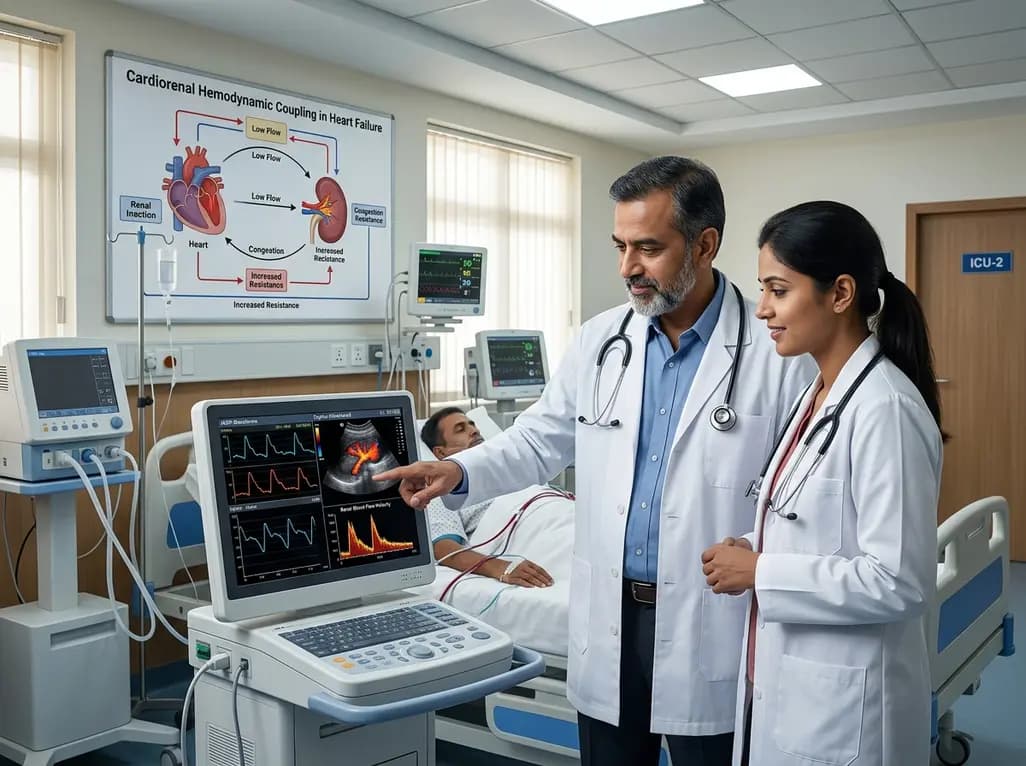
Managing cardiogenic shock (CS) requires a deep understanding of cardiorenal hemodynamic coupling. This physiological relationship determines how cardiac output and pressures influence renal perfusion. Researchers recently investigated these interactions using a porcine model to see how mechanical circulatory support (MCS) affects kidney health during heart failure progression.
Consequently, the study found that as cardiogenic shock worsens, the increase in left ventricular end-diastolic pressure correlates with higher renal vascular resistance (RVR). This resistance effectively limits renal blood flow (RBF). Therefore, clinicians often struggle with concomitant renal failure in shock patients despite initiating standard support protocols.
Moreover, the researchers observed that percutaneous ventricular assist device (pVAD) unloading provides a bidirectional benefit. By reducing left ventricular pressure and increasing mean arterial pressure, the device lowers renal vascular resistance. This reduction in resistance subsequently leads to improved renal blood flow. In addition, the study showed that renal vascular tone plays a critical role in determining the success of MCS interventions.
Furthermore, the data suggest that RBF depends primarily on RVR across various physiological states. Consequently, if a patient has excessively high renal vascular tone, the hemodynamic impact of pVAD support may be limited. Understanding these dynamics allows for more precise management of patients in the intensive care unit. Specifically, it highlights the need to monitor both cardiac and renal parameters simultaneously during mechanical support.
It is the bidirectional physiological relationship where heart function, including pressure and output, directly influences renal blood flow and vascular resistance.
A pVAD unloads the left ventricle and improves systemic arterial pressure, which reduces renal vascular resistance and promotes better renal blood flow.
Disclaimer: This content is for informational and educational purposes only. It does not constitute medical advice or a professional relationship. Always seek the advice of your physician or other qualified health provider with any questions you may have regarding a medical condition. Refer to the latest local and national guidelines for clinical practice.
References
Zale RE et al. Cardiorenal Hemodynamic Coupling: Mechanical Circulatory Support Augments Renal Blood Flow via Renal Vasodilation. JACC Basic Transl Sci. 2026 Jun 01. doi: undefined. PMID: 42224801.
Upadhyaya S et al. Outcomes of Renal Function in Cardiogenic Shock Patients With or Without Mechanical Circulatory Support. J Clin Med Res. 2021;13(5):273-281. doi: 10.14740/jocmr4504.
Ostadal P et al. Novel porcine model of acute severe cardiogenic shock developed by upper-body hypoxia. Cor et Vasa. 2016;58(6):e613-e618. doi: 10.1016/j.crvasa.2016.09.004.

Read summarized clinical updates, watch expert medical content, and earn CME certifications right from your smartphone.
Open your smartphone camera to scan and install.





A study explores how mechanical circulatory support improves renal blood flow by reducing renal vascular resistance, highlighting cardiorenal coupling in sh...
4 months ago

Explore vital recurrent stroke predictors in lacunar stroke patients managed with intensive blood pressure lowering. This analysis examines trial findings from SPS3 to uncover residual vascular risks, metabolic factors, and targeted secondary prevention strategies for high-risk neurological patients.
Today

Odisha has established India's first state-level clinical protocol specifically tailored for pregnant women with sickle cell disease. Developed with NHM and UNICEF, the framework provides structured antenatal screening, crisis mitigation, standardized referral pathways, and specialized interdisciplinary care.
Today

India is advancing preventive healthcare by integrating genomics, artificial intelligence, and quantum technologies. With the SANGAM programme sequencing one million Indian genomes, clinicians can unlock personalized therapies, detect cardiometabolic risks early, and curb the burden of diabetes and heart disease.
Today

A randomized controlled trial demonstrates that an eight-week dual-task training intervention significantly improves static and dynamic postural control over standard balance exercises in individuals with chronic ankle instability, addressing critical neurocognitive deficits during athletic and daily activities.
Today

A retrospective cohort study of 7,716 ICU patients from the MIMIC-IV database demonstrates that Gradient Boosting Decision Trees significantly outperform traditional SOFA scores in predicting in-hospital mortality among patients with sepsis and diabetes, with SHAP analysis providing clinical interpretability.
Today
