

Loading, please wait...
Loading, please wait...
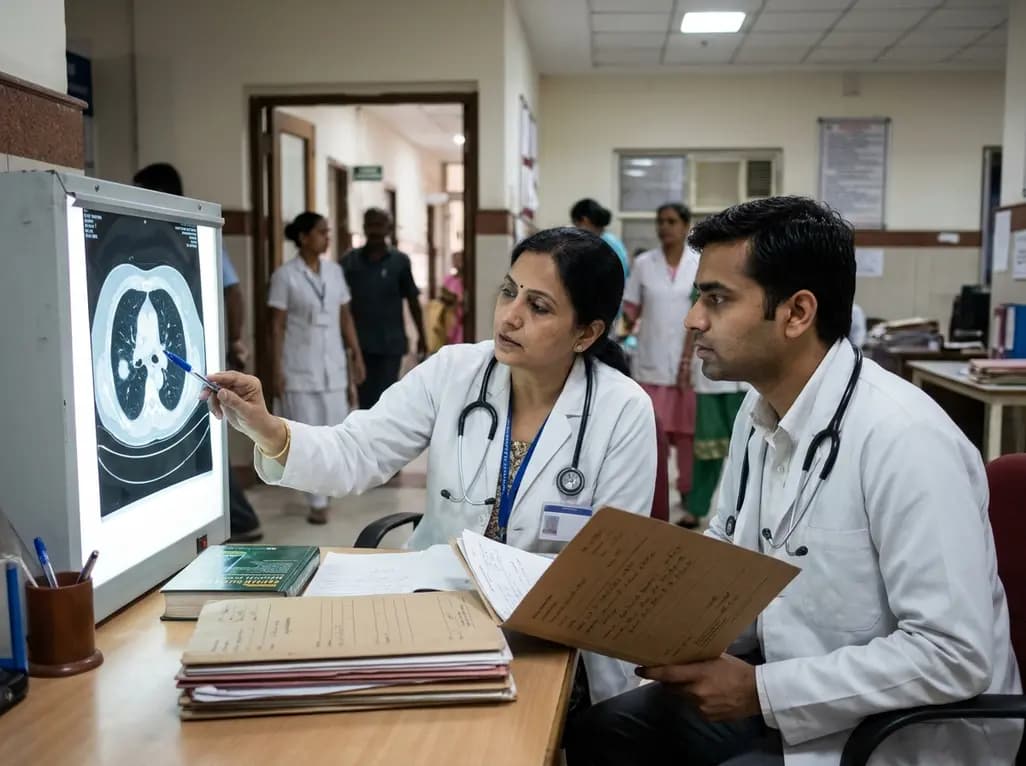
Across the nation, public health investments have produced impressive figures, particularly in preventive oncology. The Ministry of Health and Family Welfare recently documented an unprecedented milestone of 86.97 crore screenings for common malignancies under the National Programme for Prevention and Control of Non-Communicable Diseases (NP-NCD). These activities, carried out across more than 1.8 lakh Ayushman Arogya Mandirs, reflect monumental community mobilization. However, the true efficacy of cancer screening in India depends fundamentally on what occurs after an abnormal clinical finding. Clinicians, administrators, and policy experts must confront whether individuals with suspicious presentations successfully transition into confirmatory testing, specialist evaluation, and timely therapeutic intervention.
Public health programmes in India primarily target three common malignancies: oral, breast, and cervical cancers. According to official data, the cumulative screening volume comprises 49.02 crore oral cancer evaluations, 22.90 crore clinical breast examinations, and 14.05 crore cervical cancer evaluations. Concurrently, approximately 5.50 lakh patients are actively receiving therapy for these conditions. Nevertheless, public health specialists caution against interpreting screening totals as unique individuals or as direct conversion rates to clinical management. Instead, screening functions strictly as an initial filter designed to detect subtle pathology before overt symptoms appear.
Consequently, healthcare professionals must reinforce the fundamental clinical distinction between screening tests and definitive diagnosis. A positive initial finding does not establish malignancy; rather, it indicates the urgent need for secondary triaging. Conversely, a normal test result must never discourage individuals from reporting persistent, newly developing symptoms. Therefore, the core clinical objective is not simply logging screening encounters, but building structured diagnostic pathways that reliably navigate screen-positive patients toward tissue-based confirmation and multimodal staging without bureaucratic friction.
While frontline healthcare workers detect early lesions, significant structural hurdles emerge before confirmation occurs. A multicentre study published in The Lancet Regional Health – Southeast Asia evaluated nearly 7,000 cancer patients across six Indian states. The investigators demonstrated a median delay of 20 days between histological confirmation and treatment initiation, with an average delay extending to 53.7 days. These findings highlight a critical period where disease progression can easily occur, converting potentially curable early-stage malignancies into complex, locally advanced conditions.
Moreover, several compounding factors explain these extensive diagnostic delays in low- and middle-income healthcare settings. Patients from rural communities frequently lack local secondary or tertiary diagnostic infrastructure. Therefore, an individual flagged with an abnormal breast or cervical exam must undertake arduous travel to district hospitals or apex medical colleges. This secondary evaluation requires advanced ultrasonography, stereotactic mammography, digital colposcopy, or core needle biopsy. Consequently, limited operating hours, prolonged appointment queues, and scarce pathology services force families to make repeated trips, ultimately driving high rates of diagnostic drop-out.
Beyond geographical distance, socioeconomic determinants heavily govern health-seeking behaviour across rural and peri-urban demographics. Out-of-pocket medical expenses often commence well before the initiation of definitive chemotherapy, surgery, or radiotherapy. Specifically, families bear substantial indirect costs, including commercial transport, lodging near urban referral centres, and persistent loss of daily wages. For daily-wage earners, attending a hospital for advanced imaging means forfeiting essential household income. Consequently, financial precarity directly forces patients to defer necessary investigations until debilitating physical symptoms manifest.
Furthermore, pervasive social dynamics and cultural factors compound these diagnostic hurdles. Women frequently lack independent financial agency, relying on family consensus to fund secondary diagnostics and clinical consultations. Simultaneously, profound cancer fatalism and social stigma provoke profound psychological avoidance. Many individuals fear that a formal cancer diagnosis brings an inevitable financial ruin and personal tragedy. As a result, patients deliberately postpone confirmatory biopsies out of anxiety. Therefore, holistic cancer interventions must integrate patient navigation, psycho-oncology counselling, and community health worker support to dismantle social barriers proactively.
To convert primary screening into measurable survival gains, healthcare systems must aggressively decentralise diagnostic and therapeutic capabilities. Primary health centers must not operate as isolated screening kiosks; instead, health authorities must tightly link them to district-level diagnostic hubs. Equipping district hospitals with tele-pathology, digital mammography, and trained biopsy specialists reduces unnecessary patient transfers to saturated metropolitan centres. When secondary diagnostics occur within the local district, diagnostic turnaround times compress dramatically, preserving early clinical windows for curative intervention.
Additionally, modern digital health frameworks provide the tools necessary to preserve continuity of care. Utilizing the Ayushman Bharat Digital Mission (ABDM) and Ayushman Bharat Health Accounts (ABHA) permits longitudinal tracking of screen-positive individuals across disparate healthcare tiers. Furthermore, welfare schemes like Ayushman Bharat PM-JAY, AMRIT pharmacies, and Jan Aushadhi Kendras alleviate therapeutic financial toxicity. However, these financial safety nets must expand coverage to include preliminary diagnostic workups, outpatient biopsies, and specialised immunohistochemistry. By ensuring affordable diagnostics alongside affordable therapies, health systems can systematically eliminate dropouts across the continuum.
Observances such as National Cancer Awareness Day serve as an invaluable catalyst for institutional introspection and clinical policy refinement. While India's ability to execute tens of crores of primary screenings demonstrates extraordinary logistical scale, screening volume remains merely an intermediate process metric. True clinical success rests upon overall survival, early-stage detection proportions, and timely treatment initiation metrics. Primary care physicians, oncologists, and community health leaders must champion cohesive diagnostic triage systems that actively guide every patient from suspicion to histological confirmation.
Ultimately, closing the gap in cancer screening in India requires establishing dedicated cancer navigators at regional hospitals to shepherd vulnerable families through staging and multimodality consultations. Concurrently, medical colleges and oncological societies must expand outreach training for frontline providers at Ayushman Arogya Mandirs. Standardising clinical breast examination methods, oral cavity screening algorithms, and visual inspection techniques with acetic acid enhances screening specificity. By synchronising high-volume screening with rapid diagnostic pathways and decentralised oncology networks, the national healthcare ecosystem can ensure that early detection translates directly into lasting clinical remissions.
Q1: Why is an abnormal screening result not considered a definitive cancer diagnosis?
A screening test identifies preliminary clinical abnormalities or risk indicators in asymptomatic or mildly symptomatic individuals. However, it cannot confirm cellular malignancy. Definitive diagnosis requires pathological tissue confirmation via core biopsy, fine-needle aspiration, or specialised imaging modalities such as contrast-enhanced computed tomography. Therefore, positive screening findings require rapid secondary diagnostic triaging rather than immediate oncological treatment initiation.
Q2: What primary factors contribute to treatment delays after cancer diagnosis in India?
Recent studies demonstrate that delays often stem from fragmented referral pathways, geographical distance to tertiary oncology centres, and diagnostic testing backlogs. Additionally, socioeconomic burdens, such as travel expenses and loss of daily wages, create severe barriers. Fear of the disease and financial anxiety also prompt patients to postpone treatment, leading to an average delay exceeding fifty days.
Q3: How can decentralised diagnostic facilities improve cancer survival outcomes?
Decentralising diagnostics by equipping district hospitals with mammography, biopsy services, and basic histopathology reduces the need for patients to travel to distant metropolitan institutions. This local accessibility lowers indirect transport costs, prevents family wage loss, and shortens the interval between initial suspicion and definitive histological confirmation, ensuring patients initiate stage-appropriate cancer therapies much earlier.
Disclaimer: This content is for informational and educational purposes only. It does not constitute medical advice or replace professional judgment. Refer to the latest local and national guidelines for clinical practice.
References

Read summarized clinical updates, watch expert medical content, and earn CME certifications right from your smartphone.
Open your smartphone camera to scan and install.





India has reached over 86 crore cancer screenings through primary healthcare centres. However, bridging the gap between screening, diagnosis, and timely treatment remains a pivotal clinical challenge. Explore how strengthening diagnostic infrastructure and referral networks can ensure better cancer care continuum.
Today
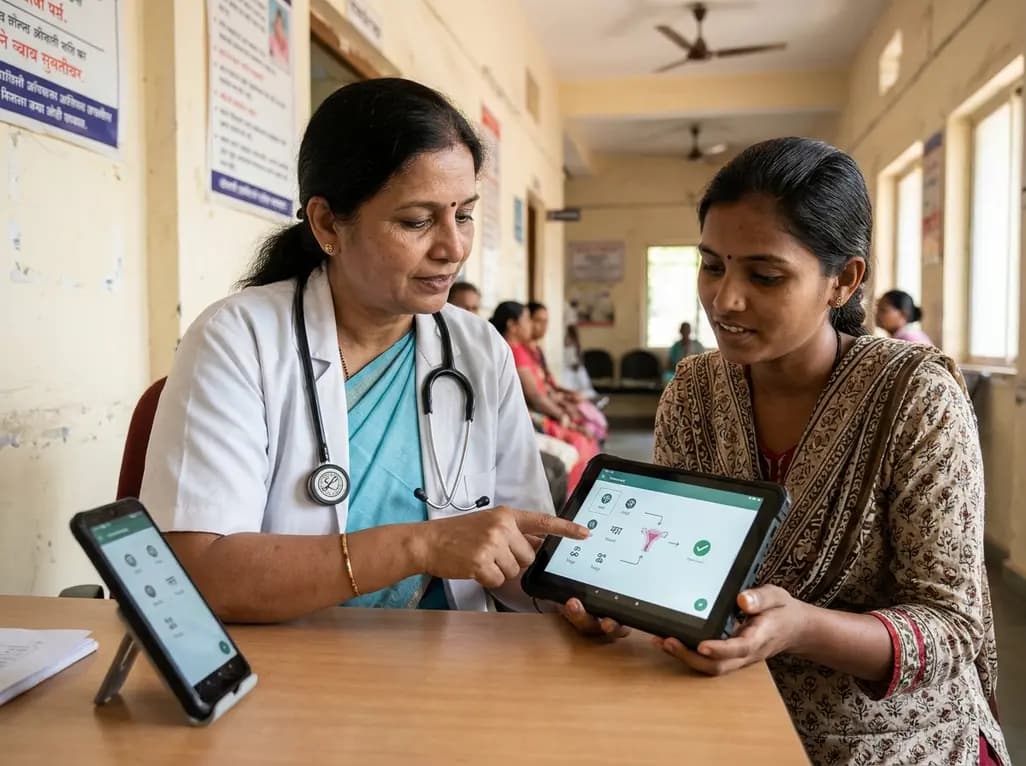
A new study evaluates a multilingual digital health platform combining rule-based cervical cancer risk assessment, retrieval-augmented generation AI, and geospatial navigation. The tool dramatically reduces clinical hallucinations while providing actionable health guidance for underserved populations.
Today

A prospective study reveals that tracking intradialytic foot temperature gradients offers a noninvasive approach to screen for severe peripheral artery disease in hemodialysis patients.
Today
A large registry study reveals that postoperative dysphagia occurs more frequently and persists longer after multilevel anterior cervical spine surgery than single-level procedures. Key risk factors include baseline dysphagia, diabetes, upper cervical segment involvement, and medical comorbidities.
Today
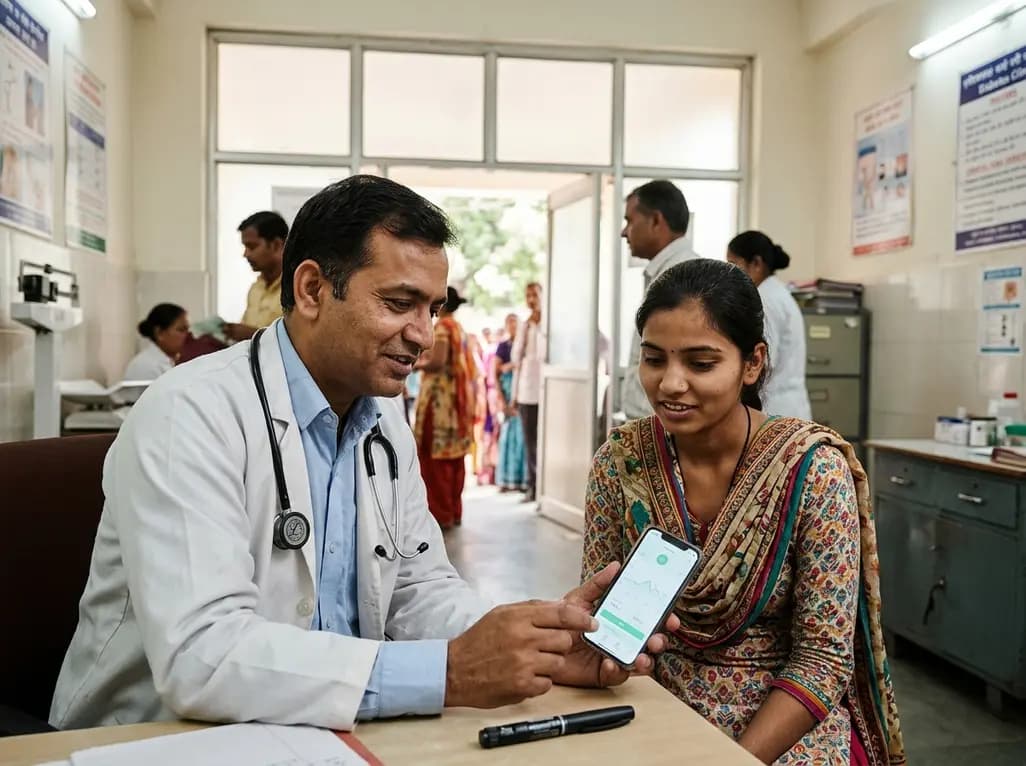
A pilot feasibility study demonstrates that a newly developed mobile app for bolus insulin dose adjustment significantly improves dosing confidence, treatment adherence, and hypoglycemia prevention for patients with type 1 diabetes while reducing provider workload in resource-limited clinical settings.
Today
