

Loading, please wait...
Loading, please wait...

Bipolar disorder presents severe clinical challenges due to recurrent mood shifts and chronic disability. Patients often turn to common lifestyle habits to self-manage affective symptoms alongside pharmacological regimens. Recent qualitative data highlight the complex reality of caffeine in bipolar disorder. While many individuals seek immediate stimulation, psychoactive beverages often generate unexpected psychiatric consequences. Clinicians must recognize how dietary methylxanthines influence mood polarity, sleep stability, and medication adherence. Understanding these patient experiences helps practitioners provide targeted lifestyle counseling during routine consultations.
Adenosine receptor antagonism drives the stimulating properties of daily caffeinated beverages. Consequently, this biochemical mechanism modulates dopaminergic and noradrenergic neurotransmission within vulnerable neural pathways. Patients with bipolar spectrum conditions frequently describe their relationship with coffee or tea as a precarious tightrope. On one hand, individuals consume these beverages to counteract debilitating daytime lethargy and profound psychomotor slowing. On the other hand, rapid stimulant intake often triggers affective destabilization and inner restlessness. Qualitative analyses demonstrate that patients clearly perceive this delicate tension throughout different illness phases. Furthermore, many individuals alternate between viewing caffeine as an indispensable ally and recognizing it as anxiogenic. In addition, circadian rhythms remain exceptionally fragile among patients living with affective disorders. Therefore, even modest morning consumption can provoke persistent nervous system arousal. Because individual metabolic rates vary significantly, predictable outcomes remain difficult to establish across diverse clinical populations. Clinicians should evaluate these idiosyncratic reactions when assessing chronic mood instability in primary care or psychiatric clinics.
During bipolar depressive episodes, severe anergia and psychomotor retardation undermine basic daily activities. Consequently, many patients actively employ caffeine as an accessible pharmacological crutch. Participants in qualitative investigations frequently label coffee as a vital helper during mild depressive troughs. They rely on its rapid stimulant properties to initiate work tasks and overcome cognitive inertia. However, this perceived benefit quickly diminishes as depression deepens into moderate or severe episodes. In severe depression, patients consistently report that caffeine produces no meaningful symptom alleviation. Instead, excessive consumption during severe depressive periods often induces unpleasant somatic symptoms. For example, patients experience distressing palpitations, gastrointestinal distress, and heightened muscle tension without obtaining mental clarity. Moreover, high doses cannot override the profound neurochemical dysregulation underlying severe melancholia. As a result, patients may escalate their intake in frustrating attempts to regain functional energy. This behavioral trap creates a vicious cycle of physical agitation superimposed on lingering low mood. Clinicians must educate patients regarding these clear clinical limitations during ongoing psychoeducation sessions.
In contrast to depressive lethargy, hypomanic and manic episodes involve elevated dopamine tone and accelerated psychomotor activity. When patients ingest stimulant beverages during elevated states, caffeine accelerates this underlying neurochemical cascade. Interviewees describe this exacerbation as increased mania that rapidly propels them into acute distress. Furthermore, the substance intensifies racing thoughts, speech pressure, and impulsivity. Although patients might initially pursue euphoria, escalating intake typically degrades cognitive execution. Specifically, individuals report significant concentration lapses and noticeable memory retrieval problems under stimulant excess. The resulting state combines high psychomotor drive with impaired executive control and disorganized thinking. Additionally, caffeine antagonizes central adenosine receptors, which suppresses the essential homeostatic drive for sleep. Because sleep loss represents the most potent trigger for full-blown mania, stimulant consumption presents severe psychiatric dangers. Patients frequently fail to recognize this compounding trajectory until social or occupational consequences occur. Therefore, psychiatrists should emphasize how excessive consumption precipitates dangerous manic escalation and marked cognitive fragmentation.
Qualitative evidence reveals distinct patterns separating daily habitual use from strategic lifestyle modifications. Many individuals maintain fixed morning consumption habits that mirror typical sociocultural behaviors. However, experienced patients often develop intentional routines to manipulate their mood and arousal levels proactively. For instance, some people consciously elevate their morning intake when feeling sluggish or demotivated. Conversely, they purposefully reduce or eliminate hot tea and coffee when detecting emerging hypomanic warning signs. This conscious titration illustrates substantial insight and proactive self-management among well-informed individuals. Nevertheless, unguided experimentation carries substantial clinical risks without proper medical supervision and physiological monitoring. Abrupt caffeine withdrawal can simulate depressive fatigue, headache, and severe dysphoria. Similarly, sudden increases in intake destabilize sleep architecture and elevate subjective anxiety levels. Consequently, clinicians should harness these patient insights while providing structured behavioral parameters. Collaborative discussions allow practitioners to transform haphazard self-medication into safe and standardized lifestyle routines.
Healthcare providers rarely address dietary stimulants during routine mental health reviews or physical evaluations. Nevertheless, clinical guidance regarding caffeine in bipolar disorder deserves equal standing alongside sleep hygiene and exercise counseling. Practitioners must systematically document daily consumption sources, including coffee, commercial energy drinks, and tea. Furthermore, physicians should educate patients on critical pharmacokinetic interactions involving psychotropic medications. For example, caffeine acts as a competitive substrate for hepatic cytochrome P450 enzymes. In addition, caffeine intake alters renal clearance mechanisms, potentially reducing serum lithium concentrations. Sudden cessation of caffeine can precipitate lithium toxicity by elevating circulating medication levels unexpectedly. Clinicians must advise stable patients to maintain consistent daily intake rather than executing abrupt lifestyle changes. Moreover, establishing a strict caffeine curfew after midday protects vital slow-wave sleep architecture. By fostering transparent therapeutic dialogues, doctors empower patients to manage lifestyle factors safely. Ultimately, personalized psychoeducation prevents avoidable affective relapses and improves long-term functional recovery.
Yes, caffeine significantly alters lithium clearance through competitive renal elimination mechanisms. When patients suddenly consume excessive caffeine, their serum lithium levels may fall, reducing therapeutic efficacy. Conversely, abrupt cessation of caffeine intake reduces renal excretion, rapidly elevating lithium levels and precipitating dangerous toxicity. Clinicians must instruct patients to maintain consistent caffeine intake.
Caffeine can trigger manic symptoms by blocking central adenosine receptors and promoting excessive dopaminergic activity. Furthermore, high caffeine consumption disrupts nighttime sleep duration and fragmentates circadian rhythms. Because acute sleep deprivation represents a primary trigger for manic switching, unmonitored stimulant intake substantially escalates the risk of psychiatric relapse.
Clinicians should systematically evaluate daily caffeine intake across all dietary sources during psychiatric assessments. Rather than imposing abrupt cessation, practitioners should encourage stable daily consumption with an afternoon curfew. Additionally, physicians must educate patients on how caffeine modifies sleep patterns, affective stability, and psychotropic medication metabolism.
Disclaimer: This content is for informational and educational purposes only and does not constitute medical advice, diagnosis, or treatment. Healthcare professionals should rely on their clinical judgment and verify findings with appropriate clinical resources. Refer to the latest local and national guidelines for clinical practice.
References

Read summarized clinical updates, watch expert medical content, and earn CME certifications right from your smartphone.
Open your smartphone camera to scan and install.





A qualitative analysis reveals the delicate balancing act of caffeine use in individuals with bipolar disorder, shedding light on symptom exacerbation, self-management, and key clinical considerations.
Today

The DOMINO study protocol presents a multidisciplinary implementation mapping approach to overcome provider, patient, and payer barriers to antiobesity medications, offering vital insights for Indian clinicians managing the growing diabesity burden.
Today

An intracranial EWSR1::CREM fusion sarcoma in a 31-year-old female manifested as a paraneoplastic inflammatory syndrome with anemia and secondary infertility. The dural mass mimicked meningioma, but gross-total resection resolved her systemic inflammation and restored natural fertility within one month.
Today

A real-world cohort study of 6,537 patients from the FOUNTAIN platform demonstrates that initiating finerenone significantly reduces albuminuria by 40.7% with minimal eGFR decline and manageable hyperkalemia risk, confirming its practical effectiveness and safety in diabetic kidney disease.
Yesterday

A comprehensive analysis of MAP therapy resistance in osteosarcoma, examining canonical and non-canonical mechanisms across damage avoidance, enhanced DNA repair, and replication stress tolerance to identify novel vulnerabilities.
Today
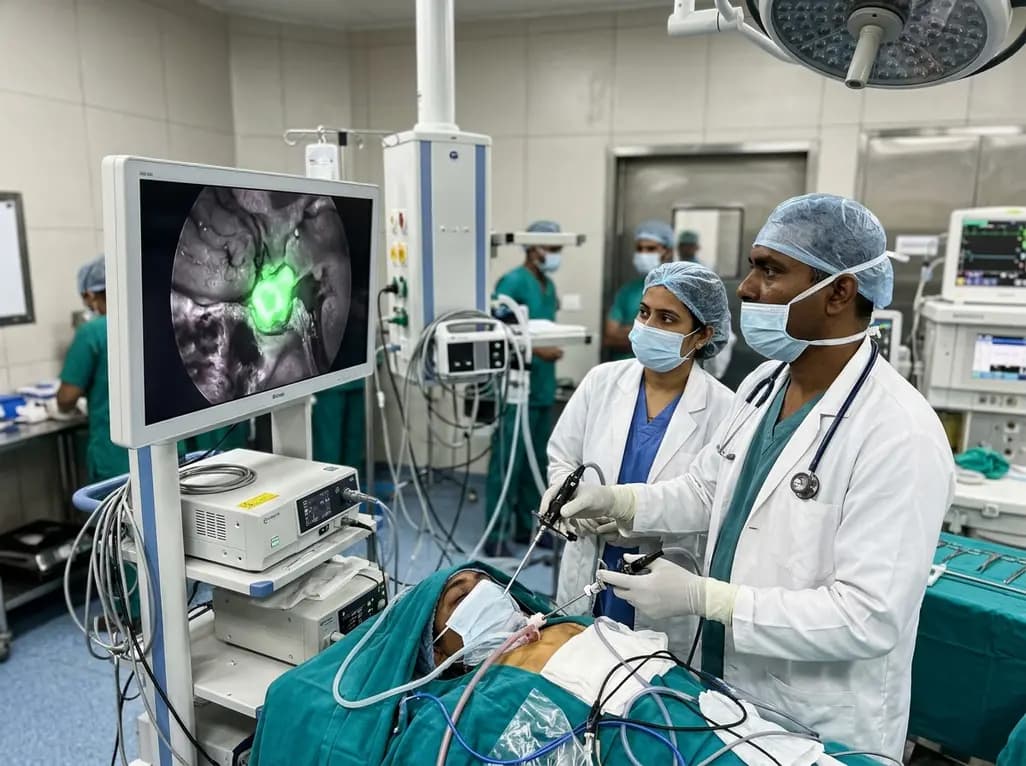
Near-infrared autofluorescence provides real-time label-free optical guidance during endoscopic transsphenoidal pituitary surgery. By highlighting stark signal contrasts between normal pituitary gland and adenomas, this technique aids gross-total tumor resection while safeguarding critical endocrine function.
Today
