.webp&w=384&q=75)

Loading, please wait...
Loading, please wait...
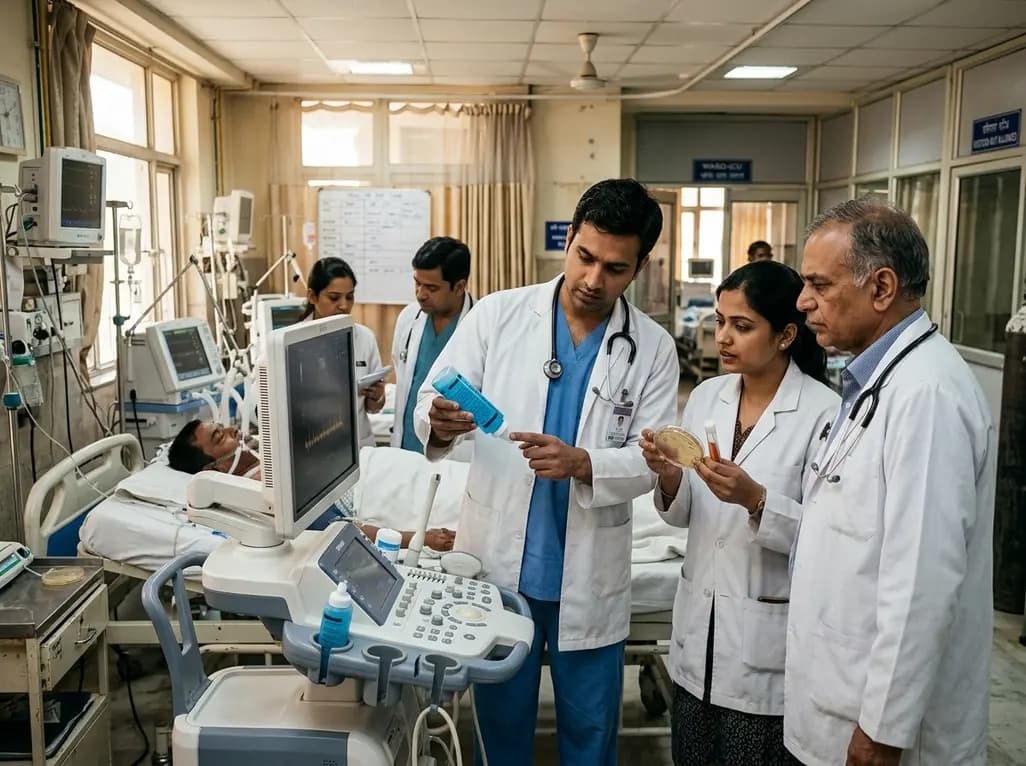
Healthcare providers must maintain high vigilance against opportunistic pathogens in critical care environments. Recently, a significant Burkholderia stabilis outbreak occurred in the Intensive Care Unit (ICU) of a tertiary care hospital in Madrid. This incident specifically involved five patients who developed positive blood cultures for the bacteria while undergoing treatment. Consequently, the hospital launched an extensive epidemiological investigation to identify the environmental source and prevent further transmission.
Burkholderia cepacia complex (Bcc) consists of diverse gram-negative bacilli that are ubiquitous in nature. While generally harmless to healthy individuals, they pose a severe threat to immunosuppressed or hospitalized patients. In this specific outbreak, researchers defined a case as any patient admitted to the ICU for over 48 hours with a positive Bcc blood culture. All affected patients had undergone ultrasound-guided procedures for central catheter insertion, which pointed toward a common procedural link.
To identify the reservoir, the medical team collected samples from the patient environment and ultrasound gels. Genomic sequencing at the National Centre for Microbiology confirmed the presence of Burkholderia stabilis ST-1565 in both patient samples and the gels. Notably, testing revealed contamination in both opened containers and factory-sealed bottles from the warehouse. This finding suggests that the contamination likely occurred during the manufacturing process rather than through local mishandling.
Immediate intervention was necessary to halt the spread. Therefore, the hospital removed the contaminated batches from all clinical units and storage areas. Following the implementation of these control measures, no new cases appeared. This event underscores the necessity of using sterile single-use gel packets for invasive ultrasound-guided procedures to minimize nosocomial risks. Furthermore, clinicians should maintain a high index of suspicion when clusters of Bcc infections emerge in the ICU setting.
Infections often present as bacteremia, especially in patients with indwelling catheters. Symptoms may include fever, chills, and signs of sepsis. Because Bcc is often multi-drug resistant, early detection through blood cultures is vital for effective management.
Ultrasound gels can harbor bacteria if they are contaminated during production or through improper multi-dose bottle handling. During invasive procedures like central line insertion, the gel can introduce pathogens into the bloodstream if the skin barrier is breached or if the gel contacts the insertion site.
Hospitals should transition to using sterile, single-use gel packets for all ultrasound-guided invasive procedures. Additionally, strict adherence to aseptic techniques and regular surveillance of ICU-acquired infections can help identify and resolve outbreaks rapidly.
Disclaimer: This content is for informational and educational purposes only. It does not constitute medical advice or a professional relationship. Refer to the latest local and national guidelines for clinical practice.
References
Acosta-Gutiérrez M et al. Nosocomial outbreak of Burkholderia stabilis related to the use of ultrasound gels in the Intensive Care Unit of the Hospital Universitario de La Princesa, Madrid. Enferm Infecc Microbiol Clin (Engl Ed). 2026 Jun 01. doi: undefined. PMID: 42224823.
Centers for Disease Control and Prevention (CDC). Burkholderia cepacia in Healthcare Settings. 2023.
Shaban RZ et al. Outbreak of Burkholderia cenocepacia bacteremia traced to contaminated ultrasound gel. Infection Control & Hospital Epidemiology. 2017;38(11):1364-1366.

Read summarized clinical updates, watch expert medical content, and earn CME certifications right from your smartphone.
Open your smartphone camera to scan and install.





An investigation in a Madrid ICU revealed a Burkholderia stabilis outbreak caused by contaminated ultrasound gels, highlighting risks in invasive procedures...
4 months ago

Novel diimide and hydrazone scaffolds, particularly compound #C4, synergistically reactivate latent HIV-1 when combined with JQ1 or PKC activators. Demonstrating donor-matched proviral transcription ex vivo and non-canonical signaling, these findings advance shock and kill strategies toward reservoir eradication.
Today

A cross-sectional study reveals that maternal RSV vaccination coverage reached only 43.7% in Argentina, with maternal vaccine knowledge being the sole independent predictor of uptake. Clinicians play a crucial role in eliminating informational and structural barriers to optimize infant health.
Today

Review how tailored exercise programs benefit frail older patients with heart failure. Explore pathophysiological mechanisms, individualized training prescriptions, and strategies to overcome adherence barriers in clinical practice.
Yesterday

This comparative study evaluates posterior labral tears with and without glenohumeral instability, highlighting distinct demographic patterns, MRI underestimation in stable shoulders, and successful arthroscopic repair outcomes.
Yesterday

A clinical study demonstrates that early intervention with tocilizumab, either as monotherapy or bridged with corticosteroids, achieves significant proptosis reduction and resolves active inflammation in treatment-naive thyroid eye disease.
Yesterday
