.webp&w=384&q=75)

Loading, please wait...
Loading, please wait...
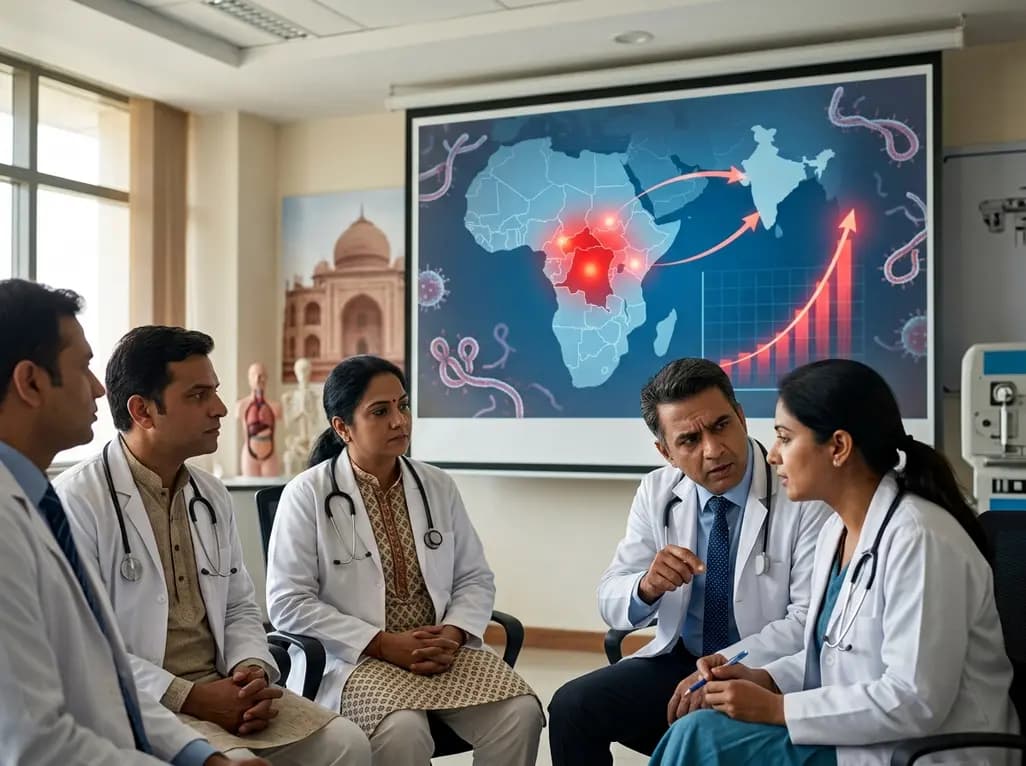
The World Health Organization (WHO) recently confirmed nearly 500 cases of Ebola in a rapidly expanding epidemic in Central Africa [1]. Specifically, this current Bundibugyo Ebola outbreak represents a critical global health emergency that clinicians must closely monitor. Although the outbreak originated in northeastern Democratic Republic of Congo (DRC), cases have already spread into neighbouring Uganda. Consequently, international health agencies are racing to contain the virus before it reaches other regions.
This particular epidemic is highly concerning because the Bundibugyo ebolavirus causes it. Importantly, there are currently no approved vaccines or targeted therapies for this specific viral strain. In contrast, established vaccines like Ervebo only protect against the more common Zaire ebolavirus strain. Therefore, healthcare workers must rely entirely on supportive clinical care and strict infection control to manage patients. Additionally, a humanitarian crisis and active security issues in northeastern DRC severely complicate containment efforts. As a result, health workers are struggling to track contacts and isolate suspected cases in remote areas.
The United States Centers for Disease Control and Prevention (CDC) recently simulated different transmission scenarios for this outbreak. According to their models, without aggressive public health interventions, the epidemic could rival the catastrophic 2014 West Africa outbreak. However, rapid isolation of infected individuals can significantly reduce the projected morbidity and mortality. Specifically, if response teams successfully isolate seventy percent of active patients, they can prevent a massive regional crisis. Thus, global partners have launched a five-hundred-and-eighteen million dollar response plan to boost surveillance and laboratory testing [1]. Furthermore, local health authorities are strengthening border screening to prevent further cross-border transmission.
While the immediate risk to countries outside Africa remains very low, healthcare professionals must maintain high vigilance. Clinicians should routinely obtain a detailed travel history from any patient presenting with acute unexplained fever. Additionally, presenting symptoms of Bundibugyo virus disease include generalized body pain, severe weakness, vomiting, and occasional bleeding. If a patient meets the suspected case criteria, immediate isolation and infection control protocols are vital. Consequently, hospitals must prepare their staff to handle potential highly infectious pathogens safely.
Q1: What makes the Bundibugyo strain of Ebola different from other strains?
Unlike the Zaire strain, the rare Bundibugyo ebolavirus strain currently has no approved vaccines or targeted antiviral treatments. Consequently, clinical management relies entirely on early supportive care and rigorous infection control measures to prevent transmission.
Q2: How does the Bundibugyo virus spread between individuals?
The virus transmits through close personal contact with the blood, secretions, organs, or other bodily fluids of infected individuals [1]. Furthermore, contact with contaminated surfaces or materials can also spread the disease, making strict hygiene protocols crucial.
Q3: What are the primary clinical symptoms of Bundibugyo virus disease?
Patients typically present with symptoms such as acute fever, generalized body pain, severe muscle weakness, and vomiting. Subsequently, some individuals may experience rapid clinical deterioration along with unexplained bleeding or haemorrhage.
Disclaimer: This content is for informational and educational purposes only. It does not constitute medical advice or replace professional judgment. Refer to the latest local and national guidelines for clinical practice.
References

Read summarized clinical updates, watch expert medical content, and earn CME certifications right from your smartphone.
Open your smartphone camera to scan and install.





The World Health Organization warns of a rapidly spreading Ebola outbreak in Central Africa caused by the rare Bundibugyo strain, with cases nearing 500....
4 months ago

Novel diimide and hydrazone scaffolds, particularly compound #C4, synergistically reactivate latent HIV-1 when combined with JQ1 or PKC activators. Demonstrating donor-matched proviral transcription ex vivo and non-canonical signaling, these findings advance shock and kill strategies toward reservoir eradication.
Today

A cross-sectional study reveals that maternal RSV vaccination coverage reached only 43.7% in Argentina, with maternal vaccine knowledge being the sole independent predictor of uptake. Clinicians play a crucial role in eliminating informational and structural barriers to optimize infant health.
Today

Review how tailored exercise programs benefit frail older patients with heart failure. Explore pathophysiological mechanisms, individualized training prescriptions, and strategies to overcome adherence barriers in clinical practice.
Yesterday

This comparative study evaluates posterior labral tears with and without glenohumeral instability, highlighting distinct demographic patterns, MRI underestimation in stable shoulders, and successful arthroscopic repair outcomes.
Yesterday

A clinical study demonstrates that early intervention with tocilizumab, either as monotherapy or bridged with corticosteroids, achieves significant proptosis reduction and resolves active inflammation in treatment-naive thyroid eye disease.
Yesterday
