.webp&w=384&q=75)

Loading, please wait...
Loading, please wait...

Brucellar Spondylodiscitis remains a significant diagnostic challenge for clinicians worldwide, particularly when it presents as a late-stage reactivation. Recently, a case report detailed a 35-year-old female patient from Syria, residing in Brazil, who developed chronic back pain. Remarkably, she had a history of brucellosis that was diagnosed and treated twenty years earlier. This case emphasizes the need for high clinical suspicion in patients with an epidemiological history, even decades after the primary event.
The patient presented with chronic back pain, headache, and discomfort in her left upper limb. Notably, she did not experience fever or weight loss, which frequently leads clinicians to overlook infectious etiologies. Magnetic resonance imaging (MRI) revealed a pathological fracture of the T8 vertebral body. Initially, histopathological examination showed a chronic granulomatous inflammatory process with necrosis. Because these findings often overlap with other diseases, the medical team first treated the condition as bone tuberculosis. However, subsequent laboratory confirmation finally identified Brucella as the causative agent. Consequently, the team shifted the therapeutic approach to target brucellosis specifically.
The treatment of spinal brucellosis requires a multi-drug regimen to ensure complete eradication and prevent further relapses. For this specific case, the patient received a combination of amikacin, rifampicin, and doxycycline for nine months. This prolonged duration is often necessary for bone-involved infections. Similarly, various studies suggest that triple-antibiotic therapy provides better outcomes compared to dual therapy in complicated presentations. Monitoring clinical improvement and radiological resolution is essential during the follow-up period. Furthermore, clinicians must distinguish this condition from spinal tuberculosis, as the pharmaceutical choices and treatment timelines differ considerably. Successful recovery in this patient was eventually confirmed through clinical and laboratory improvement.
Yes, brucellosis can remain latent in the body and manifest as localized infections, such as spondylodiscitis, many years later. This often occurs due to the pathogen's ability to survive within the reticuloendothelial system.
While both cause vertebral destruction, brucellosis typically shows more focal bone destruction and limited paravertebral involvement. Conversely, tuberculosis often presents with larger psoas abscesses and more extensive multi-level vertebral damage.
Most guidelines recommend a minimum of 12 weeks of combination therapy, though complicated cases like spondylodiscitis often require 6 to 12 months of treatment to ensure full resolution.
Disclaimer: This content is for informational and educational purposes only. It does not constitute medical advice or replace professional consultation. Refer to the latest local and national guidelines for clinical practice.
References
Kanebley M et al. Brucellar Spondylodiscitis 20 Years Post Infection. Am J Trop Med Hyg. 2026 Feb 17. doi: undefined. PMID: 41701984.
Pappas G, Akritidis N, Bosilkovski M, Tsianos E. Brucellosis. N Engl J Med. 2005 Jun 2;352(22):2325-36. doi: 10.1056/NEJMra050570.
Ulu-Kilic A, Karakas A, Erdem H, et al. Update on treatment options for spinal brucellosis. Clin Microbiol Infect. 2014;20(2):O75-O82. doi: 10.1111/1469-0691.12351.

Read summarized clinical updates, watch expert medical content, and earn CME certifications right from your smartphone.
Open your smartphone camera to scan and install.





A case report describes a 35-year-old patient who developed brucellar spondylodiscitis two decades after her initial infection, highlighting diagnostic pitf...
8 months ago
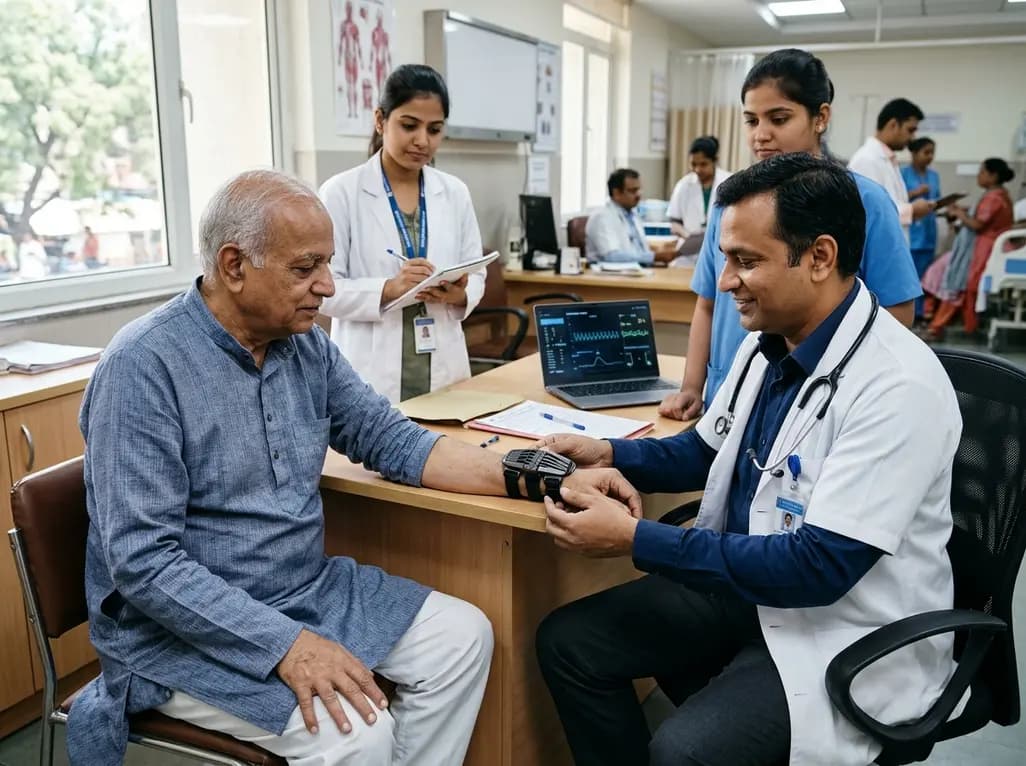
The TREM-AB open-label pilot study evaluated a wearable passive nonlinear vibration absorber for essential tremor. The Nonlinear Energy Sink bracelet reduced clinical Fahn-Tolosa-Marin tremor scores by 32.1% and electrophysiological tremor power by 49.2% with no adverse effects reported.
Today

A population-based study of 20,928 children reveals that small vulnerable newborns face sex-divergent mental capital outcomes at ages 6-7: term SGA girls show higher behavioral difficulties and lower resilience, while preterm non-SGA boys experience increased behavioral problems.
Today
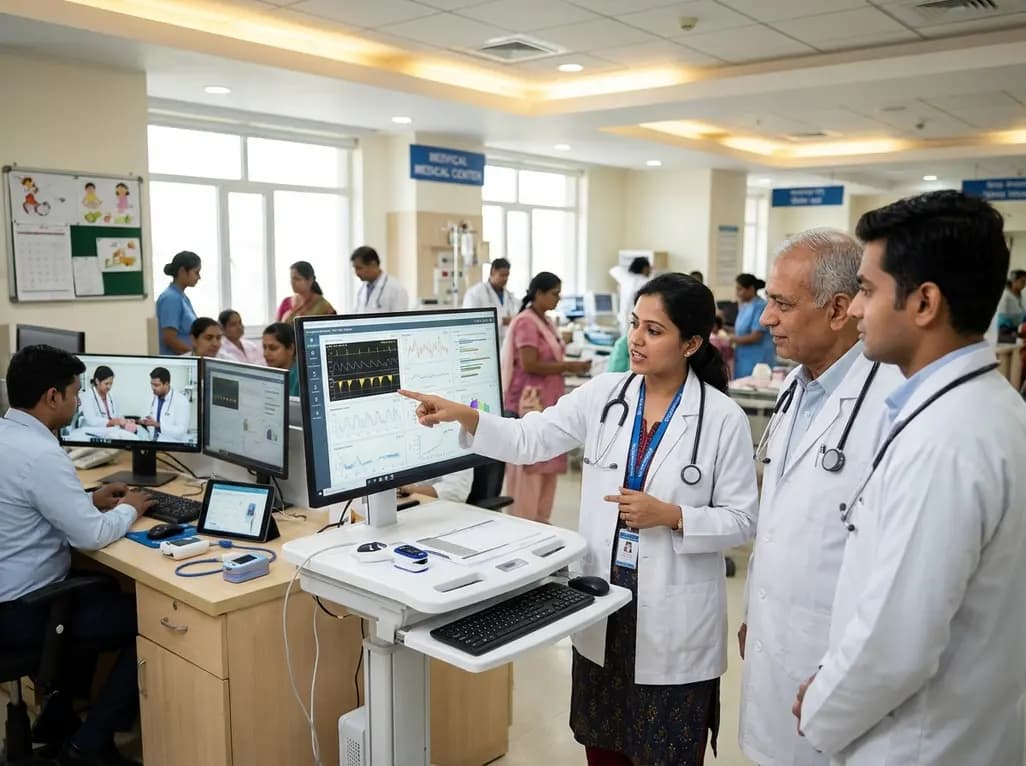
A landmark study details how an enterprise pediatric remote patient management model expanded from a single cardiology pilot to 16 diverse specialty programs by combining centralized digital operations with specialty clinical leadership.
Today

A comparative review of tension band wiring and intramedullary screw fixation in thumb metacarpophalangeal arthrodesis, evaluating union rates, hardware complications, and clinical outcomes.
Today

A breakthrough ultrathin multimodal sensor decouples physical hemodynamic monitoring from disposable electrochemical calibration, achieving long-term wearable glucose prediction with 81.36% accuracy and a 9.12% MARD. This offers a robust, drift-free solution for outpatient metabolic surveillance.
Today
