

Loading, please wait...
Loading, please wait...

The emergence of targeted tyrosine kinase inhibitors has transformed the management of oncogene-addicted lung adenocarcinoma. However, disease progression following lorlatinib failure in NSCLC represents an increasingly urgent dilemma for medical oncologists worldwide. Because clinicians lack established standard targeted guidelines after third-generation inhibitor resistance, treatment decisions require precise molecular evaluation. Consequently, understanding compound resistance mutations and designing creative combination regimens remain vital steps toward improving long-term outcomes in advanced disease.
Tyrosine kinase inhibitors have altered the clinical trajectory for individuals with advanced ALK-rearranged pulmonary adenocarcinoma. Initially, first-generation agents provided remarkable systemic responses, but secondary resistance mutations rapidly emerged. Subsequently, second-generation agents such as alectinib and brigatinib established superior efficacy and improved intracranial disease control. When tumors eventually bypass these therapies, third-generation lorlatinib offers substantial rescue activity. Lorlatinib specifically suppresses common single-nucleotide alterations such as the notorious G1202R solvent-front mutation.
Nevertheless, selective therapeutic pressure inevitably fosters complex biological adaptation within persisting cancer cells. Patients ultimately develop progressive disease driven by off-target pathway bypasses or recalcitrant on-target compound kinase mutations. These secondary compound alterations frequently alter the adenosine triphosphate-binding pocket in unexpected structural ways. As a result, standard monotherapies fail to maintain enzymatic inhibition. Clinicians practicing in modern oncology must therefore anticipate sequential failure patterns during ongoing treatment. In addition, treating teams must formulate evidence-informed salvage strategies when conventional sequential pathways terminate. Careful monitoring ensures timely detection of clinical and radiological progression before catastrophic organ compromise occurs.
Addressing lorlatinib failure in NSCLC demands a profound shift toward meticulous molecular re-evaluation. While third-generation inhibitors demonstrate broad inhibitory potency, acquired resistance mechanisms create intricate therapeutic bottlenecks. For instance, compound mutations occurring on the same allele severely hinder drug binding. When clinicians observe disease progression, repeat tissue biopsy or comprehensive liquid biopsy becomes an indispensable clinical maneuver. Next-generation sequencing clarifies whether resistance stems from kinase-domain mutations or alternative bypass tracks like MET amplification.
Moreover, identifying specific compound mutations allows oncologists to interrogate existing pharmacological databases for unexpected drug sensitivities. Preclinical in vitro assays often reveal that certain earlier-generation inhibitors retain affinity against specific paired alterations. Although guidelines generally direct refractory patients toward conventional platinum doublets, targeted combinations might provide superior disease control. Thus, genomic profiling provides the biological foundation required to craft customized salvage interventions. Clinicians must routinely integrate longitudinal re-biopsies into their practice algorithms instead of empirically switching regimens. Through this precise diagnostic approach, oncology teams identify actionable molecular vulnerabilities that might otherwise remain completely undetected. Consequently, personalized genomics transforms empirical salvage chemotherapy into rational, biology-driven clinical practice.
A recent clinical case illustrates the decisive value of repeated genomic sequencing following targeted therapy failure. A 41-year-old male with metastatic pulmonary adenocarcinoma experienced sequential disease progression on both alectinib and lorlatinib. Following disease progression on lorlatinib, the medical team performed an immediate tissue re-biopsy. DNA and RNA next-generation sequencing detected an active EML4::ALK fusion accompanied by co-occurring ALK I1171N and G1269A mutations. Furthermore, both variant alterations demonstrated high allele fractions, strongly suggesting a cis molecular configuration on the same allele.
Ordinarily, the presence of compound kinase alterations signifies pan-inhibitor resistance and predicts poor systemic responsiveness. However, published in vitro sensitivity profiles demonstrated that brigatinib uniquely retains functional binding against this specific dual-mutation combination. The I1171N mutation typically confers resistance to alectinib while remaining susceptible to alternative inhibitors. Meanwhile, the concurrent G1269A mutation preserves sensitivity toward brigatinib's distinctive molecular structure. Therefore, this molecular discovery presented a rare therapeutic window. The clinical team utilized these translational insights to design an individualized salvage protocol rather than defaulting to generic systemic therapy. Consequently, thorough molecular characterization unlocked a targeted treatment option that standard guidelines could not predict.
Supported by preclinical evidence, oncologists initiated a combination regimen comprising brigatinib alongside carboplatin and pemetrexed. Combining a targeted tyrosine kinase inhibitor with systemic cytotoxic chemotherapy represents a potent strategy against heterogeneous tumors. Specifically, cytotoxic agents eradicate rapidly dividing clone populations, whereas the targeted inhibitor suppresses specific oncogenic driver pathways. The patient completed four cycles of this multi-agent regimen without encountering unexpected hematologic or systemic toxicity. In fact, grade 2 fatigue represented the only documented adverse event throughout active treatment.
Subsequent restaging demonstrated remarkable clinical efficacy. The primary lung mass regressed markedly on follow-up computed tomography imaging. Additionally, functional positron emission tomography revealed a complete metabolic response across all previously involved regional lymph nodes. Intracranial metastatic disease also remained completely stable, reflecting the excellent central nervous system bioavailability of brigatinib. Following induction therapy, the patient transitioned to maintenance pemetrexed combined with brigatinib, which continues to control systemic disease. Consequently, this therapeutic combination achieved profound tumor shrinkage while preserving functional performance status and patient quality of life. Moreover, the acceptable safety profile confirmed the clinical feasibility of co-administering brigatinib with conventional antifolate chemotherapy.
This documented case provides compelling clinical insights, yet physicians must interpret the findings with appropriate scientific caution. Because the patient received concurrent cytotoxic chemotherapy, clinicians cannot attribute tumor regression solely to brigatinib. Furthermore, short follow-up duration precludes long-term assessment regarding overall survival or durable progression-free intervals. Nevertheless, this report confirms that a brigatinib-containing chemotherapy doublet is well tolerated and clinically feasible in heavily pretreated lung adenocarcinoma. It demonstrates that earlier-generation inhibitors can overcome complex resistance when informed by precise genomic testing.
Therefore, clinicians facing post-lorlatinib progression should prioritize repeat tissue sampling over routine empirical therapy. When actionable compound mutations appear, combining targeted agents with platinum-pemetrexed backbones offers a compelling therapeutic bridge. Similarly, ongoing clinical trials are evaluating novel fourth-generation inhibitors designed to overcome broad spectrum compound mutations. Until these innovative molecules achieve widespread regulatory clearance, individualized combinations remain a crucial clinical recourse. In conclusion, integrating longitudinal molecular re-biopsies enables oncologists to deliver personalized salvage strategies, maximizing disease control even in challenging resistance scenarios. Consequently, multidisciplinary teams can extend meaningful clinical benefit through tailored, biology-guided therapeutic sequencing.
Co-occurring mutations in the ALK tyrosine kinase domain frequently generate cross-resistance to standard third-generation inhibitors. Specifically, the I1171N substitution alters the adenosine triphosphate-binding pocket, whereas the G1269A mutation affects the flexible kinase loop. When these alterations occur in a cis configuration on the same allele, they severely disrupt lorlatinib binding affinity. However, structural models show that brigatinib retains partial inhibitory binding against this specific compound profile, thereby offering a rational therapeutic avenue.
Acquired resistance to lorlatinib exhibits profound molecular heterogeneity across different patients. Consequently, repeat tissue re-biopsy or plasma cell-free DNA next-generation sequencing provides essential biological insight. Testing identifies whether resistance stems from on-target compound ALK mutations or off-target bypass pathways such as MET amplification or KRAS activation. Therefore, comprehensive genomic profiling guides subsequent personalized intervention. Without updated molecular characterization, clinicians cannot determine whether switching targeted agents or initiating systemic chemotherapy offers the highest clinical benefit.
Platinum-based chemotherapy combined with pemetrexed represents a cornerstone treatment following targeted therapy failure in advanced non-small cell lung cancer. Furthermore, ALK-rearranged adenocarcinomas demonstrate notable sensitivity to pemetrexed due to reduced thymidylate synthase expression. Combining this cytotoxic backbone with a targeted tyrosine kinase inhibitor addresses polyclonal resistance. Consequently, this multi-agent strategy suppresses both drug-resistant mutated subclones and wild-type tumor populations, producing substantial objective responses and prolonging systemic progression-free survival in heavily pretreated individuals.
Disclaimer: This content is for informational and educational purposes only... Refer to the latest local and national guidelines for clinical practice.
References

Read summarized clinical updates, watch expert medical content, and earn CME certifications right from your smartphone.
Open your smartphone camera to scan and install.





A case report demonstrates clinical response to brigatinib plus carboplatin-pemetrexed following lorlatinib failure in ALK-rearranged NSCLC with cis ALK I1171N and G1269A compound mutations, underscoring the critical value of repeat molecular profiling.
Today
Postoperative atrial fibrillation occurs in over 40% of cardiac surgery patients but often resolves before discharge. However, a recent study reveals 89% of treated patients remain on oral anticoagulants at one year despite minimal recurrence, underscoring the urgent need for structured de-escalation protocols.
Today

A recent investigation by the ICMR-National Institute of Nutrition highlights widespread vitamin B1 insufficiency across vulnerable maternal populations. Unbalanced rice-heavy diets and specific culinary habits drive this hidden deficiency, demanding targeted screening and renewed micronutrient supplementation.
Today

A Canadian nutrition study reveals that higher diet costs predict lower dietary energy density and higher fruit intake, but also increase sodium and processed meat consumption.
Today

Idiopathic spinal cord herniation is a rare pathology presenting with progressive thoracic myelopathy. Early MRI identification and meticulous microsurgical reduction with dual bolstered dural defect repair prevent irreversible neurological deterioration.
Today
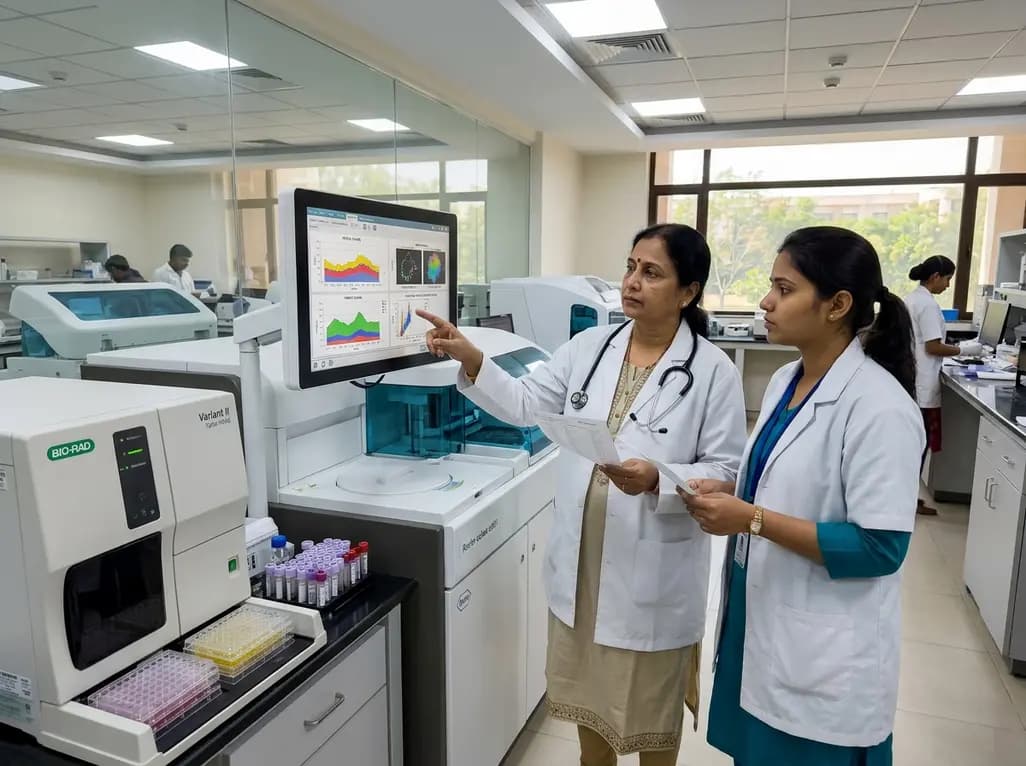
AIIMS Bhubaneswar has established three upgraded laboratories under its biochemistry department. These facilities introduce specialized antenatal panels, newborn screening for rare metabolic disorders, automated immunology platforms, and high-throughput HPLC HbA1c testing to enhance healthcare delivery across Odisha.
Today
