.webp&w=384&q=75)

Loading, please wait...
Loading, please wait...
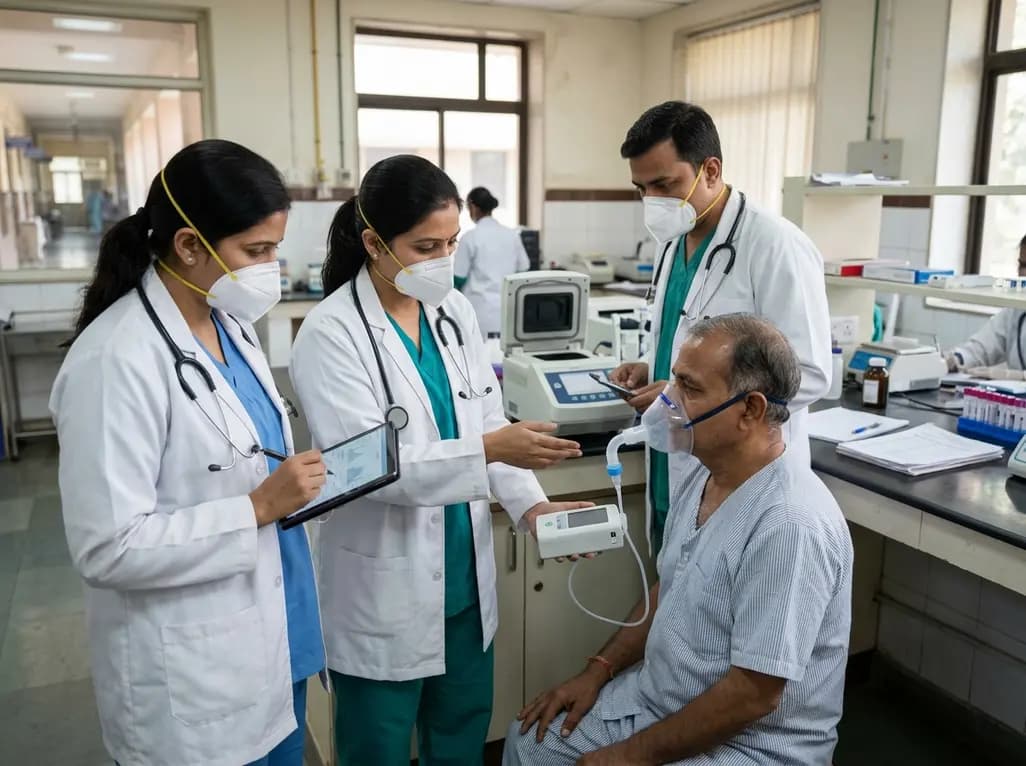
Lower respiratory tract infections remain a primary contributor to worldwide morbidity and antimicrobial resistance. Clinicians frequently struggle to establish a definitive microbial diagnosis because patients cannot produce adequate sputum. Invasive procedures such as bronchoalveolar lavage carry significant risks and resource requirements. Consequently, non-invasive breath sampling technologies have emerged as a transformative solution. A landmark study published in the Journal of Clinical Microbiology evaluates the clinical utility of breath aerosol PCR using the AveloMask collector. This novel diagnostic modality captures exhaled respiratory particles during tidal breathing. Therefore, it enables rapid molecular pathogen identification without patient discomfort or invasive instrumentation.
Lower respiratory tract infections present persistent diagnostic hurdles in acute inpatient care. Sputum expectoration serves as the conventional diagnostic pathway, yet up to half of hospitalized pneumonia patients cannot generate valid sputum specimens. Furthermore, oral microbiota easily contaminates expectorated samples, obscuring true lower airway pathogens. Elderly individuals and critically ill patients experience the greatest difficulty with voluntary expectoration. While flexible bronchoscopy with bronchoalveolar lavage delivers high-quality specimens, it requires skilled bronchoscopists, specialized suites, and conscious sedation. In addition, bronchoscopy introduces procedural risks, including hypoxemia, transient arrhythmias, and nosocomial cross-contamination.
Consequently, clinicians frequently initiate broad-spectrum empiric antimicrobial therapy without definitive microbiological identification. This widespread practice accelerates antimicrobial resistance, causes unintended drug toxicities, and escalates hospital costs. Exhaled breath aerosols provide an attractive alternative biological matrix. Bronchial airways naturally generate tiny liquid droplets during normal tidal breathing, airway reopening, and coughing. These micro-droplets entrap bacteria, viruses, and atypical pathogens directly from deep lung zones. Historically, capturing breath aerosols required cumbersome condensation devices that lacked clinical practicality. Modern functional filtration technology has finally resolved these mechanical bottlenecks. By integrating high-efficiency collection membranes into comfortable face masks, diagnostic teams can now gather deep airway specimens at the bedside effortlessly.
A multi-center prospective diagnostic trial across Switzerland and Georgia investigated whether a functional face mask could capture exhaled lower respiratory pathogens. The investigators evaluated the AveloMask, a novel face mask specimen collector engineered by Avelo AG. Patients with radiographically confirmed pneumonia wore the mask during routine breathing and cough maneuvers. The specialized filtration membrane captures exhaled micro-droplets containing bacterial and viral nucleic acids. After collection, laboratory personnel transfer the membrane into nucleic acid stabilization buffer through a simple mechanical step.
Importantly, the researchers compared breath aerosol samples directly against lower respiratory specimens obtained through sputum or bronchoalveolar lavage. The clinical team analyzed breath aerosol extracts using multiplex real-time polymerase chain reaction on the Roche LightMix panel. Simultaneously, the reference laboratory examined paired sputum and lavage specimens with the BioFire FilmArray Pneumonia Panel. The protocol enrolled 93 hospitalized adults, of whom 63 participants successfully completed paired specimen collection. The primary trial design assessed positive percent agreement, negative percent agreement, and overall concordance. In addition, user acceptability surveys indicated that patients tolerated the face mask exceptionally well. The mask caused no dyspnea, discomfort, or adverse events during acute inpatient stays. Thus, the collection procedure integrates smoothly into routine emergency and ward workflows.
The clinical evaluation demonstrated robust diagnostic concordance between mask-collected breath aerosols and conventional deep respiratory specimens. Overall, breath aerosol PCR successfully identified the dominant pathogen in 85.1% of lower respiratory tract positive cases. Dominant pathogens were defined by the lowest cycle threshold values in paired sputum or lavage samples. Across all combined bacterial and viral microbiological targets, the positive percent agreement reached 61%, while the negative percent agreement was 99.8%. Consequently, overall percent agreement attained an impressive 95%.
Notably, the non-invasive collection system performed substantially better for bacterial pathogens than for viral agents. In-depth analysis revealed that lower overall positive agreement stemmed primarily from low-abundance secondary organisms and viral co-infections. When pathogens existed in substantial quantities, the mask captured them with high fidelity. Furthermore, the exceptional negative percent agreement proves that the face mask filter resists upper airway bacterial contamination. Unlike regular sputum collection, the breath collector avoids excessive oral washings and salivary debris. Therefore, a positive result offers high diagnostic specificity for genuine pulmonary infections. As a result, clinicians can trust positive findings when tailoring antimicrobial selections. These diagnostic metrics establish breath molecular testing as a reliable adjunct to standard diagnostic pathways in hospital medicine.
Antimicrobial stewardship committees face continuous pressure to shorten empiric broad-spectrum antibiotic regimens in acute pneumonia cases. However, physicians hesitate to de-escalate antimicrobial coverage without definitive microbiological confirmation. Exploratory subset analyses from this prospective trial revealed that mask-derived results closely mirrored standard-of-care microbiological findings. In multiple instances, early pathogen identification from breath samples could have directly informed timely antimicrobial de-escalation.
Furthermore, the technology delivers immense value in intensive care units and high-dependency wards. Critical care teams frequently debate whether to perform invasive bronchoscopy in frail, hypoxemic patients. A non-invasive mask test eliminates procedural invasiveness while maintaining molecular diagnostic fidelity. In addition, breath aerosol testing dramatically shortens the diagnostic timeline compared to standard culture techniques. While bacterial sputum cultures demand 48 to 72 hours, multiplex molecular testing delivers actionable answers within a few hours. Clinicians can rapidly substitute vancomycin, piperacillin-tazobactam, or carbapenems with narrow-spectrum targeted agents. Consequently, this intervention curbs the development of multidrug-resistant pathogens, reduces Clostridioides difficile colitis rates, and shortens inpatient hospitalizations. Therefore, integrating breath sampling into stewardship pathways will elevate patient safety and hospital resource efficiency.
Despite these promising findings, clinicians must address several operational considerations before widespread implementation occurs. First, breath aerosol PCR demonstrated diminished sensitivity when detecting low-abundance co-pathogens or mild viral infections. Physicians should not view breath testing as an absolute replacement for invasive bronchoscopy in complex atypical infections. Instead, breath sampling serves as an exceptional first-line modality when sputum is unavailable or unobtainable. In addition, clinical laboratories must establish validated nucleic acid extraction protocols from mask membrane buffers.
Furthermore, future investigations must evaluate whether breath sampling remains cost-effective across diverse healthcare systems, including resource-constrained settings. Developing countries confront severe burdens of community-acquired pneumonia, tuberculosis, and multidrug-resistant hospital-acquired infections. In these settings, non-invasive mask-based sampling could transform outpatient triage and peripheral clinic capabilities. Researchers are already testing mask devices to identify Mycobacterium tuberculosis and Pseudomonas aeruginosa in chronic airway diseases. Moreover, ongoing enhancements in filter biomaterials and automated microfluidic extraction will likely improve analytic sensitivity for low-copy pathogens. Ultimately, mask-based breath aerosol testing represents a major paradigm shift toward accessible, rapid, and patient-friendly infectious disease diagnostics.
The AveloMask incorporates a specialized micro-porous filtration membrane that captures exhaled breath aerosols produced during normal breathing and coughing maneuvers. As air travels across mucosal linings, shearing forces generate micro-droplets containing intact bacterial and viral pathogens. When the patient wears the mask, the internal filter traps these aerosolized particles efficiently. Subsequently, laboratory personnel transfer the filter membrane into nucleic acid stabilization buffer for automated multiplex polymerase chain reaction testing.
In clinical trials involving hospitalized pneumonia patients, breath aerosol testing demonstrated an 85.1% positive concordance for identifying the dominant lower respiratory pathogen. Across all targeted microorganisms, the positive percent agreement was 61%, while the negative percent agreement reached an outstanding 99.8%, yielding an overall percent agreement of 95%. Positive agreement was considerably higher for bacterial infections than viral infections, primarily because low-abundance co-pathogens shed fewer aerosolized particles during tidal breathing.
Clinicians should consider mask-based breath aerosol testing when patients with suspected pneumonia cannot produce spontaneous or induced sputum specimens. This situation frequently occurs among elderly adults, dehydrated patients, and individuals with dry coughs. Furthermore, breath sampling provides an ideal non-invasive alternative for frail patients who cannot safely undergo invasive bronchoalveolar lavage. The rapid turnaround time of breath molecular analysis also assists physicians in making early, targeted antimicrobial stewardship decisions.
Disclaimer: This content is for informational and educational purposes only and does not constitute medical advice. Healthcare professionals should evaluate individual clinical circumstances and exercise independent medical judgment. Refer to the latest local and national guidelines for clinical practice.
References
Tiseo K et al. Breath aerosol PCR for detection of lower respiratory tract infections: evaluation of a non-invasive face mask collector in pneumonia patients. J Clin Microbiol. 2026 Sep 10. doi: 10.1128/jcm.00562-26. PMID: 42721424.
Risch P et al. AveloMask, a novel breath aerosol collection kit for airborne Mycobacterium tuberculosis: a proof-of-principle assessment. J Clin Microbiol. 2025;63(9):e00546-25.
Karimi K et al. Mask-Based Breath Sampling for Detection of Pseudomonas aeruginosa in Adults with Cystic Fibrosis and Bronchiectasis. Preprint. 2026. doi: 10.64898/2026.06.14.26355606.

Read summarized clinical updates, watch expert medical content, and earn CME certifications right from your smartphone.
Open your smartphone camera to scan and install.





A multi-center study demonstrates that breath aerosol PCR using a specialized face mask collector accurately detects dominant lower respiratory pathogens in pneumonia, achieving 85% concordance with invasive methods and paving the way for rapid, non-invasive microbiological diagnosis.
last month

As monsoon seasons elevate arboviral disease threats, Tamil Nadu has initiated an ICMR-monitored evaluation of the tetravalent dengue vaccine in Tenkasi district. Clinicians emphasize clinical monitoring, public prevention, and high-quality early pediatric care to reduce disease morbidity across endemic regions.
Today

A comparative cohort study evaluates vNOTES vs TLH hysterectomy for benign conditions, demonstrating shorter operative duration, faster return to daily activities, and equivalent female sexual function scores without increased dyspareunia.
Today

Review how tailored exercise programs benefit frail older patients with heart failure. Explore pathophysiological mechanisms, individualized training prescriptions, and strategies to overcome adherence barriers in clinical practice.
Today

This comparative study evaluates posterior labral tears with and without glenohumeral instability, highlighting distinct demographic patterns, MRI underestimation in stable shoulders, and successful arthroscopic repair outcomes.
Today

A clinical study demonstrates that early intervention with tocilizumab, either as monotherapy or bridged with corticosteroids, achieves significant proptosis reduction and resolves active inflammation in treatment-naive thyroid eye disease.
Today
