.webp&w=384&q=75)

Loading, please wait...
Loading, please wait...
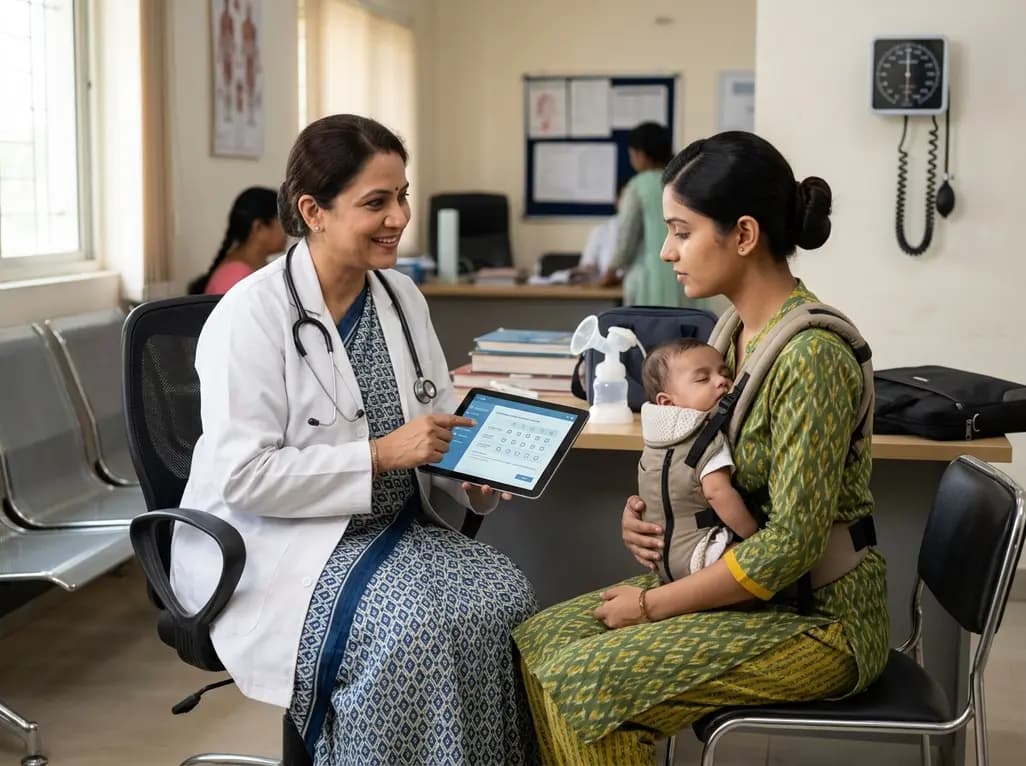
The transition back to work represents a significant hurdle for many breastfeeding mothers. In contemporary society, particularly in rapidly developing nations like China and India, the number of employed women in the workforce continues to rise. While many mothers intend to maintain exclusive breastfeeding, the pressure of workplace stressors often leads to early cessation. Consequently, researchers have recognized the need for a specific measurement tool to evaluate a mother's ability to navigate these challenges. The Breastfeeding Resilience Scale (BRS) was developed to fill this gap, offering a validated instrument to assess the psychological resilience of mothers returning to work. By understanding the intrinsic motivations and external supports that allow certain women to succeed despite adversity, healthcare providers can better tailor their interventions. Moreover, this scale acknowledges that breastfeeding is not merely a biological act but a complex journey influenced by psychological and environmental factors. Therefore, implementing such a tool in clinical settings could significantly improve maternal support and child health outcomes globally.
The creation of the Breastfeeding Resilience Scale involved a rigorous three-phase methodological approach to ensure both depth and accuracy. Initially, in Phase 1, the researchers generated a comprehensive item pool by conducting extensive literature reviews and focus group discussions. Additionally, they utilized a Delphi survey to refine these items, ensuring that experts in the field provided professional oversight. This phase concluded with a pre-test among 15 mothers to finalize the trial version. Subsequently, Phase 2 moved into a cross-sectional survey involving 172 employed mothers across 18 provincial-level regions in China. During this stage, item analysis and exploratory factor analysis (EFA) helped identify the core structure of the provisional scale. Specifically, the EFA helped filter out irrelevant items while highlighting the strongest indicators of resilience. Finally, Phase 3 focused on the development of the formal version by surveying 200 mothers across 23 regions. This final stage compared the BRS with the established Connor-Davidson Resilience Scale (CD-RISC) to verify its criterion-related validity. These systematic steps ensured that the tool was both statistically sound and practically relevant for the target population.
The theoretical underpinning of the scale is rooted in Kumpfer’s Resilience Framework. This model suggests that resilience is a dynamic process where individuals interact with various environmental stressors and protective factors. In the context of breastfeeding, a mother faces stressors such as heavy workloads, lack of pumping breaks, and inadequate social support. However, her internal resilient qualities—such as high self-efficacy and strong intrinsic motivation—allow her to adapt and persist. Furthermore, the framework emphasizes that successful adaptation leads to personal growth and strengthened resilience for future challenges. By applying this model, the BRS captures how employed mothers navigate the friction between professional responsibilities and maternal goals. Notably, the scale evaluates five distinct dimensions that represent these internal and external dynamics. This multi-dimensional approach is crucial because it recognizes that resilience is not a static trait. Instead, it is a resource that can be nurtured through appropriate workplace policies and clinical counseling. Understanding these psychological pathways allows clinicians to identify which mothers might be at the highest risk of stopping breastfeeding prematurely.
To be considered clinically useful, the Breastfeeding Resilience Scale underwent stringent psychometric testing. The formal scale consists of 24 items, and the researchers reported an overall Cronbach’s alpha of 0.897, which indicates excellent internal consistency. Additionally, the five dimensions of the scale showed alpha coefficients ranging from 0.750 to 0.875, further proving its reliability across different sub-factors. Exploratory factor analysis confirmed that five factors explained approximately 63.139% of the total variance, with all individual item loadings exceeding the necessary 0.50 threshold. Furthermore, confirmatory factor analysis (CFA) provided fit indices that largely met recommended standards, such as an RMSEA of 0.057 and a CFI of 0.923. Although some indices like the GFI were slightly below the 0.90 cutoff, the overall statistical profile remains strong. The researchers also calculated the average variance extracted (AVE) and composite reliability (CR) to confirm convergent and discriminant validity. Interestingly, the correlations between the BRS and the CD-RISC were statistically significant, confirming that while the BRS is a specialized tool, it aligns well with broader psychological resilience measurements.
In India, the clinical relevance of the Breastfeeding Resilience Scale is profound, given the diverse challenges faced by working women. Despite the Maternity Benefit (Amendment) Act 2017, which provides 26 weeks of paid leave, many women in the informal sector or in high-pressure private jobs struggle to maintain breastfeeding after returning to duty. Therefore, Indian pediatricians and gynecologists can use the BRS during postnatal follow-up visits to screen for low resilience. By identifying mothers who score poorly in the social support or intrinsic motivation dimensions, clinicians can provide targeted counseling. For instance, if a mother shows low social dimension scores, the healthcare team can encourage family involvement or suggest workplace advocacy. Moreover, this tool can serve as a baseline for lactation consultants to measure the effectiveness of their support programs. Consequently, incorporating the BRS into standard maternal care protocols could help India reach its national targets for exclusive breastfeeding. Ultimately, the scale provides a structured way to address the psychological barriers that often remain invisible during a routine physical check-up.
Promoting breastfeeding resilience is not solely the responsibility of the mother; it requires a supportive ecosystem. The BRS results highlight that workplace stressors are major detractors from breastfeeding success. Thus, organizations should use the insights gained from this research to implement better facility designs, such as private lactation rooms and dedicated storage for expressed milk. Additionally, offering flexible working hours can significantly reduce the psychological burden on new mothers. Healthcare workers should advocate for these changes by presenting data-driven evidence of how workplace support impacts maternal resilience. Furthermore, peer support groups can play a vital role in reinforcing the social dimension of the scale. When mothers share their success stories and strategies for managing work-life balance, it builds collective resilience within the community. In conclusion, the Breastfeeding Resilience Scale serves as more than just a measurement; it is a call to action for employers and policymakers to create environments where breastfeeding is not an endurance test but a supported choice. By focusing on these systemic changes, we can ensure that returning to work does not mean the end of the breastfeeding journey.
The scale measures the psychological ability of a mother to continue breastfeeding despite the significant stressors associated with returning to work. It evaluates 24 specific items across five different dimensions, including intrinsic motivation, social support, and workplace adaptability. By using this tool, healthcare providers can pinpoint exactly where a mother might be struggling, whether it is a lack of personal confidence or a deficit in external resources and environmental support.
Clinicians can incorporate the scale during routine postnatal check-ups or lactation counseling sessions. Because it is a 24-item questionnaire, it is relatively quick to administer and provides immediate insights into the mother's psychological state. Physicians can use the scores to identify high-risk individuals who may benefit from extra psychological support or specific advice on pumping at work. This proactive approach helps prevent the early cessation of breastfeeding before it actually occurs.
While general resilience scales like the CD-RISC assess a person's broad ability to bounce back from any life adversity, the BRS is specifically tailored to the unique stressors of breastfeeding. General scales might miss the subtle environmental and physiological challenges specific to lactation, such as nipple pain or workplace discrimination regarding pumping breaks. The BRS provides a more focused lens, making it significantly more relevant and accurate for lactation consultants and maternal health specialists.
Disclaimer: This content is for informational and educational purposes only. It does not constitute professional medical advice, diagnosis, or treatment. Always seek the advice of your physician or other qualified healthcare provider with any questions you may have regarding a medical condition. Refer to the latest local and national guidelines for clinical practice.
References
Guo Y et al. Development and validation of the breastfeeding resilience scale (BRS) among employed mothers after returning to work. Int Breastfeed J. 2026 Jul 11. doi: 10.1186/s13006-026-00870-5. PMID: 42436581.
World Health Organization. Breastfeeding. 2023. Available from: https://www.who.int/health-topics/breastfeeding.
National Health Mission, Ministry of Health and Family Welfare, Government of India. MAA (Mothers’ Absolute Affection) Programme Guidelines. 2016.

Read summarized clinical updates, watch expert medical content, and earn CME certifications right from your smartphone.
Open your smartphone camera to scan and install.





A new study validates the Breastfeeding Resilience Scale (BRS), a 24-item tool designed to help healthcare providers assess the psychological resilience and intrinsic motivation of employed mothers. This tool is essential for identifying mothers who may need extra support when returning to the workforce.
3 months ago

Discover the crucial role of glymphatic dysfunction in stroke, where perivascular clearance failure and neuroinflammation exacerbate cerebral edema and post-stroke brain injury.
Today

A prenatal case highlights severe glutaric acidemia type II presenting as bilateral hyperechoic cystic kidneys at 18 weeks. Whole-exome sequencing revealed a novel homozygous ETFDH frameshift variant, demonstrating the power of rapid genetic testing in fetal renal anomalies.
Today

Review how tailored exercise programs benefit frail older patients with heart failure. Explore pathophysiological mechanisms, individualized training prescriptions, and strategies to overcome adherence barriers in clinical practice.
Yesterday

This comparative study evaluates posterior labral tears with and without glenohumeral instability, highlighting distinct demographic patterns, MRI underestimation in stable shoulders, and successful arthroscopic repair outcomes.
Yesterday

A clinical study demonstrates that early intervention with tocilizumab, either as monotherapy or bridged with corticosteroids, achieves significant proptosis reduction and resolves active inflammation in treatment-naive thyroid eye disease.
Yesterday
