.webp&w=384&q=75)

Loading, please wait...
Loading, please wait...

In the modern era of digital healthcare, breast cancer patients increasingly turn to the internet for disease management. Accessing reliable breast cancer health information has become a fundamental part of the patient journey. However, the sheer volume of online data often leads to a complex navigation process involving psychological adjustments. A recent qualitative study explores these real-world experiences to help clinicians support their patients better.
Researchers identified that the search for knowledge is driven by both emotional needs and a practical desire for problem-solving. While the internet offers vast resources, patients frequently encounter conflicting data and variable quality. Consequently, this can complicate clinical decision-making and lead to significant cognitive confusion.
Patients navigate a sea of information through multichannel interweaving. They must constantly judge authenticity and assess whether specific data applies to their unique medical situation. Therefore, many patients experience what is described as "information fog" when faced with conflicting reports. To overcome this, they work to construct personal meaning from the information they find. This process involves transforming abstract data into actionable steps for their treatment plan.
Managing the pressure of digital resources requires several adaptation strategies. Specifically, patients often use emotional regulatory coping to maintain equilibrium during stressful periods. Furthermore, they build support networks and adjust their expectations as they learn more about their prognosis. This transition from searching to coping is vital for maintaining mental health during therapy. Simultaneously, healthcare providers play a crucial role in this process by guiding patients toward credible sources.
Moreover, clinicians can mitigate the stress caused by misinformation by addressing patient concerns directly. Additionally, digital platform developers should focus on creating personalized information support systems. These systems should align with the diverse needs of patients at different stages of their disease. By optimizing digital health services, we can ensure patients feel empowered rather than overwhelmed.
Patients should prioritize information from reputable medical institutions, government health bodies, and peer-reviewed journals. They should also discuss any findings with their oncology team to ensure the data is relevant to their specific medical case.
The "information fog" occurs when patients encounter a high volume of conflicting or overly complex medical data online. This can lead to cognitive overload and difficulty in making clear treatment decisions without professional guidance.
Clinicians act as essential filters for information. By recommending trusted websites and clarifying complex medical jargon, they help patients navigate digital resources safely and effectively.
Disclaimer: This content is for informational and educational purposes only. It does not constitute medical advice or a professional relationship. Refer to the latest local and national guidelines for clinical practice.
References
Liu J et al. From Searching to Coping, How Chinese Patients With Breast Cancer Navigate Web-Based Health Information: Semistructured Interview Study. J Med Internet Res. 2026 Mar 26. doi: 10.2196/80363. PMID: 41886754.
Sengupta S, et al. Health Literacy and Breast Cancer among Indian Women. Journal of Communication and Management. 2025 Sep 22. doi: 10.51957/Healthline_747_2025.
Nair M, et al. Digital Inequalities in Cancer Care Delivery in India: An Overview of the Current Landscape and Recommendations for Large-Scale Adoption. PMC. 2022 Jun 27.

Read summarized clinical updates, watch expert medical content, and earn CME certifications right from your smartphone.
Open your smartphone camera to scan and install.





A study explores how breast cancer patients navigate the complex world of online health information, moving from initial search to psychological coping....
6 months ago
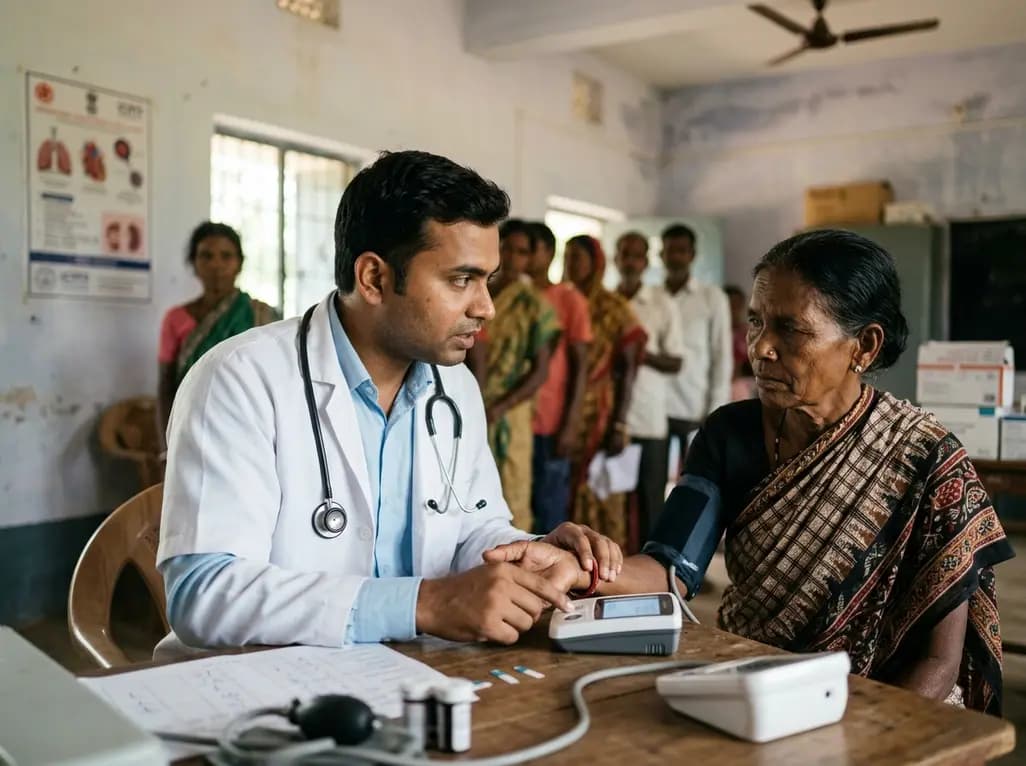
An ICMR study reveals that nearly 25% of tribal adults in Odisha suffer from renal decline. Driven by untreated hypertension, diabetes, and lifestyle risks, this hidden burden highlights the critical need for point-of-care diagnostics, proactive screening, and targeted non-communicable disease interventions.
Today

A study in Ultrasound in Obstetrics & Gynecology shows that quantitative vascularization of the anterior fornix/cervix with transvaginal ultrasound reliably identifies placenta accreta spectrum and predicts severe intraoperative hemorrhage, offering vital objective risk stratification.
Today
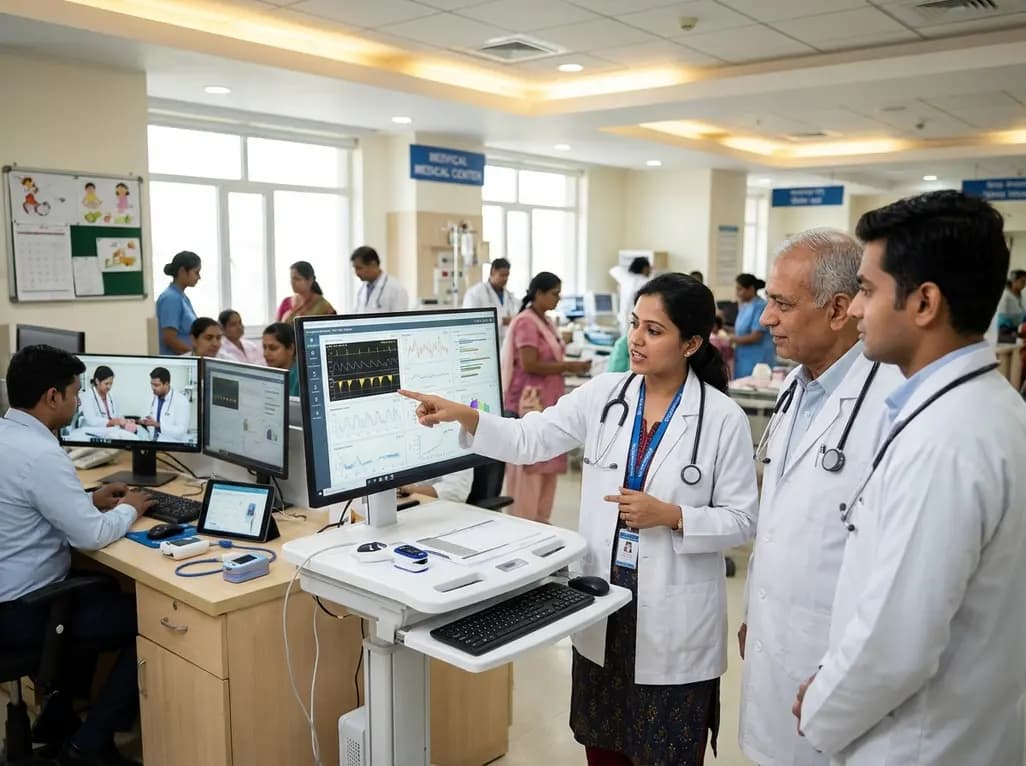
A landmark study details how an enterprise pediatric remote patient management model expanded from a single cardiology pilot to 16 diverse specialty programs by combining centralized digital operations with specialty clinical leadership.
Yesterday

Peripheral nerve injuries present clinical challenges due to regenerative mismatches between sensory and motor neurons. This review explores cutting-edge tissue-engineered nerve grafts designed as central-peripheral signal relays to overcome denervation atrophy and restore functional motor-sensory recovery.
Today
Protein O-GlcNAcylation couples cellular nutrient status to vital neuronal functions. This review explores how disrupted O-GlcNAc cycling drives both neurodevelopmental delays and neurodegenerative cascades, positioning metabolic post-translational modifications as therapeutic targets in clinical neurology.
Today
