.webp&w=384&q=75)

Loading, please wait...
Loading, please wait...
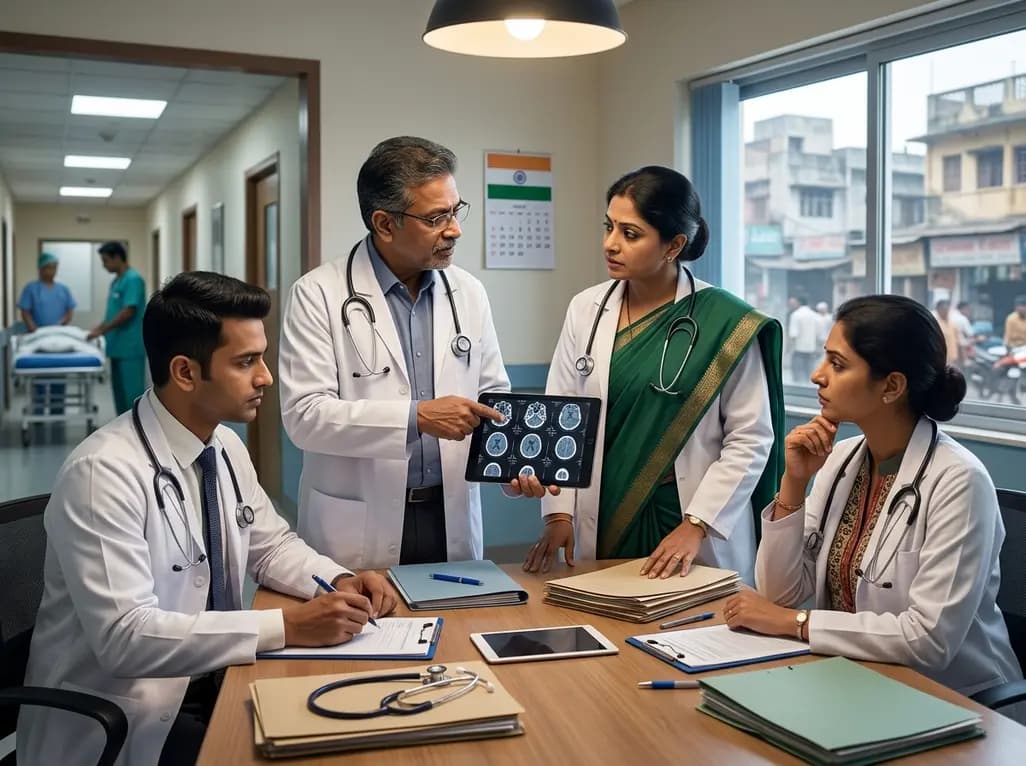
Deceased organ donation in India is experiencing a regulatory boost. Recently, the Directorate General of Medical Education (DGME) approved several hospital committees to perform brain stem death certification. This approval, given to centers like Yashoda Medicity, marks a crucial milestone in strengthening India's organ donation ecosystem. Consequently, this step will streamline deceased organ retrieval processes and save countless lives.
Currently, thousands of patients in India wait on endless lists for critical transplants. However, organ availability lags far behind this massive clinical demand. To address this crisis, hospitals must build robust and transparent systems for deceased organ donation. Specifically, establishing certified local panels allows medical institutions to make timely and legally compliant determinations. As a result, critical care teams can coordinate seamlessly with transplant coordinators.
Under the Transplantation of Human Organs and Tissues Act (THOTA), brain stem death certification is a mandatory prerequisite for organ retrieval. Therefore, the law demands strict clinical protocols to ensure absolute diagnostic certainty. A multidisciplinary board of medical experts must independently conduct two separate clinical assessments at least six hours apart. Furthermore, this panel must not have any association with the transplant surgery team. Consequently, this complete independence maintains public trust and protects ethical boundaries.
During the evaluation, specialists perform rigorous tests to confirm the irreversible cessation of all brain stem functions. For example, they carefully check for the absence of pupillary, corneal, and vestibulo-ocular reflexes. Additionally, clinicians administer a standard apnea test to verify that the patient cannot breathe spontaneously. Once the panel confirms these findings on Form 10, the clinical team can officially proceed with the donation process. Thus, the hospital establishes a transparent and secure path toward saving multiple lives.
Q1: What is the main role of a Brain Stem Death Certification Committee?
A Brain Stem Death Certification Committee independently verifies and legally certifies brain stem death under THOTA rules. This committee ensures that all legal, ethical, and clinical protocols are strictly met before any deceased organ retrieval takes place.
Q2: Who are the members of the brain stem death certifying panel in India?
According to India's THOTA guidelines, the panel consists of four independent doctors. This includes the hospital's medical superintendent, an approved nominated registered medical practitioner, a neurologist or neurosurgeon, and the treating physician.
Disclaimer: This content is for informational and educational purposes only. It does not constitute medical advice or replace professional judgment. Refer to the latest local and national guidelines for clinical practice.
References

Read summarized clinical updates, watch expert medical content, and earn CME certifications right from your smartphone.
Open your smartphone camera to scan and install.





Explore how DGME-approved Brain Stem Death Certification Committees strengthen India's transplant ecosystem by streamlining clinical and legal protocols....
4 months ago

Discover the crucial role of glymphatic dysfunction in stroke, where perivascular clearance failure and neuroinflammation exacerbate cerebral edema and post-stroke brain injury.
Today

A prenatal case highlights severe glutaric acidemia type II presenting as bilateral hyperechoic cystic kidneys at 18 weeks. Whole-exome sequencing revealed a novel homozygous ETFDH frameshift variant, demonstrating the power of rapid genetic testing in fetal renal anomalies.
Today

Review how tailored exercise programs benefit frail older patients with heart failure. Explore pathophysiological mechanisms, individualized training prescriptions, and strategies to overcome adherence barriers in clinical practice.
Yesterday

This comparative study evaluates posterior labral tears with and without glenohumeral instability, highlighting distinct demographic patterns, MRI underestimation in stable shoulders, and successful arthroscopic repair outcomes.
Yesterday

A clinical study demonstrates that early intervention with tocilizumab, either as monotherapy or bridged with corticosteroids, achieves significant proptosis reduction and resolves active inflammation in treatment-naive thyroid eye disease.
Yesterday
