.webp&w=384&q=75)

Loading, please wait...
Loading, please wait...

Brain metastasis remains one of the most devastating complications for oncology patients globally. Recent research has finally shed light on a specific brain metastasis mechanism driven by extracellular vesicles (EVs). Specifically, tumor-derived exosomes carrying the protein S100A14 play a central role in this process. By investigating these molecular pathways, scientists have opened new avenues for targeted treatments like the natural compound germacrone.
Proteomic analysis shows that S100A14 levels are remarkably high in brain-metastatic cell lines and clinical samples. Furthermore, researchers used intracardiac injection models in mice to confirm these findings. The study demonstrated that EVs rich in S100A14 significantly increase brain metastasis rates in breast and lung cancer models. For instance, in A549 lung cancer models, the rate jumped from 33.33% to 83.33%. Consequently, this protein serves as a critical mediator in pre-metastatic niche formation.
Once the S100A14-rich vesicles reach the brain, they target PIAS3 within astrocytes. This interaction effectively reprograms these brain cells by activating the STAT3 signaling pathway. Therefore, the reprogrammed astrocytes begin to secrete pro-inflammatory chemokines, including CCL2, CCL5, and CXCL5. These molecules actively recruit immunosuppressive myeloid-derived suppressor cells (MDSCs). This specific brain metastasis mechanism creates a protective environment that allows cancer cells to evade immune detection and thrive in the central nervous system.
Notably, the study identified germacrone as a promising therapeutic agent. This natural compound directly binds to S100A14 within astrocytes. By doing so, it disrupts the S100A14-PIAS3 interaction and subsequently inhibits STAT3 activation. As a result, germacrone effectively reduces MDSC recruitment and slows the progression of brain metastasis. Moreover, this treatment demonstrated minimal toxicity, making it a viable candidate for further clinical investigation. This breakthrough highlights the potential for using natural compounds to target specific metastatic pathways.
S100A14 travels in small vesicles from the primary tumor to the brain. It reprograms brain cells called astrocytes to create an environment that supports cancer growth and prevents immune cells from attacking the tumor.
Astrocytes are the main support cells in the brain. In the context of cancer, they can be \"reprogrammed\" to release chemicals that recruit immunosuppressive cells, which help the metastasis survive and grow.
The study specifically showed effectiveness in lung and breast cancer models. Specifically, it works by blocking the S100A14 pathway, which is a common driver in these types of brain colonization.
Disclaimer: This content is for informational and educational purposes only. It does not constitute medical advice or a professional relationship. Always seek the advice of a qualified healthcare provider regarding any medical condition. Refer to the latest local and national guidelines for clinical practice.
References

Read summarized clinical updates, watch expert medical content, and earn CME certifications right from your smartphone.
Open your smartphone camera to scan and install.





This study identifies S100A14 as a key driver of brain metastasis and explores germacrone as a potential therapeutic agent to inhibit progression....
6 months ago
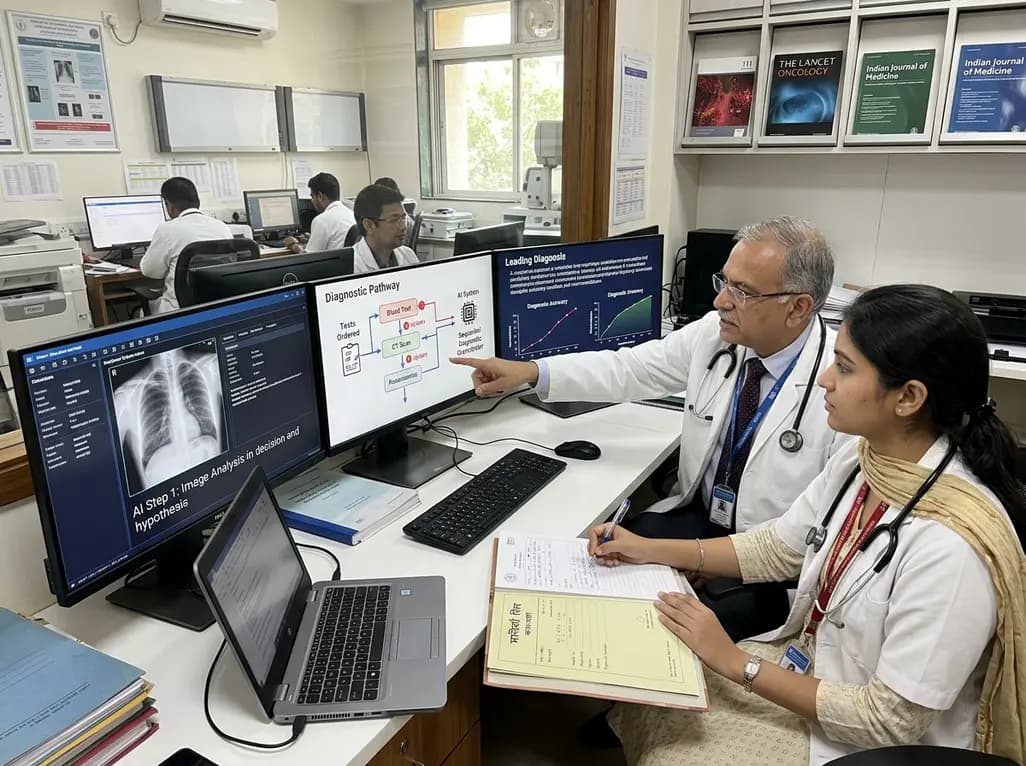
A breakthrough peer-reviewed study demonstrates that a sequential AI diagnosis system can mirror real-world clinical reasoning. By ordering stepwise tests and updating hypotheses dynamically, this multi-agent orchestrator achieved superior diagnostic accuracy while reducing investigative costs.
Today

A prenatal case highlights severe glutaric acidemia type II presenting as bilateral hyperechoic cystic kidneys at 18 weeks. Whole-exome sequencing revealed a novel homozygous ETFDH frameshift variant, demonstrating the power of rapid genetic testing in fetal renal anomalies.
Today

Review how tailored exercise programs benefit frail older patients with heart failure. Explore pathophysiological mechanisms, individualized training prescriptions, and strategies to overcome adherence barriers in clinical practice.
Yesterday

This comparative study evaluates posterior labral tears with and without glenohumeral instability, highlighting distinct demographic patterns, MRI underestimation in stable shoulders, and successful arthroscopic repair outcomes.
Yesterday

A clinical study demonstrates that early intervention with tocilizumab, either as monotherapy or bridged with corticosteroids, achieves significant proptosis reduction and resolves active inflammation in treatment-naive thyroid eye disease.
Yesterday
