.webp&w=384&q=75)

Loading, please wait...
Loading, please wait...
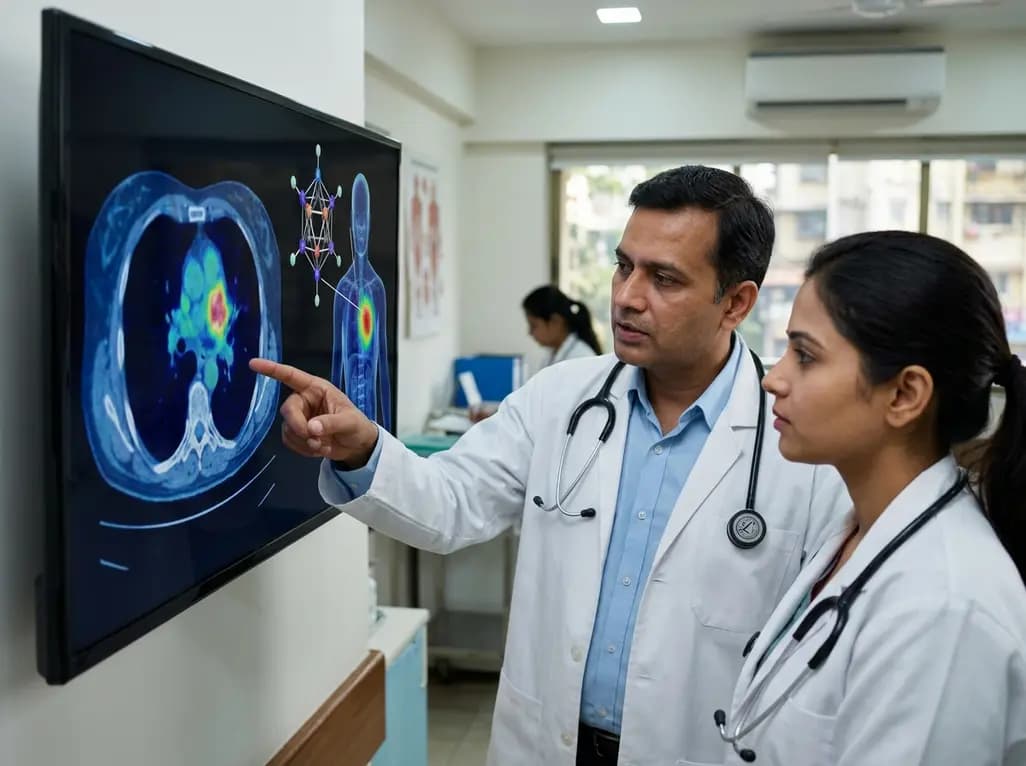
For several decades, the medical community has recognized the potential of Boron Neutron Capture Therapy (BNCT) as a revolutionary modality for treating aggressive malignancies. This binary-targeted radiotherapeutic approach relies on the selective accumulation of boron-10 isotopes within tumor cells followed by irradiation with low-energy thermal neutrons. When these neutrons interact with boron-10, they trigger a localized nuclear fission reaction that releases high-energy alpha particles and lithium nuclei. Because these particles have a very short path length, they destroy the cancerous cells while sparing the adjacent healthy tissue. However, despite this elegant radiobiological rationale, the global translation of BNCT has been significantly hampered by the lack of high-performance boron delivery agents that can achieve the necessary tumor-to-blood ratios. Most clinicians currently rely on second-generation agents like boronophenylalanine, but these often suffer from suboptimal accumulation and limited metabolic stability. To truly realize the potential of this precision medicine, researchers must develop agents that combine high boron density with excellent physiological solubility and precise targeting mechanisms.
Icosahedral carboranes represent a class of boron clusters that hold unparalleled potential for the development of modern Boron Neutron Capture Therapy agents. These unique 3D architectures offer an exceptional boron density, which is critical for delivering a sufficient therapeutic payload to the tumor site. Furthermore, their extraordinary metabolic stability ensures that the boron remains localized and intact during the delivery process. Despite these advantages, the clinical use of carboranes has faced long-standing obstacles including their intrinsic superhydrophobicity and poor tumor targeting capabilities. Most traditional carborane derivatives require complex chemical modifications that are difficult to scale, often resulting in limited theragnostic modifiability. Consequently, there is an urgent need for new chemical strategies that can transform these hydrophobic clusters into multifunctional building blocks. By addressing these structural limitations, we can enhance the pharmacokinetic profile of carboranes, making them suitable for widespread clinical application in oncology and radiology departments across India and the world.
Recent research by Zhou P et al. has introduced a transformative electron donor-acceptor (EDA) complex-based strategy for the controllable generation of boron-centered carboranyl radicals. This innovative approach utilizes N-hydroxyphthalimide (NHPI) carboranyl carboxyl esters to facilitate a room-temperature photochemical reaction without the need for traditional metal catalysts or harsh additives. By leveraging the EDA complex-mediated radical pathway, scientists can now achieve unsymmetrical B-B bond construction with unprecedented precision. Furthermore, this photochemical strategy is remarkably scalable, as evidenced by the successful decagram-scale production achieved via a continuous-flow system. This transition from laboratory-scale experiments to industrial-grade production is vital for the eventual commercialization and clinical adoption of these agents. This methodology not only simplifies the chemical synthesis process but also ensures that the resulting boryl-carboranes maintain their structural integrity throughout the manufacturing cycle. Such advancements in chemical engineering are essential for ensuring a steady supply of high-quality boron agents for future clinical trials.
The primary advantage of the newly developed boryl-carboranes lies in their pendant borane moiety, which serves as a versatile site for further functionalization. This moiety is readily converted into B(OH)2 groups, which significantly enhance the aqueous solubility of the molecule and facilitate tumor-specific targeting. In the context of Boron Neutron Capture Therapy, high solubility is mandatory to allow for intravenous administration and efficient systemic distribution. Moreover, the enhanced affinity for tumor cells ensures that the boron payload accumulates specifically within the malignant tissue rather than being cleared rapidly or accumulating in healthy organs. In vitro and in vivo studies have already demonstrated that these boryl-carboranes exhibit a favorable biosafety profile and superior boron uptake compared to clinically established agents like boronophenylalanine. By effectively overcoming the 'superhydrophobicity' of traditional carboranes, this platform paves the way for more effective and less toxic treatment regimens for patients with difficult-to-treat cancers.
Beyond its therapeutic potential, the boryl-carborane platform offers unique opportunities for theragnostic integration through fluorine-18 PET imaging. By converting the borane moiety to BFK (trifluoroborate), clinicians can integrate positron emission tomography (PET) into the treatment planning process. This allows for the real-time visualization of boron distribution and quantification of tumor uptake prior to neutron irradiation. Such an approach is highly valuable in a clinical setting, as it enables personalized dosimetry and ensures that only patients with sufficient boron accumulation proceed to the radiotherapy phase. Furthermore, the ability to monitor the pharmacokinetic behavior of the drug in vivo provides critical data for optimizing treatment timing. This dual-purpose functionality—combining therapeutic delivery with diagnostic imaging—represents a major leap forward in the development of 'smart' boron carriers. It aligns with the growing trend toward precision oncology, where treatment is tailored to the unique physiological profile of each patient’s tumor.
The successful development and scalable synthesis of boryl-carboranes have significant implications for the future of Boron Neutron Capture Therapy in India. As hospital-compatible accelerator-based neutron sources become more accessible, the availability of high-performance boron agents will be the deciding factor in the success of this modality. The ability to produce these agents on a decagram scale using continuous-flow chemistry suggests that the manufacturing costs could eventually be reduced, making the treatment more affordable for a broader patient population. Furthermore, the superior tumor uptake and accumulation observed in preclinical studies suggest that these agents could improve survival outcomes for patients with recurrent glioblastoma, head and neck cancers, and other aggressive tumors. Clinicians should remain informed about these advancements in boron cluster chemistry, as they represent the next frontier in targeted radiotherapy. Moving forward, large-scale clinical trials will be necessary to validate these findings and establish standardized protocols for the integration of boryl-carboranes into routine oncological practice.
The formation of the unsymmetrical B-B bond via boron-centered carboranyl radicals allows for the creation of multifunctional building blocks. This structural modification enables the attachment of specific moieties that improve aqueous solubility and tumor targeting. Consequently, it addresses the traditional limitation of carboranes being too hydrophobic for effective medical use, ensuring they can be administered safely and reach therapeutic concentrations within malignant tissues while being easily modified for imaging.
The electron donor-acceptor (EDA) strategy is a significant improvement because it is additive-free and operates at room temperature using light as the energy source. Traditional synthesis methods often require harsh conditions and expensive catalysts that are difficult to scale. By using a continuous-flow system, this new method allows for decagram-scale production, which is essential for providing enough material for clinical trials and large-scale hospital use, ensuring consistency and purity.
Integrating F-PET imaging via the BFK moiety allows clinicians to visualize the exact distribution of boron in the body before the patient is exposed to neutron radiation. This theragnostic approach ensures that the tumor has absorbed enough boron to make the treatment effective. It also helps in protecting healthy tissues by confirming that the agent is not accumulating in sensitive areas, thereby personalizing the treatment and improving overall patient safety and therapeutic outcomes.
Disclaimer: This content is for informational and educational purposes only and does not constitute medical advice. The synthesis and application of these chemical agents are currently under research. Clinicians should refer to the latest local and national guidelines for clinical practice regarding oncology and radiotherapy.
References
Zhou P et al. Scalable B-B Single-Bond Formation via Boron-Centered Carboranyl Radicals: Boryl-Carborane for Boron Neutron Capture Therapy Applications. J Am Chem Soc. 2026 Jul 14. doi: 10.1021/jacs.6c09199. PMID: 42444541.
Barth RF et al. Boron neutron capture therapy: current status and future perspectives. Cancer Communications. 2018; 38:35.
Sauerwein WAG et al. Neutron Capture Therapy: Principles and Applications. Springer Publishing; 2024.
"
Read summarized clinical updates, watch expert medical content, and earn CME certifications right from your smartphone.
Open your smartphone camera to scan and install.





A breakthrough in boron chemistry offers scalable, multifunctional boryl-carboranes that overcome traditional solubility and targeting hurdles. These agents integrate PET imaging and exhibit superior tumor accumulation, marking a major step forward for next-generation Boron Neutron Capture Therapy.
3 months ago

As monsoon seasons elevate arboviral disease threats, Tamil Nadu has initiated an ICMR-monitored evaluation of the tetravalent dengue vaccine in Tenkasi district. Clinicians emphasize clinical monitoring, public prevention, and high-quality early pediatric care to reduce disease morbidity across endemic regions.
Today

Leucine Rich Bio has introduced South Asia's first comprehensive vaginal microbiome test, BugSpeaks. By profiling microbial dysbiosis, pathogens, and antimicrobial resistance, this next-generation diagnostic platform provides clinicians with deeper insights into recurrent infections, fertility, and reproductive health.
Today

Review how tailored exercise programs benefit frail older patients with heart failure. Explore pathophysiological mechanisms, individualized training prescriptions, and strategies to overcome adherence barriers in clinical practice.
Today

This comparative study evaluates posterior labral tears with and without glenohumeral instability, highlighting distinct demographic patterns, MRI underestimation in stable shoulders, and successful arthroscopic repair outcomes.
Today

A clinical study demonstrates that early intervention with tocilizumab, either as monotherapy or bridged with corticosteroids, achieves significant proptosis reduction and resolves active inflammation in treatment-naive thyroid eye disease.
Today
