.webp&w=384&q=75)

Loading, please wait...
Loading, please wait...
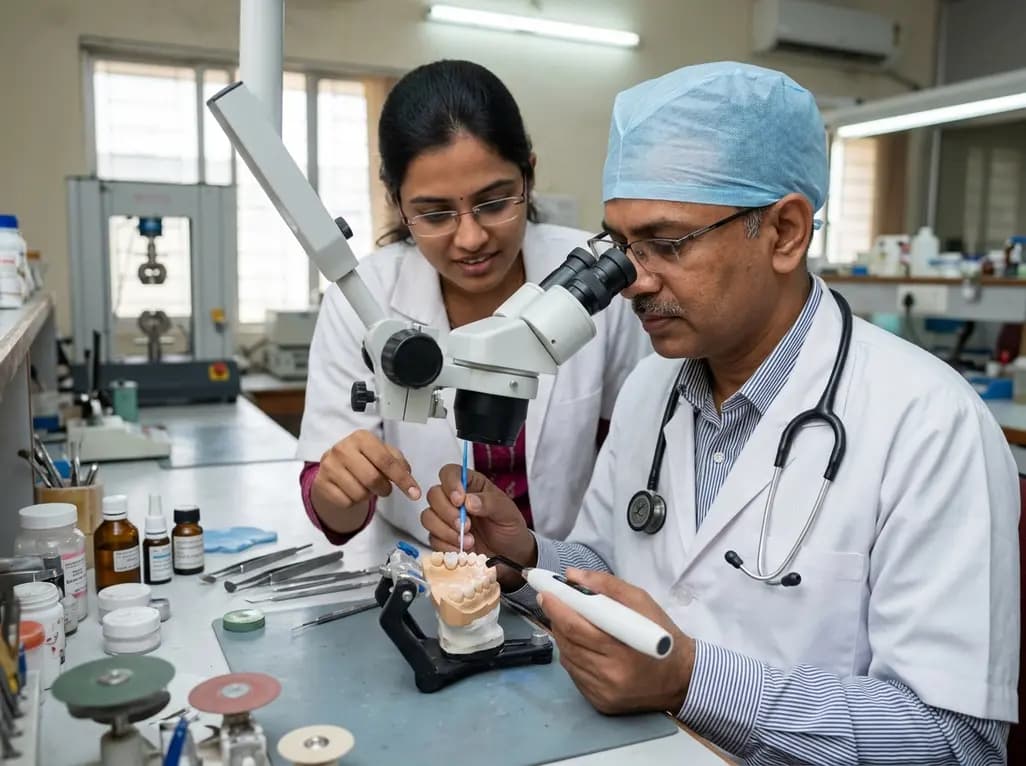
Contemporary restorative dentistry increasingly relies on translucent zirconia grades to meet high aesthetic and functional demands. However, achieving durable resin bonding while preserving the structural integrity of high-translucency ceramics remains a persistent challenge. A novel borosilicate glass coating has emerged as a promising surface modification strategy to address this issue. Clinicians frequently encounter bonding challenges with polycrystalline ceramics because zirconia lacks an inherent silica glass phase. Consequently, traditional hydrofluoric acid etching does not produce the micromechanical retentive pattern seen in glass-ceramics. Standard airborne-particle abrasion and tribochemical silica coating provide acceptable retention, but they frequently introduce surface microcracks that compromise fatigue resistance under masticatory loads. Evaluating innovative surface conditioning techniques therefore represents a vital step toward improving long-term restoration survival.
Dental zirconia has undergone substantial compositional evolution over the past decade. Traditional 3Y-TZP offers superior fracture toughness, yet its relative opacity often limits aesthetic outcomes in anterior aesthetic zones. Consequently, manufacturers introduced partially stabilized formulations, such as 4Y-PSZ and multilayer 5Y-PSZ ceramics, to enhance optical translucency. However, higher yttria concentrations increase the isotropic cubic phase, which lacks transformation toughening mechanisms. Therefore, these newer generations exhibit lower baseline flexural strength and heightened susceptibility to surface-induced flaws. Standard mechanical conditioning methods, including aluminum oxide sandblasting, generate stress concentrations that accelerate subcritical crack propagation. When dentists subject these modified ceramics to cyclic chewing forces, premature cohesive or adhesive failure can occur. As a result, researchers continue to explore alternative chemical conditioning techniques that establish robust micromechanical retention while preserving intrinsic mechanical strength.
The application of a specialized borosilicate glass coating provides an innovative biochemical bridge between non-reactive zirconia and resin-based luting agents. Specifically, practitioners apply an engineered borosilicate-based glass slurry onto the pre-sintered or fully sintered zirconia surface. The subsequent thermal treatment facilitates chemical fusion, thereby creating a stable, thin, silica-rich vitreous layer on the polycrystalline substrate. Furthermore, clinicians can etch this synthetic glass layer with standard hydrofluoric acid to create intricate microretentive microporosities. Subsequently, applying a silane coupling agent enables covalent chemical bonding between the silica network and methacrylate groups in the resin cement. Because this method eliminates high-pressure grit blasting, it avoids destructive microcracking and aggressive monoclinic phase shifting. Thus, the glass deposition protocol fundamentally preserves the bulk ceramic architecture while offering optimal surface conditioning for adhesive dentistry.
A recent comprehensive laboratory investigation evaluated the performance of structural multilayer (4Y/5Y-PSZ) and monolithic 4Y-PSZ zirconias under severe mechanical fatigue. Investigators prepared calibrated disc specimens and assigned them to distinct surface conditioning protocols: silane application alone, airborne-particle abrasion with silane, tribochemical silica coating with silane, and the experimental borosilicate glass treatment followed by hydrofluoric acid etching and silane priming. Following adhesive cementation, the researchers subjected the specimens to accelerated cyclic fatigue comprising 1.2 million cycles at 295 N and 4 Hz, effectively simulating five years of continuous clinical mastication. Furthermore, the team assessed biaxial flexural strength to measure residual mechanical performance. They also conducted rigorous surface roughness measurements, X-ray diffraction phase analyses, and scanning electron microscopy to monitor structural alterations occurring at the adhesive interface.
The experimental findings demonstrated that surface conditioning protocols significantly influence the post-fatigue biaxial flexural strength of both zirconia materials. Specifically, specimens conditioned with the borosilicate glass system exhibited outstanding mechanical resilience, outperforming or matching traditional tribochemical coating. In contrast, standard sandblasting often induced deep surface flaws that diminished post-fatigue flexural values. Moreover, X-ray diffraction analyses revealed that the thermal conditioning associated with borosilicate deposition did not trigger detrimental tetragonal-to-monoclinic phase transformations. Instead, the coated layer maintained stable crystallographic proportions across both multilayer and monolithic substrates. Consequently, the coated zirconia resisted fatigue-induced degradation far more effectively during long-term cyclic loading. These results confirm that fusing a silica-rich borosilicate network protects underlying high-translucency zirconia from stress-induced microstructural destabilization.
Detailed surface characterization demonstrated that the experimental glass application altered topographic morphology without generating destructive stress risers. Surface roughness assessments showed uniform, controlled microroughness after hydrofluoric acid etching of the borosilicate layer. Furthermore, scanning electron microscopy confirmed homogeneous glass fusion with intimate substrate adaptation, preventing interfacial delamination during severe cyclic fatigue. Energy-dispersive X-ray spectroscopy identified consistent silicon and boron distribution across the treated surfaces, verifying a reliable chemical receptive field for silane coupling. Unlike airborne abrasion, which leaves sharp microfissures and irregular defects, the etched glass layer presented rounded microretentive cavities. As a result, the resin cement achieved excellent mechanical interlocking and uniform stress dissipation during loading cycles. Thus, the microstructure remained robust, minimizing localized microfractures at the interface.
These findings offer valuable clinical guidance for restorative dentists, prosthodontists, and dental laboratory technicians utilizing modern zirconia materials. Multilayer and 4Y-PSZ restorations are increasingly chosen for minimally invasive veneers, inlays, onlays, and full-coverage crowns. However, clinical success depends heavily on gentle yet durable adhesive bonding protocols. The borosilicate coating method provides an effective alternative to aggressive mechanical sandblasting, especially for aesthetic ceramics that possess lower intrinsic fracture toughness. Consequently, clinicians can achieve high bond durability with resin cements without risking premature catastrophic ceramic fracture. Additionally, maintaining surface integrity prevents moisture ingress and hydrolytic degradation at the restoration margins. As material formulations evolve, adopting advanced surface fusion techniques will help practitioners deliver longer-lasting, aesthetic indirect restorations in routine daily dental practice.
Sandblasting creates irregular microcracks and stress concentrations that weaken translucent 4Y and 5Y zirconia grades. In contrast, applying a borosilicate glass layer produces a smooth, silica-rich surface suitable for hydrofluoric acid etching. Consequently, this chemical approach establishes superior micromechanical retention and preserves the baseline flexural strength of fragile restorative materials during masticatory function.
Mechanical fatigue testing applies cyclic loads over millions of repetitions, closely mimicking intraoral chewing patterns and thermal stresses. This continuous dynamic loading reveals subcritical crack propagation and adhesive interface degradation that static testing often misses. Therefore, fatigue evaluations provide clinicians with reliable predictability regarding the long-term clinical survival of bonded ceramic restorations.
Hydrofluoric acid cannot etch untreated polycrystalline zirconia effectively because the material lacks an amorphous glass matrix. Applying acid to raw zirconia only removes surface contamination without creating micromechanical undercuts. However, fusing a borosilicate glass layer onto the zirconia provides the necessary silicate phase, enabling successful hydrofluoric acid etching and silane bonding.
Disclaimer: This content is for informational and educational purposes only. It is not intended to substitute for professional medical advice, diagnosis, or treatment. Always seek the advice of your physician or other qualified health provider with any questions you may have regarding a medical condition. Never disregard professional medical advice or delay in seeking it because of something you have read here. Refer to the latest local and national guidelines for clinical practice.
References

Read summarized clinical updates, watch expert medical content, and earn CME certifications right from your smartphone.
Open your smartphone camera to scan and install.





A novel borosilicate glass coating significantly improves the biaxial flexural strength, fatigue resistance, and surface adhesion of multilayer and 4Y-PSZ dental zirconias without inducing adverse phase transformations, offering a reliable surface treatment for indirect restorations.
last month

A recent clinical report details an atypical presentation of bilateral proptosis as the primary manifestation of aggressive multiple myeloma. Explore the diagnostic pathway, imaging findings, and critical multidisciplinary management strategies essential for handling extramedullary plasma cell dyscrasias.
Today

Prenatal evaluation of fetal growth restriction requires an integrated diagnostic approach. While chromosomal microarray remains fundamental, exome sequencing offers significant diagnostic yield in isolated and syndromic cases, especially when ultrasound shows skeletal anomalies or normal placental function.
Today
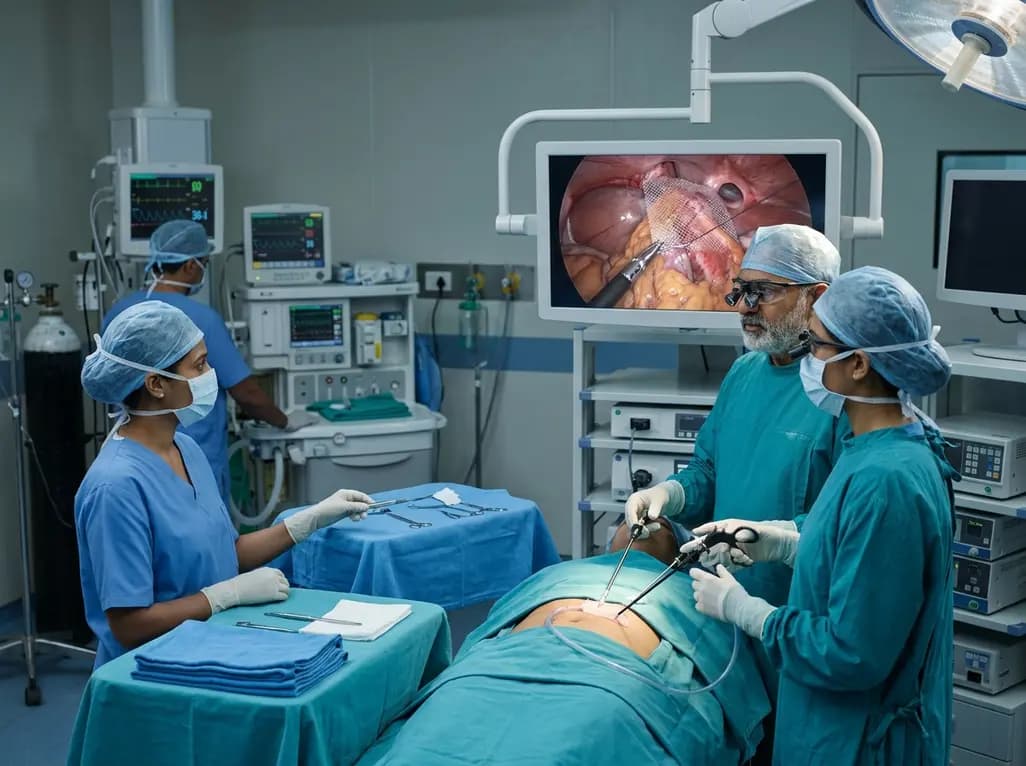
Discover a novel laparoscopic approach for iatrogenic diaphragmatic hernia repair following pedicled omentoplasty. This modified Sugarbaker technique integrates dorsal pedicle lateralization and round ligament reinforcement to secure the diaphragmatic defect while preserving vital omental vascularity.
Today

High-grade trochlear dysplasia disrupts patellofemoral stability. Although the patellotrochlear index measures cartilage overlap on MRI, cartilage contact does not ensure osseous containment. Relying solely on two-dimensional metrics may lead surgeons to overlook necessary tibial tubercle osteotomy procedures.
Today
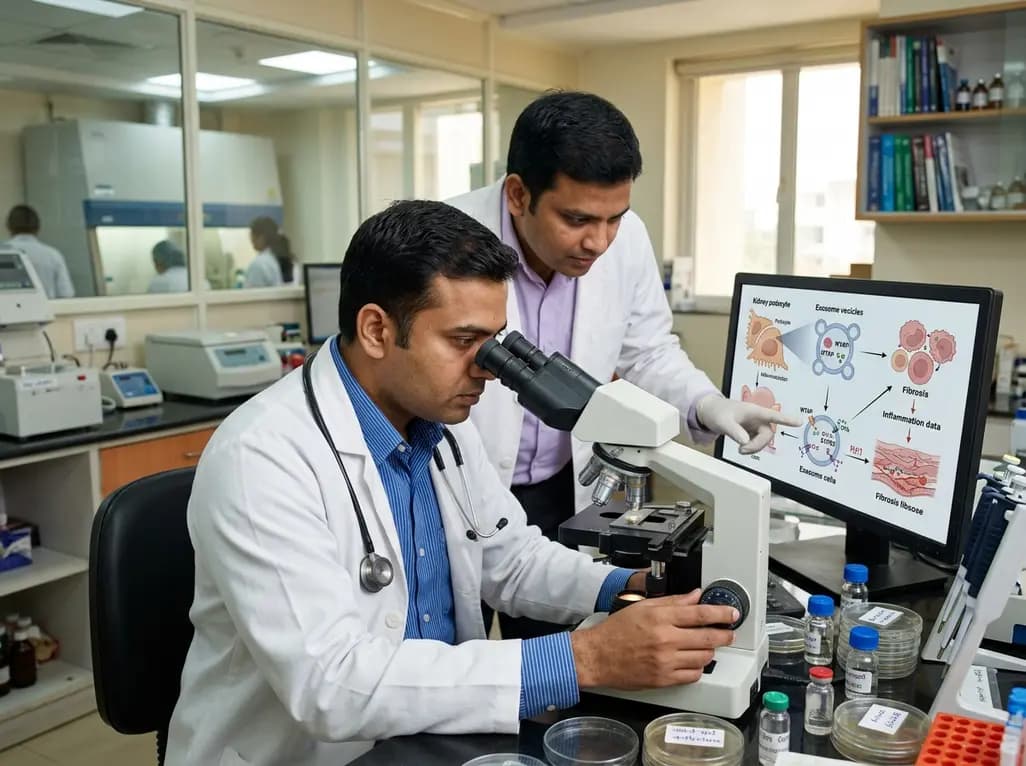
New research reveals that M1 macrophage-derived exosomes aggravate diabetic nephropathy by transferring WTAP to stabilize S1PR2 mRNA. Silencing WTAP in these vesicles attenuates endothelial injury and renal fibrosis, pointing toward innovative nanomedicine therapies.
Today
