.webp&w=384&q=75)

Loading, please wait...
Loading, please wait...
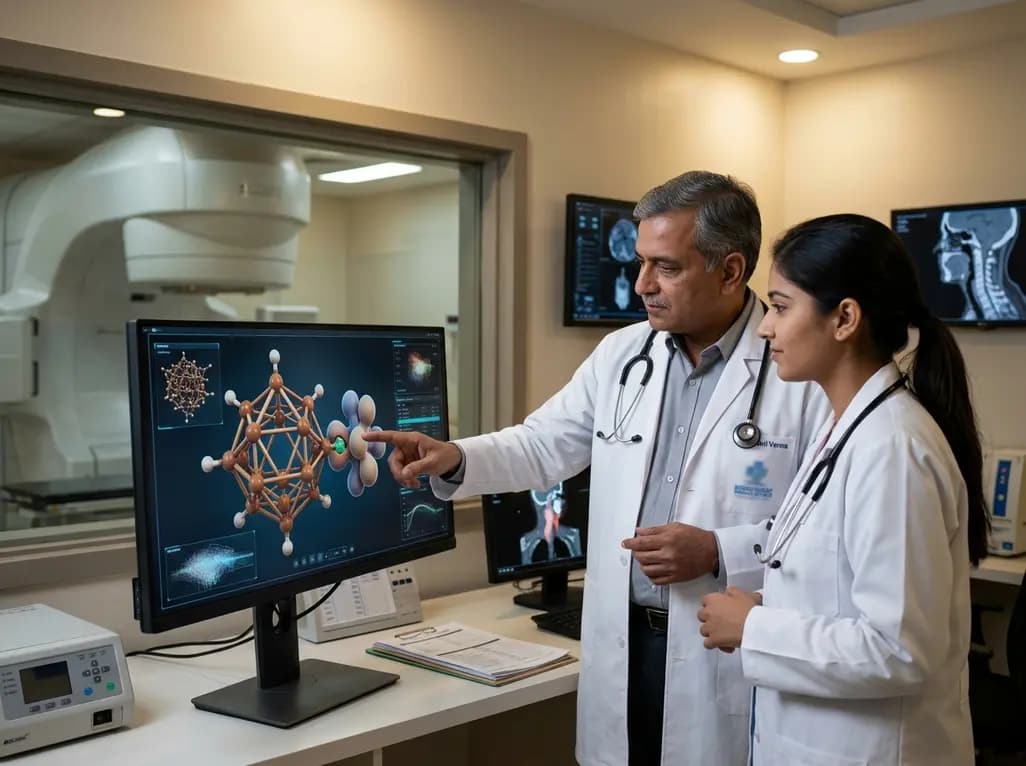
A recent breakthrough in synthetic chemistry has introduced a palladium-catalyzed approach for the selective carbonylation of carboranes. This method facilitates the creation of boron cluster carboxylic acids under mild conditions. Consequently, it addresses a long-standing challenge in drug design and material science. Traditional techniques often struggled with the inherent inertness of B-H bonds. However, this new strategy simplifies the introduction of carbonyl groups into specific sites on carborane clusters.
The ability to precisely modify carboranes is highly relevant for medicinal chemistry. For instance, carborane clusters serve as essential scaffolds in Boron Neutron Capture Therapy (BNCT). This targeted radiation treatment relies on high boron concentrations within malignant cells. Furthermore, researchers have successfully conjugated these clusters with bioactive molecules and drug scaffolds. Notably, the carboxylate functionality acts as a versatile platform for transformations like fluorination, azidation, and borylation. In addition, the reaction exhibits excellent atom economy and a broad substrate scope.
Moreover, the experimental and computational studies highlight the dual role of carbon monoxide. It functions both as a carbonylation source and a π-acid ligand. This dual action enhances the electrophilicity of the palladium center. Therefore, the process improves regioselectivity and reduces the energy barrier for B-H bond activation. These methods provide access to previously inaccessible functionalized carboranes. Ultimately, this advancement empowers scientists to develop more potent and selective therapeutic agents.
They provide a versatile chemical scaffold that scientists can easily modify. This allows for the precise attachment of boron-rich clusters to bioactive molecules, enhancing drug efficacy and targeting in therapies like Boron Neutron Capture Therapy (BNCT).
Unlike traditional methods that require harsh conditions or halogenated precursors, this approach works at ambient temperature and pressure. It offers superior site selectivity and a simpler reaction process.
Disclaimer: This content is for informational and educational purposes only. It is not intended to be a substitute for professional medical advice, diagnosis, or treatment. Always seek the advice of your physician or other qualified health provider with any questions you may have regarding a medical condition. Never disregard professional medical advice or delay in seeking it because of something you have read here. Refer to the latest local and national guidelines for clinical practice.
References
Liu J et al. Pd-Catalyzed Facile and Selective B-H Carbonylation Leading to Boron Cluster Carboxylic Acids for Diverse Transformations. J Am Chem Soc. 2026 Jun 10. doi: 10.1021/jacs.6c07496. PMID: 42267518.
Frooman MB, Deb MK, Peters J, et al. Recent Advancements in the Diversification and Applications of Boron-Containing Compounds in Medicinal Chemistry. Pharmaceuticals (Basel). 2025;18(12):1798. doi:10.3390/ph18121798
Issa F, Kassiou M, Rendina LM. Boron in drug discovery: carboranes as unique pharmacophores in biologically active compounds. Chem Rev. 2011;111(10):5701-5722. doi:10.1021/cr100181b

Read summarized clinical updates, watch expert medical content, and earn CME certifications right from your smartphone.
Open your smartphone camera to scan and install.





Researchers have developed a palladium-catalyzed method to create boron cluster carboxylic acids. This breakthrough simplifies the functionalization of carborane clusters, offering a versatile platform for drug design and material synthesis, especially for therapies like Boron Neutron Capture Therapy.
4 months ago

Novel diimide and hydrazone scaffolds, particularly compound #C4, synergistically reactivate latent HIV-1 when combined with JQ1 or PKC activators. Demonstrating donor-matched proviral transcription ex vivo and non-canonical signaling, these findings advance shock and kill strategies toward reservoir eradication.
Today

A cross-sectional study reveals that maternal RSV vaccination coverage reached only 43.7% in Argentina, with maternal vaccine knowledge being the sole independent predictor of uptake. Clinicians play a crucial role in eliminating informational and structural barriers to optimize infant health.
Today

Review how tailored exercise programs benefit frail older patients with heart failure. Explore pathophysiological mechanisms, individualized training prescriptions, and strategies to overcome adherence barriers in clinical practice.
Yesterday

This comparative study evaluates posterior labral tears with and without glenohumeral instability, highlighting distinct demographic patterns, MRI underestimation in stable shoulders, and successful arthroscopic repair outcomes.
Yesterday

A clinical study demonstrates that early intervention with tocilizumab, either as monotherapy or bridged with corticosteroids, achieves significant proptosis reduction and resolves active inflammation in treatment-naive thyroid eye disease.
Yesterday
