

Loading, please wait...
Loading, please wait...

Spinal trauma represents a devastating global health burden, inflicting severe physical disability and high mortality, particularly in low- and middle-income countries. Standard international guidelines frequently assume immediate access to tertiary infrastructure and advanced surgical technology. However, resource-constrained hospitals require adaptable, evidence-informed solutions. The BOOTStrap-SCI study provides consensus-based, resource-tiered recommendations that fundamentally transform acute spinal cord injury management across diverse clinical environments.
Traumatic spinal injuries cause catastrophic neurological harm and immense economic strain, especially in developing nations where trauma systems remain fragmented. Standard guidelines from high-income countries universally recommend prompt magnetic resonance imaging, advanced neuro-monitoring, and dedicated neuro-intensive care. Unfortunately, district and community hospitals throughout low- and middle-income regions routinely lack computed tomography scanners, specialized operating equipment, and trained spine surgeons. Consequently, healthcare providers in these centres cannot implement high-income protocols.
Because spinal trauma predominantly affects young individuals, inadequate clinical care plunges families into long-term financial hardship. Peripheral clinicians must regularly make critical stabilization decisions without advanced hemodynamic tools or specialized consultation. Therefore, global neurotrauma authorities emphasize that spine care requires flexible, tiered recommendations rather than rigid mandates. The BOOTStrap-SCI consensus directly addresses these profound structural inequities. By recognizing that clinical resources vary drastically between institutions, this initiative establishes practical care algorithms tailored to local equipment, hospital staffing, and technical infrastructure. Ultimately, this pragmatic approach ensures that clinicians can deliver rational, standardized emergency care despite severe resource limitations.
To establish reliable, context-specific recommendations, international investigators organized a comprehensive modified Delphi consensus methodology. The expert steering committee brought together neurosurgeons, orthopedic spine surgeons, intensivists, and emergency physicians from low-, middle-, and high-income nations. This balanced geographical representation ensured that all resulting guidelines remained clinically rigorous while remaining practical for austere clinical settings.
The expert panel completed multiple iterative rounds of literature review, structured debate, and anonymous voting. Initially, participants evaluated existing clinical evidence to identify interventions that deliver high neuroprotective value without requiring expensive technology. Subsequently, the panel formulated tiered strategies addressing airway stabilization, hemodynamic optimization, surgical indications, and postoperative critical care. The Delphi process attained high consensus across all clinical domains. Moreover, the experts prioritized operational clarity, enabling district medical officers and general practitioners to interpret each treatment algorithm rapidly. Consequently, this collaborative process produced five stratified clinical protocols tailored specifically for distinct healthcare facility tiers. Through this consensus-driven framework, the initiative bridges the gap between academic evidence and real-world clinical feasibility.
The BOOTStrap-SCI guidelines present three distinct surgical pathways structured around available imaging technology and operating theatre capabilities. In basic facilities lacking diagnostic imaging, surgeons focus strictly on clinical assessment, manual spinal immobilization, and continuous neurological observation. Clinicians maintain rigid immobilization while expediting transport to higher-level facilities whenever progressive neurological deficits appear.
In intermediate facilities equipped with plain radiography, clinicians utilize static and dynamic X-rays to assess spinal alignment and gross mechanical instability. In this tier, trained surgeons perform closed reduction of cervical dislocations under plain film guidance. Furthermore, general or orthopedic surgeons may perform emergent decompressive surgery if progressive deficits appear and inter-hospital transfer is impossible. In advanced facilities featuring computed tomography and magnetic resonance imaging, surgical teams execute definitive early decompression and instrumented stabilization within 24 hours of injury. Advanced imaging enables precise visualization of cord compression, bony canal compromise, and ligamentous disruption. Therefore, each surgical tier delivers actionable clinical directives matched directly to local institutional capabilities, preventing unsafe delays in essential operative decompression.
Intensive care represents a vital pillar in preventing secondary spinal cord injury following acute mechanical trauma. The BOOTStrap-SCI consensus delineates two distinct intensive care protocols, differentiating between postoperative recovery areas and specialized intensive care units. Systemic hypotension and hypoxia severely aggravate spinal cord ischemia; therefore, both protocols vigorously prioritize hemodynamic optimization.
In fully equipped intensive care units, critical care specialists maintain mean arterial pressure between 85 and 90 mmHg for five to seven days. Intensivists achieve this target using titrated vasopressors, such as noradrenaline, alongside judicious crystalloid hydration and invasive arterial pressure monitoring. Additionally, teams maintain blood oxygen saturation above 92 percent to protect vulnerable neural tissue. Conversely, in basic postoperative recovery wards lacking invasive lines, staff maintain systolic blood pressure above 100 mmHg using non-invasive monitoring and basic fluid boluses. Furthermore, nurses implement strict turning schedules to prevent pressure ulcers and administer venous thromboembolism prophylaxis. Through these tiered measures, care teams deliver robust physiological neuroprotection despite financial constraints.
In low- and middle-income nations like India, trauma capabilities vary widely between major metropolitan centres and peripheral district hospitals. Premier academic hospitals provide cutting-edge neurosurgical care, whereas rural community health centres often manage acute spinal trauma without on-site specialists. Consequently, the BOOTStrap-SCI tiered recommendations offer immense clinical and operational value for resource-variable healthcare systems.
For rural medical officers and district surgeons, the basic and intermediate protocols provide indispensable clinical guidance during the vulnerable early hours following trauma. Clinicians can confidently maintain spinal precautions, stabilize hemodynamic parameters, and coordinate safe transfer through regional emergency networks. Moreover, public health authorities can integrate these stratified algorithms into national trauma systems, establishing clear referral triggers and practical quality benchmarks. Training emergency healthcare workers on standardized motor and sensory examinations ensures accurate baseline documentation before patient transit. In addition, future efforts must focus on establishing prospective registries to validate these stratified protocols in real-world clinical practice. Ultimately, adopting these adaptable guidelines will reduce preventable secondary morbidity and promote equitable trauma care worldwide.
The consensus divides surgical facilities into three distinct operational tiers based on available imaging infrastructure. Basic facilities operate without diagnostic imaging, intermediate centres possess plain X-ray capability, and advanced facilities utilize computed tomography and magnetic resonance imaging. Each tier provides practical guidance for conservative management, emergency operative decompression, or safe inter-hospital transfer.
In advanced intensive care units with invasive arterial lines, clinicians maintain mean arterial pressure between 85 and 90 mmHg for five to seven days. Conversely, in resource-limited recovery areas lacking invasive equipment, teams maintain systolic blood pressure strictly above 100 mmHg using fluid optimization and non-invasive monitoring to prevent secondary ischemia.
Standard international spine guidelines often demand immediate magnetic resonance imaging and specialized neuro-intensive care, which remain unavailable in many developing regions. Stratified protocols offer realistic, context-sensitive alternatives that empower district clinicians to prevent secondary neurological injury, optimize surgical timing, and safely stabilize patients using existing local hospital resources.
Disclaimer: This content is for informational and educational purposes only and should not be used as a substitute for professional medical advice, diagnosis, or treatment. Always seek the advice of your physician or other qualified healthcare provider with any questions you may have regarding a medical condition. Refer to the latest local and national guidelines for clinical practice.
References

Read summarized clinical updates, watch expert medical content, and earn CME certifications right from your smartphone.
Open your smartphone camera to scan and install.





The BOOTStrap-SCI initiative introduces consensus-based, resource-stratified protocols for spinal trauma and spinal cord injury. Tailored for resource-limited settings, the framework provides tiered algorithms for surgical management, hemodynamic support, and critical care across variable healthcare levels.
Today

A large network analysis of middle-aged and older adults reveals distinct sex-specific dependency pathways between lifestyle factors and cardiometabolic diseases. Physical activity, smoking, and alcohol exhibit divergent bridging roles in men and women, underscoring the need for tailored clinical prevention.
Today

A meta-analysis of 9 randomized controlled trials evaluated health-related quality of life when adding PD-1/PD-L1 inhibitors to standard therapy for endometrial and cervical cancer. Adding immunotherapy did not detectably change global quality of life or worsen functional and symptom domains.
Today

A cross-sectional study evaluates the critical intersection between acute surgical pain, kinesiophobia, and fall risks during initial mobilization after cardiac surgery, emphasizing targeted nursing strategies.
Today

A landmark study reveals that patellofemoral cartilage defects in patients with trochlear dysplasia are primarily driven by patellar maltracking and spur height rather than dislocation frequency or shape mismatch, offering crucial insights for preoperative imaging and surgical stabilization.
Today
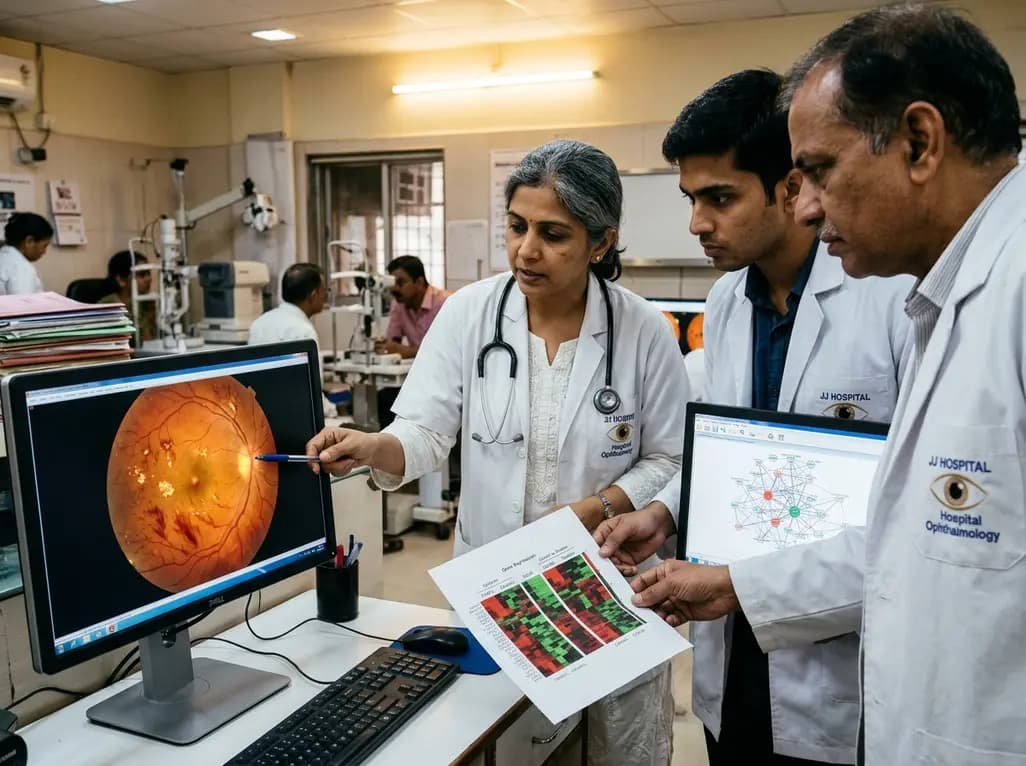
Single-cell transcriptomics reveals that STAP2 promotes retinal endothelial dysfunction in diabetic retinopathy through CXCR4 signaling. In vivo and in vitro studies show STAP2 knockdown reduces capillary drop-out and vascular leakage, uncovering a novel therapeutic target beyond anti-VEGF therapies.
Today
