.webp&w=384&q=75)

Loading, please wait...
Loading, please wait...
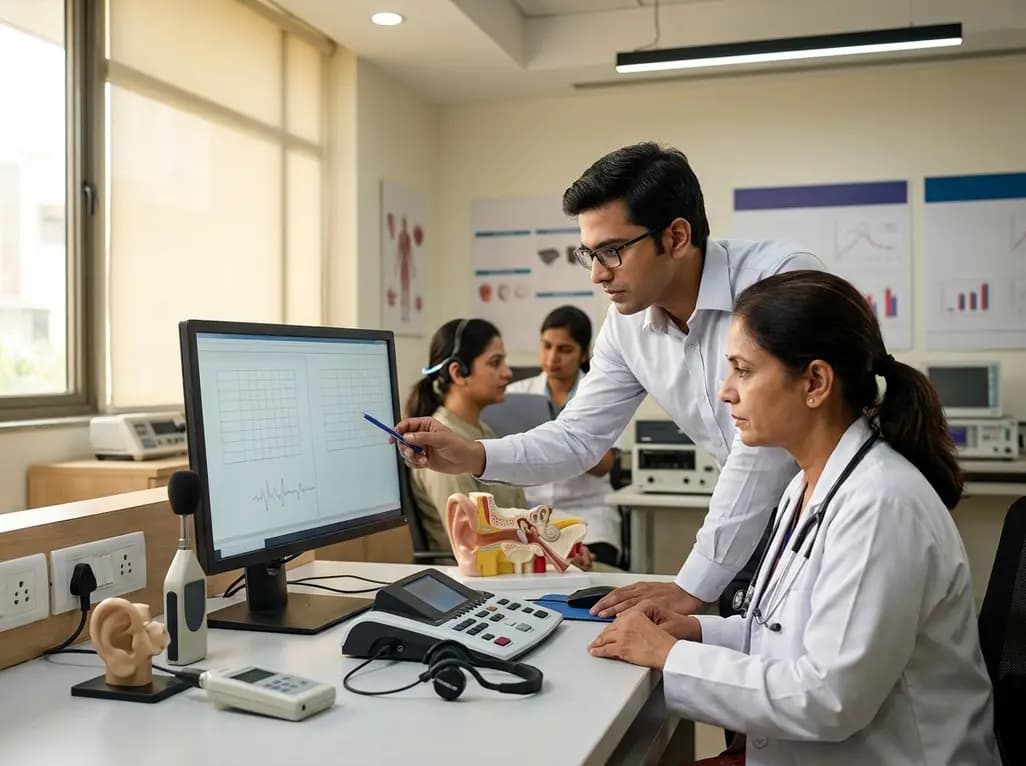
Audiologists and ENT specialists often encounter challenges when performing auditory brainstem responses (ABRs) due to incomplete calibration standards. While ISO 389-6 (2007) provides precise data for air-conduction signals, it historically lacked similar reference values for bone-conduction transducers. Consequently, many clinicians have relied on interim estimates for years. A recent study now provides the essential empirical data needed to refine bone-conduction audiometric calibration for short-duration signals, ensuring higher diagnostic precision in clinical practice.
Researchers focused their investigation on the RadioEar B81 bone vibrator, which is a standard instrument in modern audiology. By evaluating 27 otologically normal adults, the study derived specific Equivalent Threshold Vibratory Force Levels (ETVFLs) following procedures outlined in ISO 389-9. Notably, the team used the peak-to-peak equivalent method to characterize these levels. This approach allows for a more accurate representation of how short-duration signals, such as clicks and tonebursts, interact with bone-conduction equipment.
The results offer a comprehensive suite of median thresholds corresponding to 0 dB HL. For tonebursts at common center frequencies, the values with contralateral masking are 68 dB (0.5 kHz), 60.5 dB (1 kHz), 47.5 dB (2 kHz), and 44.5 dB (4 kHz) re: 1 µN. Additionally, the study established a click reference of 58 dB re: 1 µN under similar masking conditions. These data points provide a robust foundation for standardizing equipment that previously lacked clear guidance.
The significance of these findings lies in their ability to bridge the gap in existing international standards. Having standardized values allows for more reliable comparisons across various clinical settings and research institutions. Furthermore, these empirical references will likely enhance the accuracy of ABR interpretations, particularly for patients with complex conductive or mixed hearing losses. Therefore, integrating these values into daily practice can reduce the variability often associated with bone-conduction testing.
In summary, these new empirical values address the incomplete suite of references in ISO 389-6. By adopting these standards, manufacturers and clinicians can ensure that bone-conduction equipment is calibrated with the same rigor as air-conduction systems. This advancement represents a major step forward in the quest for global audiometric consistency.
It ensures that sensory thresholds are measured accurately when air-conduction pathways are obstructed, preventing diagnostic errors caused by uncalibrated equipment.
The study utilized the RadioEar B81 bone vibrator, which is recognized for its high output and low distortion compared to older models.
They fill a specific gap in ISO 389-6 (2007), which provided air-conduction values for tonebursts but lacked corresponding bone-conduction data.
Disclaimer: This content is for informational and educational purposes only and does not constitute medical advice. Always consult a qualified healthcare professional for diagnosis and treatment. Refer to the latest local and national guidelines for clinical practice.
References
Maslin MRD et al. Reference zero for the calibration of bone-conduction audiometric equipment using short-duration signals. Int J Audiol. 2026 Jun 06. doi: 10.1080/14992027.2026.2668498. PMID: 42250273.
ISO 389-6:2007. Acoustics — Reference zero for the calibration of audiometric equipment — Part 6: Reference threshold of hearing for test signals of short duration.
ISO 389-9:2009. Acoustics — Reference zero for the calibration of audiometric equipment — Part 9: Preferred test conditions for the determination of reference hearing threshold levels.

Read summarized clinical updates, watch expert medical content, and earn CME certifications right from your smartphone.
Open your smartphone camera to scan and install.





Researchers have established new empirical values for bone-conduction audiometric calibration, resolving a long-standing gap in international standards....
3 months ago

A new investigation demonstrates that middle cerebral artery blood velocity reactivity during the cold pressor test exhibits robust between-visit reproducibility comparable to systemic blood pressure, confirming its utility as a reliable neurovascular biomarker.
Today

India has achieved a historic public health milestone by administering over 80 lakh HPV vaccine doses to adolescent girls. Integrated into the U-WIN network and administered across government healthcare facilities, this nationwide campaign offers vital protection against cervical cancer and associated HPV infections.
Today

The Supreme Court rejected industry pleas for per-serve metrics, directing FSSAI to provide a firm timeline for mandatory front-of-pack food warning labels. Clinicians welcome this crucial regulatory intervention to curb rising rates of obesity, hypertension, and pediatric metabolic syndrome across India.
Today

A retrospective cohort study demonstrates that patients with anorexia nervosa and bulimia nervosa face significantly higher risks of lower extremity soft tissue injuries, including ACL tears and ligament sprains, along with heightened rates of orthopedic revision surgery, highlighting the need for systemic screening.
Today

The Supreme Court dismissed packaged food industry pleas for per-serve metrics while directing the FSSAI to establish a definitive timeline for nutritional warning labels. This analysis examines the clinical impact of high fat, sugar, and salt regulation on non-communicable diseases and preventive healthcare in India.
Today
