.webp&w=384&q=75)

Loading, please wait...
Loading, please wait...
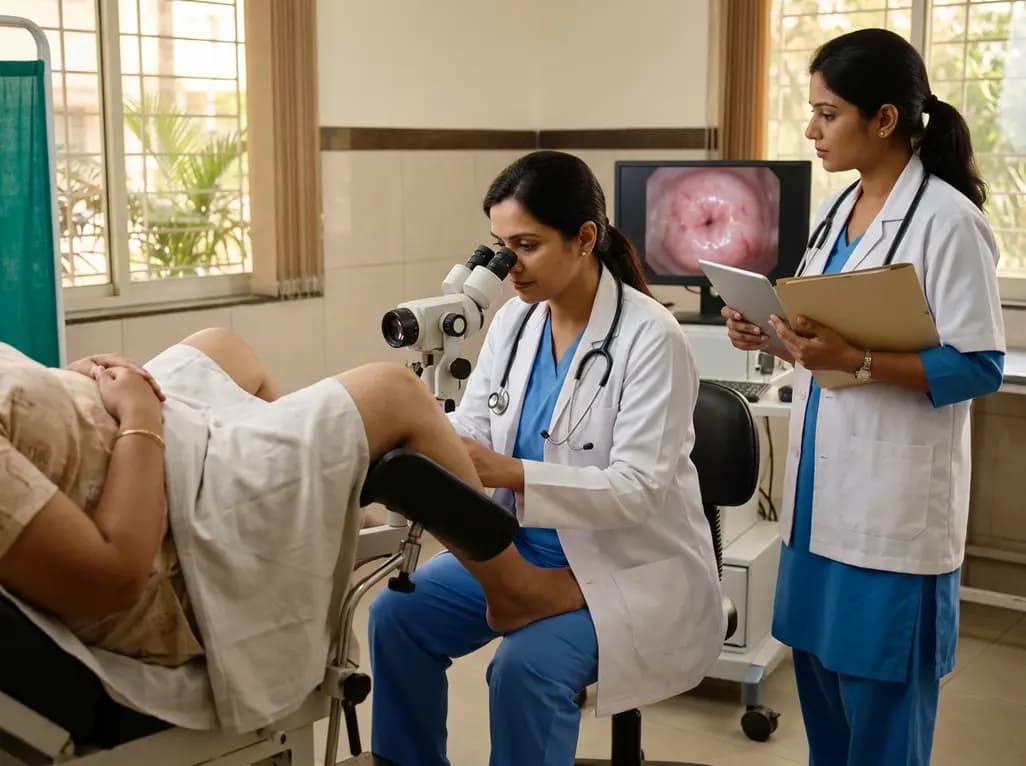
Recent research indicates a complex relationship between BMI and CIN 2/3 risk among women referred for dysplasia evaluation. Obesity drives various cancers, but its impact on cervical precancer detection remains under intense investigation. Because cervical cancer remains a major health burden in India, understanding these clinical associations is essential for better outcomes. Researchers analyzed data from 257 women to assess how body weight affects the severity of cervical lesions.
The retrospective study categorized participants into normal, overweight, and obese BMI groups. Consequently, the findings suggest that while high-grade lesions occur across all weight classes, obesity potentially complicates the diagnostic process. Furthermore, higher BMI often correlates with lower screening participation. This delay in screening might result in the identification of more advanced pathology during referral. Therefore, clinicians must remain vigilant when managing high-risk patients with elevated body mass.
Clinicians often face technical challenges during colposcopy for patients with higher BMI. However, achieving high detection accuracy is vital for preventing invasive disease. Therefore, medical professionals should prioritize thorough examinations in these cases. Additionally, optimizing cytology sampling techniques could significantly improve initial screening reliability. Through precise visualization and consistent follow-up, the medical community can better address the unique risks this population faces.
Moreover, combining HPV testing with high-quality cytology remains the gold standard. Although healthcare barriers exist in many regions, addressing the physiological effects of obesity on lesion detection is a priority. Consequently, providers should tailor care plans to ensure that at-risk individuals receive timely interventions. This proactive strategy is fundamental to lowering cervical cancer mortality rates across the country.
Studies indicate that while obesity may not change the occurrence of CIN, it often masks symptoms or complicates screening, leading to the detection of high-grade lesions like CIN 2/3 during later referral stages.
Patients with higher BMI often experience more frequent unsatisfactory cytology results and physical barriers during colposcopic exams. Consequently, these factors can delay the diagnosis of significant cervical lesions.
Disclaimer: This content is for informational and educational purposes only and does not constitute medical advice. Always seek the advice of a qualified healthcare provider with any questions regarding a medical condition. Refer to the latest local and national guidelines for clinical practice.
References

Read summarized clinical updates, watch expert medical content, and earn CME certifications right from your smartphone.
Open your smartphone camera to scan and install.





A retrospective study evaluates the correlation between body mass index and high-grade cervical intraepithelial neoplasia (CIN 2/3) in referral populations....
4 months ago

Discover the crucial role of glymphatic dysfunction in stroke, where perivascular clearance failure and neuroinflammation exacerbate cerebral edema and post-stroke brain injury.
Today

A prenatal case highlights severe glutaric acidemia type II presenting as bilateral hyperechoic cystic kidneys at 18 weeks. Whole-exome sequencing revealed a novel homozygous ETFDH frameshift variant, demonstrating the power of rapid genetic testing in fetal renal anomalies.
Today

Review how tailored exercise programs benefit frail older patients with heart failure. Explore pathophysiological mechanisms, individualized training prescriptions, and strategies to overcome adherence barriers in clinical practice.
Yesterday

This comparative study evaluates posterior labral tears with and without glenohumeral instability, highlighting distinct demographic patterns, MRI underestimation in stable shoulders, and successful arthroscopic repair outcomes.
Yesterday

A clinical study demonstrates that early intervention with tocilizumab, either as monotherapy or bridged with corticosteroids, achieves significant proptosis reduction and resolves active inflammation in treatment-naive thyroid eye disease.
Yesterday
