.webp&w=384&q=75)

Loading, please wait...
Loading, please wait...
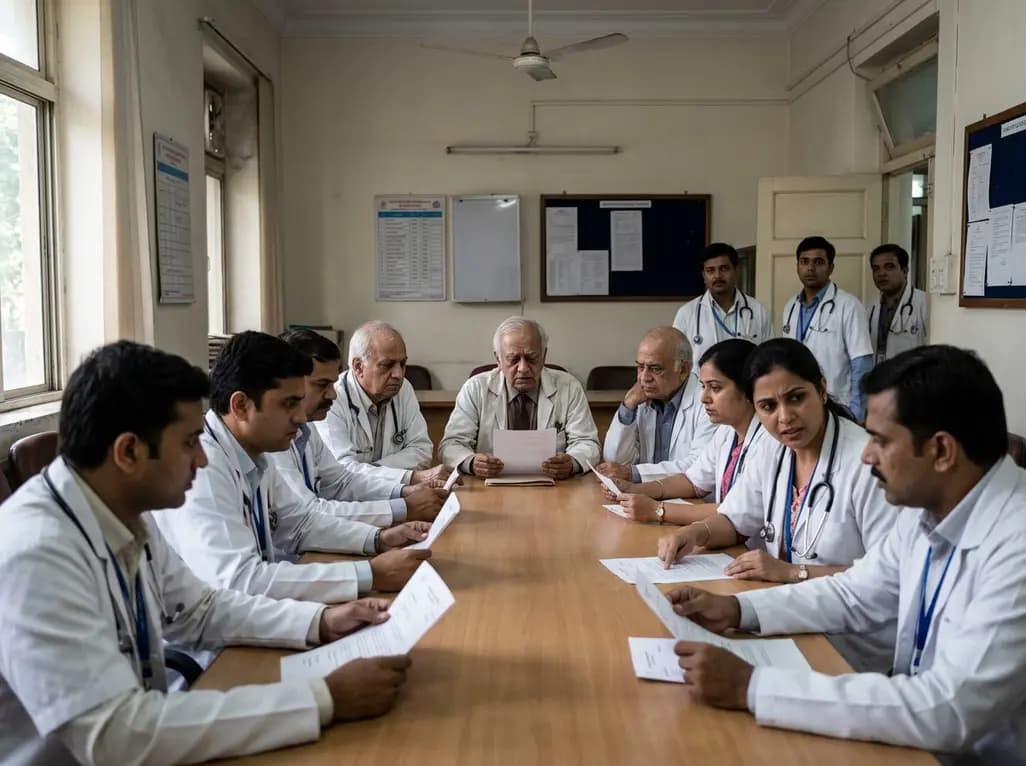
The Brihanmumbai Municipal Corporation recently issued show-cause notices to 100 senior doctors across five premier municipal medical colleges in Mumbai. Administrative audits revealed significant irregularities in digital punch records, prompting intense scrutiny over daily clinical availability. Consequently, municipal authorities emphasized that stringent monitoring of biometric attendance for doctors remains vital to protect patient welfare in busy public hospitals. However, this disciplinary crackdown has created substantial friction within the public healthcare workforce. Notably, three senior department heads at King Edward Memorial Hospital immediately submitted voluntary retirement scheme applications.
Civic administrators initiated this massive audit after receiving numerous patient grievances regarding doctor unavailability during critical outpatient department hours. Specifically, officials scrutinized digital records across five tertiary healthcare centers. The civic body issued show-cause notices to thirty-six clinicians at KEM Hospital, thirty at Sion Hospital, and twenty-four at Nair Hospital. Additionally, inspectors served notices to nine medical teachers at Cooper Hospital and one specialist at Nair Dental Hospital.
Dr. Shailesh Mohite, the BMC Director of Medical Education, confirmed that inspectors identified multiple discrepancies in the electronic system. For example, many doctors logged a single morning punch before departing immediately for external private clinics. Furthermore, several practitioners returned late at night to complete brief inpatient rounds, which disrupted resting patients and compromised clinical standards. In response to these findings, civic leaders reiterated that every physician must maintain reliable presence throughout designated shifts. Public health committee chairman Harish Bhandirge stated that impoverished citizens often wait several hours without receiving consultations due to physician absence. Therefore, municipal authorities intend to review all formal responses rigorously to enforce operational discipline and institutional accountability across every department.
Municipal healthcare guidelines mandate that full-time medical faculty must remain physically present on campus between 9 am and 4 pm. Over a decade ago, civic authorities permitted government doctors to pursue off-campus private practice after 4 pm. This policy aimed to prevent brain drain and retain experienced specialists who might otherwise seek lucrative private hospital affiliations. Nevertheless, administrators emphasize that private commitments cannot infringe upon core public duties.
Unfortunately, non-compliance during official hospital hours undermines day-to-day healthcare delivery for vulnerable populations. When senior consultants leave public facilities prematurely, outpatient clinics experience severe delays and overcrowded corridors. Moreover, junior residents frequently shoulder immense clinical workloads without timely senior supervision. Dr. Mohite affirmed that biometric validation will strictly ensure that clinicians do not abandon municipal facilities during official shifts. However, hospital administrators recognize that strict adherence to rigid hours requires careful navigation. Clinicians often handle demanding emergencies that do not conform neatly to standard administrative timetables. Consequently, municipal managers must ensure that discipline does not stifle the genuine flexibility necessary for managing urgent surgical emergencies and complex bedside interventions.
The issuance of disciplinary notices triggered an immediate institutional tremor across Mumbai municipal medical institutions. In direct reaction to the inquiry, three distinguished professors heading super-speciality departments at KEM Hospital formally applied for voluntary retirement. These senior faculty members command deep respect for pioneering specialized surgical techniques and establishing advanced therapeutic units. Therefore, their sudden resignation requests sent shockwaves throughout the academic medical community.
Meanwhile, municipal leaders adopted a skeptical perspective regarding these voluntary retirement applications. One senior civic official characterized the resignations as strategic pressure tactics designed to resist routine administrative oversight. In contrast, medical associations argue that seasoned clinicians feel alienated by aggressive punitive approaches that disregard decades of loyal public service. Furthermore, veteran doctors emphasize that relentless bureaucratic hostility severely harms institutional morale. When tertiary hospitals lose experienced mentors, department stability falters and postgraduate training suffers drastically. Consequently, hospital administrators face an escalating leadership crisis that threatens institutional continuity. Civic authorities must now decide whether to engage in constructive dialogue with senior clinicians or risk an irreparable brain drain from premier public teaching hospitals.
Crucially, KEM Hospital Dean Dr. Harish Pathak also received an attendance notice during the civic sweep. While acknowledging the administrative necessity of biometric tracking, Dr. Pathak advocated for a far more nuanced framework. Specifically, he emphasized that administrators should evaluate senior medical educators through multifaceted clinical and academic parameters rather than punch records alone.
According to Dr. Pathak, meaningful institutional appraisal must incorporate objective performance indicators. For instance, civic bodies should measure surgical complexity, clinical case volumes, procedural success rates, and emergency interventions performed outside routine hours. In addition, evaluators must credit postgraduate supervision, structured curriculum delivery, and peer-reviewed clinical research. Senior clinicians frequently devote extensive nocturnal hours to life-saving operations, acute trauma resuscitation, and critical care management. Thus, relying solely on biometric timestamps fails to capture the true magnitude of a clinician's institutional contribution. Sewri corporator Sachin Padwal similarly criticized the simplistic metrics, noting that thousands of patients visit civic centers specifically for experienced specialists. Therefore, health administrators should design holistic appraisal models that integrate clinical productivity alongside baseline biometric compliance.
The ongoing dispute carries profound implications for thousands of underprivileged patients who rely heavily on municipal healthcare facilities. Major municipal institutions like KEM, Sion, and Nair collectively treat over ten thousand outpatients every day. In fact, more than forty percent of these patients travel substantial distances from rural Maharashtra to access tertiary expertise. When senior consultants remain absent from outpatient departments, vulnerable patients endure exhausting wait times and delayed treatment plans.
Consequently, civic efforts to enforce punctuality address an urgent social necessity for accessible healthcare. However, administrators must balance rigorous regulatory compliance with empathetic workplace policies. If municipal bodies apply punitive measures too rigidly, they risk driving talented clinicians entirely into the corporate healthcare ecosystem. Such an outcome would weaken postgraduate training programs and deprive impoverished communities of cutting-edge clinical talent. Moving forward, the BMC must implement balanced administrative solutions. For example, digital tracking can incorporate on-call logs, emergency overtime recognition, and flexible shift credits for academic duties. Ultimately, sustainable healthcare governance requires harmonious collaboration between municipal administrators and frontline medical professionals.
Q1: Why did the BMC issue attendance notices to 100 civic doctors?
The Brihanmumbai Municipal Corporation issued show-cause notices after biometric audits revealed significant attendance discrepancies across five municipal hospitals. Investigators discovered that several clinicians logged single morning punches and left during official hours to conduct private practice. Furthermore, some doctors returned late at night for ward rounds, which disrupted sleeping patients. Consequently, civic authorities took disciplinary action to protect outpatient availability and ensure patients receive timely, uncompromised public medical care.
Q2: What are the official duty hours and private practice regulations for BMC doctors?
Under municipal regulations, full-time medical faculty members must complete mandatory hospital duty between 9 am and 4 pm every working day. Over a decade ago, the civic body permitted doctors to undertake private practice after 4 pm to curb talent migration to private hospitals. However, doctors cannot attend private clinics or provide off-campus consultations during designated public hospital hours, ensuring that subsidized tertiary healthcare services remain accessible to the public.
Q3: Why are senior medical teachers requesting alternative performance evaluation criteria?
Senior clinicians and institutional leaders argue that biometric punch logs cannot accurately measure a specialist's overall contribution to healthcare delivery. Senior faculty members frequently work past midnight managing complex emergency surgeries, supervising postgraduates, and conducting vital medical research. Therefore, institutional leaders advocate for balanced appraisal systems that evaluate measurable parameters such as procedural volume, case complexity, teaching hours, academic publications, and emergency coverage alongside standard electronic attendance records.
Disclaimer: This content is for informational and educational purposes only. It does not constitute medical advice or replace professional judgment. Refer to the latest local and national guidelines for clinical practice.
References

Read summarized clinical updates, watch expert medical content, and earn CME certifications right from your smartphone.
Open your smartphone camera to scan and install.





The Brihanmumbai Municipal Corporation has issued show-cause notices to 100 medical teachers across five municipal medical colleges for attendance irregularities. The crackdown on mid-day departures for private clinics has triggered pushback, with three super-speciality department heads seeking voluntary retirement.
Today
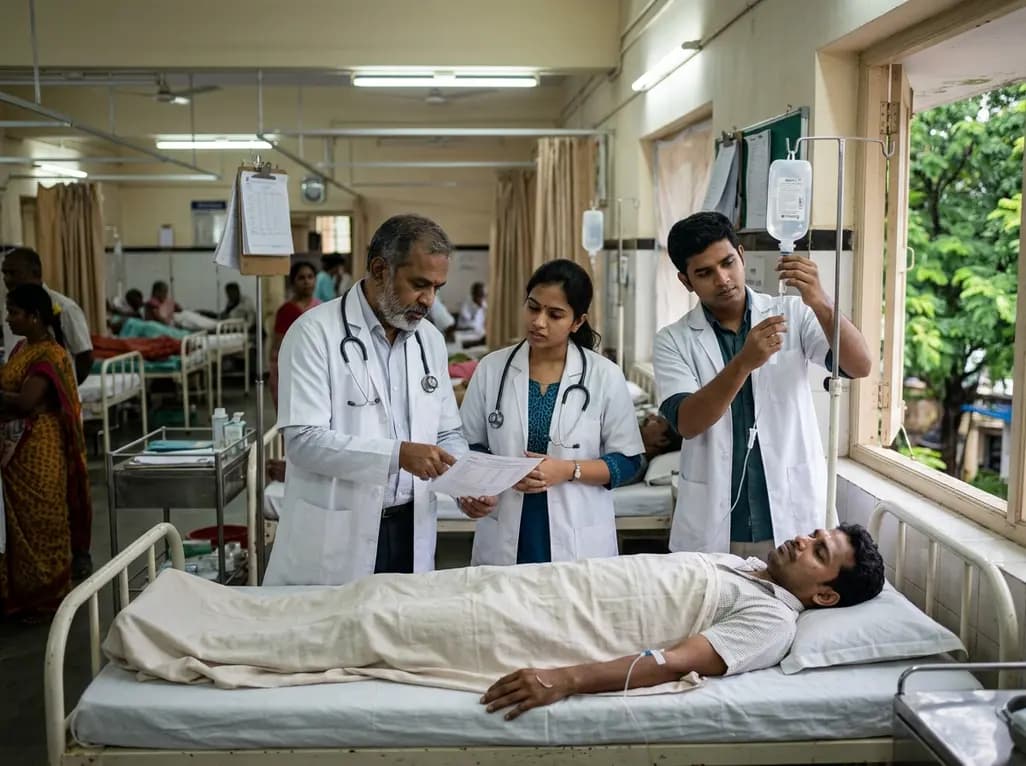
With post-monsoon dengue surges threatening South Asian health systems, physicians must refine triage and management. This guide covers vital warning signs, plasma leakage detection, crystalloid titration, and vector containment strategies to prevent mortality during seasonal arboviral epidemics.
Today

Findings from Project Viva indicate that sustained postpartum weight retention, rather than excessive gestational weight gain alone, directly worsens women's mid-life cardiovascular health, degrading blood pressure and glycemic parameters decades after delivery.
Today
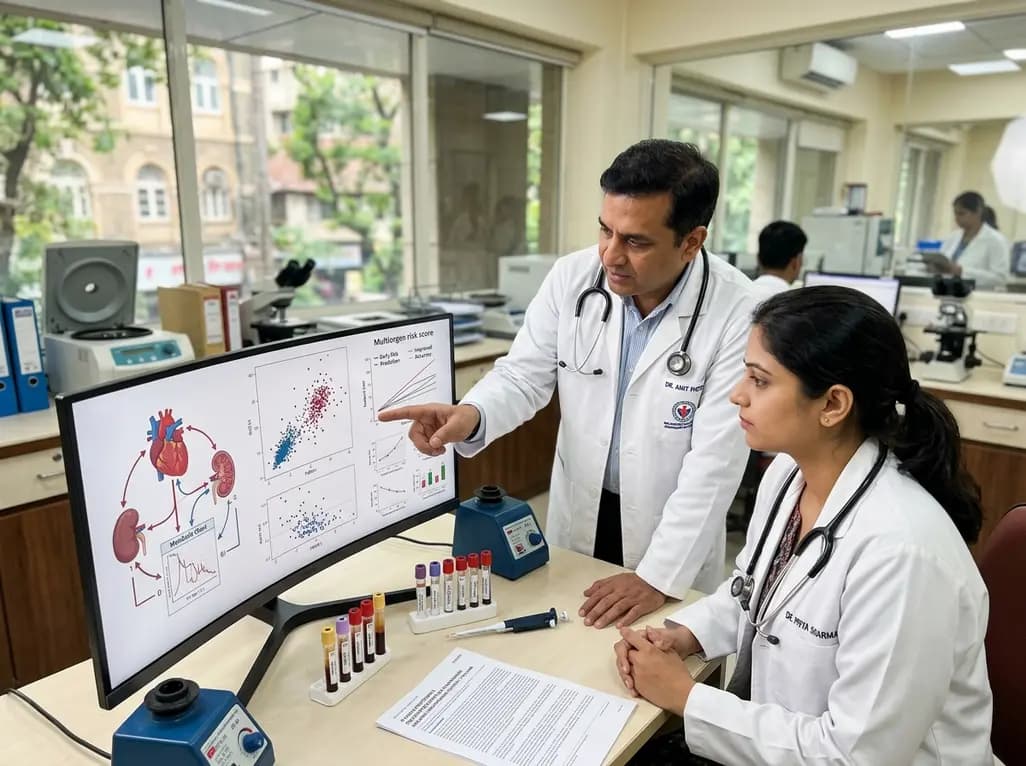
A large UK Biobank study reveals that plasma proteomic signatures capture preclinical organ damage and improve multiorgan risk prediction across early CKM syndrome stages 0 to 2 beyond traditional PREVENT clinical models.
Today
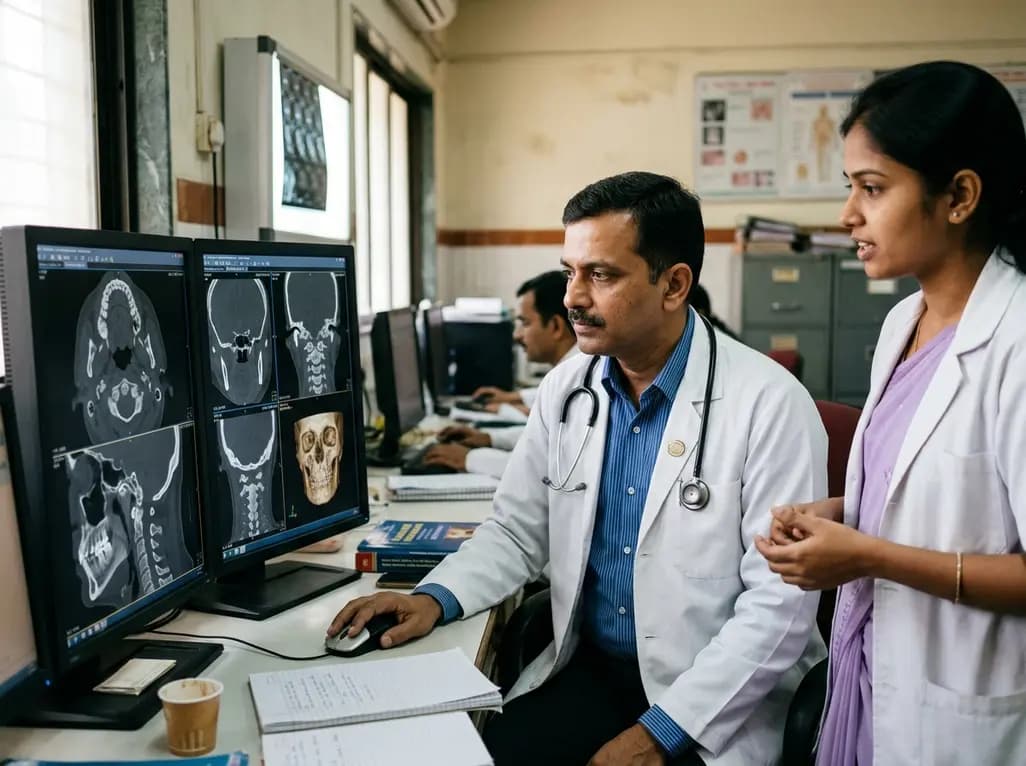
A retrospective CBCT study reveals that superior TMJ space asymmetry correlates moderately with occipital condyle-atlas-axis asymmetry in unilateral TMJ osteoarthritis, highlighting an imaging correlate between jaw biomechanics and upper cervical alignment rather than a standalone diagnostic marker.
Today

A Bayesian multilevel meta-analysis reveals that aerobic training combined with moderate carbohydrate restriction modestly lowers HbA1c in type 2 diabetes. However, sparse data and very low certainty leave incremental benefits over exercise or diet alone unproven, highlighting the need for individualized care.
Today
