.webp&w=384&q=75)

Loading, please wait...
Loading, please wait...
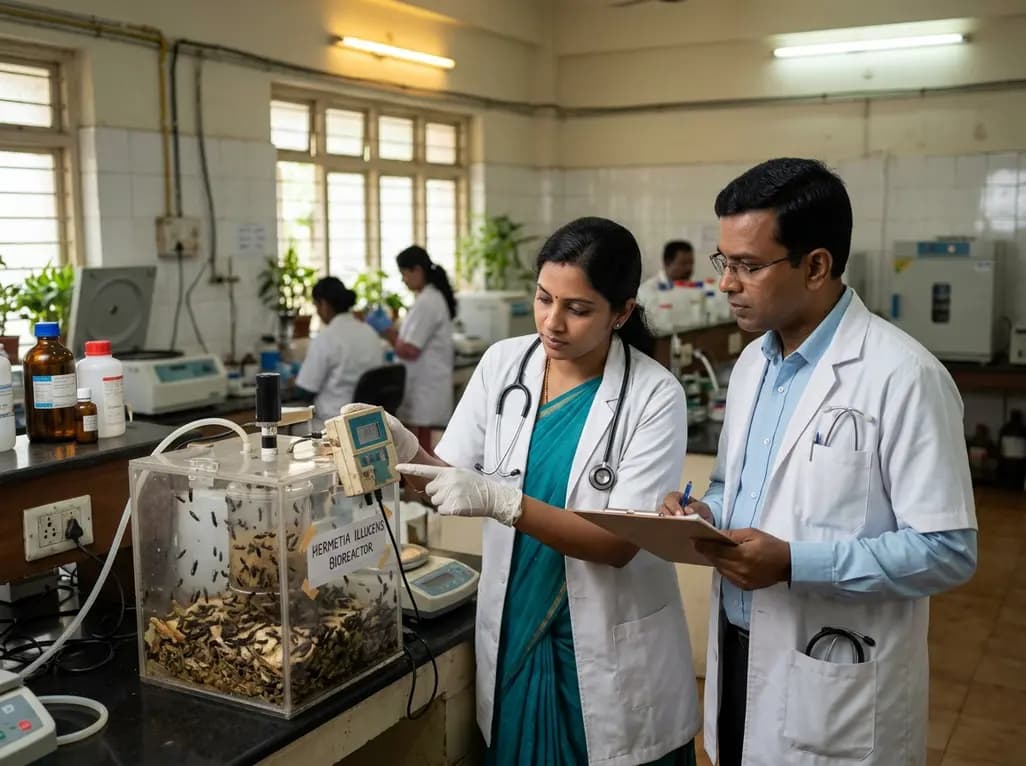
Global antimicrobial stewardship and agricultural sustainability increasingly depend on circular bioeconomy models. The black soldier fly bioreactor represents a transformative platform capable of converting hazardous organic waste into safe, nutritious animal feed. Livestock effluents and food residues routinely harbor heavy bacterial loads, chemical contaminants, and residual veterinary pharmaceuticals. Consequently, managing these substrates requires robust biological containment and decontamination mechanisms. Black soldier fly larvae (Hermetia illucens) accomplish bio-sanitization through an intricate metabolic engine that pairs insect physiology with a dynamic intestinal microbiome. Moreover, these larvae thrive under severe microbial pressures that would overwhelm most organisms. Evaluating how this digestive system degrades xenobiotics and neutralizes biological threats provides crucial insights for public health, infectious disease prevention, and agricultural biosecurity. Therefore, multidisciplinary teams are actively investigating insect bioconversion to reduce agricultural reliance on prophylactic antibiotics.
The black soldier fly gut functions as an efficient, self-regulating biological processor. Structurally, the larval intestinal tract features discrete physiological zones marked by sharp pH shifts, high enzymatic activity, and specialized epithelial membranes. When larvae consume organic waste, the midgut initiates rapid physical breakdown and enzymatic digestion. Furthermore, symbiotic intestinal bacteria collaborate with host digestive secretions to process complex biomolecules. These commensals produce specialized lysozymes and lipases that lyse foreign bacterial cell walls and degrade recalcitrant organic polymers. In addition, rapid intestinal transit times ensure efficient nutrient extraction while preventing opportunists from establishing stable colonies. Because the luminal environment maintains strict physiological checkpoints, vegetative pathogens experience severe metabolic disruption. Consequently, the larval gut acts as both a nutrient-harvesting engine and a microbiological containment barrier, transforming contaminated substrates into valuable larval protein and lipid biomass.
Pathogen eradication within the larval digestive tract depends on a tripartite defense system acting synergistically. First, the host immune system synthesizes diverse antimicrobial peptides (AMPs), including defensins and cecropins. These cationic molecules selectively target negatively charged bacterial membranes to induce rapid cell lysis. Second, the lipid fraction of the larval gut contains high concentrations of medium-chain fatty acids, especially lauric acid. Lauric acid disrupts microbial cell membranes, exerting potent bactericidal activity against Gram-positive vegetative pathogens. Third, the resident gut microbiome provides robust competitive exclusion by rapidly depleting essential nutrients and occupying epithelial adhesion niches. In addition, native commensals secrete bacteriocins that suppress enteric invaders like Salmonella enterica and Escherichia coli. Together, these complementary mechanisms ensure extensive microbial sanitization of high-bioburden feedstocks before industrial larval harvesting.
Intensive livestock operations regularly release veterinary pharmaceuticals into environmental ecosystems. The larval bioreactor demonstrates notable capacity for biotransforming and neutralizing these chemical xenobiotics. Specialized gut microbes and host metabolic enzymes—including cytochrome P450 monooxygenases and glutathione S-transferases—catalyze the breakdown of residual antibiotics. Research confirms that this bioconversion system accelerates the degradation of sulfonamides, tetracyclines, and fluoroquinolones into less toxic metabolites. Moreover, commensal bacterial taxa actively participate in chemical cleavage within the intestinal lumen. Consequently, parent pharmaceutical concentrations drop significantly throughout the larval feeding period. Furthermore, optimizing abiotic rearing conditions, such as temperature, substrate moisture, and aeration, improves microbial co-metabolic degradation rates. Thus, insect bioconversion provides a viable biological remediation strategy for sanitizing antibiotic-laden agricultural residues before soil application.
Despite substantial pathogen reduction, recent metagenomic studies highlight a critical biosafety paradox within the larval gut. While parent antibiotics and vegetative pathogens decline, selective pressure within the digestive tract intensifies. Specifically, sub-lethal concentrations of degrading pharmaceuticals stimulate bacterial stress pathways, upregulating mobile genetic elements like broad-host-range plasmids, transposons, and integrons. This environment significantly increases horizontal gene transfer (HGT) across commensal and transient bacterial species. Consequently, the relative abundance of mobile antimicrobial resistance genes (ARGs) can increase within the larval resistome. Metagenomic surveys show enrichment of resistance determinants targeting critical human antibiotics, including carbapenems and cephalosporins. Therefore, while final harvested biomass lacks living pathogens, it may still harbor mobilizable resistance determinants. This genetic amplification presents potential public health risks if transferred into agricultural food chains.
Industrial producers are developing targeted bioprocess engineering interventions to mitigate resistance gene propagation during bioconversion. First, chemical and thermal pre-treatments—such as thermophilic composting, mild alkaline hydrolysis, and advanced oxidation—effectively denature extracellular DNA and dismantle mobile plasmids before larval feeding. Second, controlling abiotic parameters, including rearing temperature, substrate pH, and feeding frequency, suppresses horizontal gene transfer without hindering larval growth. Third, probiotic bioaugmentation provides another promising mitigation route. By inoculating substrates with defined, non-pathogenic bacterial consortia lacking mobile resistance markers, operators can steer intestinal colonization. These beneficial probiotics competitively displace ARG-harboring strains, reducing overall resistome expansion. Furthermore, multi-omics surveillance platforms facilitate real-time monitoring of resistance profiles during production cycles, ensuring safe, standardized industrial insect bioconversion.
Utilizing processed larval biomass in animal feeds provides significant One Health advantages by replacing prophylactic antibiotic growth promoters. Larval meal delivers balanced amino acid profiles, essential fatty acids, and key micronutrients for poultry, swine, and aquaculture. Moreover, bioactive larval components, including chitin and antimicrobial peptides, act as natural prebiotics and immunomodulators. These functional nutrients strengthen gut barrier integrity and stimulate beneficial commensal taxa like Lactobacillus and Bifidobacterium. Consequently, livestock show improved disease resistance and reduced morbidity, diminishing the need for routine veterinary antimicrobial administration. By curtailing agricultural antibiotic misuse, insect-derived feeds help preserve human antimicrobial efficacy. However, safeguarding downstream food security requires strict adherence to standardized manufacturing, comprehensive multi-omics testing, and vigilant regulatory oversight across all processing stages.
The larval digestive tract neutralizes pathogens through a tripartite synergistic defense system. The host secretes diverse antimicrobial peptides that disrupt bacterial membranes, while dietary lipids like lauric acid exert direct biophysical antimicrobial effects. Concurrently, native commensal microbes competitively exclude pathogens for nutrients and epithelial binding sites. Together, these chemical, enzymatic, and ecological barriers eradicate vegetative enteric pathogens within the digestive tract.
Although the bioreactor degrades parent antibiotic molecules, residual chemical traces and cellular stress induce horizontal gene transfer among gut microbes. Concentrated microbial densities and mobile genetic elements, such as plasmids and integrons, facilitate rapid gene sharing. Consequently, selective pressure inside the gut amplifies specific antimicrobial resistance genes, allowing these genetic markers to persist even after vegetative bacterial pathogens have been completely eliminated.
Replacing prophylactic growth promoters with black soldier fly biomass reduces livestock dependence on sub-therapeutic antibiotics, directly limiting selective resistance pressure. Furthermore, bioactive larval components, such as antimicrobial peptides, lauric acid, and prebiotic chitin, strengthen animal intestinal barrier integrity and immune function. Consequently, livestock exhibit greater resistance to infections, decreasing zoonotic disease transmission and preserving human antimicrobial efficacy.
Disclaimer: This content is for informational and educational purposes only and is not intended as medical advice. It should not be used for diagnosing or treating a health problem or disease. Clinicians should use their professional judgment and cross-reference information with established medical standards and practices. The views expressed are those of the authors and do not necessarily reflect the official policy or position of any healthcare institution or regulatory body. Refer to the latest local and national guidelines for clinical practice.
References

Read summarized clinical updates, watch expert medical content, and earn CME certifications right from your smartphone.
Open your smartphone camera to scan and install.





Black soldier fly larvae gut bioreactors neutralize pathogens and degrade veterinary drugs, yet pose risks of antimicrobial resistance gene spread, requiring bioprocess engineering.
last month

A pilot randomized trial demonstrates that digital wellness applications and medically tailored meals significantly attenuate rapid weight regain following GLP-1 receptor agonist discontinuation, providing valuable transitional support for long-term obesity management.
Today

New evidence from Karolinska Institutet shows women vaccinated against HPV prior to conception have significantly lower rates of preterm birth and major perinatal complications. Clinicians in India can leverage these findings to strengthen adolescent immunisation and reproductive health advocacy.
Today
Stem cell-derived exosomes offer a cell-free therapeutic paradigm in regenerative medicine, providing potent immunomodulatory and trophic benefits with minimal immunological risk. Discover their biological cargo, translational hurdles, and clinical implications across disciplines.
Today
A novel theoretical framework reframes hands-on musculoskeletal assessment as a clinician-reported outcome measurement instrument using COSMIN principles. This approach emphasizes construct clarity, examiner calibration, and structured validation over historical technique debates.
Today

A breakthrough study reveals that loss of SELENOT in hypothalamic POMC neurons triggers premature cellular senescence, ATF6α stress activation, and ER calcium depletion, linking neuroendocrine decay to metabolic disease.
Today
