.webp&w=384&q=75)

Loading, please wait...
Loading, please wait...

School curricula worldwide increasingly promote fitness to combat sedentary lifestyles and pediatric metabolic disorders. However, scholars warn that framing fitness through biomedical physical education creates unintended psychological distress. This pedagogical model emphasizes bodily optimization, individual responsibility, and measurable biometric outcomes. Consequently, students often feel judged by standardized fitness testing, skinfold measurements, and public body mass calculations. When educators present health purely as a quantifiable physiological metric, vulnerable adolescents internalize body surveillance. Therefore, clinicians must understand how school fitness environments shape behavioral health. Pediatricians and sports physicians routinely encounter adolescents struggling with body image disturbances. When physical education focuses heavily on calorie burning and visible muscularity, students frequently experience psychological strain. Rather than fostering lifelong joy in recreational movement, rigid biomedical discourse can alienate youth who do not fit societal ideals. Thus, evaluating how school environments cultivate movement attitudes is vital for primary care providers.
To quantify these pedagogical experiences, investigators developed the Biomedical Discourse in Physical Education Scale (BD-PES). Researchers structured the validation across three robust empirical phases. In Phase 1, an exploratory factor analysis involving 138 young adults identified a coherent one-factor model displaying high internal consistency. Subsequently, Phase 2 confirmed this factor structure in an independent cohort of 182 young adults through confirmatory factor analysis. The results demonstrated strong model fit indices and statistically significant factor loadings across all survey items. Hence, the instrument reliably captures retrospective student perceptions of health-optimizing school environments. In Phase 3, investigators administered the questionnaire to 100 participants to examine real-world correlations with adolescent psychological health. The researchers specifically analyzed whether exposure to biomedical physical education predicted persistent discomfort with body shape, diet, and training behaviors. By establishing strong psychometric validity, the BD-PES provides researchers and clinical professionals with a reliable tool to investigate pedagogical impacts on youth well-being.
The study demonstrated clear, statistically significant associations between school fitness exposure and subjective distress. Specifically, higher BD-PES scores correlated with increased odds of reporting body-, eating-, or exercise-related discomfort during schooling. For each single-point increase on the scale, the odds of experiencing such concerns rose by approximately 64%. Furthermore, higher scores increased the likelihood of reporting persistent concerns by 78%. These pronounced odds ratios suggest that biomedical physical education actively amplifies body dissatisfaction among impressionable students. Interestingly, the scale did not correlate significantly with formal eating disorder diagnoses or clinical suspicions. This distinction indicates that biomedical discourse primarily drives subclinical distress and unhealthy weight control behaviors rather than overt psychiatric pathology. Nevertheless, chronic subclinical distress frequently precedes clinical illness. Consequently, primary care clinicians must remain vigilant when evaluating adolescents who express obsessive exercise habits or intense distress regarding mandatory school fitness assessments.
Pediatricians, family physicians, and adolescent psychiatrists frequently assess adolescents exhibiting maladaptive fitness routines and restrictive eating patterns. In clinical consultations, physicians often ask about family dynamics, social media use, and peer pressure. However, practitioners rarely explore school physical education as a potential trigger for body surveillance. This new research underscores that school environments can inadvertently promote weight stigma under the guise of health promotion. When physical educators mandate performance metrics, students with higher adiposity often endure peer humiliation and severe performance anxiety. In response, some youth adopt extreme dietary restrictions or compulsive exercise regimens to alter their physical measurements. Therefore, adolescent health providers should actively inquire about school-based movement experiences during routine wellness evaluations. By recognizing the negative influence of biomedical physical education, doctors can intervene early, validate emotional distress, and coordinate supportive counseling before disordered eating behaviors escalate into severe clinical syndromes.
Modern sports medicine and pediatric health guidelines advocate for inclusive, enjoyable, and sustainable movement practices. When physical education relies exclusively on biomedical frameworks, movement becomes an extrinsic chore aimed solely at disease prevention and aesthetic control. Consequently, students develop an all-or-nothing mindset regarding physical exertion, which harms long-term physical activity adherence. Healthcare professionals should encourage educational institutions to adopt holistic, person-centered physical education curricula. Instead of emphasizing weight loss and aerobic capacity rankings, programs should prioritize motor skill acquisition, social cooperation, and somatic awareness. Furthermore, dietitians and sports physicians can collaborate with schools to ensure fitness curricula avoid moralizing body shapes. Emphasizing functional competence and recreational enjoyment protects adolescents from developing unhealthy exercise relationships. Ultimately, shifting away from aggressive biomedical physical education allows children to discover meaningful physical activity, thereby safeguarding both metabolic health and long-term psychological resilience.
Biomedical physical education is an instructional approach that frames school fitness through bodily optimization, individual responsibility, and quantifiable health metrics. It emphasizes calorie expenditure, body mass tracking, and disease prevention rather than movement appreciation. Consequently, this pedagogical discourse often leads students to internalize severe body scrutiny, functional inadequacy, and persistent weight-related anxiety during their schooling years.
When physical education curricula emphasize biomedical metrics, students often experience elevated body dissatisfaction and compulsive exercise impulses. Standardized fitness tests and public weight assessments induce emotional distress, particularly among adolescents with diverse body shapes. This persistent stress increases the risk of subclinical disordered eating and promotes negative psychological associations with lifelong recreational physical activity.
Pediatricians can identify distress by asking youth about their emotional experiences during mandatory school fitness classes and standardized testing. Inquiries regarding public weighing, peer teasing, and performance anxiety can reveal hidden stressors. Clinicians should screen for subsequent compulsive exercise or restrictive dietary habits, offering empathetic guidance and timely multidisciplinary psychological support when needed.
Disclaimer: This content is for informational and educational purposes only. It is not intended to be a substitute for professional medical advice, diagnosis, or treatment. Always seek the advice of your physician or other qualified health provider with any questions you may have regarding a medical condition. Never disregard professional medical advice or delay in seeking it because of something you have read in this article. Refer to the latest local and national guidelines for clinical practice.
References
Saiz-González P et al. Biomedicalised Physical Education and Body-, Eating-, and Exercise-Related Concerns: Initial Evidence From a New Measure. Res Q Exerc Sport. 2026 Oct 16. doi: 10.1080/02701367.2026.2747064. PMID: 42886881.
Evans J, Rich E, Davies B. The emperor's new clothes: fat, thin, and overweight. The social fabrication of risk and ill health. J Teach Phys Educ. 2004;23(4):372-391.
Nutter S, Russell-Mayhew S, Arthur N, Ellard JH. Weight bias in educational settings: a systematic review. Curr Obes Rep. 2019;8(4):391-400.

Read summarized clinical updates, watch expert medical content, and earn CME certifications right from your smartphone.
Open your smartphone camera to scan and install.





New psychometric evidence reveals that biomedical physical education framing bodily optimization and individual responsibility increases youth body, eating, and exercise concerns. Clinicians must recognize these pedagogical stressors to prevent disordered eating and exercise-related distress.
Today
Prospective analysis of the ARIC study shows that elevated midlife p-tau181 is associated with accelerated late-life memory decline decades later, while late-life biomarkers predict multi-domain cognitive changes, offering new opportunities for early risk assessment and proactive dementia care.
Today

A recent cohort study reveals that reproductive-age women with cerebral venous thrombosis have nearly double the odds of developing intracranial hypertension compared to older women. Superior sagittal and lateral sinus occlusions heighten this risk, predisposing patients to persistent visual impairment.
Today
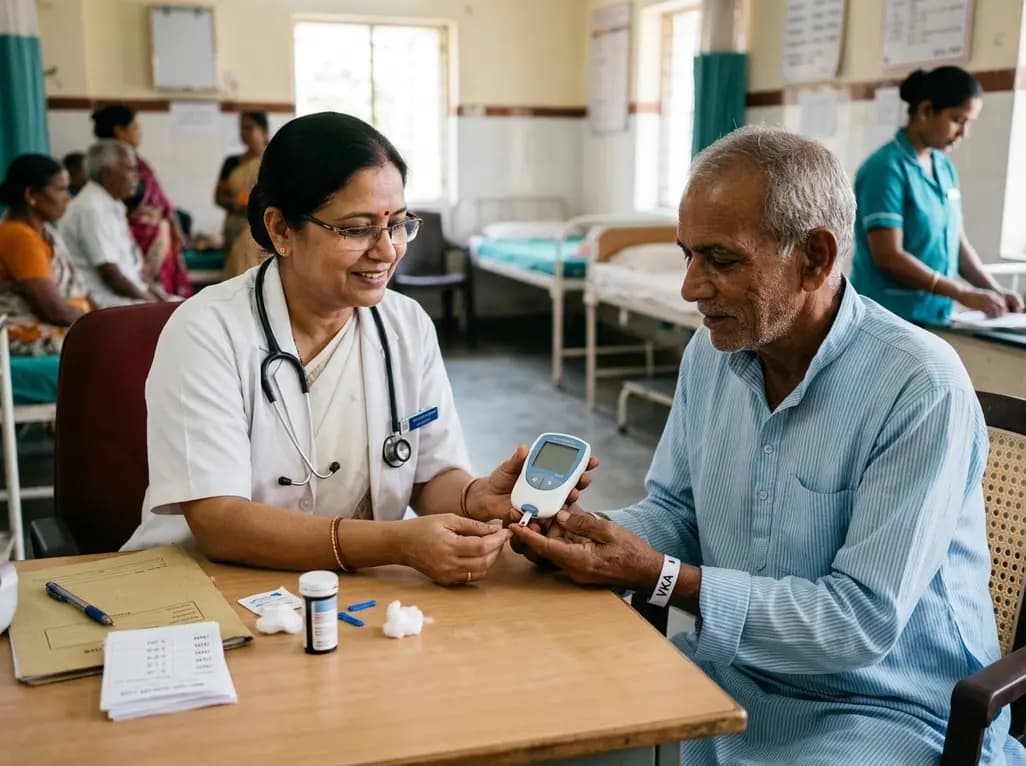
A new implementation study demonstrates that an integrated home INR monitoring network for vitamin K antagonist therapy cuts test turnaround times from three hours to 20 minutes, enhancing clinical oversight, diagnostic accuracy, and patient quality of life.
Today

Diagnostic data shows that nearly one in four spine investigations now involve patients younger than 40 years. This comprehensive overview explores the drivers behind this demographic trend, evaluates ergonomic hazards, clarifies red-flag signs, and highlights clinical indications for judicious diagnostic imaging.
Today

A study reveals how adrenal hormones maintain glucose homeostasis during prolonged fasting when glucagon is absent. In glucagon-deficient mice, corticosterone-driven lipolysis prevents severe hypoglycemia, offering key insights for managing counterregulatory failure and fasting in diabetes.
Today
