.webp&w=384&q=75)

Loading, please wait...
Loading, please wait...
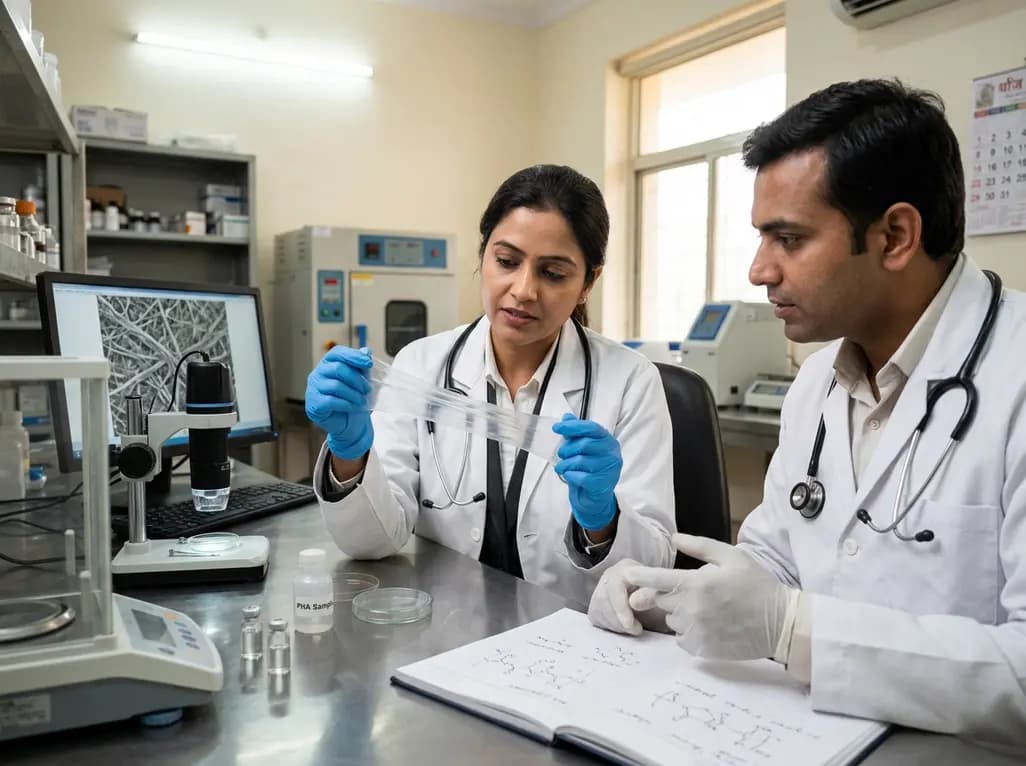
Polyhydroxyalkanoates (PHAs) are a fascinating class of biopolymers. Microorganisms naturally synthesize these materials through fermentation processes. Because they are truly biodegradable in various environments, PHAs offer a sustainable alternative to traditional petroleum-based plastics. However, many common PHAs face significant mechanical limitations. For instance, they often lack the flexibility required for clinical and industrial applications. Biodegradable PHA block copolymers represent a promising solution to these challenges. Recent research has focused on enhancing their mechanical properties to match or exceed those of nondegradable plastics. This innovation is particularly relevant for the healthcare sector in India. Medical waste management remains a critical concern, and biodegradable alternatives can reduce the environmental footprint of hospitals. Furthermore, these materials must exhibit specific toughness and elongation to serve as effective surgical tools. Scientists are now exploring how block copolymer synthesis can bridge the gap between sustainability and performance.
Two of the most well-known PHAs are poly(3-hydroxybutyrate) (P3HB) and its copolymer poly(3-hydroxybutyrate-co-3-hydroxyvalerate) (PHBV). These materials are highly valued for their exceptional tensile strength and high modulus. In a clinical setting, strength is vital for structural integrity. However, these polymers possess a high degree of crystallinity. This physical characteristic leads to significant brittleness. Consequently, P3HB and PHBV often fail when subjected to stretching or bending. They lack the necessary elongation at break, which limits their use in flexible medical films or patches. Therefore, surgeons and medical device manufacturers often find these homopolymers too stiff for delicate applications. While they are biocompatible, their mechanical failure during use can be problematic. Consequently, researchers have sought ways to modify these structures. The goal is to retain their strength while introducing much-needed toughness and ductility. This balancing act requires sophisticated chemical engineering techniques beyond simple blending or random copolymerization.
To address the brittleness of early PHAs, scientists developed the copolymer poly(3-hydroxybutyrate-co-4-hydroxybutyrate), commonly known as P3HB4HB. This material shows a considerable improvement in elongation at break, especially when it contains higher levels of 4-hydroxybutyrate (4HB). In fact, P3HB4HB can be quite ductile and elastic. Nevertheless, this improvement comes with a significant trade-off. As the 4HB content increases, the tensile strength and overall toughness of the material typically decrease. This results in a polymer that is ductile but ultimately weak. Such a material might stretch easily, but it cannot support significant mechanical loads. For pharmaceutical packaging or surgical meshes, this weakness is a disqualifying factor. Manufacturers need a material that can withstand pressure without tearing or deforming permanently. Similarly, the Indian medical device industry requires polymers that meet rigorous safety and performance standards. Finding a way to combine the strength of P3HB with the ductility of P3HB4HB has therefore become a primary objective in polymer science.
The recent study by Kockler et al. introduces a transformative approach by coupling different PHAs into a single block copolymer. Unlike random copolymers or physical blends, biodegradable PHA block copolymers consist of distinct segments or "blocks" of different polymers linked together. This structural arrangement allows the final material to inherit the best properties of each block. In this specific research, the team coupled high-strength PHAs with highly elastic versions. The resulting block copolymers demonstrated a remarkable elongation at break of 630%. Furthermore, the toughness reached 52 MJ/m, which is more than triple the results previously reported for similar materials. This level of performance is comparable to many commercial, nondegradable thin-film plastics currently used in healthcare. The ability to synthesize these blocks accurately ensures that the material does not lose its structural integrity. Moreover, these block copolymers outperform traditional blends, which often suffer from phase separation and weak interfaces. This chemical innovation provides a clear pathway toward creating high-performance, eco-friendly medical supplies.
For medical professionals in India, these advancements carry significant weight. India is currently modernizing its healthcare infrastructure, which includes a push for sustainable practices. The high volume of single-use medical plastics contributes heavily to landfill waste. By adopting advanced PHA-based materials, hospitals can transition toward a circular economy. These biodegradable PHA block copolymers are not only environmentally friendly but also biocompatible. They do not trigger adverse immune responses when used in contact with human tissue. Consequently, they are ideal candidates for surgical sutures, wound dressings, and drug-delivery films. Furthermore, the improved mechanical properties ensure that these items perform reliably under the stress of surgery or patient movement. Regulatory bodies in India are increasingly focusing on medical device standards. Proving that biodegradable materials can match the mechanical specs of traditional plastics is a vital step toward widespread clinical adoption. Therefore, this research supports both environmental goals and patient safety requirements.
The potential applications for these toughened PHAs extend far beyond simple packaging. Because they possess such high elongation and toughness, they are perfect for tissue engineering scaffolds. These scaffolds must mimic the mechanical environment of natural tissues to support cell growth effectively. Additionally, the tunable nature of block copolymers allows researchers to adjust the degradation rate. This means a surgical implant can be designed to disappear exactly when the body has finished healing. In the pharmaceutical sector, these polymers could be used for advanced drug-release patches that adhere comfortably to the skin. Similarly, the flexibility of these materials makes them suitable for cardiovascular applications, such as heart valve components or stents. As synthesis techniques become more refined and cost-effective, we expect to see these materials move from the laboratory into large-scale production. This transition will likely be supported by collaborations between Indian biotechnology firms and international research institutions. Ultimately, the development of PHA-PHA block copolymers marks a new era in sustainable biomaterial science.
Traditional blends involve physically mixing two different polymers, which often leads to weak spots and poor integration. In contrast, block copolymers are chemically bonded at the molecular level. This creates a single, continuous chain with distinct functional segments. This structural integrity prevents phase separation and allows the material to exhibit a superior combination of strength and flexibility that physical blends simply cannot achieve in practice.
P3HB4HB is valuable because the 4-hydroxybutyrate (4HB) monomer introduces significant elasticity into the polymer backbone. While pure P3HB is brittle and stiff, the addition of 4HB units allows the material to stretch without breaking. When synthesized as part of a block copolymer, it provides the necessary ductility for flexible medical films, wound dressings, and surgical meshes that must move with the patient's body during the healing process.
These advancements are highly relevant given India's growing focus on environmental sustainability and medical innovation. Indian hospitals generate vast amounts of plastic waste, much of which is non-biodegradable. High-performance PHA block copolymers offer a way to maintain clinical standards for safety and mechanical strength while ensuring that medical waste does not persist in the environment. This aligns with national goals for a cleaner and more technologically advanced healthcare system.
Disclaimer: This content is for informational and educational purposes only. It does not constitute medical advice or professional engineering recommendations. Refer to the latest local and national guidelines for clinical practice.
References
Kockler KB et al. Improving the Mechanical Properties of Biodegradable Polyhydroxyalkanoates via PHA-PHA Block-Copolymer Synthesis. Chemistry. 2026 Jul 09. doi: 10.1002/chem.71303. PMID: 42423041.
Mai J et al. Synthesis and physical properties of polyhydroxyalkanoate (PHA)-based block copolymers: A review. International Journal of Biological Macromolecules. 2024; 263:130204. doi: 10.1016/j.ijbiomac.2024.130204.
Chen G, Wang YC. Medical applications of biopolyesters polyhydroxyalkanoates. Journal of Polymer Science Part A: Polymer Chemistry. 2013; 31:719-736. doi: 10.1002/pola.26463.
"
Read summarized clinical updates, watch expert medical content, and earn CME certifications right from your smartphone.
Open your smartphone camera to scan and install.





Recent research by Kockler et al. highlights a breakthrough in synthesizing PHA-PHA block copolymers. By combining different polyhydroxyalkanoates, researchers achieved a 630% elongation at break, significantly improving the toughness of these biodegradable materials for medical and industrial use.
3 months ago
Explore vital recurrent stroke predictors in lacunar stroke patients managed with intensive blood pressure lowering. This analysis examines trial findings from SPS3 to uncover residual vascular risks, metabolic factors, and targeted secondary prevention strategies for high-risk neurological patients.
Today

A comprehensive scoping review synthesises evidence linking prenatal maternal mental health to long-term offspring neurodevelopment, evaluating neuroendocrine, inflammatory, and epigenetic pathways while highlighting clinical screening and future research priorities.
Today

The Directorate General of Health Services directs Indian states to halt the hazardous reuse and reprocessing of single-use medical devices. Discover regulatory implications under the Drugs and Cosmetics Act, critical infection risks, legal liabilities, and operational changes required across clinical specialties.
Today
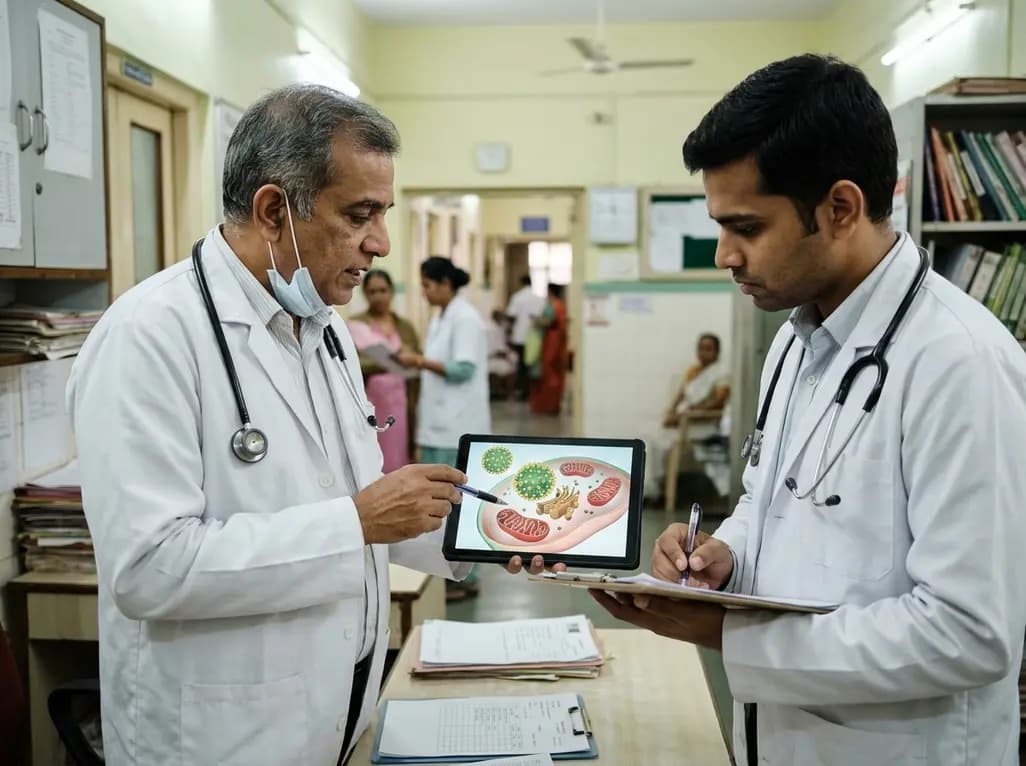
Mitochondria-targeted nanoparticles self-assembled from EGCG and L-glutamic acid effectively restore mitochondrial homeostasis, suppress synovial inflammation, and attenuate chondrocyte senescence in osteoarthritis, offering a promising disease-modifying nanotherapy.
Today

India is advancing preventive healthcare by integrating genomics, artificial intelligence, and quantum technologies. With the SANGAM programme sequencing one million Indian genomes, clinicians can unlock personalized therapies, detect cardiometabolic risks early, and curb the burden of diabetes and heart disease.
Today
