.webp&w=384&q=75)

Loading, please wait...
Loading, please wait...

Infected and chronic cutaneous wounds present significant clinical challenges across surgical and dermatological disciplines globally. Bacterial pathogens rapidly establish complex microcolonies encased within self-secreted extracellular polymeric matrices. Consequently, these structures shield embedded microorganisms against conventional antibiotics and host immune surveillance. Therefore, achieving prompt bacterial biofilm eradication remains essential to prevent persistent infection, tissue destruction, and sepsis. Systemic antibiotic therapy frequently proves inadequate because antimicrobial agents cannot achieve bactericidal concentrations across dense biofilm architectures.
Furthermore, escalating antimicrobial resistance diminishes the efficacy of standard pharmaceutical treatments in acute and chronic wounds. Clinicians managing diabetic foot ulcers, pressure injuries, and traumatic lacerations face recurrent treatment failures caused by persistent pathogen colonization. Additionally, widespread reliance on repetitive antibiotic courses exerts selective pressure, encouraging the emergence of multidrug-resistant strains. Photodynamic therapy provides an attractive non-antibiotic alternative, yet conventional photosensitizers suffer from poor tissue penetration and low target selectivity. Thus, modern reconstructive medicine requires advanced surface-active technologies that destroy protective biofilm shields directly at the site of infection.
To overcome traditional drug delivery limitations, researchers developed a bio-palladium-catalyzed in situ polymerization strategy. Specifically, this innovative platform synthesizes macromolecular networks directly on the outer membrane of living bacterial cells. The process utilizes bio-derived palladium nanoparticles as localized catalysts to drive Sonogashira cross-coupling reactions between soluble synthetic monomers. Consequently, cross-linking occurs selectively at the bacterial membrane rather than dispersing haphazardly through healthy tissue parenchyma. This site-specific catalytic mechanism protects adjacent host cells from unnecessary chemical exposure.
Furthermore, this surface-confined reaction creates a robust cationic conjugated microporous polymer coating around individual microbial cells. Because the synthetic event takes place directly at the pathogen interface, the polymer achieves intimate physical and biochemical contact with bacterial envelopes. In addition, the rigid conjugated framework prevents aggregation-induced emission quenching, preserving outstanding photophysical activity under ambient light exposure. This localized catalytic technique effectively transforms the target pathogen into a chemical template for its own encapsulation. Therefore, the methodology eliminates high-dose systemic pharmaceuticals, providing extraordinary spatial control and remarkable therapeutic specificity at the wound margin.
The molecular design incorporates deliberate chemical elements that optimize pathogen recognition and membrane destabilization. Specifically, investigators synthesized two distinct building blocks: a mannose-functionalized monomer and a quaternary ammonium-functionalized monomer. Mannose residues display high binding affinity toward bacterial surface lectins, particularly type-1 fimbriae expressed abundantly on Escherichia coli strains. Consequently, carbohydrate-receptor recognition guarantees rapid, selective recruitment of precursors directly to bacterial surfaces within complex wound fluids.
Simultaneously, quaternary ammonium groups confer permanent positive charges across the resulting microporous network. These cationic sites promote robust electrostatic attraction toward negatively charged bacterial cell walls and lipopolysaccharide layers. Additionally, quaternary ammonium moieties enhance aqueous solubility, facilitating smooth biological dispersion without hazardous organic solvents. Once formed on the bacterial surface, the cationic shell alters membrane permeability and impairs essential transmembrane nutrient transport. Moreover, the rigid polymer shield physically masks surface adhesins, preventing bacteria from anchoring to host extracellular matrices. Thus, the deliberate bifunctional design coordinates biochemical affinity with mechanical disruption of bacterial virulence.
The key therapeutic triumph of this surface-polymerized coating stems from enhanced photodynamic antimicrobial efficacy. Typically, photodynamically generated reactive oxygen species, including singlet oxygen and hydroxyl radicals, display very short half-lives and narrow diffusion radii. Conventional photosensitizers produce reactive oxygen species remotely in bulk solutions, where molecules degrade before reaching bacterial structures. In contrast, this cationic conjugated microporous polymer resides directly on the bacterial wall, drastically shortening the diffusion distance to vital cell components.
Consequently, visible light activation triggers localized, lethal oxidative bursts that rupture bacterial envelopes, oxidize membrane lipids, and denature critical proteins instantaneously. Under experimental light exposure, the polymer platform achieved complete bacterial biofilm eradication against virulent Escherichia coli populations. Furthermore, this dual-modal action decomposed dense extracellular polymeric substances, exposing embedded dormant microbes to photodynamic destruction. Notably, the stable cationic coating maintained persistent contact with target cells, preventing colonization recurrence. Therefore, combining close proximity with light-induced oxidative damage produces decisive bactericidal performance against mature, drug-resistant biofilms.
Beyond outstanding in vitro bactericidal activity, this polymer platform accelerates cutaneous wound repair in preclinical animal models. Researchers evaluated infected full-thickness skin wounds, observing markedly enhanced wound closure rates and early re-epithelialization in treated subjects. Histological assessments demonstrated dense, well-organized collagen bundles, mature fibroblasts, and active microvascular angiogenesis across the healing dermis. Moreover, local inflammatory markers declined swiftly, resolving pathological hyper-inflammation and enabling physiological tissue remodeling.
These findings hold profound relevance for clinicians managing high-burden wound populations across Indian healthcare settings. Healthcare providers in tertiary hospitals and outpatient clinics continually encounter refractory diabetic ulcers and infected surgical incisions harboring resistant pathogens. Because this light-activated approach avoids classic antibiotic pathways, bacteria cannot readily mutate to evade therapeutic destruction. Additionally, extensive safety evaluations demonstrated zero systemic organ toxicity, preserving renal and hepatic function during therapy. Thus, in situ catalytic polymer platforms present immense translational potential to complement surgical debridement and revolutionize wound management nationwide.
Conventional topical dressings passively release broad-spectrum antibiotics or antiseptic compounds into the wound bed, which often fail to penetrate established biofilm barriers. In contrast, in situ polymerization utilizes bio-palladium catalysis directly on the pathogen surface to synthesize a dense cationic conjugated microporous polymer. This localized synthesis tightly encapsulates microbial cells, disrupts membrane potentials, and dramatically shortens diffusion distances for photodynamically generated reactive oxygen species.
Photodynamic reactive oxygen species possess an extremely short half-life and diffuse only a few nanometers before becoming inactive. When photosensitizers float freely in wound exudate, generated radicals decay before damaging microbial membranes. Because this cationic polymer synthesizes directly on bacterial walls via mannose and quaternary ammonium targeting, reactive species generate immediately adjacent to vital cell structures. This intimate contact maximizes fatal oxidative damage while completely sparing distant healthy tissues.
Bacterial biofilms produce a protective extracellular slime matrix that increases microbial antibiotic tolerance up to one thousand times compared to planktonic cells. In regions with high antibiotic resistance, standard oral or parenteral therapies fail to resolve biofilm-encased infections, driving chronic non-healing ulcers and tissue loss. Therefore, effective bacterial biofilm eradication removes persistent bacterial reservoirs, reduces destructive chronic inflammation, and allows normal granulation and epithelialization to proceed uninhibited.
Disclaimer: This content is for informational and educational purposes only... Refer to the latest local and national guidelines for clinical practice.
References

Read summarized clinical updates, watch expert medical content, and earn CME certifications right from your smartphone.
Open your smartphone camera to scan and install.





A bio-Pd-mediated in situ polymerization strategy synthesizes cationic conjugated microporous polymers directly on bacterial surfaces. By shortening ROS diffusion and preventing adhesion, this platform achieves rapid bacterial biofilm eradication and accelerates infected wound healing without systemic toxicity.
Today

A retrospective study shows that symptom-monitored loading with lorazepam, chlordiazepoxide, or gabapentin significantly reduces hospital length of stay compared to CIWA-Ar-only therapy in severe alcohol withdrawal, providing a safer, more proactive management strategy.
Today

A retrospective cohort study of 5,481 children aged 3–6 years evaluated whether surgical sperm retrieval for ICSI affects offspring cognitive and physical growth compared with ejaculated sperm and IVF. Results demonstrate comparable IQ scores and growth parameters, providing reassuring safety evidence for clinical practice.
Today
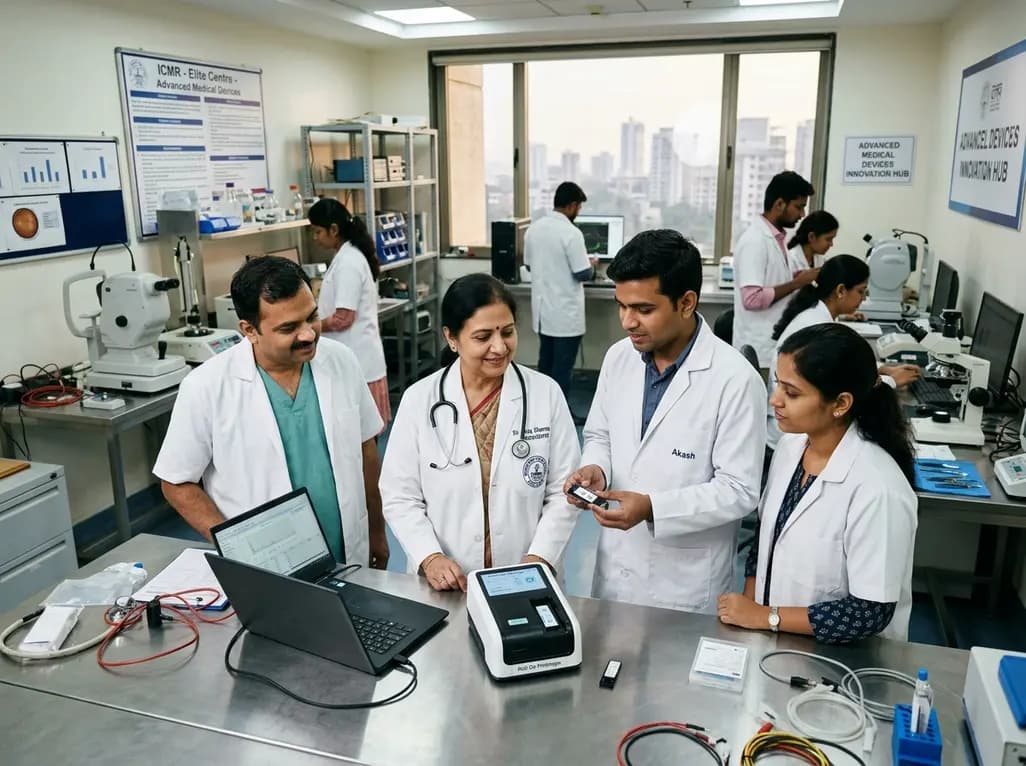
The Indian Council of Medical Research has funded seven top academic hubs to build indigenous healthcare technologies. Targeting point-of-care diagnostics, biomaterials, and ophthalmology, these multidisciplinary centres aim to tackle unmet clinical needs and make medical care affordable across India.
Today

A meta-analysis evaluates the impact of preoperative transthoracic echocardiography on surgical delay and hospital stay in geriatric hip fracture patients. Evidence emphasizes balancing cardiac workups against operative urgency and adhering to clinical guidelines.
Today

A multicenter cross-sectional study of 1,315 adults with type 1 diabetes reveals that the GMI/HbA1c ratio does not independently predict microvascular complications. Clinicians should prioritize sustained time in range and blood pressure management over glycation discordance metrics.
Today
