

Loading, please wait...
Loading, please wait...

Bachmann's bundle pacing (BBp) represents an emerging physiologic pacing strategy designed to restore natural electrical flow between the atria. Conventional pacing often targets the right atrial appendage, which can lead to delayed left atrial activation. This delay often results in interatrial dyssynchrony and may worsen heart failure symptoms. Recent evidence suggests that targeting the Bachmann's bundle can mitigate these issues by facilitating faster conduction between the heart's upper chambers.
A recent case series explored the clinical impact of Bachmann's bundle pacing on atrial function. Researchers evaluated eight cases where BBp was attempted to improve interatrial conduction. In patients who met the specific electrocardiographic criteria, the results were significant. These successful cases demonstrated substantial P-wave shortening and increased P-wave amplitude in the inferior leads. Furthermore, these patients experienced improved left atrial function, characterized by a decreased E/e' ratio and reduced left atrial diameter. Consequently, these hemodynamic improvements led to heart failure stabilization. In contrast, patients who failed to achieve significant P-wave changes did not show similar improvements in atrial remodeling or clinical status.
Moreover, the restoration of interatrial conduction appears to optimize left atrial performance. By improving the timing of atrial contraction, BBp helps maintain better filling pressures. This physiologic synchronization is particularly beneficial for patients with underlying atrial cardiomyopathy. Therefore, clinicians should consider BBp as a viable alternative for patients at risk of pacing-induced dyssynchrony.
The ability of Bachmann's bundle pacing to induce atrial reverse remodeling marks a significant step forward in cardiac device therapy. While traditional methods focus primarily on ventricular synchrony, this approach addresses the often-overlooked atrial contribution to cardiac output. Additionally, the reduction in left atrial size may lower the long-term risk of atrial arrhythmias. Future studies should continue to investigate the long-term mortality benefits of this pacing modality compared to standard techniques.
BBp improves heart failure by restoring the electrical connection between the right and left atria. This synchronization enhances left atrial function, reduces filling pressures, and promotes atrial reverse remodeling, which stabilizes the patient's overall hemodynamic state.
Successful pacing is typically identified by a significant shortening of the P-wave duration and an increase in P-wave amplitude in the inferior leads (II, III, and aVF). These changes indicate more efficient interatrial conduction.
Research suggests that BBp may be superior for patients with interatrial conduction delay. Unlike conventional right atrial appendage pacing, BBp mimics the heart's natural activation sequence, potentially preventing atrial enlargement and further heart failure progression.
Disclaimer: This content is for informational and educational purposes only. It does not constitute professional medical advice, diagnosis, or treatment. Always seek the advice of your physician or other qualified healthcare provider with any questions you may have regarding a medical condition. Refer to the latest local and national guidelines for clinical practice.
References
1. Naka M et al. Atrial Reverse Remodeling by Bachmann's Bundle Pacing With Improved Interatrial Dyssynchrony: Case Series. Pacing Clin Electrophysiol. 2026 Apr 18. doi: 10.1111/pace.70261. PMID: 42001247.
2. Israel C. Bachmann bundle pacing. Herzschrittmacherther Elektrophysiol. 2018 Nov;29(4):362-370. doi: 10.1007/s00059-018-4755-6.
3. Saga A et al. Clinical impact of Bachmann's bundle pacing defined by electrocardiographic criteria on atrial arrhythmia outcomes. Europace. 2022 Oct 13;24(10):1460-1468. doi: 10.1093/europace/euac068.
"
Read summarized clinical updates, watch expert medical content, and earn CME certifications right from your smartphone.
Open your smartphone camera to scan and install.





A case series suggests that successful Bachmann's bundle pacing improves interatrial conduction, left atrial function, and heart failure stability....
6 months ago

Review how tailored exercise programs benefit frail older patients with heart failure. Explore pathophysiological mechanisms, individualized training prescriptions, and strategies to overcome adherence barriers in clinical practice.
Today

Leucine Rich Bio has introduced South Asia's first comprehensive vaginal microbiome test, BugSpeaks. By profiling microbial dysbiosis, pathogens, and antimicrobial resistance, this next-generation diagnostic platform provides clinicians with deeper insights into recurrent infections, fertility, and reproductive health.
Today
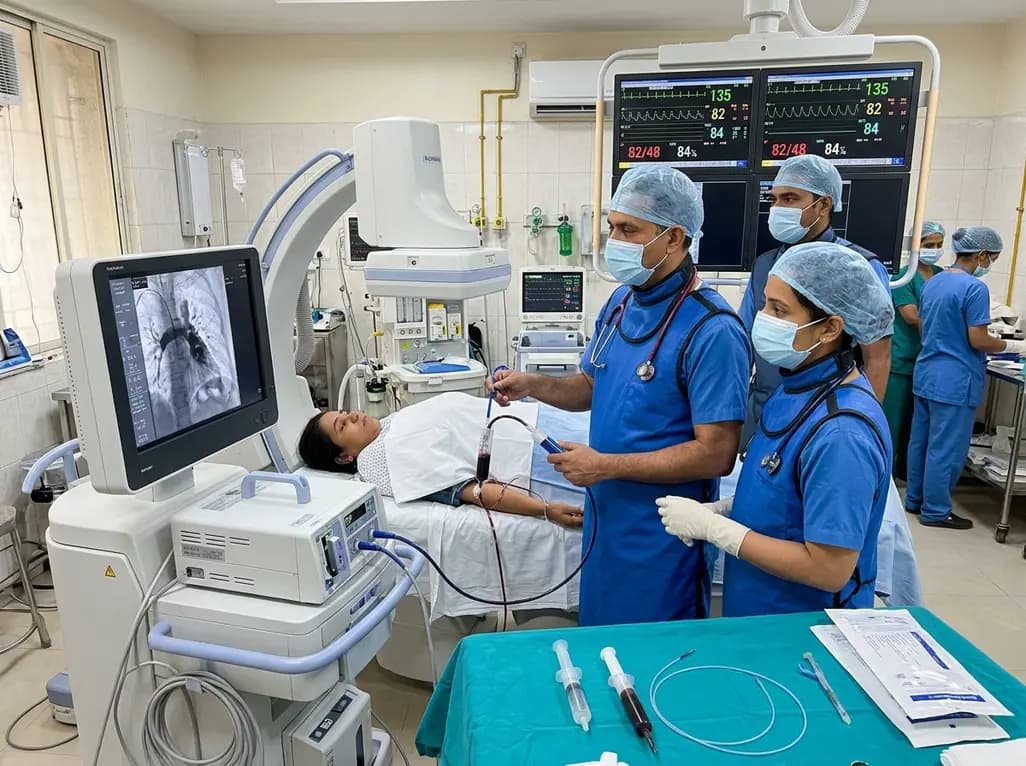
In high-risk pulmonary embolism complicated by severe anemia and active uterine bleeding, systemic thrombolysis is contraindicated. Large-bore aspiration thrombectomy provides rapid hemodynamic rescue without fibrinolysis, supported by inferior vena cava filter placement and multidisciplinary critical care.
Today

This comparative study evaluates posterior labral tears with and without glenohumeral instability, highlighting distinct demographic patterns, MRI underestimation in stable shoulders, and successful arthroscopic repair outcomes.
Today

A clinical study demonstrates that early intervention with tocilizumab, either as monotherapy or bridged with corticosteroids, achieves significant proptosis reduction and resolves active inflammation in treatment-naive thyroid eye disease.
Today
