.webp&w=384&q=75)

Loading, please wait...
Loading, please wait...

Neurodevelopmental trajectories establish their foundational architecture during the earliest months of human life. Healthcare professionals recognize that early infant communication shapes long-term cognitive, emotional, and linguistic outcomes. However, many first-time parents lack formal guidance regarding reciprocal exchanges before three months of age. Therefore, innovative educational strategies remain urgently necessary. A pilot study evaluated the BabyTok Project to address this knowledge disparity. Specifically, this digital initiative uses short-form video micro-learning on social media platforms to deliver evidence-based developmental coaching directly to families.
Infant communication begins long before a baby utters their first recognizable word. From the neonatal period, infants actively engage their environment through eye contact, crying, cooing, and delicate facial expressions. When caregivers promptly acknowledge and mirror these subtle communicative bids, they foster robust neural connectivity. Neuroscientists refer to this dynamic as serve-and-return interaction. Moreover, repeated communicative loops stimulate frontal and temporal cortex development. Consequently, infants who experience responsive vocal and visual feedback demonstrate enhanced language comprehension in subsequent toddler years. In contrast, delayed or absent reciprocal responsiveness can impair social-emotional maturation and phonetic discrimination. Many parents mistakenly believe that active communication starts only when children begin speaking words. Thus, pediatricians must educate families about pre-linguistic signaling during well-child visits. Educating caregivers early equips them to create language-rich home environments. Furthermore, structured parental guidance dispels the misconception that infants under three months merely feed and sleep without cognitive processing. By understanding infant developmental vulnerability, clinicians can champion early preventive interventions that support optimal communicative potential.
Traditional parent education programs often require substantial time commitments and financial resources. Consequently, many vulnerable families face significant structural barriers to attending clinic-based parenting classes. To overcome these logistical hurdles, the BabyTok Project leveraged ubiquitous digital technologies. The research team curated micro-learning video modules designed specifically for popular social platforms like TikTok and Instagram. Because modern caregivers consume health information on mobile devices, delivering educational content across existing social feeds ensures seamless accessibility. Each short-form video demonstrated concrete, responsive interactions with infants younger than three months. For instance, the modules modeled face-to-face vocal imitation, mutual gazing during feeding, and responsive vocal warmth. Furthermore, the creators translated complex developmental neuroscience into engaging, highly relatable demonstrations. Instead of relying on dry academic lectures, the intervention employed accessible language and clear visual prompts. As a result, busy parents could quickly assimilate actionable strategies during brief pauses in their daily caregiving routines. Ultimately, this scalable delivery model meets parents where they already spend digital time.
To evaluate the educational impact rigorously, the investigators utilized a pre-post quasi-experimental design. The research protocol measured caregiver understanding before and after exposure to the BabyTok curriculum. Specifically, the researchers administered the Survey of Parent/Provider Expectations and Knowledge-Research, widely recognized as the SPEAK-R assessment tool. This validated psychometric instrument systematically measures parental knowledge regarding early childhood cognitive and communicative development. In addition, the questionnaire examines caregiver beliefs about their direct influence on early language acquisition. Beyond standardized testing, the study captured quantitative platform analytics. These analytics tracked user video views, completion rates, and digital interactions. Meanwhile, post-intervention surveys and qualitative interviews collected granular feedback regarding content acceptability, clarity, and practical relevance. By combining objective knowledge metrics with direct user testimonials, the multiple-methods methodology provided robust insights. Therefore, the investigative team could evaluate whether light-touch digital interventions reliably modify caregiver developmental perceptions without burdening families with cumbersome academic testing.
The pilot investigation yielded compelling outcomes regarding feasibility, acceptability, and educational efficacy. Digital analytics demonstrated sustained parental engagement throughout the multi-week intervention period. Participants consistently watched the shared clips and reported high satisfaction with the micro-learning presentation format. Additionally, qualitative feedback highlighted that caregivers valued the practical, readily applicable nature of the guidance. Most importantly, participants achieved statistically significant score improvements on the post-intervention SPEAK-R evaluation. These elevated scores confirm that concise, visually demonstrated instruction directly bolsters parental knowledge. Furthermore, caregivers expressed greater confidence in interpreting newborn behavioral cues and vocalizations. Many participants reported that the videos helped them recognize that babies communicate long before developing speech. Thus, the intervention successfully reshaped parental attitudes regarding early reciprocal engagement. While this pilot study featured a focused sample size, the measurable knowledge gains underscore the intervention's potent potential. Consequently, short-form digital media represents a viable mechanism for disseminating critical pediatric developmental science on a population scale.
These findings carry profound clinical implications for child healthcare delivery across India. In Indian clinical settings, pediatricians and general practitioners face high outpatient volumes that severely restrict counseling time. Consequently, clinicians rarely have adequate time to deliver comprehensive developmental guidance during standard neonatal immunizations. Meanwhile, mobile internet access and social video consumption have surged dramatically across urban and rural Indian demographics. Therefore, developing culturally adapted, vernacular micro-learning modules offers a cost-effective public health strategy. Healthcare organizations can collaborate with pediatric societies to produce evidence-backed developmental reels in regional Indian languages. Furthermore, primary care physicians can prescribe these verified video channels to prospective and postpartum parents during routine checkups. This proactive strategy effectively counters prevalent online medical misinformation. Additionally, it directs caregiver screen time away from passive infant viewing and toward caregiver-centered education. By embracing digital health innovations, Indian clinicians can empower diverse socioeconomic populations, dismantle educational barriers, and nurture thriving neurodevelopmental beginnings nationwide.
Early verbal exchanges during the first months establish foundational synaptic architecture across receptive language and social processing networks. When caregivers promptly reciprocate infant gazes, smiles, and coos, they stimulate essential linguistic circuits. Consequently, babies develop stronger phonological discrimination and accelerated vocabulary acquisition. In contrast, communicative deprivation elevates developmental delay vulnerabilities. Therefore, establishing enriched parent-infant responsiveness during the neonatal period remains critical for ensuring optimal lifelong learning, executive functioning, and socioeconomic well-being.
Short-form micro-learning videos deliver digestible, actionable modeling directly to mobile phones. Because many new parents experience severe time constraints and information overload, brief visual demonstrations resonate far better than dense informational pamphlets. Clinicians can actively endorse verified social media modules to reinforce routine anticipatory guidance. Consequently, parents observe real-life conversational turn-taking techniques that they can instantly replicate during daily feeding, bathing, and soothing routines, thereby bridging the clinical counseling gap.
Pediatric guidelines strongly advise against passive infant screen viewing under eighteen to twenty-four months of age due to detrimental neurodevelopmental impacts. However, caregiver-facing digital instruction represents an entirely distinct educational category. Clinicians must clarify that parents, rather than neonates, should consume digital instructional content. By translating brief educational clips into responsive, face-to-face vocalizations and mutual gaze during diaper changes or playtime, parents cultivate rich linguistic environments while strictly protecting infants from direct screen harms.
Disclaimer: This content is for informational and educational purposes only... Refer to the latest local and national guidelines for clinical practice.
References

Read summarized clinical updates, watch expert medical content, and earn CME certifications right from your smartphone.
Open your smartphone camera to scan and install.





A recent pilot investigation evaluated the BabyTok Project, a micro-learning social media intervention targeting caregivers of infants under 3 months. The study demonstrated high feasibility and significant improvements in early infant communication knowledge measured by the validated SPEAK-R tool.
Today
A landmark validation study demonstrates that agentic AI accurately generates epidemiological estimates from claims data across six diverse diseases. By producing inspectable code and maintaining human-in-the-loop oversight, the system democratizes population health research for resource-limited clinical settings.
Today
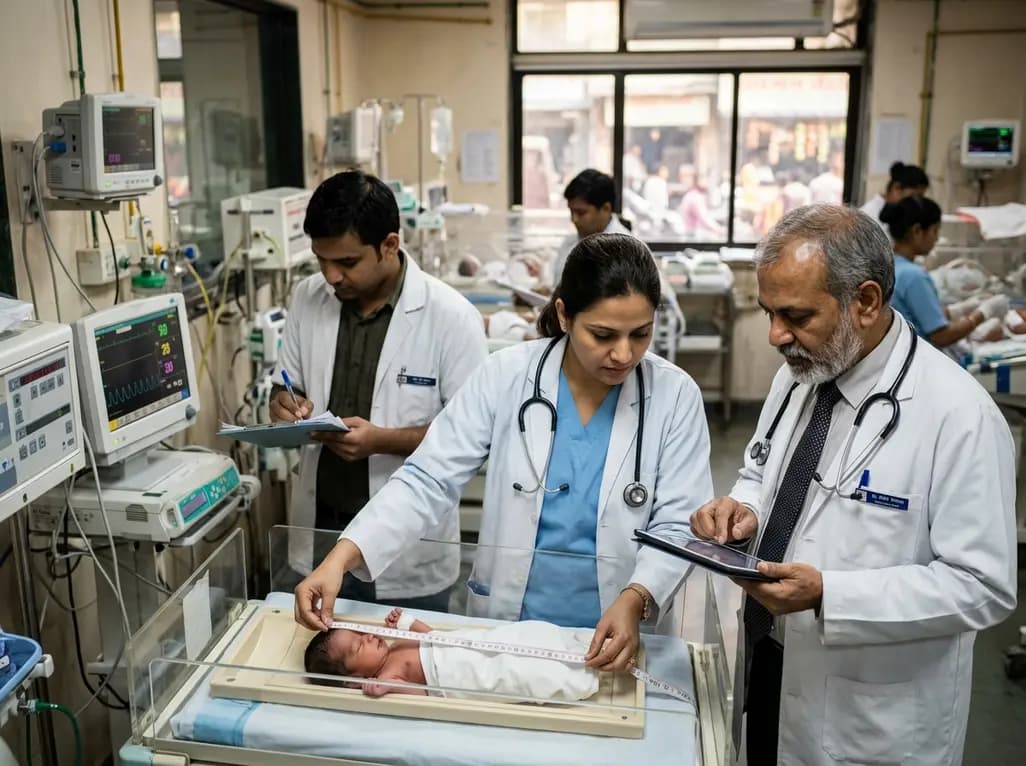
Scandinavian register evidence reveals that neonatal birth length strongly predicts adult health and mortality, whereas birth weight dictates cognitive capacity. Symmetric growth restriction causes far more severe long-term deficits than asymmetric restriction, underscoring the need for comprehensive anthropometry.
Today

Discover how rescue cutting balloon angioplasty successfully modifies heavily calcified carotid stenosis, enabling stent delivery without baroreceptor instability and ensuring favorable long-term neurologic outcomes.
Today
A retrospective CBCT study reveals that superior TMJ space asymmetry correlates moderately with occipital condyle-atlas-axis asymmetry in unilateral TMJ osteoarthritis, highlighting an imaging correlate between jaw biomechanics and upper cervical alignment rather than a standalone diagnostic marker.
Today
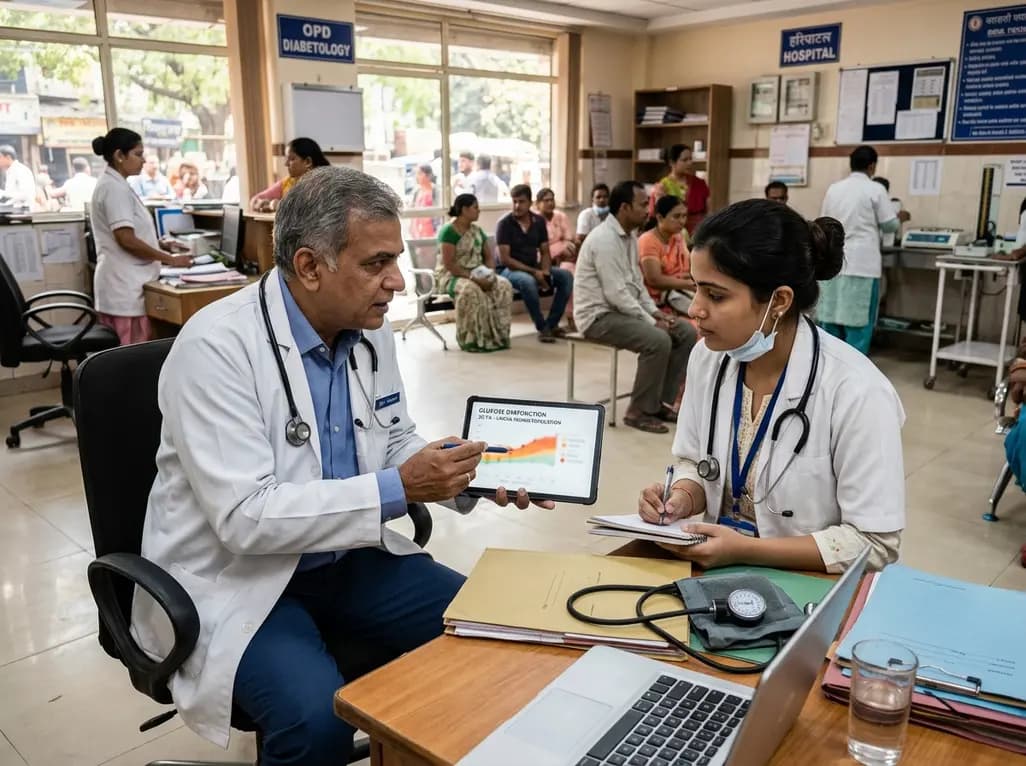
Data from the 2026 Workforce Health Index reveals that 38.7% of urban employees and dependents exhibit abnormal glycemic control. Emerging at increasingly younger ages, this metabolic shift intersects with severe vitamin deficiencies, highlighting the urgent need for early workplace screenings and targeted clinical care.
Today
