.webp&w=384&q=75)

Loading, please wait...
Loading, please wait...
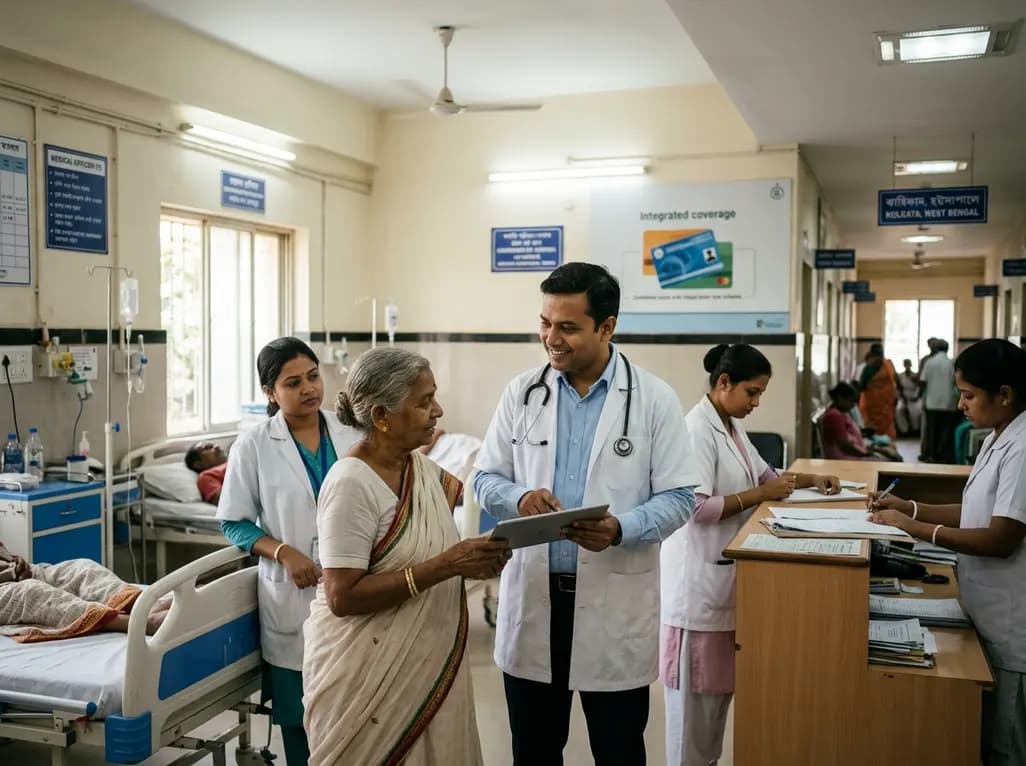
The recent healthcare expansion under Ayushman Bharat West Bengal marks a transformative milestone for regional public health delivery. The state government announced the simultaneous rollout of the central Ayushman Bharat Pradhan Mantri Jan Arogya Yojana alongside the state-sponsored Mukhyamantri Swasthya Bima Yojana. Consequently, this integrated framework guarantees cashless secondary and tertiary hospitalization benefits of up to five lakh rupees per eligible family annually. Furthermore, the collaborative rollout incorporates over 1,850 hospitals within West Bengal, establishing immediate access to standardized medical care across diverse districts. This structural shift addresses long-standing healthcare access disparities while establishing seamless nationwide portability for millions of resident beneficiaries. In addition, the policy bridges systemic gaps between state and central healthcare coverage systems.
Healthcare infrastructure development stands at the forefront of this administrative health reform across West Bengal. Therefore, the authorities have empanelled 1,240 private hospitals and nursing homes alongside 627 government medical facilities across the state. In total, over 1,850 healthcare centers will actively admit patients under both schemes. Additionally, this vast network ensures that rural and urban patients find tertiary treatment facilities close to their homes. Public healthcare centers will deliver fundamental and specialized services, while private healthcare providers contribute advanced surgical, oncological, and cardiac interventions. Furthermore, the integration creates nationwide portability for all enrolled beneficiaries. Patients can now access medical treatment across approximately 38,600 empanelled hospitals throughout India. Previously, state health cards restricted patient coverage strictly within regional boundaries. However, this nationwide portability provides critical relief for families who need advanced interventions at national apex centers like CMC Vellore, AIIMS, or specialized institutes in Mumbai and Chennai. Consequently, clinical referrals become substantially smoother, allowing doctors to coordinate care across state borders without administrative delays or unexpected financial burdens on impoverished households. Thus, the healthcare system effectively builds a unified clinical network.
A core strength of the new healthcare architecture lies in its universal approach to insurance eligibility. While Ayushman Bharat caters to economically vulnerable households identified through central socio-economic criteria, approximately 80 lakh families do not qualify under those federal thresholds. Therefore, the West Bengal government introduced the Mukhyamantri Swasthya Bima Yojana to close this critical insurance gap. Beneficiaries covered under the state scheme receive identical cashless treatment privileges up to five lakh rupees per year. Furthermore, the state initiative covers approximately 40 lakh senior citizens without imposing restrictive eligibility hurdles or socio-economic means testing. As a result, older individuals gain direct financial protection against age-related chronic illnesses, complex surgeries, and intensive care admissions. Both schemes operate through a harmonized digital backend linked to Aadhaar identification numbers. Thus, patients encounter identical hospital procedures, package authorizations, and claim protocols regardless of their primary scheme classification. By synchronizing central and state funding streams, the administration successfully establishes a universal safety net that prevents medical emergencies from pushing families into crippling debt cycles. This dual mechanism ensures comprehensive social protection.
The new health scheme framework significantly enhances clinical options by broadening available therapeutic procedures. Under the revised policy, the administration covers approximately 1,950 treatment packages, representing a notable expansion from the 1,700 procedures available previously. Consequently, clinicians can now prescribe advanced surgical interventions, comprehensive cancer regimens, and specialized diagnostic workflows with absolute financial confidence. In addition, the state government launched a dedicated eye care initiative to combat preventable visual impairment across vulnerable populations. To ensure comprehensive continuity of care beyond acute inpatient admission, the rollout integrates vital pharmaceutical distribution networks. Specifically, beneficiaries will gain direct access to 100 Amrit pharmacies and around 480 Pradhan Mantri Jan Aushadhi centres situated across government hospital premises. These retail touchpoints supply generic medicines, surgical consumables, cardiovascular drugs, and oncological implants at heavily subsidized rates. As a result, post-discharge medication adherence improves dramatically among chronic disease patients, effectively curbing avoidable hospital readmissions. Clinicians can confidently direct their patients toward these accredited pharmacy centers for reliable long-term medical maintenance. Therefore, outpatient medication access complements inpatient hospitalization seamlessly.
Sustainable implementation of large-scale healthcare assurance requires transparent financial planning and mutual stakeholder collaboration. For the federal Ayushman Bharat implementation, the central government has allocated approximately 1,000 crore rupees, covering 60 percent of operational expenses. Meanwhile, the state government bears the remaining 40 percent funding share to guarantee uninterrupted financial liquidity. However, engaging private healthcare establishments requires resolving historical friction points regarding procedural reimbursements. Several private medical facilities and charitable trust hospitals, including institutions managed by the Ramakrishna Mission, raised valid concerns regarding procedural reimbursement tariffs. In particular, healthcare administrators highlighted discrepancies between local Category B reimbursement rates and the higher reimbursement tiers awarded to hospitals in metropolitan hubs like Mumbai or Chennai. In response, state leadership promised an immediate review of these pricing structures. The health ministry intends to work closely with private hospital federations to establish equitable package rates without compromising clinical quality. By addressing these economic realities, the administration fosters a cooperative healthcare ecosystem that encourages robust private sector participation. Consequently, public-private partnerships will maintain high clinical standards.
This extensive healthcare overhaul brings decisive shifts for medical practitioners, hospital administrators, and healthcare delivery teams across West Bengal. First, the expansion of cashless coverage minimizes discharge delays and removes difficult financial discussions between clinical teams and distressed relatives. Consequently, emergency physicians and critical care specialists can initiate lifesaving interventions immediately upon admission without awaiting upfront monetary deposits. Second, standardized national clinical protocols under PM-JAY streamline pre-authorization requests, utilization reviews, and electronic medical documentation. Hospital management must optimize their administrative workflows, ensuring digital verification terminals and Ayushman Mitra helpdesks operate seamlessly 24/7. Additionally, tertiary specialists will receive referrals from a broader geographic pool due to nationwide portability. Medical staff must familiarize themselves with the 1,950 available treatment codes, documentation standards, and pre-authorization requisites to prevent claim rejections. Ultimately, the integration of central and state health schemes establishes a resilient healthcare model, allowing Indian medical professionals to deliver evidence-based, compassionate care across all socio-economic strata. Thus, clinical efficiency and healthcare equity advance concurrently.
Q1: How many hospitals are empanelled under the new healthcare rollout in West Bengal?
The integrated healthcare programme empanels over 1,850 medical facilities across West Bengal, encompassing 1,240 private healthcare establishments and 627 government medical centers. Furthermore, enrolled beneficiaries gain seamless access to approximately 38,600 empanelled hospitals across India through the nationwide portability feature. This extensive empanelment ensures that patients can access both basic primary interventions and highly specialized secondary or tertiary surgical procedures without facing geographical restrictions.
Q2: What are the primary coverage benefits under the Mukhyamantri Swasthya Bima Yojana?
The Mukhyamantri Swasthya Bima Yojana provides cashless secondary and tertiary hospitalization coverage of up to Rs 5 lakh per family annually for households ineligible for Ayushman Bharat. Additionally, the scheme covers around 40 lakh senior citizens without any socio-economic eligibility criteria. Beneficiaries receive cashless care across 1,950 standardized medical and surgical packages, mirroring all clinical entitlements provided under the central Ayushman Bharat programme.
Q3: How does the scheme assist patients with post-discharge medications and generic drugs?
The initiative integrates 100 Amrit pharmacy outlets and around 480 Pradhan Mantri Jan Aushadhi centres situated directly within government hospital premises across West Bengal. Consequently, patients receive heavily subsidized generic pharmaceuticals, specialized oncological medications, and affordable surgical consumables. This extensive pharmaceutical network significantly lowers out-of-pocket prescription expenses and promotes strict long-term therapeutic adherence for chronic disease patients following inpatient hospital discharge.
Disclaimer: This content is for informational and educational purposes only. It does not constitute medical advice or replace professional judgment. Refer to the latest local and national guidelines for clinical practice.
References

Read summarized clinical updates, watch expert medical content, and earn CME certifications right from your smartphone.
Open your smartphone camera to scan and install.





West Bengal integrates central Ayushman Bharat with the Mukhyamantri Swasthya Bima Yojana to provide comprehensive healthcare coverage up to Rs 5 lakh. The initiative empanels over 1,850 state hospitals, unlocks 38,600 healthcare facilities nationwide, and introduces expanded treatment packages for all citizens.
last month

Chronic eosinophilic pneumonia can present with atypical bronchoalveolar lavage findings and an organizing pneumonia pattern, necessitating surgical lung biopsy.
Today

Discover the crucial distinctions between mesonephric and mesonephric-like proliferations of the female genital tract. Learn the key histomorphologic, immunohistochemical, and molecular differences essential for accurate diagnosis and clinical management.
Today
Kikuchi-Fujimoto disease rarely presents with refractory shock and sinus bradycardia in children. This case report highlights life-threatening hemodynamic instability requiring intensive care, preserved cardiac contractility, and the critical diagnostic role of early excisional lymph node biopsy.
Today
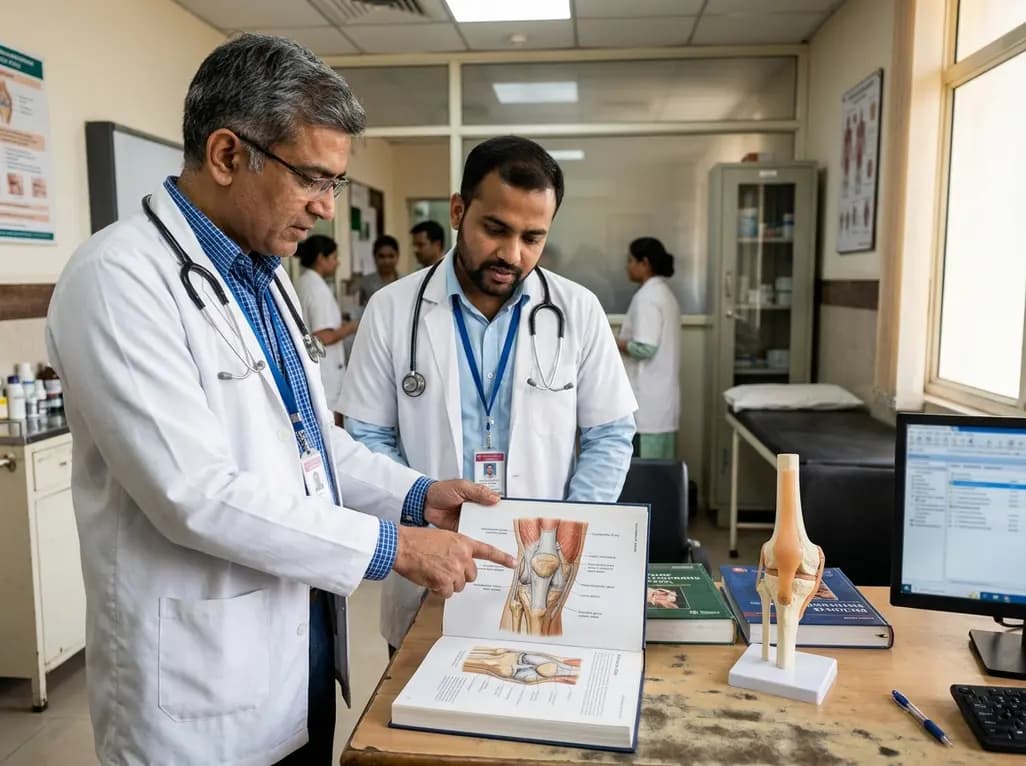
A narrative review investigates whether the articularis genus muscle functions as an independent anatomical entity or blends with the vastus intermedius. We evaluate its morphology, role in retracting the suprapatellar bursa, and direct clinical significance in anterior knee pain and arthroplasty.
Today

A Bayesian multilevel meta-analysis reveals that aerobic training combined with moderate carbohydrate restriction modestly lowers HbA1c in type 2 diabetes. However, sparse data and very low certainty leave incremental benefits over exercise or diet alone unproven, highlighting the need for individualized care.
Today
