.webp&w=384&q=75)

Loading, please wait...
Loading, please wait...

The Delhi government recently announced a significant Ayushman Bharat Delhi expansion to enhance healthcare access for vulnerable populations. This policy change specifically targets widows and persons with disabilities. Consequently, these individuals can now access comprehensive health insurance without financial worry. Chief Minister Rekha Gupta emphasized that this move ensures no citizen is deprived of quality treatment due to poverty.
The Delhi Cabinet decided to include approximately 3.97 lakh widows in the Pradhan Mantri Jan Arogya Yojana (PMJAY). Furthermore, 1.31 lakh Divyang or disabled persons will join the scheme. This decision extends benefits to their entire families as well. As a result, about 5.5 lakh additional families will receive robust health security cover. This group adds to the 5.5 lakh families already receiving benefits in the capital. The initiative focuses on making healthcare more inclusive and effective for all needy citizens.
The government is working hard to implement these changes effectively across the city. Currently, the state has issued 7,23,707 Ayushman cards to eligible residents. This total includes over 2.7 lakh cards for senior citizens above 70 years. To provide care, a network of 208 hospitals is already empanelled in Delhi. This network consists of 156 private hospitals and 53 government facilities. Therefore, patients have diverse options for seeking specialized medical services. To date, more than 29,120 beneficiaries have already received treatment through the State Health Agency.
Q1: Who are the new beneficiaries included in the Delhi PMJAY scheme?
The scheme now includes approximately 3.97 lakh widows and 1.31 lakh persons with disabilities (Divyang), along with their families.
Q2: How many hospitals in Delhi are empanelled under the Ayushman Bharat scheme?
There are currently 208 hospitals empanelled, comprising 156 private hospitals and 53 government hospitals.
Q3: Does the scheme cover senior citizens in Delhi?
Yes, senior citizens above 70 years of age are already covered under the scheme, with over 2.74 lakh cards issued to them so far.
Disclaimer: This content is for informational and educational purposes only. It does not constitute medical advice or replace professional judgment. Refer to the latest local and national guidelines for clinical practice.
References

Read summarized clinical updates, watch expert medical content, and earn CME certifications right from your smartphone.
Open your smartphone camera to scan and install.





The Delhi government has included 3.97 lakh widows and 1.31 lakh disabled persons under the Ayushman Bharat PMJAY scheme, adding 5.5 lakh families to the co...
7 months ago

Review how tailored exercise programs benefit frail older patients with heart failure. Explore pathophysiological mechanisms, individualized training prescriptions, and strategies to overcome adherence barriers in clinical practice.
Today
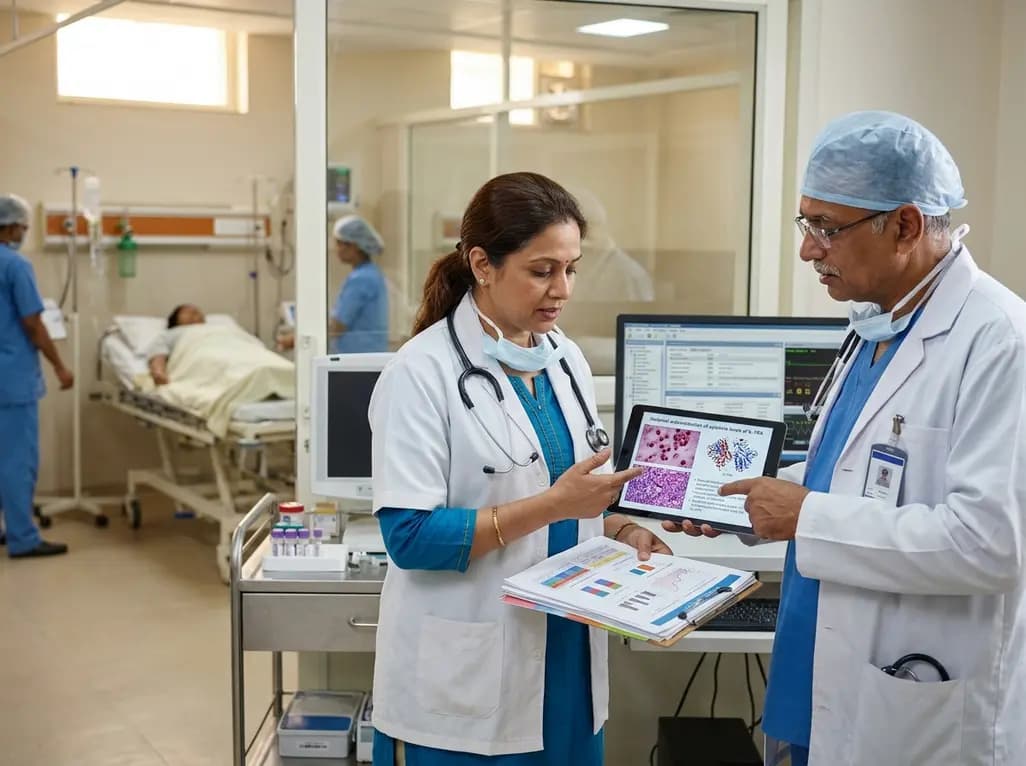
Recent clinical studies reveal maternal autoantibodies targeting IL-1RA as potential triggers for preterm labor, opening avenues for targeted cytokine therapies. Concurrently, new perioperative findings show inhaled cannabis increases propofol requirements during upper endoscopy compared to oral edible consumption.
Today

In high-risk pulmonary embolism complicated by severe anemia and active uterine bleeding, systemic thrombolysis is contraindicated. Large-bore aspiration thrombectomy provides rapid hemodynamic rescue without fibrinolysis, supported by inferior vena cava filter placement and multidisciplinary critical care.
Today

This comparative study evaluates posterior labral tears with and without glenohumeral instability, highlighting distinct demographic patterns, MRI underestimation in stable shoulders, and successful arthroscopic repair outcomes.
Today

A clinical study demonstrates that early intervention with tocilizumab, either as monotherapy or bridged with corticosteroids, achieves significant proptosis reduction and resolves active inflammation in treatment-naive thyroid eye disease.
Today
