.webp&w=384&q=75)

Loading, please wait...
Loading, please wait...
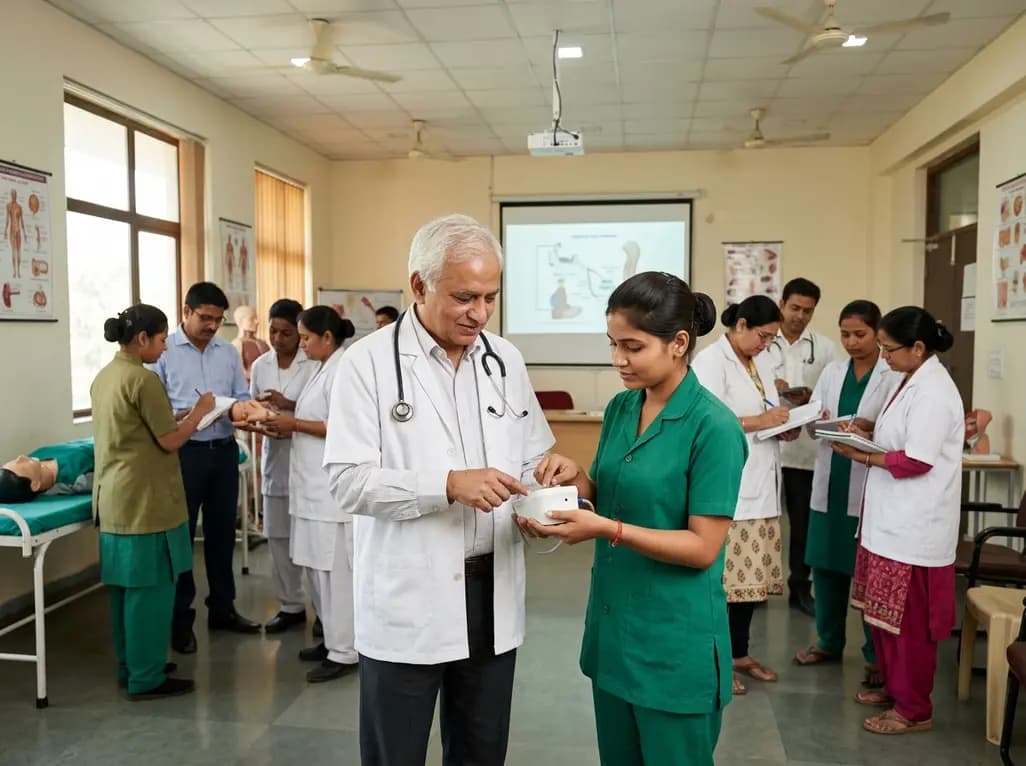
The Indian Union Health Ministry recently completed the National Training of Trainers to reinforce comprehensive primary healthcare services countrywide. Specifically, this critical program took place at the National Health Systems Resource Centre in New Delhi. Consequently, over 110 national and master trainers converged to establish a standardized, highly skilled workforce. Ultimately, this national effort aims to transform clinical delivery at Ayushman Arogya Mandirs by empowering frontline healthcare professionals with advanced clinical skills.
To begin with, the government renamed the Health and Wellness Centres to Ayushman Arogya Mandirs to mark a major paradigm shift. This strategic rebranding represents a transition from selective, basic healthcare to comprehensive, patient-centric clinical delivery. Under this model, public health facilities offer an expanded range of services. Specifically, these services span preventive, promotive, curative, rehabilitative, and palliative care directly within local communities. Consequently, this decentralized setup significantly reduces the heavy patient burden on secondary and tertiary medical institutions. Furthermore, local clinics now offer free essential drugs and basic diagnostics closer to patient homes. Thus, the model targets the root social determinants of health while successfully managing chronic conditions. However, maintaining consistent service delivery across diverse regions requires highly standardized clinical guidelines. This structured training program directly addresses this operational need. Therefore, medical educators designed the new framework to ensure every citizen receives uniform, high-quality clinical attention. Ultimately, these clinical hubs will serve as the primary defensive line against escalating healthcare challenges in rural India.
To achieve seamless clinical care, the National Training of Trainers focuses on five specific healthcare cadres. Specifically, the initiative targets Medical Officers, Staff Nurses, Community Health Officers, Auxiliary Nurse Midwives, and Accredited Social Health Activists. Each cadre plays a distinct yet highly collaborative role in the patient care continuum. For instance, Community Health Officers lead localized clinical teams while collaborating with visiting medical officers. Meanwhile, frontline activists and midwives manage community mobilization, basic screening, and maternal welfare programs. Additionally, the training aligns these five cadres under a single, unified operational strategy. Consequently, this alignment ensures that clinical protocols remain completely uniform from the household level to the primary clinic. Therefore, healthcare professionals can avoid fragmented care pathways that often delay critical interventions. Furthermore, the program helps build strong clinical networks that streamline patient referrals to higher-level hospitals. Ultimately, this holistic synchronization ensures that patients receive continuous, coordinated, and efficient care. Consequently, this collaborative framework dramatically minimizes clinical errors and enhances overall patient outcomes across diverse rural landscapes.
Significantly, the training program derives its structure from the newly launched Integrated Training Strategy. Union Health Minister Jagat Prakash Nadda initially unveiled this comprehensive strategy at Chandigarh in early 2026. This strategy represents a major transition from knowledge-heavy education to highly practical, competency-based capacity building. For this reason, the curriculum combines intensive classroom sessions with hands-on clinical simulations. Additionally, trainers successfully utilized the advanced facilities of the National Institute of Health and Family Welfare Skill Lab. Furthermore, the strategy highlights that clinical competency must extend beyond purely technical knowledge. Specifically, the ministry emphasizes behavioral competencies, compassion, empathy, and effective doctor-patient communication. Therefore, the trainers focused heavily on soft skills to foster compassionate, patient-centered clinical care. Consequently, patients will experience a more welcoming environment when seeking medical assistance at public clinics. Meanwhile, the program empowers primary healthcare workers to handle difficult clinical scenarios with greater confidence. Thus, this balanced educational approach ensures that clinical safety aligns perfectly with empathetic care delivery. Ultimately, the ministry expects this strategy to redefine patient experiences.
To guarantee nationwide impact, the government will deploy this clinical training through a decentralized cascade model. Specifically, the rollout will officially commence in August 2026 across more than 100 designated Regional Training Institutes. This decentralization ensures that state-level healthcare facilities can adapt the national guidelines to their local epidemiological realities. For instance, regional trainers will directly educate local clinical staff, creating a powerful multiplier effect. Consequently, this structured approach will rapidly upgrade the skills of thousands of primary healthcare providers. Additionally, using regional centers prevents logistical bottlenecks that often disrupt centralized healthcare campaigns. Therefore, state administrations can maintain clinical service continuity while systematically updating their workforce. Furthermore, this cascade system allows for continuous monitoring and rapid feedback loops during the implementation phase. Thus, healthcare administrators can easily identify and resolve training gaps in real-time. Ultimately, this efficient model guarantees that high-quality clinical standards reach even the most remote sub-centers in the country. Consequently, the national health administration expects a significant rise in local workforce proficiency.
Ultimately, the primary goal of this extensive training remains the restoration of public confidence in government health facilities. Smt. Aradhana Patnaik highlighted that strengthening community trust requires both clinical excellence and formal quality certification. Therefore, the Ministry of Health focuses heavily on standardized clinical standards across all Ayushman Arogya Mandirs. When patients trust their local primary healthcare team, they seek timely preventive screenings and early interventions. Consequently, this proactive health-seeking behavior drastically reduces out-of-pocket medical expenditures for vulnerable families. Furthermore, consistent clinical quality builds a reliable database for public health surveillance and future epidemic planning. Additionally, the integration of these programs under one unified umbrella fosters inter-agency convergence and better resource allocation. Thus, the healthcare system moves closer to achieving sustainable, long-term health equity. However, maintaining this trust requires continuous supportive supervision and periodic retraining of clinical staff. Therefore, the ministry remains committed to establishing robust quality assurance protocols at every administrative level. Ultimately, this comprehensive effort will elevate the public primary care system into a highly trusted national resource.
Q1: What are the five healthcare cadres trained under the National Training of Trainers program?
The program targets five essential frontline cadres delivering care at Ayushman Arogya Mandirs. Specifically, these include Medical Officers, Staff Nurses, Community Health Officers, Auxiliary Nurse Midwives, and Accredited Social Health Activists. Additionally, this diverse training aligns their clinical responsibilities under a unified framework. Consequently, this collaborative alignment ensures seamless, team-based care that effectively addresses complex rural health challenges.
Q2: How does the Integrated Training Strategy differ from traditional clinical training programs?
Unlike traditional, program-specific education, the Integrated Training Strategy focuses entirely on competency-based, patient-centric learning. For this reason, the curriculum combines rigorous clinical simulations with soft skills training, including empathy and communication. Therefore, the strategy ensures that healthcare providers possess both clinical competence and compassionate communication. Ultimately, this shift aims to establish a highly professional, welcoming public healthcare system.
Q3: What is the cascade model of implementation planned for August 2026?
To scale training nationwide, the government will implement a decentralized cascade model across more than 100 Regional Training Institutes starting in August 2026. Initially, national trainers will educate regional instructors. Subsequently, these regional instructors will train frontline workers at state and district levels. Consequently, this approach ensures standardized clinical education while allowing regional facilities to adapt to local health requirements.
Disclaimer: This content is for informational and educational purposes only. It does not constitute medical advice or replace professional judgment. Refer to the latest local and national guidelines for clinical practice.
References

Read summarized clinical updates, watch expert medical content, and earn CME certifications right from your smartphone.
Open your smartphone camera to scan and install.





The Union Health Ministry has successfully concluded the National Training of Trainers to empower frontline healthcare workers. Discover how this cascade-based training model is set to elevate comprehensive primary healthcare delivery at Ayushman Arogya Mandirs across India starting in August 2026.
3 months ago

Explore vital recurrent stroke predictors in lacunar stroke patients managed with intensive blood pressure lowering. This analysis examines trial findings from SPS3 to uncover residual vascular risks, metabolic factors, and targeted secondary prevention strategies for high-risk neurological patients.
Today

Odisha has established India's first state-level clinical protocol specifically tailored for pregnant women with sickle cell disease. Developed with NHM and UNICEF, the framework provides structured antenatal screening, crisis mitigation, standardized referral pathways, and specialized interdisciplinary care.
Today

India is advancing preventive healthcare by integrating genomics, artificial intelligence, and quantum technologies. With the SANGAM programme sequencing one million Indian genomes, clinicians can unlock personalized therapies, detect cardiometabolic risks early, and curb the burden of diabetes and heart disease.
Today
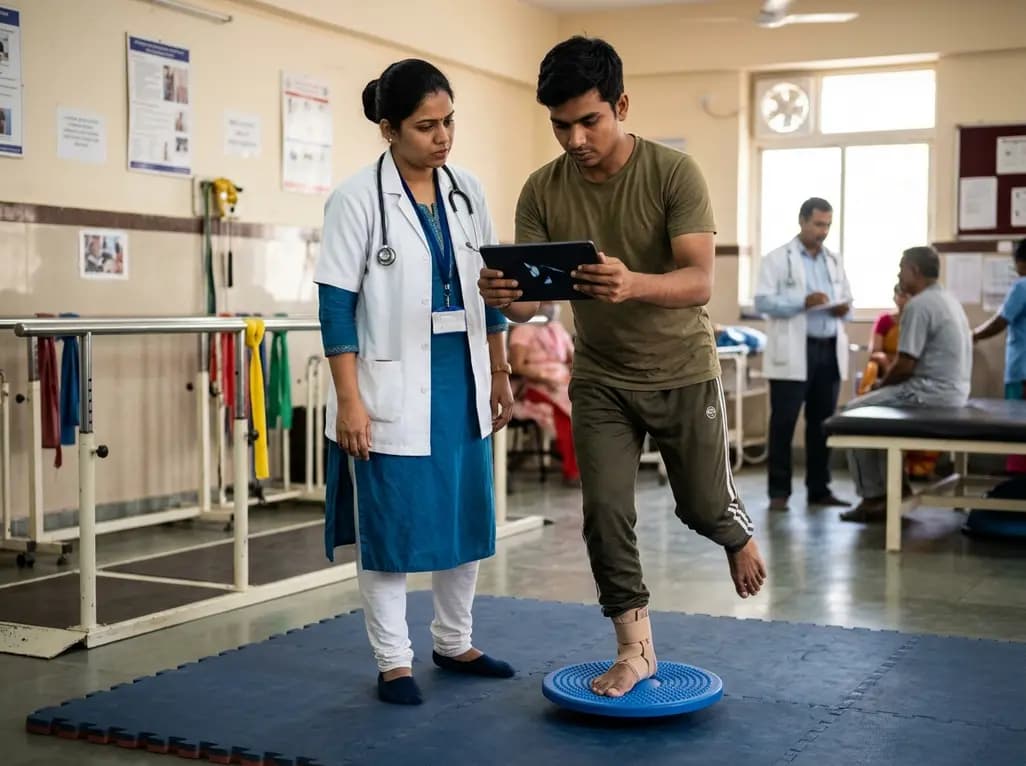
A randomized controlled trial demonstrates that an eight-week dual-task training intervention significantly improves static and dynamic postural control over standard balance exercises in individuals with chronic ankle instability, addressing critical neurocognitive deficits during athletic and daily activities.
Today

A retrospective cohort study of 7,716 ICU patients from the MIMIC-IV database demonstrates that Gradient Boosting Decision Trees significantly outperform traditional SOFA scores in predicting in-hospital mortality among patients with sepsis and diabetes, with SHAP analysis providing clinical interpretability.
Today
