.webp&w=384&q=75)

Loading, please wait...
Loading, please wait...

Neurosurgeons often face the significant challenge of maximizing tumor removal while preserving critical neurological functions. A recent study highlights how awake glioma resection utilizing subcortical stimulation (SCS) serves as a potent tool for predicting language outcomes. By assessing the proximity of the resection cavity to individual white matter tracts, clinicians can better navigate the delicate balance between oncological goals and functional safety.
The research involved a single-center study of 130 patients undergoing surgery for language-eloquent high-grade gliomas (HGG). Investigators utilized a multimodal approach, including diffusion tractography, 5-aminolevulinic acid (5-ALA), and intraoperative language testing. They discovered that specific stimulatory thresholds are highly predictive of postoperative deficits. Specifically, a threshold of ≤ 4 mA for the inferior fronto-occipital fasciculus (IFOF) strongly correlates with semantic processing impairments. Similarly, thresholds of ≤ 5 mA for the arcuate fasciculus (AF) and superior longitudinal fasciculus (SLF) effectively predict auditory naming and repetition deficits.
Furthermore, the study identified the inferior longitudinal fasciculus (ILF) as a particularly sensitive structure. A stimulation threshold of ≤ 4 mA in this region frequently resulted in postoperative reading difficulties. While 53.1% of patients experienced a new or worsened language deficit immediately after surgery, most cases were transient. Only 9.2% of patients suffered from permanent deficits lasting longer than three months. Consequently, intraoperative clinical deterioration remains a critical warning sign that surgeons must monitor closely.
Beyond intraoperative stimulation, preoperative factors also influence long-term recovery. For instance, patients with a baseline speech deficit face a higher risk of permanent decline. Additionally, the study found that the ILF-related reading function shows the least propensity for functional recovery once damaged. Therefore, protecting multiple white matter tracts simultaneously is vital for maintaining a patient's quality of life. This evidence supports a multimodal strategy where subcortical mapping guides the surgical limits to avoid functional morbidity.
Subcortical stimulation thresholds act as a proximity alert. Lower thresholds (typically between 4 mA and 5 mA) indicate that the surgical instruments are near functional language tracts, significantly increasing the risk of postoperative impairment.
The inferior longitudinal fasciculus (ILF) is the primary tract associated with reading function. It is highly sensitive to surgical manipulation and often shows poor recovery compared to other language-related tracts.
Disclaimer: This content is for informational and educational purposes only. It does not constitute medical advice or a professional relationship. Refer to the latest local and national guidelines for clinical practice.
References
Honeyman SI et al. Speech mapping in awake high-grade glioma resection: subcortical tract proximity as a predictor of language outcomes. J Neurosurg. 2026 Mar 13. doi: 10.3171/2025.10.JNS251541. PMID: 41825076.

Read summarized clinical updates, watch expert medical content, and earn CME certifications right from your smartphone.
Open your smartphone camera to scan and install.





A study of 130 patients identifies subcortical stimulation thresholds as key predictors of language decline after awake high-grade glioma resection....
7 months ago

India is advancing preventive healthcare by integrating genomics, artificial intelligence, and quantum technologies. With the SANGAM programme sequencing one million Indian genomes, clinicians can unlock personalized therapies, detect cardiometabolic risks early, and curb the burden of diabetes and heart disease.
Today
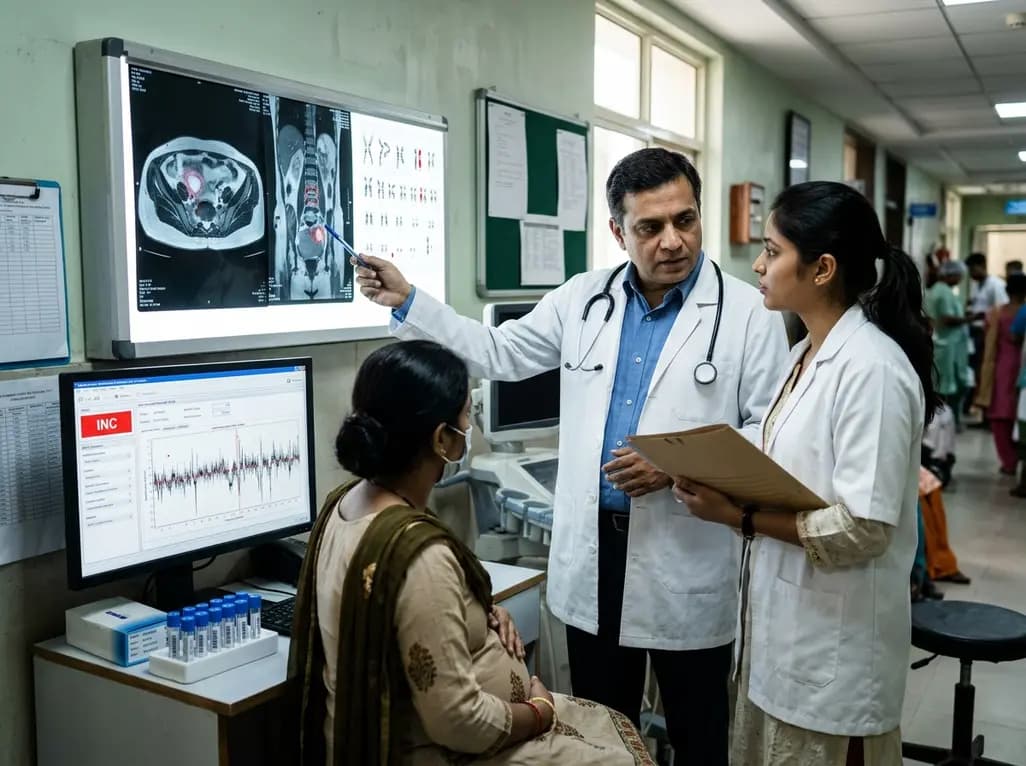
Occult maternal malignancy accounts for 3.82% of persistent unreportable NIPT results with genomic noise. Multiple chromosomal aberrations, notably on chromosome 18, warrant thorough oncological evaluation and whole-body MRI to ensure timely maternal diagnosis while preserving fetal care.
Today
This article reviews the forensic and clinical complexities of acute myocarditis arising on left ventricular hypertrophy in children, highlighting early diagnostic red flags and multidisciplinary postmortem autopsy protocols.
Today
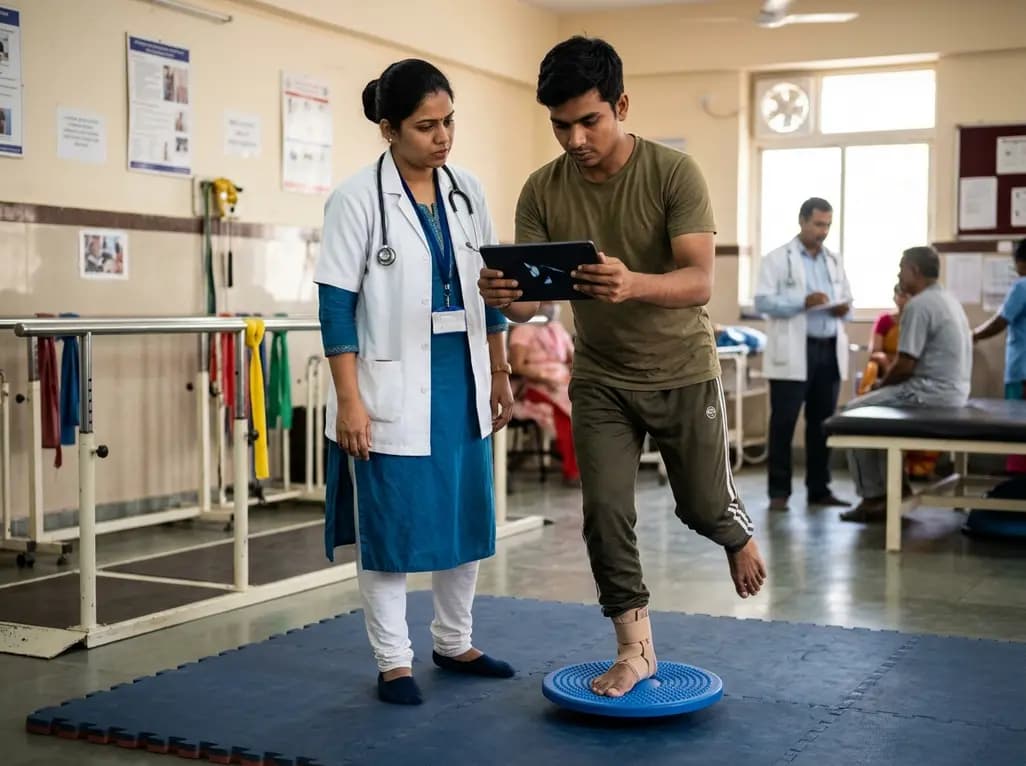
A randomized controlled trial demonstrates that an eight-week dual-task training intervention significantly improves static and dynamic postural control over standard balance exercises in individuals with chronic ankle instability, addressing critical neurocognitive deficits during athletic and daily activities.
Today

A retrospective cohort study of 7,716 ICU patients from the MIMIC-IV database demonstrates that Gradient Boosting Decision Trees significantly outperform traditional SOFA scores in predicting in-hospital mortality among patients with sepsis and diabetes, with SHAP analysis providing clinical interpretability.
Today
