.webp&w=384&q=75)

Loading, please wait...
Loading, please wait...
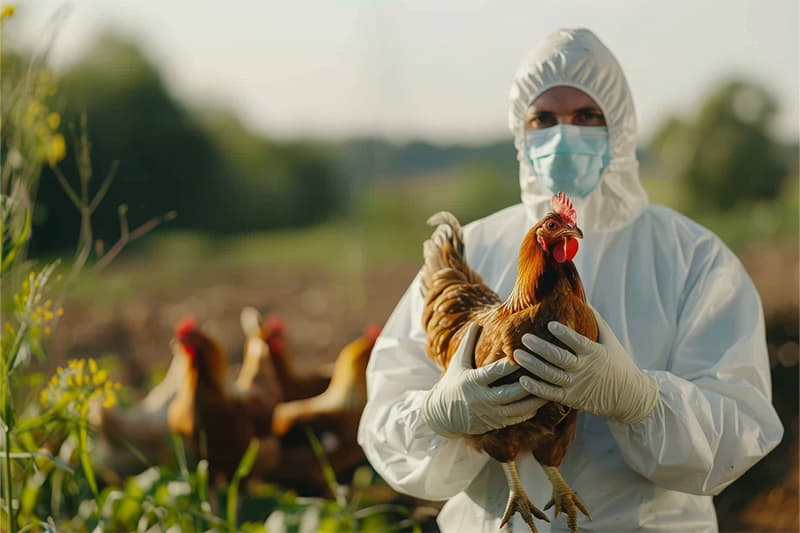
The Tamil Nadu government has sounded a high alert following reports of widespread crow mortality across the state, triggering an Avian Influenza Alert. This development mandates stringent biosecurity and clinical vigilance. The Department of Animal Husbandry, Dairying, and Fisheries consequently issued a comprehensive advisory for poultry farmers and wild bird handlers. Furthermore, the Directorate of Public Health and Preventive Medicine (DPH) released a separate communication, urging the public to follow strict safety protocols.
The DPH advises individuals to seek immediate medical assistance if they experience flu-like symptoms. These symptoms include a cough, cold, fever, or breathing difficulties. Therefore, clinicians must maintain a high index of suspicion, especially for specific at-risk groups. Specific caution applies to those working in slaughterhouses and personnel who handle sick or dead birds. Additionally, the Animal Husbandry department directed officials to intensify surveillance. They must step up vigil to detect any unusual sickness or mortality among crows, migratory birds, and commercial poultry. The new protocols strictly instruct veterinary staff to refrain from conducting autopsies in the field. Instead, they must refer all carcasses to designated Regional Disease Diagnostic Labs for containment and clinical accuracy. Finally, the advisory mandates that authorities must either burn or bury dead birds deep to prevent the infection's spread through scavenging.
Q1: Who should seek immediate medical assistance during this Avian Influenza Alert?
Individuals who experience flu-like symptoms such as cough, cold, fever, or breathing difficulties must seek immediate medical help. Specific caution is urged for those who work in slaughterhouses or handle sick/dead birds.
Q2: What should the public do if they observe unusual bird deaths?
The authorities urge the public to immediately inform the Animal Husbandry department. This action facilitates a rapid response and helps prevent a potential zoonotic spillover to humans.
Q3: What are the new protocols for handling dead birds in the field?
Veterinary staff must strictly refrain from conducting autopsies in the field. They must instead refer all carcasses to designated Regional Disease Diagnostic Labs. Authorities must also either burn or bury dead birds deep to prevent the spread of infection.
References

Read summarized clinical updates, watch expert medical content, and earn CME certifications right from your smartphone.
Open your smartphone camera to scan and install.





The Tamil Nadu government has sounded a high alert following reports of widespread crow mortality across the state, triggering an Avian Influenza Alert. Thi...
8 months ago

A retrospective cohort study of 7,716 ICU patients from the MIMIC-IV database demonstrates that Gradient Boosting Decision Trees significantly outperform traditional SOFA scores in predicting in-hospital mortality among patients with sepsis and diabetes, with SHAP analysis providing clinical interpretability.
Today

A prenatal case highlights severe glutaric acidemia type II presenting as bilateral hyperechoic cystic kidneys at 18 weeks. Whole-exome sequencing revealed a novel homozygous ETFDH frameshift variant, demonstrating the power of rapid genetic testing in fetal renal anomalies.
Today
This article reviews the forensic and clinical complexities of acute myocarditis arising on left ventricular hypertrophy in children, highlighting early diagnostic red flags and multidisciplinary postmortem autopsy protocols.
Today

This comparative study evaluates posterior labral tears with and without glenohumeral instability, highlighting distinct demographic patterns, MRI underestimation in stable shoulders, and successful arthroscopic repair outcomes.
Yesterday

A clinical study demonstrates that early intervention with tocilizumab, either as monotherapy or bridged with corticosteroids, achieves significant proptosis reduction and resolves active inflammation in treatment-naive thyroid eye disease.
Yesterday
