.webp&w=384&q=75)

Loading, please wait...
Loading, please wait...

Pediatric healthcare providers recognize that motor development plays a vital role in functional independence and social communication. Children with autism spectrum disorder frequently experience significant coordination deficits alongside sensory processing challenges. Therefore, structured autism motor interventions are essential components of comprehensive multidisciplinary care. However, engaging children with moderate and high support needs presents distinct clinical challenges during therapeutic sessions. A groundbreaking observational study published in 2026 offers critical insights into how therapists can optimize practice time, overcome dysregulation, and build effective relational frameworks during motor skill programs.
Historically, clinicians evaluated therapy success primarily through nominal attendance and completed protocol milestones. However, active behavioral engagement determines neuroplastic motor adaptations. In this systematic investigation, researchers evaluated nine children aged four to ten years with moderate and high support needs. The children engaged in a thirteen-week, twice-weekly motor development program delivered by exercise physiologists. Using an objective, validated observational coding framework, the team quantified the exact duration of active gross motor skill practice. Consequently, investigators found that participants spent an average of 29.6 percent of total session time in direct motor practice. Although this proportion appears modest initially, clinicians must evaluate it within the context of substantial neurodevelopmental challenges. In fact, sustaining focused physical effort requires immense cognitive stamina and sensory tolerance. Therefore, pediatricians must understand that direct exercise time represents only one part of the broader clinical picture.
During the remaining seventy percent of session time, children demonstrated diverse off-task actions. Rather than classifying these behaviors as deliberate defiance, observers categorized them into sensory-seeking activities, avoidance, co-regulation attempts, and exploratory social actions. For instance, many children actively sought vestibular or proprioceptive input to stabilize their nervous systems. Others required brief pauses to process multisensory overload caused by the physical environment. Furthermore, social exploration often served as a vital tool for establishing safety and mutual rapport. Thus, off-task intervals serve necessary physiological and emotional functions. When clinicians recognize these actions as self-regulatory coping mechanisms, they can prevent caregiver frustration and reduce patient distress. In addition, recognizing sensory triggers allows practitioners to adjust therapy environments dynamically, transforming potential disruptions into productive restorative moments.
Qualitative analysis of semi-structured interviews with treating clinicians revealed a clear, overarching theme. Specifically, providers must prioritize the therapeutic relationship above rigid adherence to scheduled exercises. Therapists emphasized that rigid compliance models frequently trigger escalating anxiety and behavioral withdrawal in vulnerable children. Conversely, attuning to nonverbal cues, idiosyncratic communication styles, and subtle regulatory shifts fostered mutual trust and increased cooperation. Consequently, successful clinicians continuously adjusted task complexity, movement pacing, and environmental sensory demands. Moreover, therapists learned that meeting a child where they are emotionally directly improves long-term skill acquisition. In pediatric clinical practice, establishing emotional safety represents a necessary prerequisite for physical execution. Therefore, therapy protocols must allow flexible pacing that honors individual sensory and communicative profiles.
Motor skill acquisition in pediatric neurodevelopmental disorders requires repetitive practice to strengthen neuromuscular pathways. However, this clinical trial indicates that relational security and somatic regulation act as fundamental mediators of functional improvement. When a therapist validates a child's sensory preferences, the child experiences reduced autonomic arousal. Consequently, this regulated physiological state increases executive function and motor planning capacity. Furthermore, moment-to-moment clinical decisions dictate the ultimate success of gross motor training. Therapists frequently integrated sensory pauses, playful animal movements, and visual schedules to re-engage distracted participants. As a result, children re-entered active practice willingly without feeling coerced. Clinicians who understand these complex mechanisms of change can tailor rehabilitation prescriptions far more effectively.
To implement these findings, pediatricians and allied health professionals should adopt patient-centered procedural adjustments. First, clinicians should educate caregivers that therapy sessions naturally include significant regulatory downtime. Unrealistic expectations regarding continuous physical drills create unnecessary stress for both families and providers. Second, multidisciplinary teams must cultivate shared communication systems across occupational, physical, and speech therapies. For example, incorporating consistent visual cues across all therapeutic settings reinforces predictability and reduces task transition anxiety. Third, clinics should design motor therapy environments with adaptable lighting, quiet decompression corners, and diverse sensory equipment. Ultimately, these practical adjustments transform motor training into an enjoyable, sustainable therapeutic endeavor that supports meaningful developmental milestones.
Research demonstrates that children with moderate to high support needs spend approximately 29.6 percent of session time in active gross motor skill practice. The remaining time involves sensory-seeking actions, emotional co-regulation, exploration, and structured rest. Clinicians consider this distribution appropriate because neurodivergent children require substantial regulatory support to tolerate strenuous physical drills safely.
Off-task behaviors usually represent adaptive regulatory coping mechanisms rather than non-compliance or behavioral opposition. Children often engage in movement exploration, sensory-seeking, or task avoidance to modulate autonomic nervous system arousal. Furthermore, environmental stimuli and high cognitive demands can overwhelm children, prompting self-soothing actions that restore baseline emotional equilibrium before resuming guided exercises.
Clinicians can improve therapeutic engagement by prioritizing the therapeutic alliance over rigid drill completion. Providers should actively observe nonverbal communicative signals, adjust environmental sensory loads, and embed preferred interests into gross motor tasks. Additionally, incorporating strategic regulatory pauses ensures children feel emotionally secure, which directly enhances motivation and functional movement outcomes over time.
Disclaimer: This content is for informational and educational purposes only. It is not intended to be a substitute for professional medical advice, diagnosis, or treatment. Always seek the advice of your physician or another qualified healthcare provider with any questions you may have regarding a medical condition. Refer to the latest local and national guidelines for clinical practice.
References
Svensson L et al. Engagement of Children with Moderate and High Support Needs Autism in Motor Program Sessions. Phys Occup Ther Pediatr. 2026 Sep 02. doi: 10.1080/01942638.2026.2722992. PMID: 42684076.
Holloway JM, Long TM. The intersection of gross motor abilities and participation in children with autism spectrum disorder. Disabil Rehabil. 2021;43(15):2156-2164.
Li J, et al. Effectiveness of exercise interventions on gross motor skills in children with autism spectrum disorder: a systematic review and meta-analysis. Front Psychiatry. 2025;16:1745638.

Read summarized clinical updates, watch expert medical content, and earn CME certifications right from your smartphone.
Open your smartphone camera to scan and install.





Discover insights from new research on autism motor interventions for children with moderate to high support needs, highlighting therapeutic alliance, behavioral regulation, and gross motor skill engagement.
4 weeks back

A laboratory technician's death in Siberia from an unverified respiratory pathogen has renewed global vigilance for pneumonic plague. Clinicians must recognize early presentations of Yersinia pestis, enforce immediate respiratory isolation, and start early bactericidal therapy to prevent severe secondary spread.
Today

A retrospective study of 824 patients undergoing over 2,200 intradetrusor onabotulinumtoxinA injections identifies sex- and etiology-specific predictors of 2-week post-void residual, highlighting the influence of baseline residual volumes, toxin dosage, and distinct urodynamic parameters on urinary retention risk.
Today
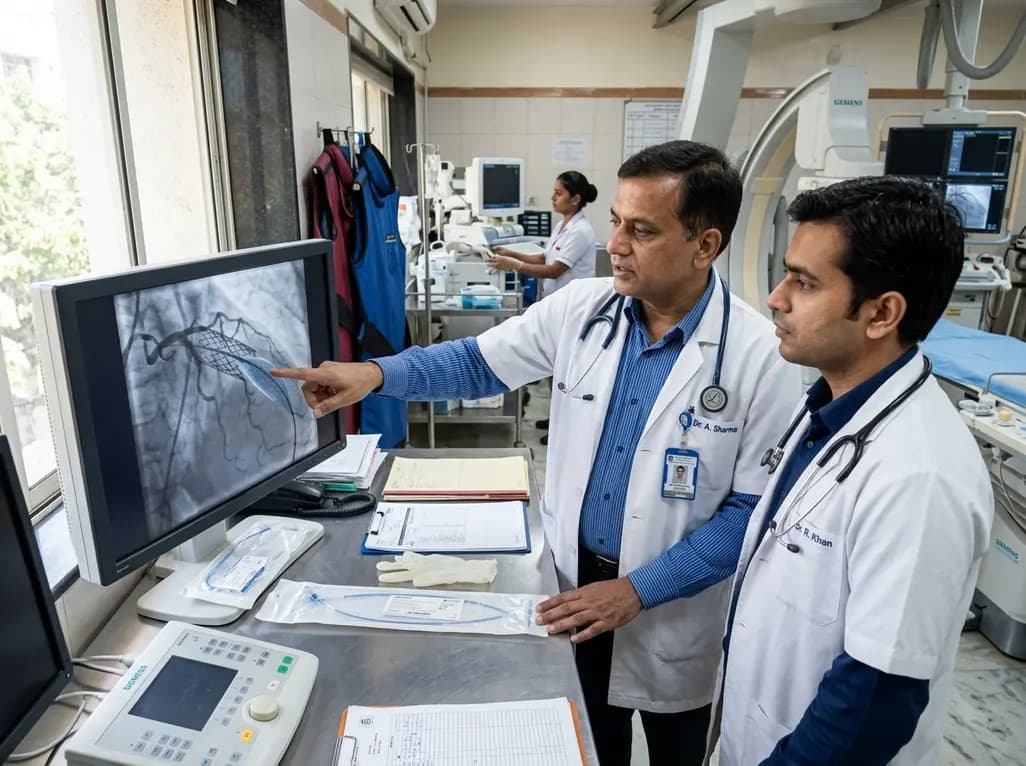
The US FDA has granted approval to the SELUTION SLR drug-eluting balloon for treating coronary in-stent restenosis. This milestone introduces a sustained-release sirolimus platform that eliminates the need for additional permanent metallic stents while maintaining robust vascular healing and luminal patency.
Today

The Thumbs-Out Classification (TOC) is a reliable screening tool for detecting thumb-in-palm deformity in children with cerebral palsy. Utilizing traffic-light tiers for radial abduction, TOC enables clinicians to monitor upper limb function and initiate timely therapeutic or surgical interventions.
Today

A comprehensive review analyzes periconceptional GLP-1 receptor agonist exposure, revealing reassuring data on congenital anomalies and adverse perinatal outcomes while emphasizing the need for cautious patient counseling.
Today
