.webp&w=384&q=75)

Loading, please wait...
Loading, please wait...

Managing a moderate-severe traumatic brain injury requires a highly coordinated clinical approach, particularly when predicting long-term neurological recovery. The Australian Traumatic Brain Injury Initiative (AUS-TBI) consortium has recently addressed a significant gap in neurotrauma care by establishing a unified single data dictionary. This framework focuses on selecting common data elements during the acute phase of injury that directly correlate with patient outcomes. Consequently, clinicians can utilize these standardized measures to better understand the trajectory of recovery across the entire lifespan. This initiative represents a massive shift from fragmented data collection toward a centralized, evidence-based methodology. Furthermore, the inclusion of various stakeholders ensures that the selected data points are both clinically relevant and meaningful to the patients themselves. By focusing on variables that have been proven to predict outcomes, the consortium aims to streamline research and enhance clinical decision-making. Therefore, this approach provides a robust foundation for future neurotrauma studies, ensuring that data collected in emergency departments and intensive care units remains consistent and actionable. In addition, the initiative emphasizes the importance of personalized care, recognizing that every brain injury follows a unique physiological and social path. This standardized approach ultimately seeks to reduce the global burden of neurotrauma.
The core of the AUS-TBI initiative involves the identification of specific common data elements (CDEs) that serve as reliable predictors for recovery. Historically, the lack of standardization in data collection has hindered the ability of researchers to compare results across different clinical trials and healthcare systems. However, the unified data dictionary addresses this by providing a clear set of definitions and measurement protocols. These elements cover a wide range of clinical parameters, including neurological assessments, imaging findings, and laboratory results obtained during the early stages of care. Moreover, the initiative has incorporated additional measures specifically designed to facilitate comparative effectiveness research. This allows healthcare providers to evaluate different treatment strategies more accurately and determine which interventions yield the best results for specific patient profiles. Additionally, the integration of data linkage capabilities means that acute care data can be seamlessly combined with long-term rehabilitation records. Consequently, this holistic view of the patient journey enables a deeper understanding of how early interventions influence late-stage quality of life. By adopting these standardized elements, clinical centers in Australia and potentially worldwide can contribute to a larger, more powerful database, driving innovation in neurotrauma management and improving prognostic accuracy for patients and their families.
Accurate outcome prediction remains one of the most challenging aspects of treating a moderate-severe traumatic brain injury. The AUS-TBI data dictionary was specifically curated to include only those variables with a demonstrated predictive value. This selection process ensures that clinicians are not overwhelmed by excessive data, but rather focus on the factors that truly matter for recovery. For instance, the dictionary highlights specific physiological markers and injury characteristics that correlate with cognitive and functional outcomes months or years after the initial event. Furthermore, the framework acknowledges the influence of pre-injury health status and socioeconomic factors on the recovery process. By including these variables, the initiative provides a more comprehensive picture of the patient's resilience and potential challenges. Notably, the consortium utilized insights from the Lived Experience Expert Group to ensure that the measures of 'success' in recovery align with what patients value most. This shift from purely clinical metrics to patient-centered outcomes is essential for modern neurotrauma care. Consequently, the predictive models derived from this data can help set realistic expectations for families and guide the allocation of rehabilitation resources. As a result, the initiative bridges the gap between acute clinical stabilization and long-term community reintegration, fostering a more continuous and supportive care environment.
A unique and vital component of the AUS-TBI initiative is its deep commitment to community involvement and cultural sensitivity. The consortium engaged extensively with the Lived Experience Expert Group to refine the data dictionary, ensuring the principles guiding data collection respect the perspectives of those who have survived TBI. These consultations highlighted the need for meaningful measures that go beyond simple survival, focusing instead on social participation and psychological well-being. Moreover, the inclusion of the Aboriginal and Torres Strait Islander Advisory Group has set a new standard for health research involving indigenous populations. This group identified critical points regarding data sovereignty, community involvement, and the ethical management of health information. Consequently, the initiative has adopted specific principles to ensure that data collection methodologies are culturally appropriate and respectful of indigenous governance. This approach is particularly relevant for diverse nations like India, where indigenous and marginalized communities often face unique health challenges. By prioritizing data sovereignty, the AUS-TBI initiative ensures that research benefits the community it studies and does not perpetuate historical inequities. Furthermore, these principles guide the selection of outcome measures that are sensitive to cultural differences in health perception, ensuring that the personalization of care is truly inclusive and representative of the entire population.
The implementation of the AUS-TBI approach aims to maximize the utility of every data point collected during the acute phase of injury. By facilitating comparative effectiveness research, the unified dictionary allows clinicians to compare the success of various surgical and medical interventions across different hospitals. This level of transparency is essential for identifying best practices and eliminating ineffective treatments. Furthermore, the focus on data linkage allows for the tracking of patient outcomes long after they have left the acute care setting. This longitudinal data is crucial for understanding the delayed effects of moderate-severe traumatic brain injury and the long-term efficacy of rehabilitation programs. Consequently, the initiative supports a move toward personalized medicine, where treatment plans are tailored to the specific injury profile and social context of the individual. Additionally, the unified dictionary simplifies the process of conducting multi-center trials, as researchers no longer need to spend months harmonizing disparate datasets. This efficiency accelerates the translation of research findings into clinical practice, ultimately leading to faster improvements in patient outcomes. Therefore, the AUS-TBI framework serves as a model for how standardized data collection can transform the landscape of neurotrauma research, making it more collaborative, efficient, and patient-centered on a global scale.
While the AUS-TBI initiative is centered in Australia, its methodology and the data dictionary itself have significant implications for the global medical community. Neurosurgeons and emergency physicians worldwide can adapt these standardized elements to improve their own local registries and clinical protocols. Specifically, the principles of data sovereignty and lived experience inclusion offer a blueprint for ethical research in any diverse healthcare environment. Moreover, the emphasis on predictive modeling provides a tool for resource-limited settings to prioritize patients who require the most intensive interventions. In addition, the use of a unified language for neurotrauma data facilitates international collaboration, allowing researchers from different continents to pool their data and solve complex clinical questions. Subsequently, this collective effort can lead to the development of more accurate global prognostic tools. The initiative also highlights the importance of integrating social determinants of health into clinical data, a practice that is becoming increasingly vital in understanding patient recovery trajectories globally. By fostering a culture of data sharing and standardization, the AUS-TBI consortium is not only improving care within its own borders but also contributing to a worldwide movement toward more effective and compassionate management of traumatic brain injuries. Consequently, the medical community stands to gain a more nuanced and scientifically rigorous understanding of neurotrauma recovery.
The primary goal is to standardize the collection of acute clinical data elements that have been proven to predict long-term outcomes for patients with moderate-to-severe brain injuries. This standardization facilitates comparative effectiveness research, improves data linkage across health systems, and supports the personalization of patient care through evidence-based prognostic modeling.
The AUS-TBI consortium established a Lived Experience Expert Group to provide insights on the merits of various data elements. This group helped ensure that the selected measures are meaningful to survivors, focusing on quality of life and social reintegration rather than just clinical survival or basic functional scores.
Data sovereignty ensures that communities, particularly indigenous populations like Aboriginal and Torres Strait Islander peoples, have control over how their health data is collected, managed, and used. This principle promotes ethical research practices, ensures community involvement, and guarantees that the research remains culturally appropriate and beneficial to the participants.
Disclaimer: This content is for informational and educational purposes only. It is not intended as a substitute for professional medical advice, diagnosis, or treatment. Always seek the advice of your physician or other qualified health provider with any questions you may have regarding a medical condition. Refer to the latest local and national guidelines for clinical practice.
References
Fitzgerald M et al. The Australian Traumatic Brain Injury Initiative: Single Data Dictionary to Predict Outcome for People With Moderate-Severe Traumatic Brain Injury. J Neurotrauma. 2025 Nov. doi: 10.1089/neu.2023.0467. PMID: 38117144.
Maas AIR, et al. Traumatic brain injury: integrated approaches to improve prevention, clinical care, and research. Lancet Neurol. 2022 Nov;21(11):1004-1060.
Hicks R, et al. Progress and Challenges in Common Data Elements for Traumatic Brain Injury. Front Neurol. 2021 Mar;12:608304.

Read summarized clinical updates, watch expert medical content, and earn CME certifications right from your smartphone.
Open your smartphone camera to scan and install.





The Australian Traumatic Brain Injury Initiative (AUS-TBI) has launched a unified single data dictionary designed to standardize acute data collection and improve outcome prediction for patients with moderate-severe traumatic brain injury across the lifespan.
Last week
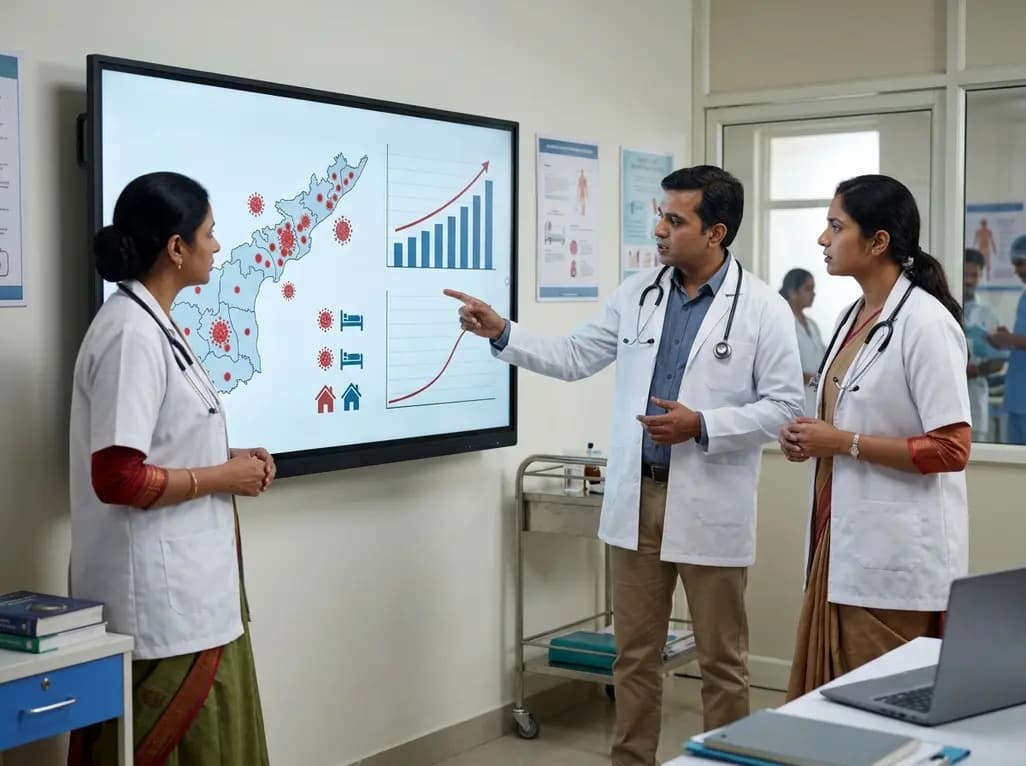
Andhra Pradesh reported 10 new Covid-19 cases, taking the state tally to 49 while deaths remain at four. With 24 patients hospitalized and 16 under home isolation, the Health Department has intensified monitoring. Medical professionals should review regional distribution, diagnostic protocols, and management plans.
Today

An 11-year Swedish registry study of 618 uterine sarcoma patients found that minimally invasive surgery yielded survival comparable to open surgery in early stages. However, adjuvant chemotherapy conferred no survival benefit in localized or advanced disease, highlighting stage and histology as key outcomes.
3 days back

A cross-sectional study evaluates post-intensive care syndrome in cardiac patients 2-4 weeks post-ICU discharge, highlighting cognitive, psychological, and functional impairments and the need for structured multidisciplinary rehabilitation.
3 days back
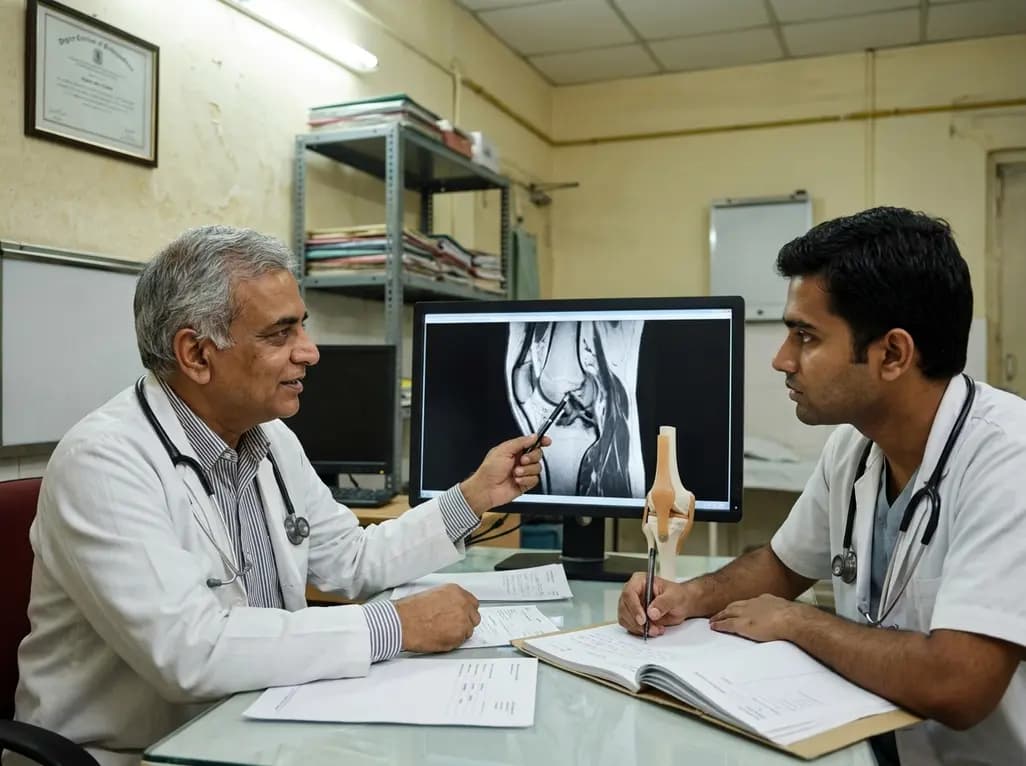
Anterior cruciate ligament reconstruction failure lacks uniform definition. A narrative review proposes an integrative framework incorporating objective and subjective instability, persistent pain, restricted motion, graft rupture, and secondary meniscal injury to standardize clinical reporting.
3 days back

With World Obesity Atlas data warning that over 41 million Indian children are overweight or obese, ICMR and NIN have unveiled a 10-point policy roadmap. The initiative calls for mandatory front-of-pack labeling, HFSS taxes, strict marketing bans, and healthier school environments to curb non-communicable diseases.
Today
