.webp&w=384&q=75)

Loading, please wait...
Loading, please wait...

Modern clinical research in neurodegenerative disease is undergoing a major paradigm shift toward precision medicine. Today, biomarker-driven Alzheimer's clinical trials require rigorous coordination between fluid biomarker biobanking, imaging data, and longitudinal cognitive tracking. To address these complex informatics demands, investigators developed the Alzheimer's Therapeutic Research Institute Laboratory Information Management System, known as ATRI LIMS. This cloud-native, open-source platform bridges the operational gaps between central biobanks and multisite trial networks. Consequently, clinical investigators gain unprecedented transparency and sample fidelity across multi-institutional therapeutic studies.
To support dynamic research protocols, software engineers developed ATRI LIMS using a modern Model-View-Controller framework built in Django. Furthermore, the front end incorporates a responsive Single-Page Application interface powered by ReactJS. This technical design enables research teams to execute real-time sample logging without encountering user interface latency. In addition, the system relies on a hybrid database structure that combines a normalized core schema with custom study-specific tables. Therefore, scientific teams can modify data collection protocols for novel biomarkers without altering the underlying foundational database.
Cloud hosting on Amazon Web Services guarantees reliable computing power and rapid horizontal scalability. In particular, this robust infrastructure accommodates intensive computational tasks and unpredictable analytical workloads. Furthermore, the development team integrated advanced security protections to safeguard sensitive participant biospecimens. The system deploys enterprise-grade web application firewalls, end-to-end data encryption, and mandatory multifactor authentication for all participating staff. As a result, academic consortia can securely manage geographically distributed studies while adhering to international digital governance frameworks. This architectural versatility establishes an ideal foundation for collaborative neurodegenerative disease research globally.
Managing large cohorts in Alzheimer's clinical trials presents formidable operational hurdles for laboratory teams and clinical coordinators. As of February 2026, the ATRI LIMS infrastructure actively coordinates seven clinical trials and observational cohorts. Most remarkably, the system catalogs and tracks more than 1.2 million individual human biospecimens across diverse collection sites. The platform automatically associates collection timestamps, freeze-thaw cycles, and aliquot volumes with specific participant records. Consequently, research laboratories eliminate specimen mishandling and preserve pre-analytical integrity for downstream assays.
Furthermore, automated quality control scripts evaluate sample logs at each processing step to prevent transcription errors. Therefore, assay technicians can immediately identify temperature deviations or missing documentation before laboratory testing begins. Additionally, the software synchronizes fluid assay outputs directly with broader clinical datasets, including neuroimaging results and cognitive scores. This synchronization provides researchers with an integrated view of participant disease progression. Moreover, standardized data structures streamline secondary sample sharing across authorized academic collaborators. By establishing transparent tracking pipelines, the platform ensures that precious patient biofluid collections deliver maximum scientific yield for global therapeutic development.
High-stakes neurotherapeutic studies demand stringent regulatory compliance across every laboratory workflow. For this reason, the developers embedded immutable electronic audit trails directly into the core application software. The platform records every user action, sample movement, and assay modification with detailed cryptographic timestamps. Consequently, audit monitors can easily inspect specimen chains of custody during formal regulatory reviews. In addition, electronic signatures comply with 21 CFR Part 11 requirements, ensuring complete legal and regulatory accountability.
Furthermore, system engineers implemented fine-grained role-based access controls to safeguard data integrity across participating clinical sites. Laboratory personnel access only the study modules corresponding to their authorized operational duties. Meanwhile, clinical investigators review de-identified specimen metrics without compromising blinded trial parameters. Collaborative user acceptance testing between software engineers and laboratory personnel continuously refined these administrative workflows. As a result, the user interface remains intuitive while enforcing strict compliance standards. By harmonizing technical safeguards with statutory trial regulations, the system minimizes human documentation errors. Ultimately, these rigorous compliance mechanisms provide regulatory agencies with absolute confidence in study data validity.
Software development teams face relentless pressure to deliver complex features within demanding trial initiation deadlines. To accelerate system release, informatics engineers incorporated artificial intelligence tools into their daily coding workflows. Specifically, AI-assisted development aided code generation, routine test writing, and automated documentation creation. Consequently, the engineering team substantially shortened software development lifecycles while maintaining exceptional software reliability.
Moreover, rigorous automated testing protocols verified that AI-generated code snippets complied with industry standards. Routine user acceptance testing provided an essential feedback loop, allowing laboratory personnel to guide iterative interface refinements. Therefore, technical teams successfully resolved workflow bottlenecks before system-wide deployment occurred. In addition, this agile software engineering model enabled the rapid rollout of custom assay data parsers. As new fluid biomarkers entered trial protocols, engineers adapted import modules within days rather than months. Thus, AI-driven development practices demonstrated how biomedical informatics groups can rapidly scale enterprise software without bloating operational budgets. This pragmatic development strategy offers valuable operational insights for academic institutions worldwide.
The planned open-source distribution of ATRI LIMS carries profound implications for global biomedical research consortia. Neurodegenerative diseases, such as Alzheimer's and Parkinson's, require massive international cohorts to uncover nuanced pathological mechanisms. However, commercial laboratory information management platforms often impose steep subscription fees that strain academic research budgets. In contrast, an open-source, cloud-native architecture offers an accessible, cost-effective alternative for research centers worldwide.
Consequently, research institutions in emerging economies can deploy sophisticated biobanking systems without proprietary software limitations. For instance, academic centers across India and other developing regions can establish standardized biospecimen repositories for dementia studies. Furthermore, the modular codebase allows local software developers to integrate regional language interfaces and specific institutional compliance workflows. Such technological democratization accelerates cross-border data harmonization and facilitates international scientific collaboration. When research networks share uniform data standards, multi-ethnic biomarker discovery advances rapidly. Therefore, the open-source release of ATRI LIMS represents a vital step toward equitable, globally integrated dementia research infrastructure.
Although laboratory information management systems operate behind research doors, their output directly influences clinical medicine. Modern disease-modifying therapies for Alzheimer's depend heavily on precise biomarker confirmation, including amyloid PET and plasma p-tau217. Robust biobanking and assay pipelines ensure that diagnostic cutoff values in trials translate faithfully to real-world clinical practice. Furthermore, accurate specimen tracking accelerates the validation of minimally invasive blood-based tests for routine clinical screening.
As standardized trial informatics matures, primary care physicians and neurologists will access highly reliable diagnostic assays. Consequently, clinicians can detect neurodegenerative pathology years before severe cognitive impairment develops. Moreover, reproducible clinical research protocols build therapeutic confidence among practicing doctors and their vulnerable patients. Integrating high-throughput informatics with patient-centered neurology ultimately bridges the divide between experimental bench science and daily bedside care.
The ATRI LIMS serves as a cloud-native platform designed to track and manage biospecimens in biomarker-driven research studies. Specifically, it synchronizes physical laboratory samples with longitudinal clinical datasets across multisite clinical networks. By automating specimen logging, quality control protocols, and assay result ingestion, the system minimizes human handling errors. Consequently, research teams can maintain flawless chain-of-custody documentation while supporting compliant sample sharing for secondary research.
ATRI LIMS maintains regulatory compliance by integrating immutable electronic audit trails, cryptographic timestamps, and compliant electronic signatures. These features adhere strictly to standards such as FDA 21 CFR Part 11. Furthermore, granular role-based access permissions prevent unauthorized personnel from viewing sensitive participant identification or modifying assay records. Consequently, regulatory auditors can readily verify specimen custody and operational histories, ensuring that trial findings remain scientifically valid and verifiable.
Open-source software eliminates proprietary licensing costs, enabling academic and healthcare institutions globally to establish standardized research infrastructure. Furthermore, it fosters cross-institutional collaboration by allowing researchers to inspect, customize, and improve source code to fit regional study protocols. Therefore, academic medical centers in resource-limited environments can manage large biospecimen repositories efficiently. This shared informatics architecture accelerates international data harmonization and supports multi-ethnic biomarker discovery in neurodegenerative disorders.
Disclaimer: This content is for informational and educational purposes only... Refer to the latest local and national guidelines for clinical practice.
References

Read summarized clinical updates, watch expert medical content, and earn CME certifications right from your smartphone.
Open your smartphone camera to scan and install.





ATRI LIMS is a cloud-native, open-source laboratory information management system supporting Alzheimer's clinical trials. Managing over 1.2 million biospecimens across multi-site studies, it bridges laboratory workflows, clinical datasets, and regulatory compliance for biomarker research.
Today
In severe acute pancreatitis, initial normal calcium levels can mask primary hyperparathyroidism due to saponification. This case report highlights how serial calcium monitoring unmasked severe hypercalcemia, guiding life-saving emergency medical therapy and curative parathyroidectomy.
Today
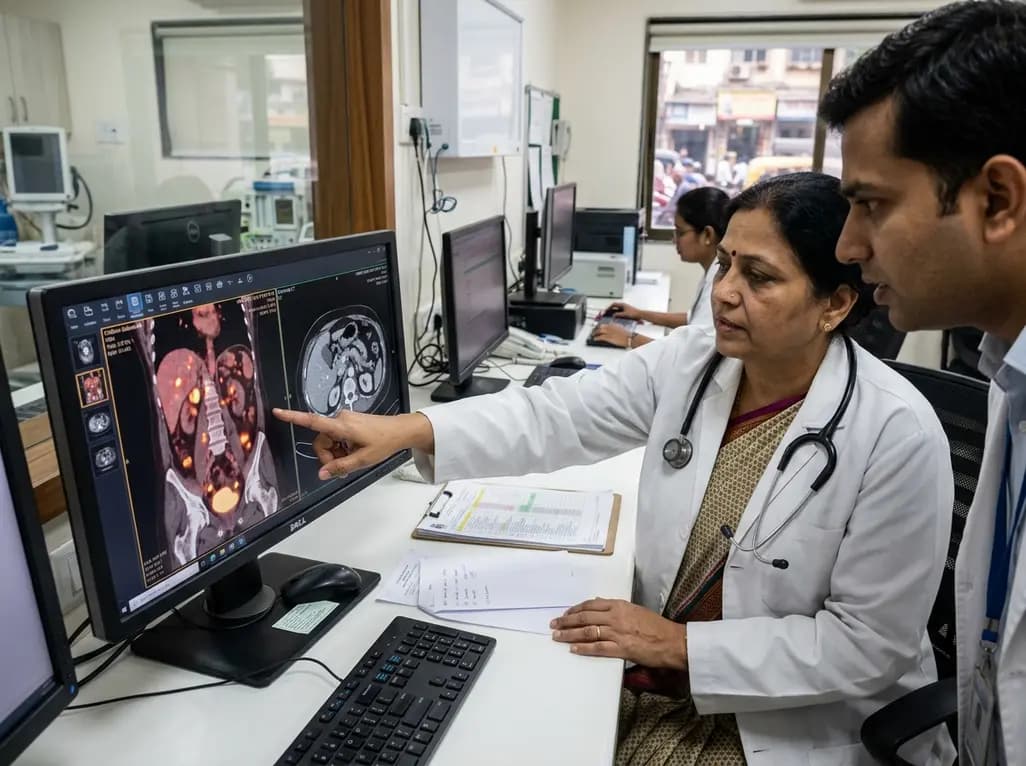
A landmark prospective study reveals gallium-68 FAPI PET/CT achieves 81.8% sensitivity in mapping peritoneal carcinomatosis in epithelial ovarian cancer, surpassing contrast CT. By resolving small bowel and mesenteric deposits, this molecular imaging alters treatment decisions in up to 21% of surgical candidates.
Today

Atherosclerotic cardiovascular disease guidelines often rely on European-derived lipoprotein(a) cutoffs. However, baseline Lp(a) levels vary widely across ancestries, including South Asians and Africans. Clinicians must interpret Lp(a) values within overall absolute cardiovascular risk.
Today

A longitudinal study of 1,055 chronic low back pain patients reveals that higher patient activation fosters constructive pain medication attitudes, reduces disability, and decreases short- and long-term opioid use through collaborative, multimodal care.
Yesterday

A review highlights how N-acetyl-L-cysteine influences pancreatic beta cells differently across metabolic states. While it protects islets during glucolipotoxicity and diabetes, excessive antioxidant exposure during physiological or aging states can induce reductive stress and impair insulin release.
Today
