.webp&w=384&q=75)

Loading, please wait...
Loading, please wait...

Atopic dermatitis (AD) represents a significant global health burden, characterized by chronic, relapsing skin inflammation and intense pruritus. In India, recent epidemiological surveys indicate that AD prevalence among children can reach up to 18%, while adult-onset cases are also on the rise due to urbanization and environmental triggers. Clinicians often face challenges in achieving long-term remission, as conventional therapies like topical corticosteroids and calcineurin inhibitors may lead to concerns regarding side effects or patient non-adherence. Consequently, there is an increasing interest in integrative approaches, particularly those utilizing standardized herbal formulations. The recently proposed multicenter randomized controlled trial exploring Atopic Dermatitis Granule Efficacy through the Inflammation Formula Number 1 (IFN-1) aims to address these gaps. This study focuses on validating whether modern granule preparations can match the therapeutic output of traditional decoctions while offering superior convenience. By establishing a clear dose-response relationship, researchers hope to provide a scientific foundation for the use of concentrated herbal extracts. This clinical protocol is particularly relevant for practitioners in India, where traditional medicine systems like Ayurveda similarly grapple with the transition from bulky decoctions to patient-friendly formulations. Understanding the rigor of this trial design helps medical professionals evaluate the potential of herbal granules in managing chronic inflammatory conditions effectively.
For centuries, traditional decoctions have been the cornerstone of herbal medicine, involving the labor-intensive process of boiling raw herbs to extract active constituents. While effective, this method is often plagued by poor patient compliance because of the bitter taste, time-consuming preparation, and lack of standardized quality. Furthermore, the biochemical profile of a decoction can vary significantly based on the duration of boiling and the source of the raw materials. To overcome these hurdles, the pharmaceutical industry has developed concentrated granules, which are produced via spray-drying or vacuum-concentration of the liquid extract. These granules offer standardized dosing and improved stability, making them more suitable for long-term clinical use. However, a major question persists in the dermatological community: do these granules retain the same biological activity as the traditionally prepared "soup"? The IFN-1 trial is designed specifically to answer this by comparing traditional decoctions with various dosages of granules. This comparison is vital because the synergistic chemical reactions that occur during the co-decoction of multiple herbs might be altered during the industrial granulation process. Therefore, proving equivalence is not just a matter of convenience but a requirement for ensuring that patient outcomes remain consistently high across different modes of administration.
The protocol for the IFN-1 trial is structured as a prospective, randomized, multicenter equivalence trial involving 300 participants. Patients aged 18 to 60 with mild to moderate atopic dermatitis will be recruited from five different hospitals. The randomization process is uniquely designed with a 2:2:1:1 ratio, assigning participants to four distinct groups: traditional decoction, standard-dose granules, two-thirds dose granules, and one-tenth dose granules. This innovative distribution allows researchers to not only test for equivalence between the standard preparations but also to identify the minimum effective dose required to maintain clinical benefits. All participants will undergo a four-week treatment phase, during which their progress will be monitored at weekly intervals. The primary endpoint is the proportion of patients achieving Eczema Area and Severity Index 50 (EASI50), which represents a 50% improvement from the baseline. This rigorous design ensures that the Atopic Dermatitis Granule Efficacy is measured against the highest standards of evidence-based medicine. By including lower-dose groups, the trial also seeks to elucidate the dose-response curve, which is often missing in traditional medicine literature. Such data are crucial for optimizing treatment regimens and reducing the potential for adverse effects, even in natural products.
Beyond the primary EASI50 endpoint, the IFN-1 trial incorporates a comprehensive suite of secondary outcomes to capture the full spectrum of the patient experience. These include EASI75 and EASI90, which measure more significant clearance of skin lesions, and the Investigator Global Assessment (IGA) score. Importantly, the study also focuses on patient-reported outcomes, such as the Dermatology Life Quality Index (DLQI) and the Pruritus Numerical Rating Scale (NRS). Given that itch is the most debilitating symptom of AD, a reduction in the NRS score is a critical indicator of therapeutic success. Additionally, the trial uses the Patient-Oriented Eczema Measure (POEM) to assess how the disease affects daily activities and sleep. In the context of Traditional Chinese Medicine (TCM), the researchers will also track TCM syndrome scores, which evaluate systemic balance according to traditional diagnostic criteria. Statistical analysis will be conducted using SAS version 9.4, employing a 2-sided 95% confidence interval approach. The equivalence margin has been predefined at -15% to +15%, a strict threshold that ensures any conclusions about the granules being as effective as decoctions are statistically robust. This holistic approach to data collection provides a multidimensional view of how IFN-1 impacts both the physical pathology and the psychosocial well-being of the patient.
The inclusion of different dose levels in the IFN-1 protocol marks a significant advancement in the study of herbal pharmacology. In many traditional systems, the dose is often determined by historical precedent rather than modern pharmacodynamic studies. By testing two-thirds and one-tenth doses, this trial will provide essential information on whether a lower concentration of granules can still elicit a therapeutic response. This has profound implications for cost-effectiveness and resource management, especially in public health settings. Moreover, standardized granules allow for better quality control regarding heavy metals, pesticides, and microbial contaminants, which are frequent concerns in raw herb markets. For Indian clinicians, this model of research offers a blueprint for validating Ayurvedic *Kashayams* and their modern tablet or granule counterparts. As the demand for "clean label" and natural treatments grows, the ability to prescribe a standardized, scientifically validated herbal product becomes a powerful tool for the dermatologist. The trial findings, expected in 2028, will likely influence clinical guidelines and encourage the adoption of modern delivery systems for ancient formulas. Ultimately, the goal is to bridge the gap between traditional wisdom and the rigorous demands of contemporary clinical practice through high-quality research and standardized manufacturing.
The IFN-1 trial is not just a local study; it is registered with the International Traditional Medicine Clinical Trial Registry, highlighting its commitment to global transparency and scientific integrity. As we move toward a more integrated model of healthcare, the validation of traditional formulas through randomized controlled trials is becoming indispensable. In India, the Ministry of AYUSH has been actively promoting the standardization of Ayurvedic products to enhance their global acceptance. The methodology used in the IFN-1 study—specifically the multicenter approach and the use of SAS for rigorous data analysis—mirrors the requirements for pharmaceutical drug approval. This level of scrutiny helps to dispel skepticism surrounding herbal medicine and provides dermatologists with the confidence to recommend these treatments as adjuncts or alternatives to conventional therapy. Furthermore, the focus on mild to moderate AD is strategic, as this patient population often seeks long-term, non-steroidal options to manage chronic flares. By successfully demonstrating the efficacy of granules, the trial will provide a scalable solution for AD management that can be easily integrated into various healthcare systems worldwide. This transition toward evidence-based traditional medicine ensures that ancient therapies can meet the safety and efficacy standards of the 21st century, benefiting millions of patients suffering from chronic skin conditions.
Traditional decoctions require patients to soak and boil raw herbs for extended periods, which can be inconsistent and time-consuming. In contrast, herbal granules are pre-prepared concentrated extracts. They are manufactured using modern pharmaceutical techniques like vacuum concentration and spray-drying. This ensures that the active ingredients are standardized and stable. For the patient, this means the medicine is ready to use by simply dissolving it in warm water, significantly improving treatment compliance.
The Eczema Area and Severity Index 50 (EASI50) is a validated clinical tool used to measure a 50% reduction in the severity and extent of atopic dermatitis. Achieving this endpoint indicates a clinically meaningful improvement in the patient's skin condition, including reductions in redness, thickness, and excoriation. It is a standard benchmark in dermatological research, allowing for a clear comparison between different therapeutic interventions and ensuring that the results are quantifiable and objective.
Establishing a dose-response relationship is essential for optimizing the therapeutic window of any medicine. For herbal formulas like IFN-1, it helps clinicians understand the minimum amount of the product required to achieve the desired clinical effect. This knowledge prevents over-medication, reduces the risk of potential side effects, and makes the treatment more cost-effective for the patient. Furthermore, it provides scientific evidence that the observed clinical improvements are indeed caused by the pharmacological action of the herbs.
Disclaimer: This content is for informational and educational purposes only. It does not constitute medical advice or a professional physician-patient relationship. Always seek the advice of a qualified healthcare provider regarding any medical condition or treatment. Refer to the latest local and national guidelines for clinical practice.
References
Li D et al. Clinical Dose-Response of Inflammation Formula Number 1 Granules Versus Traditional Decoction in the Treatment of Patients With Mild to Moderate Atopic Dermatitis: Protocol for a Multicenter Randomized Controlled Trial. JMIR Res Protoc. 2026 Jul 03. doi: 10.2196/96094. PMID: 42397675.
Sarkar R et al. Standardising the diagnosis and management of atopic dermatitis in India: A consensus statement by the modified Delphi method by IADVL Special Interest Group of Pediatric Dermatology (STAND AD). Indian J Dermatol Venereol Leprol. 2025.
Qiu et al. Comparison of the efficacy of dispensing granules with traditional decoction: a systematic review and meta-analysis. Ann Transl Med. 2018;6(3):38.

Read summarized clinical updates, watch expert medical content, and earn CME certifications right from your smartphone.
Open your smartphone camera to scan and install.





This multicenter randomized trial evaluates the efficacy and dose-response of Inflammation Formula Number 1 (IFN-1) granules compared to traditional decoctions in mild to moderate Atopic Dermatitis patients, focusing on standardized delivery and clinical equivalence.
3 months ago

Co-administering antiseizure medications and DOACs frequently causes pharmacokinetic interactions, subtherapeutic drug levels, and thromboembolic failures. This review highlights enzyme induction risks, unpredictable outcomes with levetiracetam, and the vital role of therapeutic drug monitoring.
Today

Demanding exhaustive hormonal profiling can inadvertently discourage clinical studies involving females. Methodological standards must align with the specific scientific question to expand, not restrict, equitable evidence for women.
Today
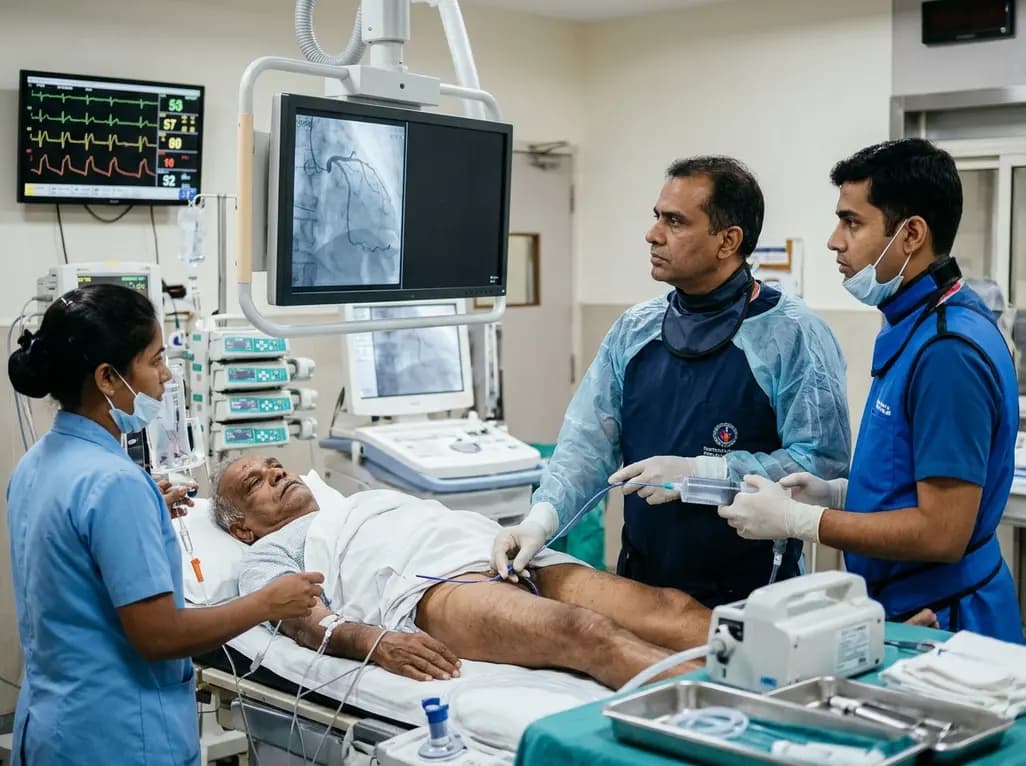
An elderly man with partially repaired Tetralogy of Fallot presented with STEMI caused by coronary embolism rather than atherosclerosis. Successful treatment with sustained mechanical aspiration thrombectomy underscores the vital need for high clinical vigilance in adult congenital heart disease.
Today

A comparative review of tension band wiring and intramedullary screw fixation in thumb metacarpophalangeal arthrodesis, evaluating union rates, hardware complications, and clinical outcomes.
Today

Following regulatory scrutiny from FSSAI regarding promotional representations and lean muscle preservation claims, Dr. Reddy's Laboratories and Nestlé Health Science are currently reviewing the branding and marketing strategy for their joint nutritional supplement Celevida GLP+.
Today
