.webp&w=384&q=75)

Loading, please wait...
Loading, please wait...
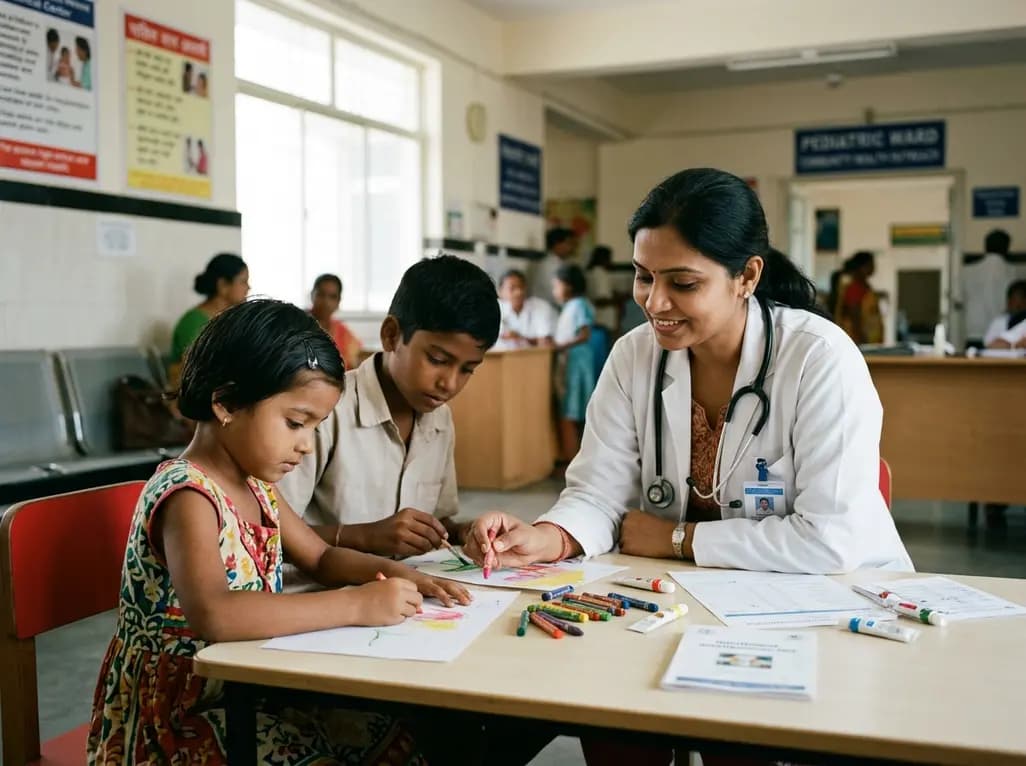
Childhood mental health challenges represent a major public health priority, with approximately eight percent of children aged ten or younger suffering from emotional, behavioral, or psychiatric disorders. Non-pharmacological community approaches, such as structured visual art programs, offer accessible avenues to support socioemotional development. Implementing an art-based intervention children can access within vulnerable communities provides a scalable method to improve psychosocial outcomes.
Despite growing evidence supporting early intervention, access to specialized mental health services remains severely limited. Socioeconomically disadvantaged populations face significant systemic barriers, including financial constraints, geographic isolation, and clinical service shortages. Consequently, vulnerable children experiencing chronic psychosocial stressors often go untreated, leading to long-term emotional and developmental impairment.
To address these disparities, healthcare researchers are turning to community-based creative arts. Art-based strategies present an engaging, non-stigmatizing platform that encourages emotional regulation, self-expression, and resilience. However, robust evidence regarding the precise clinical effectiveness, scalability, and economic value of structured visual arts programs remains scarce. Therefore, rigorous clinical trials are essential to evaluate how community visual arts initiatives foster psychological adjustment and quality of life in young populations.
To generate robust evidence, researchers established a cluster nonrandomized controlled trial protocol focusing on children from socioeconomically disadvantaged neighborhoods. The study recruits 156 children aged six to twelve years through primary schools and local community projects. Investigators assign participants to either a visual arts intervention group (n=104, 66.7%) or a waitlist control group (n=52, 33.3%). Allocation occurs at the neighborhood or cluster level to prevent cross-group contamination and preserve ecological validity.
The nonrandomized cluster design reflects real-world logistical conditions within community organizations and educational settings. Specifically, neighborhood-level clustering ensures that entire school cohorts or community centers participate together, maintaining natural peer dynamics. Moreover, the waitlist control structure ensures ethical equity, allowing control participants to access the intervention after trial completion.
By enrolling children directly from vulnerable socioeconomically disadvantaged areas, the study targets populations with the highest risk of mental health inequities. Consequently, the trial design balances scientific rigor with pragmatic implementation. It provides a realistic framework for evaluating community-delivered psychosocial interventions while generating actionable data for clinicians and public health organizers.
The intervention protocol spans nine months, consisting of weekly one-hour visual arts sessions led by professional artists. Rather than passive recreational crafting, the structured curriculum engages children in guided artistic processes that foster self-reflection, creative problem-solving, and emotional externalization. Furthermore, professional artists collaborate with pediatric health advisors to ensure sessions remain psychologically supportive and developmentally appropriate.
Throughout the nine-month program, participants explore diverse visual artistic media, including painting, sculpting, drawing, and collaborative mural creation. These structured group activities encourage positive peer interactions, cooperative communication, and mutual social support. Additionally, the intervention culminates in public community art exhibitions where participants display their completed creative works to family members and community leaders.
These community exhibitions serve a critical therapeutic and social function. Specifically, showcasing creative accomplishments validates the children's artistic efforts, boosts personal pride, and reinforces positive identity formation. Consequently, the combination of weekly artistic instruction and public exhibition creates an empowering environment that directly targets self-concept and socioemotional growth in developing children.
Researchers collect quantitative assessment data at two distinct time points: baseline (T1) and post-intervention completion (T2). The study utilizes well-validated clinical instruments to evaluate primary psychosocial outcomes across multiple developmental domains. Specifically, the Strengths and Difficulties Questionnaire (SDQ) measures overall psychological adjustment, tracking changes in internalizing symptoms, externalizing behaviors, hyperactivity, and prosocial dynamics.
To evaluate self-concept, investigators administer the Self-Perception Profile for Children (SPPC). This instrument measures specific self-esteem domains, including scholastic competence, social acceptance, athletic competence, physical appearance, and global self-worth. Additionally, the study evaluates health-related quality of life (HRQoL) using the Child Health Utility 9D (CHU9D), a validated pediatric preference-based measure designed specifically for economic evaluation.
By pairing psychological adjustment metrics with self-concept and health utility scores, the trial captures a multidimensional profile of participant wellbeing. Furthermore, regression modeling and intention-to-treat analysis principles guide all quantitative data evaluations. Consequently, this rigorous methodological structure ensures that observed changes accurately reflect intervention efficacy rather than attrition bias or confounding demographic variables.
Beyond clinical efficacy, evaluating economic sustainability is essential for public health integration. This study incorporates a comprehensive societal resource use evaluation alongside clinical testing. Researchers track program implementation expenses, including artist compensation, material costs, facility usage, and organizational overhead. Additionally, investigators monitor broader health care and community resource utilization among participant families during the nine-month study period.
Combining Child Health Utility 9D (CHU9D) preference scores with resource utilization data allows health economists to conduct formal cost-utility analyses. Specifically, these calculations determine the incremental cost per quality-adjusted life year (QALY) gained through participation in the visual arts program. Furthermore, economic evaluations clarify whether community art initiatives offer a cost-effective alternative to traditional clinical mental health interventions.
Public health decision-makers require clear economic evidence to justify sustainable resource allocation in low-income communities. Consequently, generating robust cost-effectiveness data bridges the gap between clinical research and health policy implementation. If proven cost-effective, community visual arts programs can serve as scalable models for national public health frameworks, expanding preventive mental health access for vulnerable children.
The study secured research grant funding in September 2023, initiating formal trial logistics and community partnership recruitment. Participant enrollment commenced in March 2024, successfully recruiting 179 participants by April 2024. Data collection across baseline and post-intervention follow-up phases concluded in July 2025. Following rigorous data verification and cleaning, statistical data analysis begins in April 2026, with final results scheduled for publication in September 2026.
This prospective cluster trial protocol addresses major literature gaps regarding art-based psychosocial interventions. Specifically, it offers prospective longitudinal data on psychosocial trajectories, self-concept evolution, and health utility changes in vulnerable pediatric cohorts. Moreover, combining rigorous clinical outcome measures with formal health economic evaluations provides actionable evidence for educational authorities, pediatric clinicians, and public health policy planners.
Ultimately, demonstrating clinical efficacy and economic sustainability will pave the way for broader integration of arts-based programs into community health infrastructure. By establishing accessible, non-stigmatizing pathways for emotional support, visual art interventions can enhance psychological resilience, bolster self-worth, and reduce health disparities among socioeconomically disadvantaged children.
Community art interventions offer non-verbal, creative outlets for emotional expression and stress relief. They promote self-reflection, personal empowerment, and positive social interaction among peers in a safe environment. By building emotional regulation and self-efficacy, structured artistic creation helps vulnerable children overcome psychological distress. Consequently, these programs reduce internalizing behavioral difficulties and enhance overall self-concept without requiring direct psychiatric stigma or high clinical resource costs.
Standardized clinical tools measure outcomes across several psychological and economic dimensions. The Strengths and Difficulties Questionnaire evaluates emotional symptoms, conduct problems, hyperactivity, and peer relationships. Additionally, the Self-Perception Profile for Children measures self-concept across academic, social, and physical domains. Health-related quality of life is assessed using the Child Health Utility 9D, while cost logs quantify economic impacts. Together, these validated tools establish comprehensive, objective outcome data.
Economic evaluations determine whether community art interventions deliver sufficient health benefits relative to operational expenses. Researchers calculate cost-utility ratios by linking intervention costs with improvements in quality-adjusted health years using Child Health Utility 9D scores. Furthermore, demonstrating cost-effectiveness enables public health authorities and educational policymakers to justify funding allocation. Consequently, strong economic evidence supports integrating scalable, art-based interventions into public health budgets and community infrastructure for disadvantaged children.
Disclaimer: This content is for informational and educational purposes only and does not constitute medical advice, diagnosis, or treatment. Healthcare professionals should rely on their clinical judgment and consult official guidelines. Refer to the latest local and national guidelines for clinical practice.
References

Read summarized clinical updates, watch expert medical content, and earn CME certifications right from your smartphone.
Open your smartphone camera to scan and install.





A cluster nonrandomized trial protocol evaluates a 9-month community visual arts program for children aged 6–12 in disadvantaged areas. The study assesses impacts on psychological adjustment, self-concept, health-related quality of life, and cost-effectiveness using standardized tools like SDQ and CHU9D.
last month
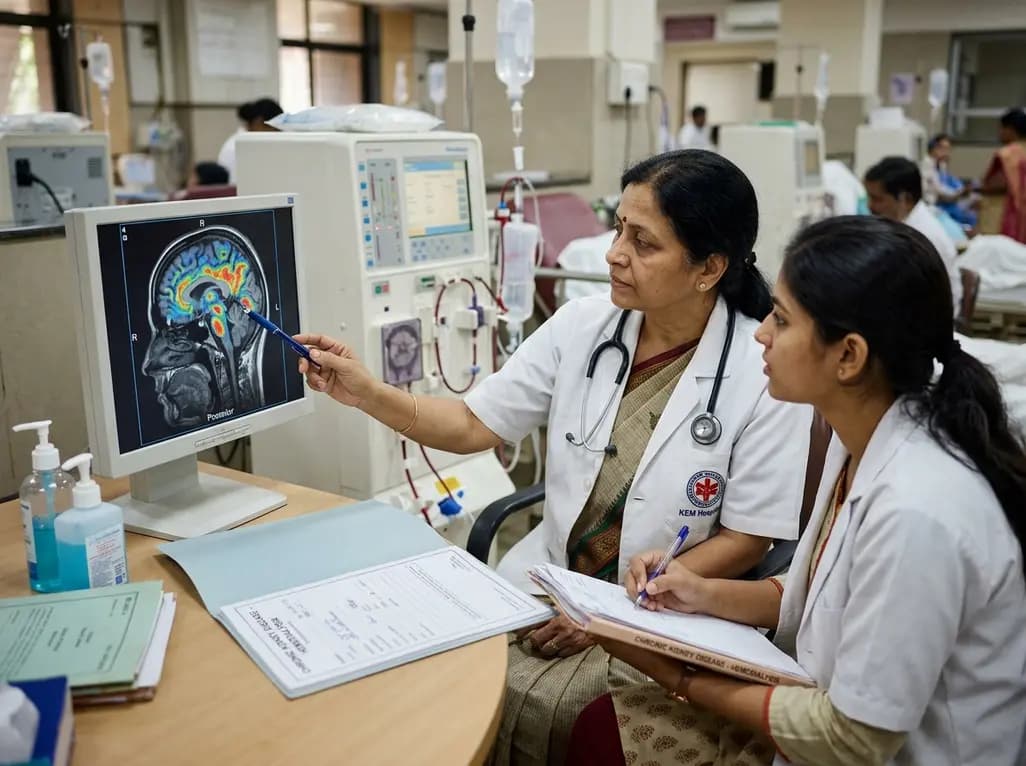
A retrospective clinical analysis reveals that hemodialysis-associated cognitive dysfunction arises from synergistic pathological mechanisms, including severe chronic anemia, worsening renal clearance, abnormal regional brain iron deposition, and an imbalance between neuroinflammatory and neurotrophic factors.
Today

A multiparametric MRI approach combining quantitative T2 shading, apparent diffusion coefficient (ADC) measurements, and morphological signs provides superior diagnostic accuracy over subjective evaluation to differentiate ovarian endometriomas from benign hemorrhagic cysts.
Today
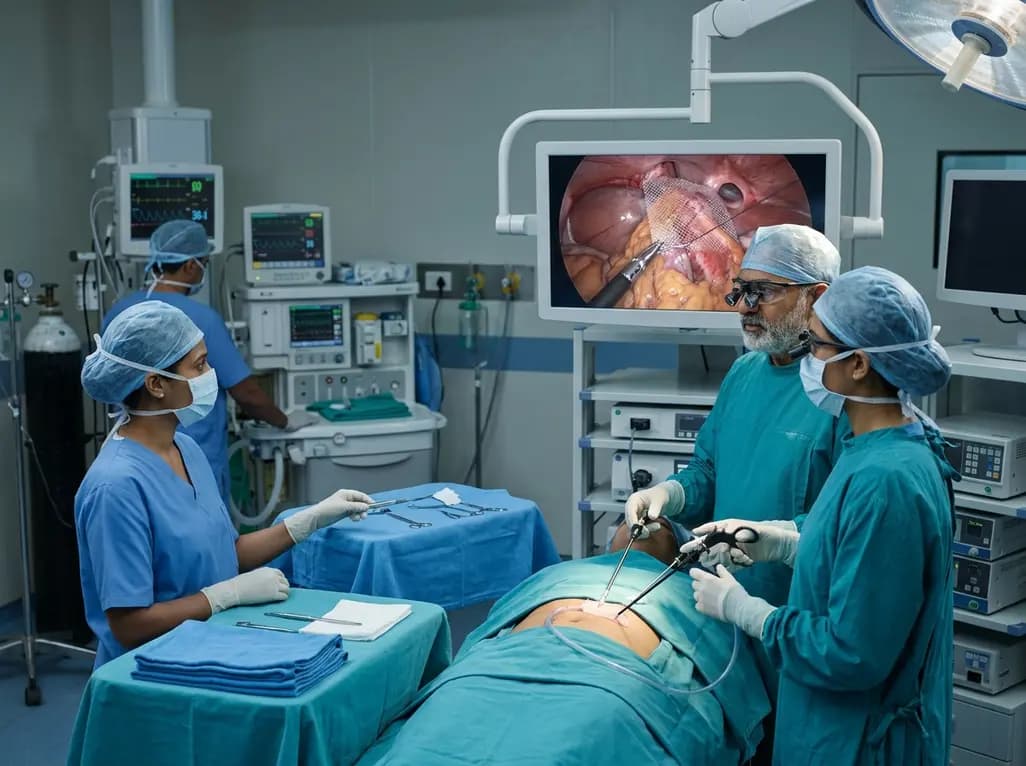
Discover a novel laparoscopic approach for iatrogenic diaphragmatic hernia repair following pedicled omentoplasty. This modified Sugarbaker technique integrates dorsal pedicle lateralization and round ligament reinforcement to secure the diaphragmatic defect while preserving vital omental vascularity.
Today

Evaluating Hill-Sachs lesion size and the distance to dislocation is critical in recurrent shoulder instability. As bone loss concepts shift from binary on-track classifications to continuous risk assessment, clinicians must identify when isolated Bankart repair is insufficient and supplementary procedures are needed.
Today
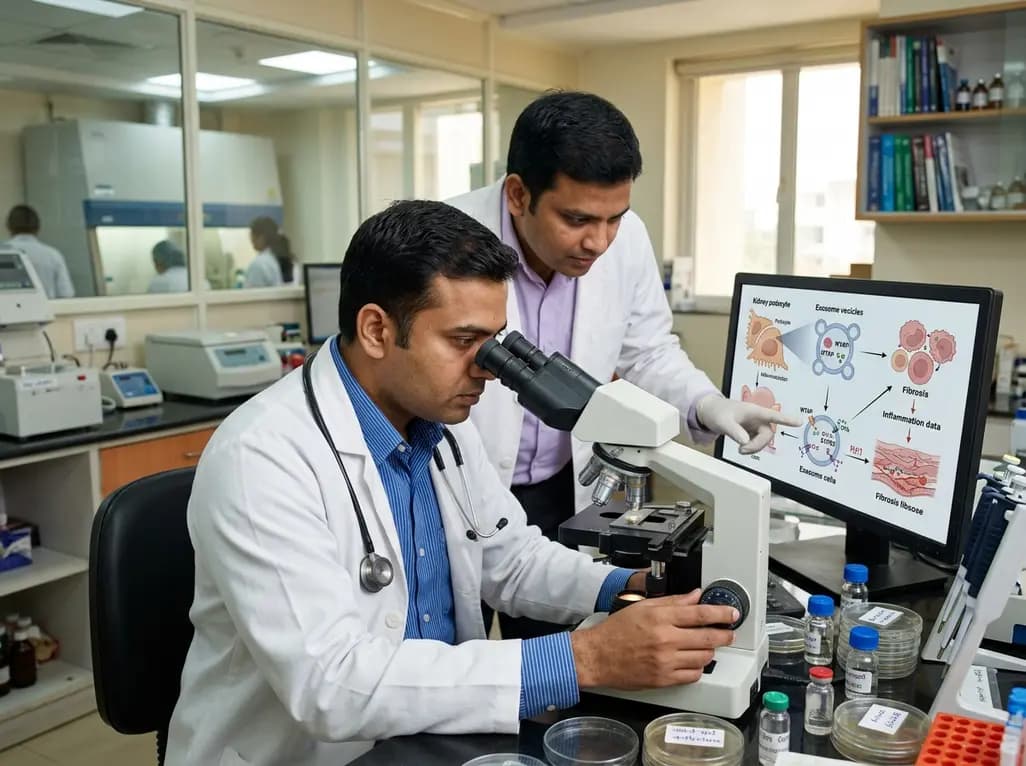
New research reveals that M1 macrophage-derived exosomes aggravate diabetic nephropathy by transferring WTAP to stabilize S1PR2 mRNA. Silencing WTAP in these vesicles attenuates endothelial injury and renal fibrosis, pointing toward innovative nanomedicine therapies.
Today
