.webp&w=384&q=75)

Loading, please wait...
Loading, please wait...
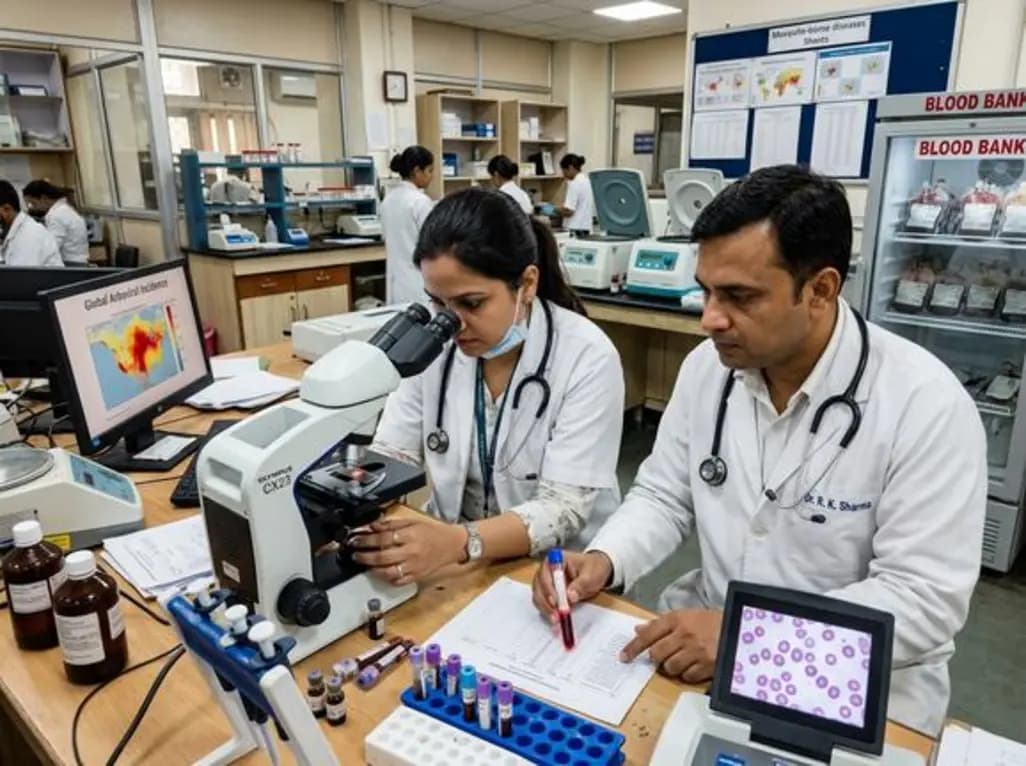
Emerging arboviral infections significantly threaten global transfusion systems. Consequently, healthcare providers must prioritize robust Arboviral blood safety measures to prevent the transmission of infectious agents. A recent international survey involving 21 countries evaluated how blood establishments manage these risks. The study analyzed data from nearly 30 million donations collected in 2024 to identify gaps in current safety protocols.
Researchers found that every respondent currently uses travel-based donor deferrals. However, this strategy alone may not remain sustainable during large-scale outbreaks. Extensive deferrals can drastically reduce the donor pool, leading to critical blood shortages. Furthermore, only half of the surveyed countries have implemented pathogen reduction technologies. These methods currently apply mostly to a selection of plasma and platelet donations rather than the entire supply.
Pathogen reduction technologies offer a universal safeguard by inactivating various viruses and bacteria. Despite their benefits, cost and logistical hurdles often impede their widespread adoption. West Nile virus (WNV) was the primary target for screening in the survey. While screening confirmed 256 WNV-positive donations, nine respondents noted that screening for other emerging viruses remains rare. Consequently, experts advocate for proactive risk assessments to determine if additional mitigation is necessary for viruses like Dengue, Chikungunya, and Zika.
In India, regulators are also enhancing safety standards. The Indian Pharmacopoeia 2026 now brings blood components under uniform standards to tighten oversight. This move, alongside the phased expansion of Nucleic Acid Testing (NAT), aligns with global efforts to modernize blood-safety architecture. Therefore, clinicians must stay updated on these evolving guidelines to ensure patient safety during transfusion therapy.
Donor deferral relies on identifying high-risk individuals, but large outbreaks can infect a significant portion of the population. This reduces the number of eligible donors. Consequently, relying solely on deferrals can cause severe blood supply shortages during epidemics.
Pathogen reduction technologies (PRTs) use chemical or light-based methods to inactivate pathogens within blood products. Unlike screening, which targets specific known viruses, PRTs provide a broad layer of protection against both known and emerging infectious agents.
No, current protocols are often limited. While many regions screen for West Nile Virus, screening for Dengue or Zika is not yet universal. Medical authorities recommend performing specific risk assessments to determine when additional screening or pathogen reduction is warranted.
Disclaimer: This content is for informational and educational purposes only. It does not constitute professional medical advice, diagnosis, or treatment. Always seek the advice of your physician or other qualified health provider with any questions you may have regarding a medical condition. Refer to the latest local and national guidelines for clinical practice.
References

Read summarized clinical updates, watch expert medical content, and earn CME certifications right from your smartphone.
Open your smartphone camera to scan and install.





An international survey of 21 countries reveals that current arboviral blood safety measures are limited and unevenly distributed. While West Nile virus screening is established in some regions, growing threats from Dengue and Zika require urgent risk assessments and enhanced pathogen reduction strategies.
4 months ago

Novel diimide and hydrazone scaffolds, particularly compound #C4, synergistically reactivate latent HIV-1 when combined with JQ1 or PKC activators. Demonstrating donor-matched proviral transcription ex vivo and non-canonical signaling, these findings advance shock and kill strategies toward reservoir eradication.
Today

A cross-sectional study reveals that maternal RSV vaccination coverage reached only 43.7% in Argentina, with maternal vaccine knowledge being the sole independent predictor of uptake. Clinicians play a crucial role in eliminating informational and structural barriers to optimize infant health.
Today

Review how tailored exercise programs benefit frail older patients with heart failure. Explore pathophysiological mechanisms, individualized training prescriptions, and strategies to overcome adherence barriers in clinical practice.
Yesterday

This comparative study evaluates posterior labral tears with and without glenohumeral instability, highlighting distinct demographic patterns, MRI underestimation in stable shoulders, and successful arthroscopic repair outcomes.
Yesterday

A clinical study demonstrates that early intervention with tocilizumab, either as monotherapy or bridged with corticosteroids, achieves significant proptosis reduction and resolves active inflammation in treatment-naive thyroid eye disease.
Yesterday
