

Loading, please wait...
Loading, please wait...
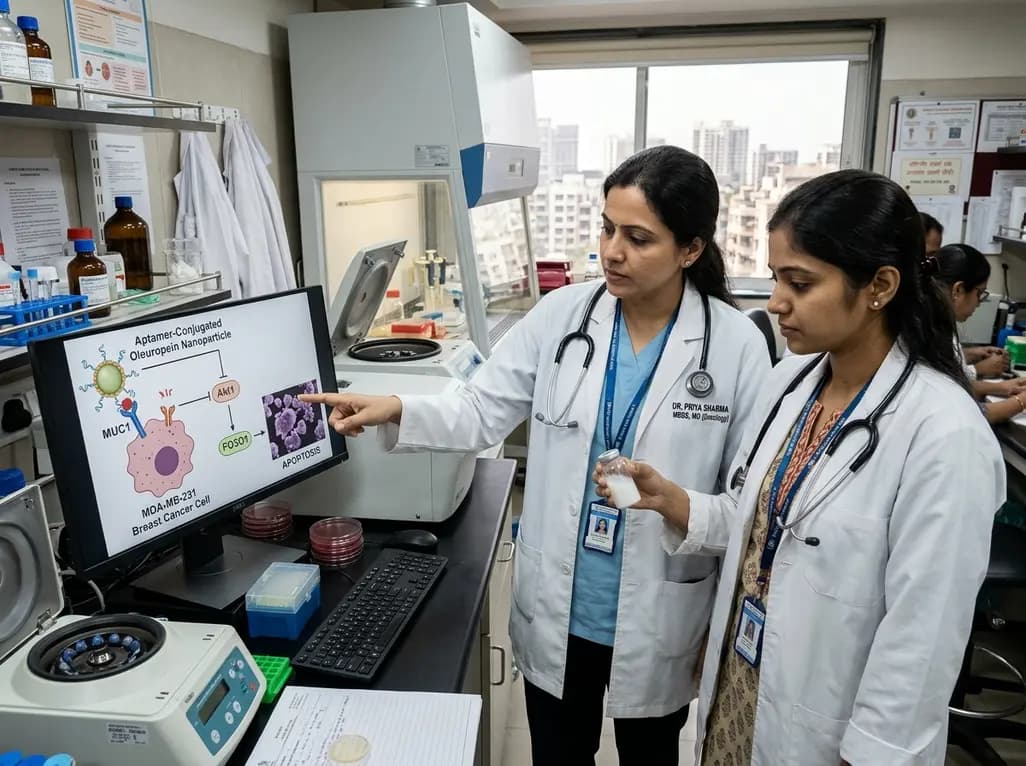
Modern oncology continually explores advanced therapeutic approaches that sensitize resistant malignant cells to programmed apoptotic death. Breast cancer remains a leading contributor to cancer-related mortality worldwide, necessitating creative pharmacological solutions. Oleuropein, a bioactive polyphenolic secoiridoid derived from olive leaves, demonstrates remarkable antineoplastic properties across numerous human malignancies. In laboratory models, this natural compound displays potent antiproliferative, antioxidant, and anti-inflammatory activities. However, native oleuropein exhibits significant pharmacological liabilities that hinder its direct therapeutic translation. Rapid enzymatic degradation, poor bioavailability, and non-specific distribution limit its anticancer efficacy in solid tumors. To address these pharmacokinetic constraints, researchers developed targeted oleuropein nanoparticles using biodegradable poly(lactic-co-glycolic acid) polymer platforms. Encapsulation protects the phytochemical from systemic clearance while enabling controlled release kinetics. Furthermore, nano-formulations dramatically increase drug concentration within neoplastic tissue beds. Clinicians recognize that optimizing delivery vehicles is vital for clinical success. Therefore, formulating polymeric nanocarriers creates promising avenues for natural therapeutics, turning dietary polyphenols into potent anticancer tools. Consequently, this platform establishes a robust foundation for modern precision oncology applications.
Targeted cancer pharmacotherapy requires precise discrimination between malignant cells and non-malignant tissues. Breast cancer cells, particularly aggressive triple-negative phenotypes like MDA-MB-231, abundantly express specific surface glycoproteins such as Mucin-1. Mucin-1 plays an essential pathological role in tumor growth, invasion, and distant metastatic dissemination. To achieve superior localization, researchers conjugated the oleuropein-loaded nanoparticles with a synthetic Mucin-1 specific aptamer. Aptamers are single-stranded oligonucleotides that fold into defined three-dimensional shapes, binding targets with exquisite molecular affinity. Therefore, aptamer functionalization creates an active homing mechanism for polymeric drug carriers. In contrast to traditional monoclonal antibodies, aptamers provide enhanced thermal stability, minimal immunogenicity, and reproducible synthesis. Moreover, surface modification does not compromise the structural integrity of the polymer core. As a result, the functionalized nanoconstructs seek out tumor markers with elevated precision. This targeting minimizes toxic collateral damage to non-cancerous somatic cells. Consequently, functionalized aptamer nanocarriers represent an innovative leap forward in targeted drug delivery design. Importantly, this targeted strategy enhances therapeutic indices while minimizing systemic chemotherapy side effects.
Successful translation of nanomedicine platforms depends heavily upon favorable physicochemical features and consistent cellular uptake dynamics. The synthesized aptamer-conjugated oleuropein nanocarriers displayed a compact hydrodynamic diameter and a negative zeta potential. Notably, the hydrodynamic size expanded following aptamer functionalization compared to plain nanoparticles. This dimensional change verified successful covalent attachment of the oligonucleotides onto the polymer surface. In addition, the negative surface charge prevents undesirable erythrocyte aggregation and stabilizes colloidal solutions in physiologic fluids. Nanoparticles within this optimal size range leverage receptor-mediated endocytosis in aggressive breast carcinoma cells. Specifically, binding between the surface aptamer and membrane Mucin-1 drives rapid internalization. Consequently, intracellular oleuropein accumulation increases significantly compared to unformulated compound exposure. Furthermore, the biodegrading polymer matrix delivers sustained release over extended durations. Thus, these tailored physical parameters prevent rapid intracellular clearance and maximize intracellular drug exposure. Ultimately, efficient cellular internalization ensures optimal intracellular pharmacological bioavailability. Therefore, robust nanocarrier architecture remains indispensable for overcoming biological drug transport barriers.
The core therapeutic value of this nanomedicine approach lies in reactivating programmed apoptosis within aggressive breast cancer cells. In vitro experiments revealed that aptamer-conjugated oleuropein nanocarriers significantly reduced MDA-MB-231 viability. Gene expression profiling confirmed altered transcription of apoptosis-related genes, particularly within the Bcl-2 protein family. In particular, the nanoparticles shifted cellular equilibrium toward pro-apoptotic effectors. Concurrently, protein analysis demonstrated that oleuropein suppresses upstream Akt1 kinase signaling. In many malignant tumors, hyperactive Akt1 promotes pathological cell survival and suppresses normal apoptotic cues. However, targeted nanocarrier delivery inhibits Akt1 phosphorylation, thereby restricting Nuclear Factor kappa B transcription. Furthermore, Akt1 inhibition liberates the critical tumor suppressor FOXO1 from cytoplasmic sequestration. Consequently, unphosphorylated FOXO1 migrates to the nucleus to trigger the transcription of decisive pro-apoptotic target genes. This molecular cascade permeabilizes mitochondrial membranes and activates downstream executioner caspases. Therefore, the formulation effectively dismantled cancer survival machinery through coordinated pathway regulation. Notably, this multi-target pathway disruption prevents malignant cells from activating compensatory survival mechanisms.
Aggressive breast carcinomas, including triple-negative subtypes, present immense therapeutic challenges in modern clinical practice. These tumors lack hormone receptors and HER2 overexpression, leaving cytotoxic systemic chemotherapy as the primary standard intervention. Consequently, patients often experience debilitating systemic toxicities with modest long-term survival advantages. Targeted nanocarriers carrying phytochemical agents offer a promising, biocompatible paradigm to address these clinical obstacles. By directing active payloads specifically to tumor sites, oncologists can maximize antineoplastic potency while sparing healthy organs. In India and worldwide, rising rates of aggressive breast cancer demand accessible, highly tolerable therapies. However, transitioning from benchtop discoveries to bedside application requires rigorous pharmacokinetic and toxicological evaluations in complex animal models. In addition, researchers must establish scalable, Good Manufacturing Practice compliant synthesis protocols for uniform clinical batches. Furthermore, combining targeted nanocarriers with existing chemotherapeutics or immune checkpoint inhibitors could generate powerful synergistic responses. Thus, advancing aptamer-functionalized nanomedicines holds profound potential for transforming oncology regimens. Ultimately, continued translational investigation will determine how effectively these platforms improve clinical oncology outcomes.
The Mucin-1 aptamer functions as an active homing ligand that specifically binds to Mucin-1 glycoproteins overexpressed on malignant breast cancer cell surfaces. By conjugating this single-stranded oligonucleotide to the nanoparticle surface, the drug delivery system selectively targets tumor cells while sparing healthy tissue. Consequently, this active molecular guidance enhances cellular uptake through receptor-mediated endocytosis, increases intracellular drug accumulation, and significantly minimizes toxic off-target effects during systemic administration in experimental oncology models.
Oleuropein induces apoptosis primarily by downregulating the oncogenic Akt1 signaling pathway within aggressive cancer cells. Inhibiting Akt1 represses Nuclear Factor kappa B activity and facilitates the nuclear translocation of the pivotal FOXO1 transcription factor. Once inside the nucleus, activated FOXO1 triggers the expression of critical pro-apoptotic genes while suppressing survival pathways. Consequently, this transcriptional reprogramming alters Bcl-2 family balance, disrupts mitochondrial membrane integrity, and initiates programmed apoptotic cell death in triple-negative tumor cells.
Poly(lactic-co-glycolic acid), or PLGA, is an ideal nanocarrier vehicle because of its excellent biocompatibility, low intrinsic toxicity, and complete biodegradability into non-toxic monomers. Encapsulating oleuropein within PLGA prevents early metabolic degradation, improves aqueous solubility, and provides controlled, sustained release kinetics. Furthermore, the versatile polyester surface allows straightforward chemical conjugation of targeting aptamers. These combined physical attributes collectively overcome the poor bioavailability of native phytochemicals, enabling enhanced therapeutic delivery directly to solid malignancies.
Disclaimer: This content is for informational and educational purposes only... Refer to the latest local and national guidelines for clinical practice.
References

Read summarized clinical updates, watch expert medical content, and earn CME certifications right from your smartphone.
Open your smartphone camera to scan and install.





Novel research highlights aptamer-conjugated oleuropein nanoparticles targeting MUC1 in MDA-MB-231 breast cancer cells. By inhibiting Akt1 and activating FOXO1, this biomaterial platform enhances apoptosis and overcomes bioavailability limitations, offering a promising advance in oncology drug delivery.
Today

Novel diimide and hydrazone scaffolds, particularly compound #C4, synergistically reactivate latent HIV-1 when combined with JQ1 or PKC activators. Demonstrating donor-matched proviral transcription ex vivo and non-canonical signaling, these findings advance shock and kill strategies toward reservoir eradication.
Today

A cross-sectional study reveals that maternal RSV vaccination coverage reached only 43.7% in Argentina, with maternal vaccine knowledge being the sole independent predictor of uptake. Clinicians play a crucial role in eliminating informational and structural barriers to optimize infant health.
Today

Review how tailored exercise programs benefit frail older patients with heart failure. Explore pathophysiological mechanisms, individualized training prescriptions, and strategies to overcome adherence barriers in clinical practice.
Yesterday

This comparative study evaluates posterior labral tears with and without glenohumeral instability, highlighting distinct demographic patterns, MRI underestimation in stable shoulders, and successful arthroscopic repair outcomes.
Yesterday

A clinical study demonstrates that early intervention with tocilizumab, either as monotherapy or bridged with corticosteroids, achieves significant proptosis reduction and resolves active inflammation in treatment-naive thyroid eye disease.
Yesterday
