.webp&w=384&q=75)

Loading, please wait...
Loading, please wait...

Managing anxiety in older adults represents a growing challenge in modern clinical medicine. Although late-life anxiety causes substantial emotional distress and functional impairment, elderly patients frequently underutilize formal psychiatric services. Consequently, many geriatric patients rely on self-regulation and informal coping strategies to manage their emotional symptoms. A recent multicultural qualitative study provides valuable insights into how diverse demographic groups perceive and address anxiety. Specifically, the study evaluated older adults from White British, South Asian, African, and Caribbean backgrounds using Leventhal's Common-Sense Model of Self-Regulation. Understanding these underlying beliefs helps general practitioners, psychiatrists, and geriatricians tailor culturally sensitive interventions.
Clinicians often assume that cultural background alone dictates health-seeking behavior. However, the study revealed that coping choices depend heavily on individual illness representations rather than broad ethnic categories. In fact, participants exhibited wide variation in their views within the same ethnic cohort. While some individuals recognized chronic worry as an illness, others normalized emotional distress as an unavoidable part of aging. Furthermore, participants with distressing anxiety perceived their symptoms differently from those with non-distressing symptoms. Distressed individuals acknowledged that their tension disrupted daily functioning and personal relationships. Nevertheless, they frequently hesitated to seek professional psychiatric care. Instead, they weighed their perceived need against their personal eligibility for medical resources. In addition, social roles and community relationships strongly governed their therapeutic decisions. Therefore, physicians must assess individual patient beliefs rather than relying on generalized cultural stereotypes during clinical consultations.
Leventhal's Common-Sense Model of Self-Regulation posits that individuals construct cognitive and emotional representations of health threats. Subsequently, these mental representations guide coping behaviors and self-appraisal. The qualitative study confirmed that older adults develop distinct cognitive models regarding the identity, timeline, and consequences of anxiety. However, the classical framework failed to capture several crucial motivational dynamics. Specifically, inductive thematic analysis identified three novel dimensions that extend beyond traditional model components. First, researchers identified distinct triggers that drive the immediate motivation to take corrective action. Second, patients held specific beliefs about healthcare providers, including worries about physician workload and diagnostic dismissiveness. Third, participants evaluated new treatment modalities based on personal values rather than clinical efficacy alone. Consequently, clinicians must recognize that coping pathways involve complex emotional motivations beyond basic cognitive risk perceptions.
Across all cultural backgrounds, older adults consistently favored self-help mechanisms over formal psychiatric treatments. Indeed, participants actively engaged in diverse behavioral, spiritual, and cognitive strategies to manage daily emotional distress. Many individuals turned to prayer, meditation, and faith-based practices to restore inner calm and resilience. Similarly, others adopted physical activities such as walking, gardening, and household chores to divert their attention from intrusive thoughts. In addition, creative hobbies, social interactions, and music served as effective distraction techniques. These informal routines provided participants with a strong sense of autonomy and personal control. Because patients perceived self-help as safe and accessible, they rarely considered pharmacological therapies as their primary option. Furthermore, many seniors feared medication dependence and adverse drug interactions. Therefore, primary care doctors should validate these constructive self-regulation practices while monitoring their therapeutic sufficiency.
Despite severe emotional distress, many elderly individuals avoid formal mental health services. This reluctance stems from significant psychosocial and institutional barriers. For example, older adults frequently doubt their candidacy for National Health Service or primary care mental health support. They often worry that discussing psychological distress might overburden busy family physicians. Moreover, deep-rooted stigma surrounding mental illness continues to hinder open communication across multiple generations. In minority communities, fear of social judgment or cultural misunderstanding further discourages disclosure. Consequently, patients choose silent endurance or informal coping until symptoms become debilitating. In addition, past negative interactions with medical professionals can reinforce feelings of alienation. General practitioners must proactively screen older adults during routine visits to dismantle these persistent systemic and interpersonal barriers.
Clinicians working in primary care and geriatrics must modernize their approach to emotional disorders in older populations. Instead of prescribing psychotropic medications immediately, physicians should explore combined management pathways. Specifically, clinicians can endorse evidence-based self-help tools alongside formal psychological therapies. Providing structured bibliotherapy, mindfulness protocols, and guided breathing techniques aligns closely with patient preferences for personal autonomy. Furthermore, multidisciplinary teams should involve community health workers and cultural navigators to foster trust among underserved ethnic minorities. When doctors validate existing lifestyle coping strategies, patients become much more receptive to formal psychiatric referrals. In addition, clinicians must conduct regular follow-up consultations to evaluate whether self-directed coping sufficiently alleviates distressing anxiety. Through personalized and culturally sensitive care, healthcare professionals can significantly improve clinical outcomes for vulnerable aging adults.
Healthcare policymakers must re-examine how mental health services engage aging multicultural communities. Historically, research initiatives grouped ethnic populations into broad, homogenous categories. However, this study underscores substantial within-group diversity that demands nuanced, individualized care paradigms. In particular, socioeconomic status, immigration history, and personal identity shape health behaviors just as profoundly as cultural background. Therefore, future public health initiatives must design adaptable therapeutic programs that address unique lived experiences. Moreover, health systems should expand community-based educational campaigns to destigmatize anxiety and promote early help-seeking. Providing professional interpreter services and culturally adapted psychological resources also remains an essential priority. Ultimately, closing the treatment gap requires collaborative efforts between healthcare providers, policymakers, and community leaders.
Older adults frequently prioritize personal autonomy and fear dependency on psychiatric medications. In addition, many elderly patients believe that daily activities, spiritual practices, and lifestyle modifications provide sufficient symptom control. Stigma surrounding mental health and concerns about burdening busy healthcare providers also reinforce their strong preference for independent self-help.
Culture shapes illness perceptions, social stigma, and acceptable coping activities like prayer or community engagement. However, research demonstrates substantial diversity within cultural groups. Individual identity, symptom severity, past medical experiences, and perceived healthcare candidacy often influence coping choices more strongly than broad ethnic classifications alone.
Leventhal's model explains how patients form cognitive and emotional representations of anxiety to direct their coping responses. While the model maps core illness beliefs effectively, it fails to capture provider-related perceptions, treatment acceptability beliefs, and specific motivational factors that drive older adults to seek clinical help.
Disclaimer: This content is for informational and educational purposes only and does not constitute medical advice. Healthcare professionals must use their clinical judgment when applying this information. Readers should consult a qualified doctor regarding medical conditions. Mention of specific tests, drugs, or treatments does not imply endorsement. Refer to the latest local and national guidelines for clinical practice.
References

Read summarized clinical updates, watch expert medical content, and earn CME certifications right from your smartphone.
Open your smartphone camera to scan and install.





A UK qualitative study reveals how older adults from diverse backgrounds manage anxiety. Seniors predominantly rely on self-help strategies, shaped by personal identity and perceived barriers rather than ethnicity alone, offering crucial insights for culturally sensitive geriatric mental health interventions.
Today

A multicentre study validates Day 1 prognostic scores (ADMIT-ASC, ACE, and ROR) for predicting steroid non-response in acute severe ulcerative colitis, delineating crucial trade-offs between sensitivity and specificity.
Today

A nationwide cross-sectional study evaluates hospital digital articles on benign breast disease, revealing adequate readability but significant shortfalls in actionability and treatment-focused shared decision-making support.
Today

A landmark systematic review and meta-analysis establishes age-specific normative reference values for pediatric pulse wave velocity, revealing a nonlinear trajectory of arterial stiffness from early childhood through adolescence.
Today
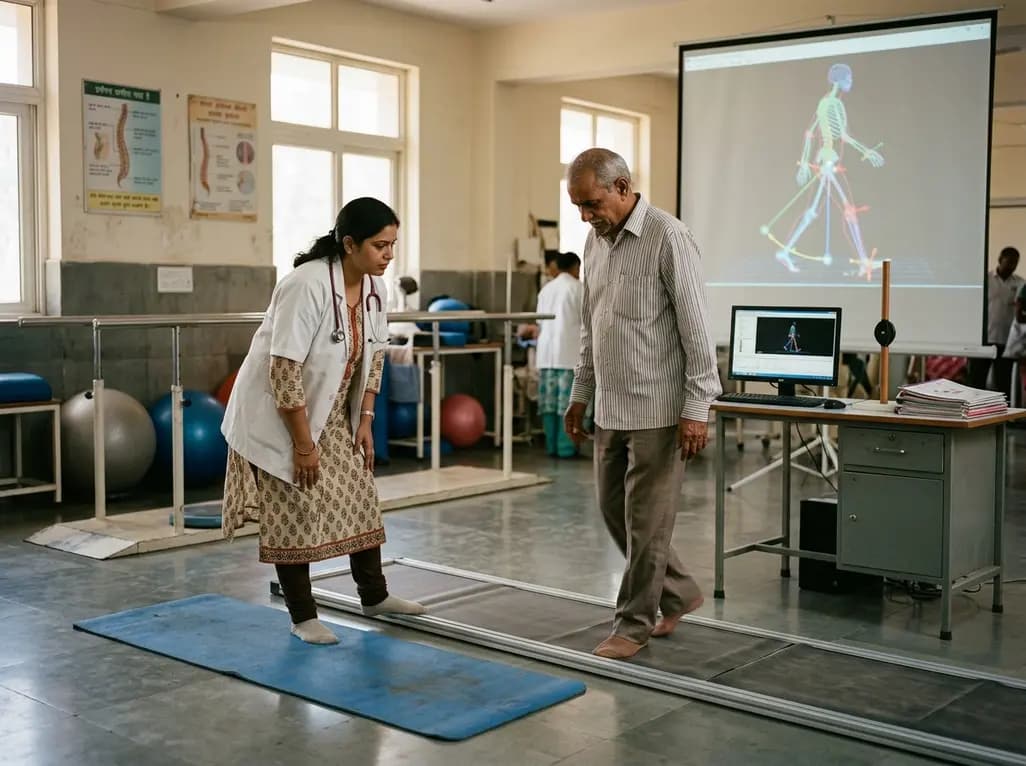
New biomechanical research reveals how postural stabilization mechanisms coordinate delayed sensory feedback and ground reaction forces to preserve pendulum-like center of mass motion across standing and walking, providing vital insights for balance rehabilitation and fall prevention.
Today

A landmark cross-sectional study in Asian adults with type 2 diabetes identifies novel urinary metabolites linked to mild cognitive impairment. Elevated urinary sucrose and altered metabolites highlight non-invasive pathways for early cognitive risk stratification and targeted metabolic management.
Today
