.webp&w=384&q=75)

Loading, please wait...
Loading, please wait...

Sepsis and critical illness frequently trigger severe organ dysfunction, demanding immediate and aggressive therapeutic interventions. However, managing antimicrobial dosing in renal dysfunction presents significant clinical hurdles for healthcare teams. Most life-saving antimicrobials undergo clearance primarily through the kidneys. Consequently, acute fluctuations in glomerular filtration rapidly alter systemic drug levels. When clinicians extrapolate standard drug regimens from noncritically ill cohorts, treatment failures frequently occur. Therefore, intensivists must implement tailored strategies to prevent drug accumulation or subtherapeutic exposure. A nuanced understanding of organ crosstalk and drug clearance remains essential to optimize patient recovery.
Critical illness profoundly reshapes human physiology and alters drug handling within hours of presentation. Sepsis initiates widespread endothelial disruption, capillary leakage, and profound third-spacing across interstitial tissues. Consequently, the volume of distribution expands substantially, particularly for hydrophilic antibiotics like beta-lactams and aminoglycosides. Aggressive fluid resuscitation further compounds this expansion, diluting intravascular antimicrobial concentrations. Moreover, severe hypoalbuminemia diminishes serum protein binding, which increases the unbound fraction of heavily bound agents. While this free fraction initially exerts bactericidal activity, rapid tissue redistribution or filtration promptly removes it from circulation. Conversely, patients who develop acute renal impairment exhibit dramatically reduced drug clearance. This reduction prolongs antimicrobial elimination half-lives and promotes metabolite retention. In addition, critical illness produces unstable hemodynamic states with shifting organ perfusion. As a result, standard pharmacokinetics cannot reliably predict serum concentrations in these vulnerable patients. Intensivists must constantly reassess these dynamic variables to avoid treatment failure.
Selecting appropriate regimens remains exceptionally difficult when treating critically ill patients with acute renal impairment. Clinicians often rely on serum creatinine measurements to estimate glomerular filtration rates. However, serum creatinine represents a lagging marker in acute kidney injury, delaying accurate detection of renal compromise by several days. Furthermore, muscle wasting and massive fluid overload artificially dilute serum creatinine concentrations in intensive care units. Consequently, mathematical clearance equations frequently overestimate renal function, leading to inadvertent dosing errors. Clinicians who prematurely decrease antibiotic doses to preserve kidneys often induce subtherapeutic serum levels. Subtherapeutic concentrations compromise bactericidal activity, promote antimicrobial resistance, and drive patient mortality during acute septic shock. Conversely, excessive doses cause profound adverse effects, including neurotoxicity and worsening nephrotoxicity. Extracorporeal organ support, such as continuous renal replacement therapy, adds additional pharmacokinetic complexity. These circuits continually eliminate hydrophilic antimicrobials across synthetic membranes at variable rates. Therefore, optimizing antimicrobial dosing in renal dysfunction demands sophisticated clinical assessment rather than simple reliance on static baseline formulas.
In resource-constrained intensive care units, clinicians frequently lack immediate access to specialized drug assays. Nevertheless, healthcare teams must achieve therapeutic targets swiftly to treat life-threatening infections. Dosing nomograms developed specifically for critically ill cohorts offer a practical and reproducible solution. Unlike generic manufacturer inserts, ICU-validated nomograms integrate acute physiological derangements and realistic distribution volumes. For example, these protocols emphasize administering a full, unadjusted loading dose regardless of baseline renal function. Because acute volume expansion dilutes drug concentrations on day one, reducing the initial loading dose produces therapeutic failure. Nomograms subsequently guide maintenance dosing based on measured creatinine clearance or estimated residual urine output. Furthermore, specialized charts provide precise adjustments for continuous venovenous hemodialysis, continuous hemodiafiltration, and intermittent modalities. Clinicians adjust flow rates and residual clearance systematically using standardized matrix charts. As a result, bedside teams execute timely dose modifications safely. Institutional adoption of these evidence-based nomograms standardizes clinical workflows, prevents avoidable overdoses, and ensures consistent target attainment in resource-limited wards.
Therapeutic drug monitoring provides definitive guidance when managing unstable critical illness complicated by acute renal injury. Historically, clinicians reserved therapeutic drug monitoring solely for agents with narrow therapeutic indices, such as aminoglycosides and vancomycin. Today, international guidelines strongly advocate routine concentration monitoring for broad-spectrum beta-lactams, linezolid, and antifungal agents. In critically ill patients, plasma concentrations fluctuate unpredictably between scheduled doses. For instance, intermittent hemodialysis clears small, hydrophilic molecules rapidly during sessions, but rebound redistribution occurs shortly after cessation. By obtaining paired pre-filter and post-filter levels, clinicians quantify precise extracorporeal clearance. Moreover, therapeutic drug monitoring prevents insidious drug accumulation in anuric patients, thereby minimizing encephalopathy, neurotoxicity, and secondary bone marrow suppression. Conversely, monitoring identifies underexposure during augmented renal clearance or recovery phases of acute tubular necrosis. Experienced clinical pharmacists utilize these measured serum concentrations to calculate patient-specific clearance rates. Consequently, medical teams adjust infusion schedules, prolong administration times, and optimize pharmacodynamic target attainment. Routine therapeutic drug monitoring ultimately transforms empirical guesswork into personalized, objective antimicrobial therapy.
Modern computational algorithms represent the next evolutionary step in individualizing antimicrobial therapy for critical illness. Model-informed precision dosing software integrates population pharmacokinetic models with individual patient covariates to forecast drug behavior. Specifically, the software incorporates body weight, serum creatinine, extracorporeal settings, and drug assay results. Clinicians use Bayesian forecasting tools to estimate individual exposure profiles and simulate optimal dosing regimens in real time. Although conclusive evidence linking computational modeling directly to reduced mortality remains limited, these tools consistently improve target attainment. Furthermore, emerging advances combine artificial intelligence with continuous physiological monitoring to predict renal clearance fluctuations before clinical deterioration appears. Bioengineers are also developing microfluidic biosensors for real-time antimicrobial tracking directly at the bedside. Ultimately, implementing these advanced tools requires strong institutional support, multidisciplinary coordination, and antimicrobial stewardship guidance. When integrated alongside clinical judgment, these transformative technologies promise to eliminate drug toxicity while eradicating resistant bacterial pathogens efficiently.
Clinicians must administer a full loading dose because initial drug distribution depends on fluid volume rather than renal clearance. Critical illness frequently causes endothelial leak and third-spacing, which dramatically expands the volume of distribution for hydrophilic antimicrobials. If physicians reduce the initial dose out of concern for renal toxicity, serum concentrations will remain subtherapeutic. Consequently, early bacterial eradication fails, increasing patient mortality. Therefore, clinicians must administer standard or escalated loading doses initially.
Continuous renal replacement therapy continually eliminates hydrophilic, low-protein-bound antimicrobials through convection, diffusion, or membrane adsorption. As a result, drug clearance often matches or exceeds native renal function, especially when using high effluent flow rates. If clinicians blindly apply chronic renal failure dosing recommendations to patients undergoing continuous therapy, persistent underexposure occurs. Therefore, clinicians must assess filter membrane characteristics, prescribed effluent rates, and residual urinary output to establish adequate maintenance regimens.
Clinicians routinely monitor aminoglycosides and glycopeptides due to their narrow therapeutic indices and established nephrotoxic potential. Furthermore, contemporary critical care guidelines strongly encourage monitoring beta-lactam antibiotics, such as piperacillin-tazobactam, meropenem, and cefepime, alongside linezolid and voriconazole. Dynamic shifts in renal clearance make beta-lactam exposure unpredictable, often risking neurotoxicity or treatment failure. Consequently, therapeutic drug monitoring provides precise concentration measurements, enabling clinicians to titrate dosing intervals safely and achieve targets.
Disclaimer: This content is for informational and educational purposes only and does not constitute medical advice, diagnosis, or treatment. Healthcare professionals should exercise their clinical judgment when applying this information. Refer to the latest local and national guidelines for clinical practice.
References

Read summarized clinical updates, watch expert medical content, and earn CME certifications right from your smartphone.
Open your smartphone camera to scan and install.





Managing antimicrobial dosing in critically ill patients with renal dysfunction requires balancing clearance changes with pathogen eradication. Discover how ICU nomograms, therapeutic drug monitoring, and precision dosing guide therapy to prevent toxicity and clinical failure.
4 weeks back

With post-monsoon dengue surges threatening South Asian health systems, physicians must refine triage and management. This guide covers vital warning signs, plasma leakage detection, crystalloid titration, and vector containment strategies to prevent mortality during seasonal arboviral epidemics.
Today

Findings from Project Viva indicate that sustained postpartum weight retention, rather than excessive gestational weight gain alone, directly worsens women's mid-life cardiovascular health, degrading blood pressure and glycemic parameters decades after delivery.
Today
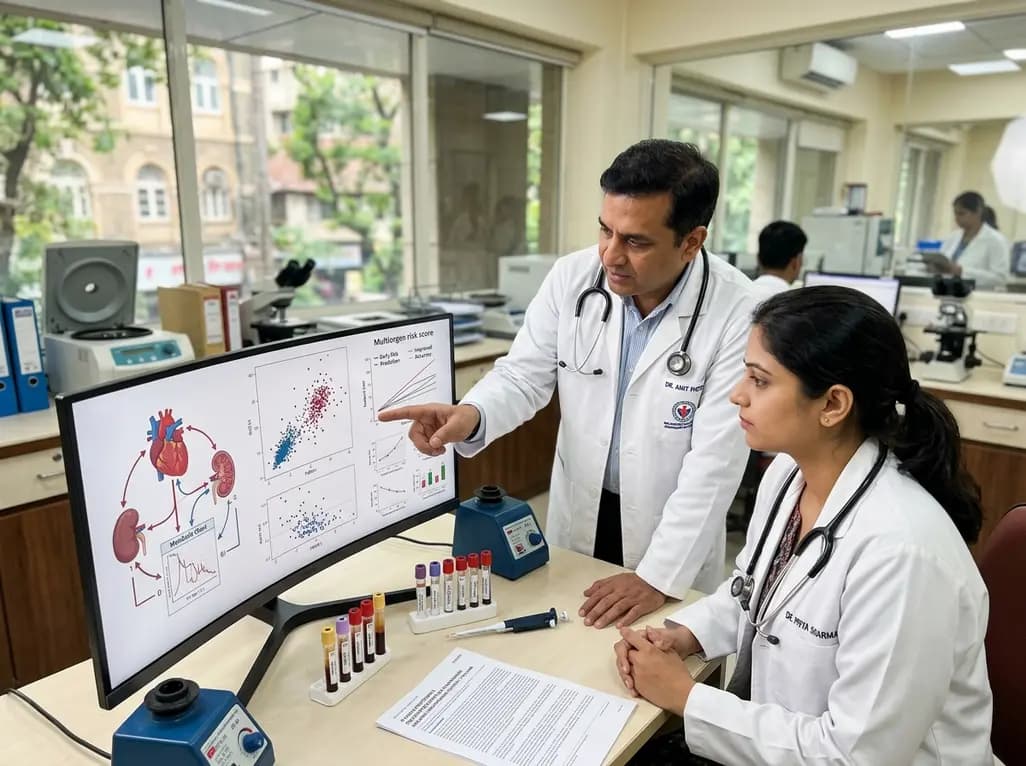
A large UK Biobank study reveals that plasma proteomic signatures capture preclinical organ damage and improve multiorgan risk prediction across early CKM syndrome stages 0 to 2 beyond traditional PREVENT clinical models.
Today

A retrospective CBCT study reveals that superior TMJ space asymmetry correlates moderately with occipital condyle-atlas-axis asymmetry in unilateral TMJ osteoarthritis, highlighting an imaging correlate between jaw biomechanics and upper cervical alignment rather than a standalone diagnostic marker.
Today

A Bayesian multilevel meta-analysis reveals that aerobic training combined with moderate carbohydrate restriction modestly lowers HbA1c in type 2 diabetes. However, sparse data and very low certainty leave incremental benefits over exercise or diet alone unproven, highlighting the need for individualized care.
Today
