.webp&w=384&q=75)

Loading, please wait...
Loading, please wait...
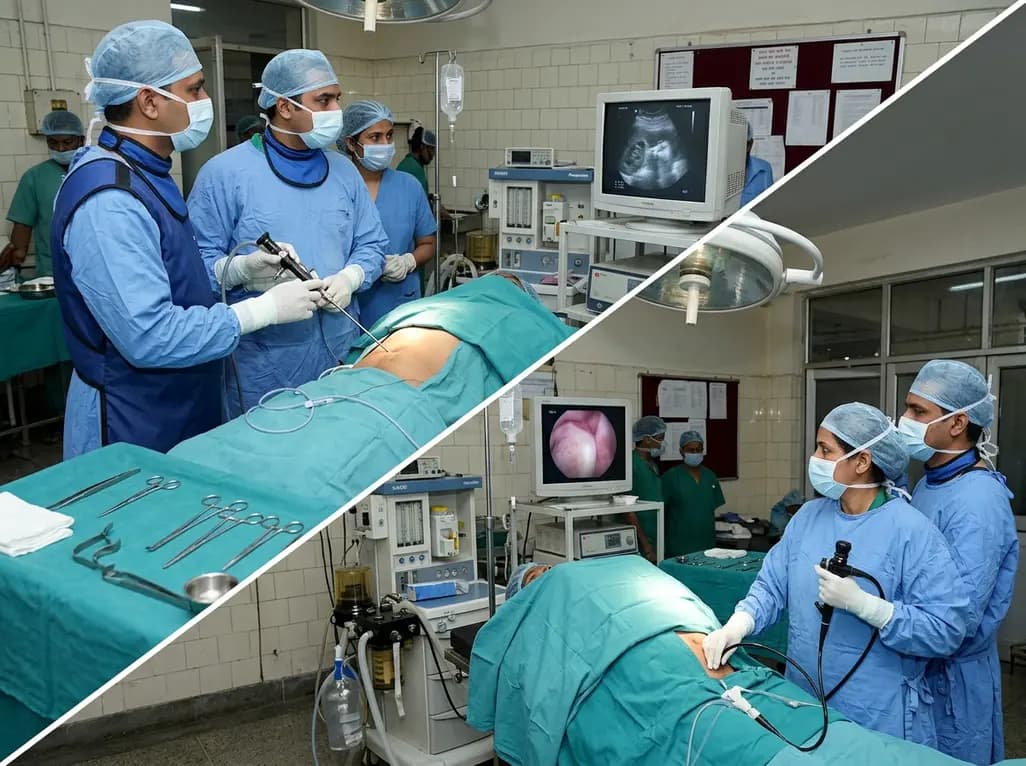
Managing large proximal ureteric stones presents a frequent clinical challenge for endourologists and general surgeons. When calculi equal or exceed 10 millimeters in diameter, conservative expulsion fails in most clinical presentations. Clinicians must choose between antegrade ureteroscopy through percutaneous renal access and retrograde ureteroscopy via transurethral instrumentation. A recent comprehensive meta-analysis of fourteen randomized controlled trials encompassing 1,432 patients provides decisive comparative insights. This analysis demonstrates meaningful differences in stone-free rates, operative parameters, hospital stays, and complication profiles. Understanding these surgical outcomes assists urologists in tailoring individualized interventions for proximal stone disease.
Large calculi located in the upper ureter often cause severe ureteral obstruction, excruciating flank pain, and progressive renal impairment. Consequently, prompt surgical intervention is essential to relieve obstruction, prevent urosepsis, and protect baseline renal architecture. However, treating proximal stones measuring 10 millimeters or larger presents distinct technical hurdles for endourologists. During retrograde instrumentation, pressurized irrigation fluid frequently propels stone fragments backward into the intrarenal collecting system. This retropulsion phenomenon complicates complete clearance and frequently necessitates flexible deflection or secondary ureteroscopic sessions.
In contrast, the antegrade approach utilizes percutaneous renal puncture to access the proximal ureter from above. Downward irrigation naturally directs stone fragments forward or toward the percutaneous sheath, which facilitates rapid mechanical evacuation and minimizes unwanted displacement. Nevertheless, establishing a percutaneous access tract through vascularized renal parenchyma introduces procedural invasiveness and tract-related risks. Surgeons must therefore weigh the advantages of superior single-session clearance against the inherent demands of percutaneous entry. Furthermore, patient comorbidities, degree of hydronephrosis, local ureteral inflammation, and baseline anatomical features heavily influence surgical selection. Thus, clinicians require robust clinical evidence from randomized trials to optimize procedural choices.
Achieving complete stone clearance in a single surgical intervention remains the principal benchmark of endourological success. According to the pooled meta-analysis data, retrograde ureteroscopy achieved significantly lower stone-free rates compared to antegrade ureteroscopy. The calculated odds ratio for stone clearance stood at 0.30, demonstrating clear superiority for the antegrade technique. Furthermore, this difference translates into a substantially reduced need for secondary auxiliary procedures following antegrade lithotripsy.
Specifically, patients undergoing retrograde ureteroscopy experienced a nearly sixfold increase in required auxiliary interventions, with an odds ratio of 5.83. These secondary interventions typically included repeat retrograde ureteroscopy, shock wave lithotripsy, or delayed percutaneous nephrolithotomy to clear retropulsed residual fragments. In addition, persistent stone debris increases postoperative discomfort, hospital readmission rates, and overall healthcare expenditure. Therefore, antegrade ureteroscopy delivers a distinct clinical advantage whenever complete, single-stage calculus removal is the primary therapeutic priority. By avoiding retropulsion and allowing direct lithotripsy with rigid or flexible instruments through a wide tract, antegrade access reliably clears large stone burdens. Consequently, clinicians treating high-volume upper ureteral stones should strongly consider the antegrade pathway to reduce retreatment burdens.
Although antegrade ureteroscopy provides superior stone clearance, it entails longer operative duration and extended hospitalization. The meta-analysis revealed that antegrade ureteroscopy required significantly longer operative times, with a mean difference of 12.03 minutes. Establishing percutaneous renal access, dilating the nephrostomy tract, and achieving meticulous hemostasis account for this added surgical duration. In contrast, retrograde access proceeds directly through the natural lower urinary tract, which reduces initial procedural setup.
Similarly, the length of hospital stay favored retrograde ureteroscopy. Patients managed via the antegrade route stayed in the hospital an average of 1.29 days longer than those undergoing retrograde intervention. This extended hospitalization reflects necessary postoperative nephrostomy tube management, monitoring of tract drainage, and routine parenchymal recovery protocols. In contrast, retrograde ureteroscopy allows same-day discharge or brief overnight observation in uncomplicated presentations. Therefore, when outpatient management or rapid return to daily activities represents the primary patient goal, retrograde ureteroscopy remains highly attractive. Clinicians must transparently communicate these temporal trade-offs during preoperative counseling sessions. Thus, shared decision-making balances immediate procedural efficiency against total treatment cycle duration.
Safety considerations play a pivotal role in choosing the optimal endourological strategy for upper ureteral calculi. The meta-analysis identified a significant difference in postoperative bleeding, with retrograde ureteroscopy demonstrating significantly lower haematuria rates. Specifically, retrograde intervention achieved a favorable odds ratio of 0.40 for postoperative haematuria compared to antegrade access. This finding reflects the non-parenchymal route of retrograde entry, which avoids disruption of vascularized renal cortex.
Conversely, rates of postoperative fever did not differ significantly between the two surgical approaches, exhibiting an odds ratio of 0.93. Both techniques involve pressurized irrigation within an obstructed, potentially colonized urinary tract, highlighting the importance of strict perioperative antibiotic prophylaxis. Similarly, the incidence of late ureteral strictures showed no statistically significant difference between groups, with an odds ratio of 3.70. Notably, the certainty of evidence for several secondary outcomes ranged from moderate to very low due to trial heterogeneity and study bias. Consequently, while antegrade ureteroscopy elevates minor bleeding risks, major morbidity profiles remain generally comparable when experienced endourologists perform the procedures. Surgeons must remain vigilant for systemic infection regardless of the selected access route.
Integrating these findings into real-world clinical practice requires a nuanced, individualized approach to patient management. For patients presenting with large, impacted proximal ureteric stones greater than 10 millimeters, antegrade ureteroscopy provides definitive single-session clearance. This approach is particularly advantageous for individuals who wish to avoid repeat procedures or those with dilated upper tracts. In addition, antegrade lithotripsy minimizes retropulsion risks in cases where previous retrograde attempts failed.
On the other hand, retrograde ureteroscopy remains an excellent alternative for patients with substantial bleeding risks or severe cardiopulmonary comorbidities. Moreover, patients prioritizing same-day discharge and minimal invasiveness often prefer retrograde intervention despite higher chances of secondary procedures. Clinicians should also consider local institutional resources, equipment availability, and surgeon proficiency when recommending a specific operative route. Ultimately, modern endourology emphasizes customized surgical planning that balances anatomical factors, procedural efficacy, and patient preferences. By contextualizing the meta-analytic data, urologists can optimize clinical outcomes, enhance patient satisfaction, and reduce unnecessary reinterventions.
Antegrade ureteroscopy offers significantly higher primary stone-free rates and lowers the need for auxiliary retreatments. By accessing the upper ureter percutaneously from above, irrigation fluid pushes fragments down rather than retropulsing them into the kidney. Consequently, surgeons can achieve complete single-session stone clearance more reliably. In contrast, retrograde ureteroscopy carries a nearly sixfold higher likelihood of requiring secondary procedures to clear retropulsed residual fragments.
Retrograde ureteroscopy utilizes natural anatomical pathways through the urethra and bladder, avoiding parenchymal puncture. Consequently, patients experience less postoperative pain, minimal parenchymal trauma, and lower bleeding risks. They rarely require external nephrostomy drainage tubes after the procedure. As a result, patients recover more rapidly, allowing for same-day discharge or brief overnight hospitalization. In contrast, antegrade access requires tract healing and monitoring, extending hospital stays by over one full day.
Postoperative haematuria occurs significantly less often following retrograde ureteroscopy because it bypasses vascularized renal tissue. However, rates of postoperative fever and late ureteral stricture formation do not differ significantly between the two techniques. Both procedures involve pressurized irrigation in obstructed collecting systems, demanding rigorous perioperative antibiotic prophylaxis. Overall, both approaches demonstrate favorable safety profiles when experienced endourologists perform them in appropriate clinical candidates.
Disclaimer: This content is for informational and educational purposes only and is not intended to serve as medical advice, diagnosis, or treatment. Healthcare professionals should exercise their independent clinical judgment when evaluating the information provided. While every effort has been made to ensure accuracy, medical knowledge is constantly evolving. Refer to the latest local and national guidelines for clinical practice.
References

Read summarized clinical updates, watch expert medical content, and earn CME certifications right from your smartphone.
Open your smartphone camera to scan and install.





A meta-analysis of 14 randomized controlled trials shows antegrade ureteroscopy achieves superior stone-free rates and fewer auxiliary procedures than retrograde ureteroscopy for large proximal ureteric stones (≥10 mm), though with longer operative time, longer hospital stay, and higher haematuria rates.
last month

High-dose anakinra provides rapid, life-saving remission in refractory SLE-associated haemophagocytic lymphohistiocytosis. Escalating interleukin-1 blockade halts hyperinflammation without cytotoxic marrow suppression, marking a key paradigm shift in managing secondary macrophage activation.
Today

Prenatal evaluation of fetal growth restriction requires an integrated diagnostic approach. While chromosomal microarray remains fundamental, exome sequencing offers significant diagnostic yield in isolated and syndromic cases, especially when ultrasound shows skeletal anomalies or normal placental function.
Today

Evaluating disagreement among Friedewald, Martin-Hopkins, and Sampson LDL-C equations reveals diagnostic uncertainty at statin cutoffs. An interpretable regime-aware calibration model rescues patient misclassifications without extra testing costs.
Today

A randomized controlled trial compared ultrasound-guided intra-articular injections of PRP, hydrolyzed type I collagen, and hyaluronic acid in knee osteoarthritis. All therapies demonstrated significant improvements in WOMAC and pain scores at six months, supporting hydrolyzed collagen as a viable biological option.
Today

A study reveals that salivary cortisone correlates more strongly with serum cortisol than salivary cortisol during dynamic adrenal testing, while salivary dexamethasone accurately confirms compliance. This provides a non-invasive, precise alternative to venipuncture for diagnosing adrenal disorders.
Today
