.webp&w=384&q=75)

Loading, please wait...
Loading, please wait...

Modern aneurysmal subarachnoid hemorrhage care requires prompt surgical or endovascular occlusion of the ruptured aneurysm alongside intensive neurocritical management. However, significant healthcare disparities exist worldwide, particularly in public health systems across middle-income nations. Although rapid expansion of endovascular coiling and microsurgical clipping has occurred in many tertiary centers, the delivery of specialized neurocritical care often lags behind. Consequently, overall patient outcomes frequently remain guarded despite successful initial aneurysm repair. A recent real-world cohort study from a high-volume public referral center in Brazil provides critical insights into these clinical dynamics. Researchers evaluated contemporary care pathways, complication rates, and functional outcomes in patients admitted with acute aneurysmal subarachnoid hemorrhage. The investigation focused on identifying critical systemic bottlenecks that affect patient recovery after immediate surgical intervention. Furthermore, the findings emphasize that securing a ruptured aneurysm represents only the initial step in a complex treatment continuum. Optimal patient survival and long-term functional independence depend heavily on continuous intensive monitoring and rapid management of secondary brain injury in specialized neurocritical units.
The observational study analyzed seventy-four consecutive adult patients admitted with confirmed aneurysmal subarachnoid hemorrhage within five days of symptom onset. Clinical data demonstrated an exceptionally high baseline disease severity across the cohort. Specifically, forty-five percent of patients presented with World Federation of Neurological Surgeons grades four to five, reflecting profound initial neurological impairment. Additionally, seventy-three percent of the cohort displayed modified Fisher grade four hemorrhage on baseline computed tomography scans, indicating extensive subarachnoid blood volume and elevated vasospasm risk. Hydrocephalus was also present in sixty-four percent of patients upon initial evaluation. Because public healthcare referral pathways in middle-income countries often experience pre-hospital delays, patients frequently present at advanced stages of neurological injury. Therefore, neurocritical care teams must immediately initiate aggressive stabilization protocols upon emergency department arrival. These baseline parameters underline the severe physiological burden that tertiary public hospitals manage daily, highlighting the urgent need for streamlined triage and rapid transfer protocols across regional healthcare networks.
Endovascular intervention served as the primary treatment strategy, performed in seventy-three percent of cases. Fortunately, the median time from hospital admission to definitive aneurysm treatment was only one day, demonstrating efficient interventional workflow within the tertiary referral center. However, serious systemic bottlenecks emerged regarding intensive care unit access. Despite early aneurysm occlusion capabilities, only twenty-eight percent of patients gained admission to an intensive care unit within forty-eight hours of presentation. Moreover, thirty-eight percent of the cohort never received specialized intensive care during their hospital stay. This stark discrepancy illustrates a major critical care deficit within middle-income public healthcare systems. While surgical and endovascular teams successfully prevent early rebleeding, limited intensive care bed capacity severely hinders comprehensive postoperative monitoring. Consequently, vulnerable patients remain in lower-acuity hospital wards where subtle neurological deterioration might pass unnoticed. Closing this gap requires targeted health policy reforms and dedicated allocation of neurocritical beds alongside endovascular service expansion.
Subarachnoid hemorrhage triggers complex secondary cascades that require aggressive, specialized neurocritical monitoring. In this cohort, neurological and systemic complications occurred at alarming rates throughout hospitalization. Specifically, radiologic vasospasm developed in fifty-eight percent of patients, while delayed cerebral ischemia affected forty-three percent of the study population. External ventricular drainage was necessary in forty-two percent of cases to manage acute hydrocephalus and elevated intracranial pressure. Furthermore, severe infectious complications occurred in fifty-seven percent of patients, with ventriculitis developing in twenty-two percent. Vasoactive drug administration was required in eighty-five percent of individuals to maintain adequate cerebral perfusion pressure and combat vasospasm. These findings highlight that securing the aneurysm does not eliminate ongoing cerebral ischemia or systemic instability. Therefore, clinical teams must maintain vigilant monitoring for delayed vasospasm, intracranial hypertension, and nosocomial infections. Without specialized neurointensive care, managing these multifaceted complications becomes exceptionally challenging, directly contributing to secondary brain injury and prolonged hospitalization.
The high complication burden directly translated into sobering clinical outcomes for this patient population. In-hospital mortality reached forty-two percent, while sixty-six percent of patients suffered unfavorable functional outcomes at three months, defined as modified Rankin Scale scores of four to six. These results highlight a profound reality in public healthcare delivery: timely anatomical repair of an aneurysm cannot compensate for gaps in continuous critical care support. To significantly improve functional recovery, public health infrastructure must prioritize neurocritical care expansion alongside interventional radiology and neurosurgery capabilities. Establishing dedicated neuro-ICUs, implementing standardized vasospasm protocols, and training specialized nursing staff represent essential steps forward. Furthermore, optimizing emergency referral pathways will reduce pre-hospital transport delays. Ultimately, this real-world cohort proves that effective subarachnoid hemorrhage management demands a fully integrated system of care. Healthcare administrators must invest in comprehensive critical care pathways to ensure that life-saving surgical interventions result in meaningful long-term patient recovery.
Securing the aneurysm prevents immediate rebleeding, but patients remain at high risk for secondary brain injury from delayed cerebral ischemia, vasospasm, hydrocephalus, and systemic infections. Neurocritical care units provide specialized continuous invasive monitoring, tailored hemodynamic management, and rapid intervention when neurological status changes. Without dedicated neurointensive support, subtle deterioration may be missed, leading to permanent neurological deficits or increased patient mortality.
Delayed cerebral ischemia is a major cause of morbidity following aneurysmal subarachnoid hemorrhage, occurring in approximately thirty to forty-five percent of affected patients. Real-world data from middle-income public settings show delayed cerebral ischemia rates around forty-three percent. It typically develops between three to fourteen days post-hemorrhage due to microvascular dysfunction, arterial vasospasm, and cortical spreading depolarization, requiring careful blood pressure and fluid optimization.
Public healthcare systems must align interventional expansion with neurocritical bed capacity. Key strategies include establishing dedicated neuro-intensive care units, training specialized critical care nurses, implementing standardized vasospasm screening protocols, and streamlining inter-hospital transfer networks. Additionally, early identification of hydrocephalus and rapid placement of external ventricular drains help stabilize critically ill patients prior to definitive endovascular or surgical aneurysm repair.
Disclaimer: This content is for informational and educational purposes only and does not constitute medical advice, diagnosis, or treatment. Healthcare professionals should rely on their clinical judgment and refer to the latest local and national guidelines for clinical practice.
References

Read summarized clinical updates, watch expert medical content, and earn CME certifications right from your smartphone.
Open your smartphone camera to scan and install.





A real-world Brazilian cohort highlights critical gaps in neurocritical care for aneurysmal subarachnoid hemorrhage. Despite rapid aneurysm treatment, limited ICU capacity and high complication rates led to 42% in-hospital mortality and 66% poor 3-month functional outcomes.
last month

The Supreme Court questioned FSSAI's phased warning approach, urging single-phase implementation for foods exceeding limits in any nutrient of concern. Backed by ICMR-NIN recommendations, the proposed red hexagonal warnings target added sugar, salt, and fat to combat India's escalating chronic disease epidemic.
Today

A premature neonate developed upper limb compartment syndrome after uterine rupture extruded the arm through a scar defect. Conservative management with continuous monitoring yielded complete functional recovery and normal limb growth at 10-year follow-up, highlighting non-operative safety in selected cases.
Today

A comparative analysis shows that older age, elevated blood glucose, and abdominal adiposity are primary drivers of hypertension. Comprehensive evaluation of cardiometabolic risk profiles enables clinicians to detect overlapping metabolic dysfunctions early and optimize targeted prevention strategies.
Today
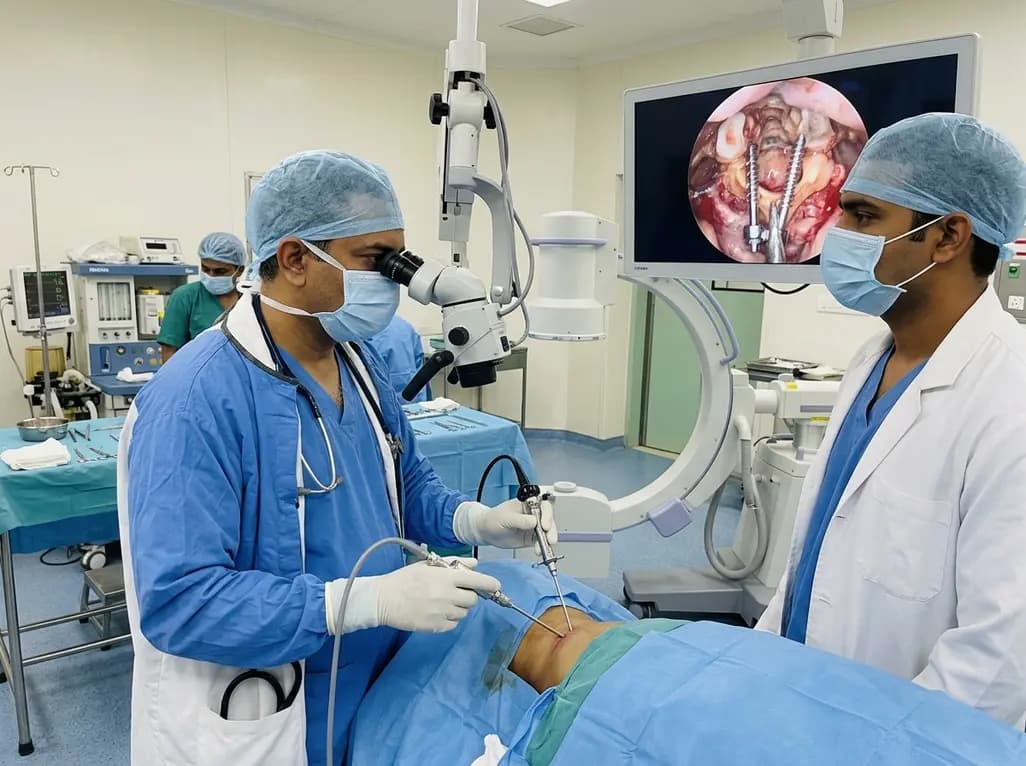
Endoscopic posterior cervical fusion combines minimally invasive decompression, joint preparation, and rigid screw-rod fixation for atlantoaxial pathologies. Early clinical findings demonstrate solid bony union, excellent symptom relief, and minimal soft-tissue morbidity without significant vascular compromise.
Yesterday

Atherosclerosis involves extensive glycometabolic reprogramming across immune and vascular cells. This review examines how glycolysis, the pentose phosphate pathway, and lactate-driven epigenetic shifts fuel plaque vulnerability, while highlighting novel therapeutic targets like PFKFB3 and LDHA.
Today
