.webp&w=384&q=75)

Loading, please wait...
Loading, please wait...

Aneurysmal subarachnoid hemorrhage remains one of the most devastating neurosurgical emergencies worldwide. Clinicians frequently encounter severe secondary neurological deterioration, primarily driven by delayed cerebral ischemia. Consequently, preventing secondary ischemic brain injury represents a paramount goal in neurocritical care. In India, ruptured intracranial aneurysms present significant therapeutic challenges because tertiary facilities manage diverse presentations with varying transfer delays. When a patient survives the initial hemorrhage, neurovascular teams must immediately secure the culprit aneurysm to prevent catastrophic rebleeding. Historically, neurosurgeons relied exclusively on open microsurgical clipping. However, the rapid evolution of endovascular coiling transformed modern clinical practice. While both techniques effectively exclude aneurysms from circulation, their downstream impact on secondary complications remains heavily debated. Specifically, researchers continue to investigate whether surgical manipulation or endovascular device deployment disproportionately triggers delayed cerebral ischemia. Therefore, large-scale clinical investigations are vital for resolving this persistent therapeutic dilemma.
Furthermore, secondary ischemic events significantly reduce the likelihood of independent functional recovery. Although angiographic vasospasm explains a portion of these neurological declines, microcirculatory dysfunction, cortical spreading depolarization, and neuroinflammation also contribute substantially. Because clinical deterioration imposes severe long-term disability, selecting the optimal upfront aneurysm intervention is critical. Thus, examining extensive clinical datasets provides actionable insights for neurosurgeons, neurologists, and neurointensivists striving to optimize clinical outcomes.
For several decades, randomized clinical trials established the foundational evidence guiding ruptured aneurysm management. In particular, the International Subarachnoid Aneurysm Trial demonstrated superior one-year disability-free survival for endovascular coiling compared to microsurgical clipping. Similarly, the Barrow Ruptured Aneurysm Trial highlighted early functional advantages with endovascular intervention, although differences narrowed during long-term follow-up. Nevertheless, these landmark trials enrolled highly selected patient cohorts, often excluding anatomically challenging aneurysms or medically unstable candidates. In addition, neurointerventional technology has advanced exponentially since those early trials concluded. As a result, contemporary clinicians require large-scale real-world observational data to evaluate how modern procedural strategies influence secondary complications.
Moreover, real-world registry studies capture the true diversity of patient populations treated across major neurosurgical centers. Observational cohorts reflect routine clinical workflows, diverse anatomical configurations, and variable baseline comorbidities. Consequently, evaluating thousands of consecutively treated cases clarifies whether the chosen treatment modality independently predicts secondary complications. Specifically, researchers must determine whether the physical trauma of open craniotomy or the endovascular deployment of microcoils differentially triggers delayed cerebral ischemia. Hence, contemporary cohort studies provide a necessary bridge between historical randomized controlled trials and contemporary neurosurgical decision-making.
To address this critical knowledge gap, researchers conducted a comprehensive 12-year observational cohort study at Beijing Tiantan Hospital in China. The investigators retrospectively evaluated 2748 consecutive patients admitted between January 2012 and December 2023 with confirmed aneurysmal subarachnoid hemorrhage. Among this cohort, the median patient age was 55 years, and women constituted 58.8% of the study population. The primary outcome was the incidence of delayed cerebral ischemia, while secondary evaluations focused on short-term functional recovery at three months using the modified Rankin Scale.
Because non-randomized surgical studies harbor inherent selection bias, the researchers implemented propensity score matching. Clinicians typically assign younger patients with complex wide-neck aneurysms or large hematomas to open surgery, whereas they channel elderly or high-grade patients toward endovascular intervention. Therefore, propensity score matching rigorously balanced baseline patient demographics, neurological status, radiographic severity, and aneurysm characteristics between the microsurgical and endovascular cohorts. In addition, the team conducted multivariate regression analyses both before and after matching. Consequently, this methodological rigor minimized confounding factors, enabling the authors to isolate the true independent effect of the intervention modality on clinical outcomes.
The findings from this extensive 12-year experience demonstrated a striking divergence between treatment modalities. Specifically, multivariate analysis revealed that microsurgical clipping significantly increased the risk of delayed cerebral ischemia compared to endovascular coiling. Both before and after propensity score matching, open surgery correlated with more than double the likelihood of ischemic deterioration, displaying an odds ratio of 2.510. Furthermore, this elevated risk persisted after adjusting for recognized predictors such as admission Hunt and Hess grade and Fisher grade.
Additionally, the study examined functional outcomes at three months post-hemorrhage. Patients who underwent endovascular coiling achieved significantly higher rates of functional independence, defined as a modified Rankin Scale score between 0 and 2. Conversely, patients treated with microsurgical clipping exhibited higher rates of moderate-to-severe disability and dependency. In summary, these findings strongly suggest that endovascular coiling offers superior neuroprotection against secondary ischemia while simultaneously fostering more favorable short-term functional recovery. Consequently, when both treatment modalities appear anatomically viable, clinicians should carefully consider the substantial ischemic penalty associated with open craniotomy.
Several biological and technical mechanisms explain why open microsurgical clipping elevates the hazard of delayed cerebral ischemia. First, open craniotomy requires extensive mechanical brain retraction and direct surgical manipulation of major cerebral arteries. This physical trauma damages the delicate vascular endothelium and perturbs local microcirculatory autoregulation. Furthermore, direct dissection through the subarachnoid cisterns can provoke mechanical spasm and release pro-inflammatory cytokines into the local milieu. In contrast, endovascular coiling secures the aneurysm from within the vessel lumen, completely avoiding direct mechanical disruption of the abluminal brain parenchyma.
Moreover, blood breakdown products interact uniquely with the cerebral vasculature following different interventions. Although neurosurgeons often attempt cisternal blood clot evacuation during open surgery, residual hematoma and operative cortical contusions can incite profound neuroinflammation. Consequently, localized release of endothelin-1, reactive oxygen species, and free hemoglobin drives sustained microvascular constriction and microthrombosis. Additionally, open surgery increases the incidence of cortical spreading depolarizations, which further exhaust regional energy reserves. Therefore, the combined burden of mechanical trauma, blood degradation, and vascular dysfunction substantially amplifies ischemic vulnerability after surgical clipping.
These landmark findings hold profound implications for the delivery of acute neurovascular care across medical centers in India. Historically, many regional institutions relied heavily on microsurgical clipping due to hardware expense and a shortage of trained interventional neuroradiologists. However, neuroendovascular capabilities have expanded rapidly in major Indian cities and teaching hospitals over the past decade. Given the clear association between open surgery and delayed cerebral ischemia, Indian tertiary centers must establish multidisciplinary neurovascular teams to evaluate every acute subarachnoid hemorrhage promptly.
Furthermore, healthcare systems must address infrastructural and economic disparities to broaden access to endovascular techniques. When patients present with ruptured intracranial aneurysms, early endovascular treatment preserves functional independence and substantially curtails prolonged intensive care stays. In addition, neurointensive care units across India must adopt standardized neuromonitoring protocols to detect ischemic complications early. Routine surveillance utilizing transcranial Doppler sonography, combined with strict euvolemia and enteral nimodipine, ensures robust secondary neuroprotection. Therefore, integrating evidence-based treatment selection with vigilant bedside monitoring will significantly enhance survival and reduce disability among Indian patients.
Surgical clipping requires direct brain tissue retraction and mechanical vessel manipulation, which disrupt endothelial autoregulation. Additionally, operative trauma releases pro-inflammatory mediators and free hemoglobin into the subarachnoid space. These inflammatory cascades trigger sustained microvascular constriction, microthrombosis, and cortical spreading depolarizations, thereby increasing the risk of delayed cerebral ischemia.
Propensity score matching creates balanced comparison groups by accounting for non-randomized treatment assignment in observational cohorts. Clinicians often reserve surgery for complex aneurysms or younger individuals while directing fragile patients toward coiling. Matching equalizes baseline characteristics, such as neurological grade and aneurysm location, allowing investigators to isolate the true treatment effect.
Current clinical protocols recommend enteral nimodipine for all patients with aneurysmal subarachnoid hemorrhage to improve functional outcomes. Furthermore, neurocritical teams maintain strict euvolemia and normal circulating blood volume while avoiding prophylactic hypervolemia. If delayed ischemia develops, clinicians induce therapeutic hypertension and may deploy rescue endovascular spasmolysis or transluminal balloon angioplasty.
Disclaimer: This content is for informational and educational purposes only... Refer to the latest local and national guidelines for clinical practice.
References

Read summarized clinical updates, watch expert medical content, and earn CME certifications right from your smartphone.
Open your smartphone camera to scan and install.





A 12-year study of 2748 patients with aneurysmal subarachnoid hemorrhage shows microsurgical clipping is linked to a 2.5-fold higher risk of delayed cerebral ischemia than endovascular coiling, emphasizing the need for evidence-based intervention to improve neurological recovery.
Today

Bacteroides thetaiotaomicron utilizes an intricate multiprotein extracellular relay and outer membrane vesicles for cobamide scavenging in the human gut. This review examines its transport mechanics, riboswitch regulation, and potential clinical implications for host-microbe vitamin competition and nutrient absorption.
Today

Novel preclinical research demonstrates that antisense oligonucleotides targeting essential genes such as DARS1, DYNC1I2, and EIF2S3 selectively induce apoptosis in ovarian and lung cancer cells. Conditional biomarker activation provides a viable strategy to spare normal tissue while overcoming therapy resistance.
Today
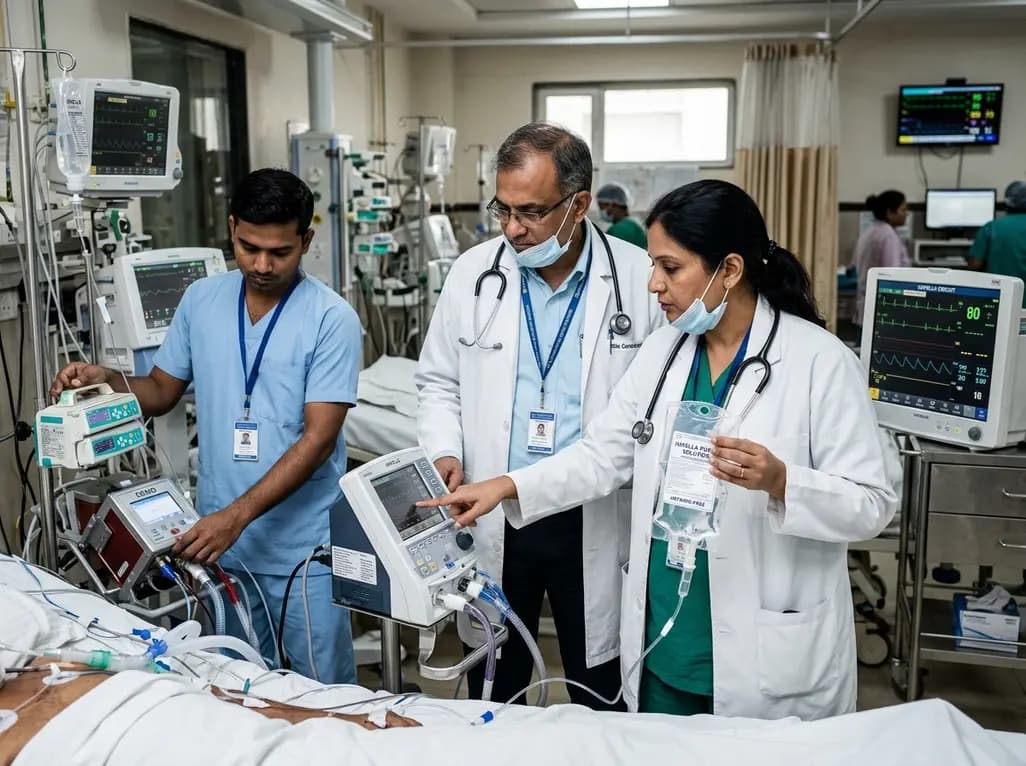
This clinical analysis examines heparin-free versus heparin-containing Impella purge solutions in patients receiving concomitant ECMO support (ECPELLA). Evidence suggests anticoagulant-free purges maintain device patency while reducing bleeding risks, offering a viable strategy alongside systemic anticoagulation.
Today

A 10-year Markov state-transition model shows minimally invasive tubular decompression dominates open laminectomy for pure lumbar spinal stenosis, yielding 5.95 vs 5.91 QALYs and saving $4,167 per patient through reduced complications and lower index costs.
Today

A preclinical study demonstrates that naringin-loaded phytosomes significantly enhance oral bioavailability and provide neuroprotective efficacy in diabetic neuropathy by dampening inflammation, reducing oxidative stress, and relieving neuropathic pain.
Today
