.webp&w=384&q=75)

Loading, please wait...
Loading, please wait...

Motor vehicle accidents remain a leading cause of craniofacial injuries despite significant advancements in automotive safety technology. While airbags and seatbelts save thousands of lives annually, their mechanical deployment can paradoxically cause specific facial injuries. Specifically, airbag-related maxillofacial trauma presents unique clinical patterns that emergency physicians and surgeons must recognize to provide optimal care. Understanding the dynamics between occupant position and restraint mechanics is essential for preventing these complications.
Current research indicates that orbital fractures, particularly blow-out fractures, and ocular trauma are the most frequent injuries documented. These often result from the blunt force distributed when the airbag module expands at high speeds during a collision. Additionally, the rapid chemical reaction used for inflation can cause thermal or chemical burns on the face and neck. Furthermore, atypical fracture patterns often emerge when occupants sit too close to the steering wheel. Consequently, clinicians must assess both skeletal and soft tissue integrity during the initial trauma evaluation to identify these specific lesions.
Several risk factors significantly influence injury severity. For example, pre-impact braking often shifts the occupant forward, placing them in the direct path of the deploying airbag. Moreover, seatbelt nonuse significantly increases the likelihood of striking the interior module before the airbag reaches full inflation. However, proper occupant positioning and restraint system interactions can mitigate these risks. Therefore, public education regarding optimal seating distance remains a critical component of modern trauma prevention strategies.
Technological refinements continue to evolve to minimize the kinetic risks of deployment and chemical exposure. Nevertheless, a balance between lifesaving benefits and potential for injury requires ongoing multidisciplinary collaboration. In summary, clinicians should integrate biomechanical research with clinical findings to improve patient management. Consistent policy updates and public awareness are also necessary to optimize protective outcomes in future automotive safety designs.
Orbital blow-out fractures and ocular trauma are the most common reported injuries. Patients may also experience chemical burns, soft tissue abrasions, and dental fractures depending on their proximity to the airbag module at the time of impact.
Occupants who sit too close to the steering wheel or dashboard are at a higher risk of blunt-force impact. Maintaining a distance of at least 10 inches and wearing a seatbelt ensures that the airbag provides a cushion rather than causing secondary trauma.
Disclaimer: This content is for informational and educational purposes only. It does not constitute professional medical advice, diagnosis, or treatment. Always seek the advice of your physician or other qualified healthcare provider with any questions you may have regarding a medical condition. Refer to the latest local and national guidelines for clinical practice.
References

Read summarized clinical updates, watch expert medical content, and earn CME certifications right from your smartphone.
Open your smartphone camera to scan and install.





A scoping review identifies common airbag-related facial injuries like orbital fractures and chemical burns, highlighting the need for proper seating positi...
5 months ago

A breakthrough ultrathin multimodal sensor decouples physical hemodynamic monitoring from disposable electrochemical calibration, achieving long-term wearable glucose prediction with 81.36% accuracy and a 9.12% MARD. This offers a robust, drift-free solution for outpatient metabolic surveillance.
Today

A clinical review of menopause and neurology highlights the neurobiological impacts of midlife hormonal shifts on cognition, epilepsy, migraine, multiple sclerosis, and stroke, emphasizing safe hormone therapy prescribing.
Today

Co-administering antiseizure medications and DOACs frequently causes pharmacokinetic interactions, subtherapeutic drug levels, and thromboembolic failures. This review highlights enzyme induction risks, unpredictable outcomes with levetiracetam, and the vital role of therapeutic drug monitoring.
Today
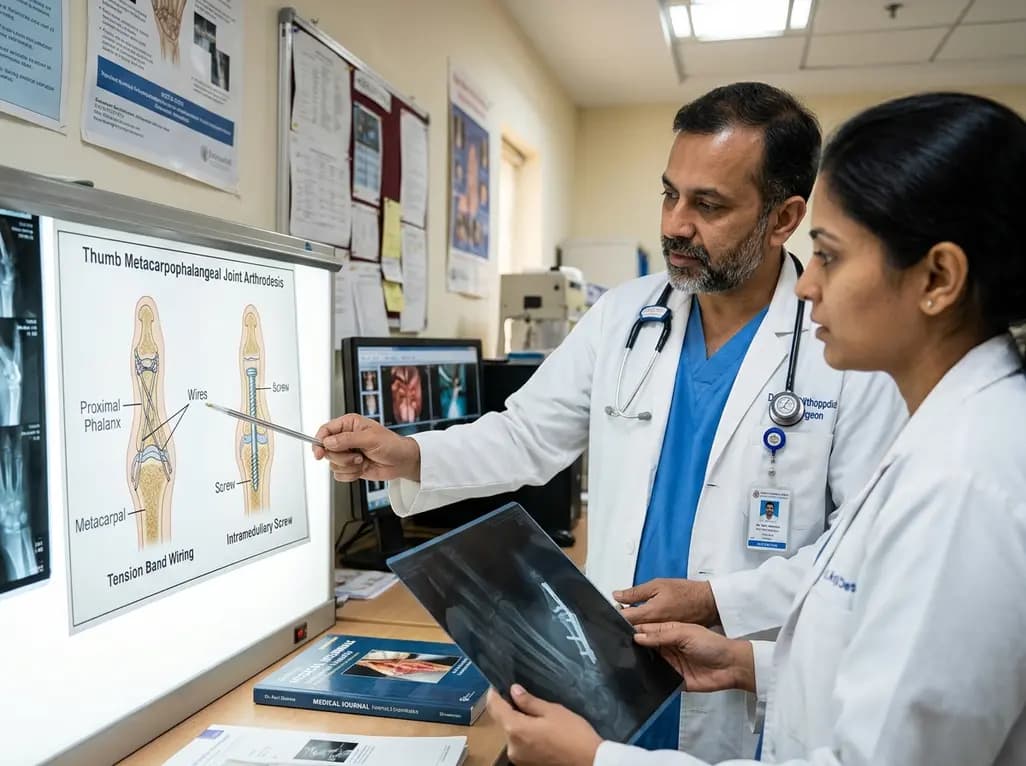
A comparative review of tension band wiring and intramedullary screw fixation in thumb metacarpophalangeal arthrodesis, evaluating union rates, hardware complications, and clinical outcomes.
Today

Following regulatory scrutiny from FSSAI regarding promotional representations and lean muscle preservation claims, Dr. Reddy's Laboratories and Nestlé Health Science are currently reviewing the branding and marketing strategy for their joint nutritional supplement Celevida GLP+.
Today
