.webp&w=384&q=75)

Loading, please wait...
Loading, please wait...
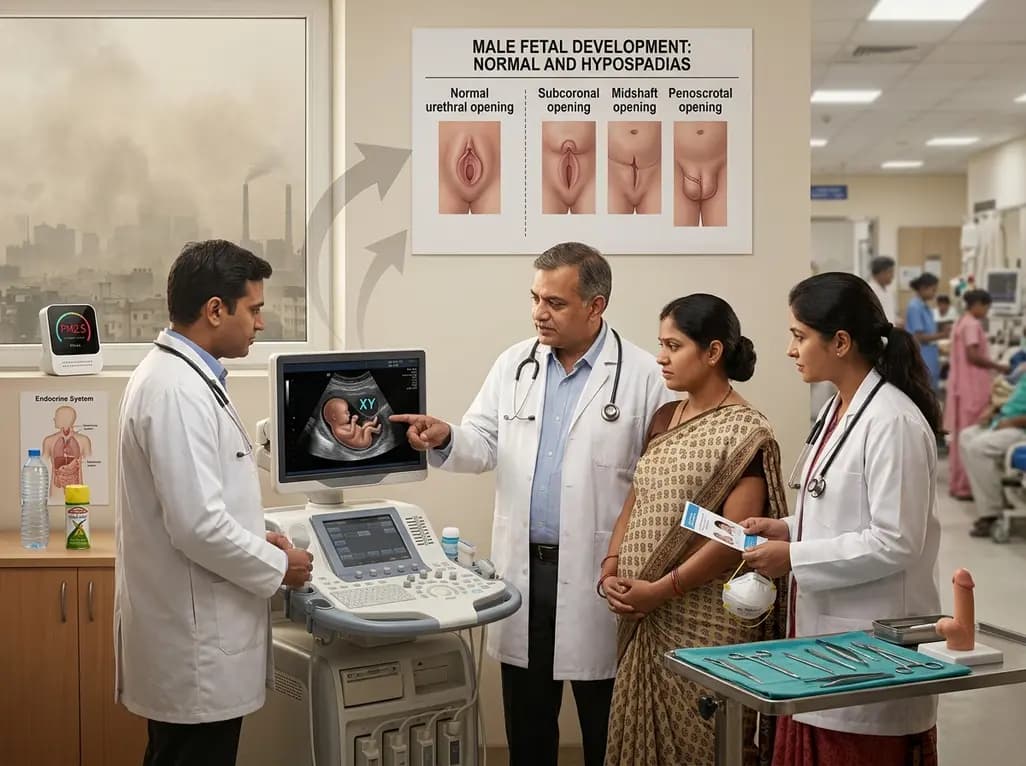
Emerging medical research highlights growing concerns regarding environmental hazards during pregnancy. Medical specialists are closely evaluating the relationship between ambient air pollution fetal development and congenital reproductive malformations in male offspring. Specifically, conditions like hypospadias have drawn significant scientific attention. While genetic factors play a key role, exposure to endocrine-disrupting chemicals in airborne particulates is now recognized as a major potential risk factor.
Hypospadias represents one of the most common congenital malformations in male newborns globally. This structural abnormality occurs when the urethral orifice opens on the ventral surface of the penis rather than at the tip. Furthermore, the condition often presents with a downward penile curvature and incomplete foreskin formation. Clinical data indicates that hypospadias affects approximately one in every 150 to 200 male live births worldwide. In India, pediatric surgeons evaluate thousands of affected infants each year during routine neonatal screenings.
The development of external male genitalia depends heavily on precise hormonal orchestration during early intrauterine life. Male fetal organogenesis begins early during the first trimester. Specifically, endogenous androgens such as testosterone drive normal urethral tubulation and penile fusion between 8 and 16 weeks of gestation. If hormonal signaling encounters disruption during this narrow developmental window, anatomical defects can occur. In addition to hypospadias, prenatal endocrine disruption has been linked to cryptorchidism, impaired adult sperm quality, and an elevated lifetime risk of testicular malignancy. Consequently, clinicians emphasize comprehensive newborn physical examinations to detect genital anomalies promptly and initiate timely pediatric urology care.
Airborne pollutants contain complex mixtures of fine particulate matter, heavy metals, volatile organic compounds, and industrial byproducts. Many of these substances function as potent endocrine-disrupting chemicals within the human body. When pregnant women inhale polluted ambient air, ultra-fine particles and toxic chemicals cross the alveolar membrane into maternal systemic circulation. Consequently, these xenobiotics can traverse the placental barrier and accumulate within fetal tissues.
Inside fetal organs, endocrine disruptors mimic, block, or alter endogenous androgenic and estrogenic signaling pathways. For instance, chemical compounds like phthalates, bisphenols, organophosphate pesticides, and polycyclic aromatic hydrocarbons inhibit androgen synthesis or competitively block cellular androgen receptors. This molecular interference disrupts critical tissue morphogenesis during the delicate 8-to-16-week gestational period. Furthermore, recent scientific investigations reveal that airborne pollutants can induce epigenetic alterations in fetal cellular DNA. These epigenetic modifications alter gene expression without changing the underlying DNA sequence. As a result, atmospheric pollution may exert lasting adverse effects on reproductive health across multiple generations, necessitating urgent environmental health research.
Medical experts caution that environmental pollution alone does not cause every case of hypospadias. Instead, pediatric urologists describe hypospadias as a complex, multifactorial disorder. The condition arises from an intricate interaction between genetic predisposition, maternal health, placental function, and external environmental exposures. In most clinical cases, identifying a single definitive etiology remains challenging for treating physicians.
Genetic susceptibility plays a prominent role in determining how a fetus responds to environmental stressors. For example, specific gene mutations in androgen synthesis pathways can make a fetus exceptionally vulnerable to low concentrations of environmental toxins. Conversely, a robust genetic background might offer protection against chemical exposures. Furthermore, maternal health factors such as advanced maternal age, pre-existing metabolic disorders, and nutritional deficiencies can further influence fetal susceptibility during early gestation. Therefore, medical leaders emphasize that air pollution represents one environmental risk factor among several potential contributors. Nevertheless, given the rising global incidence of male urogenital anomalies, investigating environmental hazards remains an essential public health priority for modern pediatric healthcare.
Fortunately, pediatric urologists and pediatric surgeons can successfully correct hypospadias through specialized reconstructive surgery. The primary goals of surgical repair include repositioning the urethral meatus to the tip of the glans penis, straightening any ventral penile curvature, and achieving a natural cosmetic appearance. Ideally, pediatric urologists perform this corrective procedure when the child is between 9 and 24 months of age.
Early surgical intervention offers significant clinical advantages for the child's overall development. Operating during early toddlerhood minimizes psychological trauma and allows normal urinary function before formal toilet training begins. Furthermore, modern pediatric reconstructive techniques yield exceptionally high success rates with excellent long-term functional and cosmetic outcomes. Most children achieve normal urinary stream control and preserve future reproductive capacity. However, timely evaluation by an experienced pediatric surgeon remains crucial. If parents notice an abnormal urinary stream or atypical penile morphology, prompt specialist consultation ensures appropriate surgical planning. Delayed intervention, in contrast, can lead to functional impairment and emotional distress during adolescence.
While individuals cannot control ambient air quality single-handedly, expectant mothers can adopt practical preventive strategies to reduce chemical exposure during pregnancy. Obstetricians recommend prioritizing comprehensive antenatal care from early gestation. Regular prenatal check-ups allow healthcare providers to monitor fetal growth, assess maternal wellness, and provide personalized lifestyle advice tailored to environmental health risks.
To minimize exposure to endocrine disruptors, pregnant women should avoid heating food in plastic containers and limit their use of synthetic cosmetics containing phthalates. Additionally, avoiding pesticide exposure, consuming thoroughly washed organic produce, and eliminating exposure to secondhand tobacco smoke are prudent daily measures. During periods of severe ambient air pollution, expectant mothers should limit strenuous outdoor activity and utilize indoor air purifiers equipped with HEPA filtration. Furthermore, maintaining proper indoor ventilation and staying well-hydrated support overall maternal-fetal wellness. These proactive health measures collectively foster an optimal intrauterine environment for fetal organ development and promote positive pregnancy outcomes.
To establish definitive causal links between ambient air pollution fetal development and male congenital abnormalities, healthcare leaders urge robust, large-scale clinical studies. Prospective epidemiological research tracking maternal pollutant exposure and fetal outcomes across diverse patient cohorts will clarify specific dose-response relationships. Furthermore, biomonitoring studies measuring maternal serum, amniotic fluid, and placental chemical concentrations will yield valuable mechanistic insights into fetal toxicology.
At the public health level, addressing atmospheric pollution requires coordinated policy interventions and strict environmental regulations. Industrial emissions, vehicular exhaust, and agricultural burning represent major targets for pollution control initiatives in rapidly developing nations. Simultaneously, integrating environmental health assessments into routine maternal healthcare empowers doctors to offer targeted clinical advice to vulnerable populations. Ultimately, protecting developing fetuses from harmful environmental chemicals benefits overall community health and reduces the healthcare burden of congenital malformations. Through combined scientific research, clinical vigilance, and legislative action, medical systems can better safeguard future generations.
Q1: What is hypospadias and how common is it in male newborns?
Hypospadias is a congenital anomaly where the urethral opening forms on the underside of the penis rather than at the tip. Globally, it affects approximately one in every 150 to 200 male live births. Pediatric surgeons can successfully correct the condition using advanced reconstructive surgical procedures, ideally performed when the child is between nine months and two years of age to achieve optimal functional outcomes.
Q2: How can air pollution affect male fetal development during pregnancy?
Air pollution contains endocrine-disrupting chemicals that cross the placenta into fetal circulation. These hazardous compounds interfere with critical androgenic hormones, such as testosterone, during the delicate first-trimester developmental window between 8 and 16 weeks of gestation. Consequently, disrupted hormonal signaling can impair the structural formation of external male genitalia, leading to congenital conditions like hypospadias and undescended testes.
Q3: What preventive steps can pregnant women take to minimize chemical exposure?
Expectant mothers can minimize harmful chemical exposure by avoiding food heated in plastic containers, staying indoors during periods of severe air pollution, and using indoor air purifiers with HEPA filters. Additionally, avoiding secondhand tobacco smoke, thoroughly washing fresh produce to eliminate pesticide residues, and adhering to routine antenatal care check-ups significantly support healthy fetal development and maternal health throughout pregnancy.
Disclaimer: This content is for informational and educational purposes only. It does not constitute medical advice or replace professional judgment. Refer to the latest local and national guidelines for clinical practice.
References

Read summarized clinical updates, watch expert medical content, and earn CME certifications right from your smartphone.
Open your smartphone camera to scan and install.





Emerging clinical evidence links prenatal exposure to air pollution and endocrine-disrupting chemicals with male fetal development risks, including hypospadias. Pediatric urologists discuss hormonal disruption during early gestation, surgical treatment outcomes, and preventive measures for expectant mothers.
2 months ago
Explore vital recurrent stroke predictors in lacunar stroke patients managed with intensive blood pressure lowering. This analysis examines trial findings from SPS3 to uncover residual vascular risks, metabolic factors, and targeted secondary prevention strategies for high-risk neurological patients.
Today
A comprehensive scoping review synthesises evidence linking prenatal maternal mental health to long-term offspring neurodevelopment, evaluating neuroendocrine, inflammatory, and epigenetic pathways while highlighting clinical screening and future research priorities.
Today

The Directorate General of Health Services directs Indian states to halt the hazardous reuse and reprocessing of single-use medical devices. Discover regulatory implications under the Drugs and Cosmetics Act, critical infection risks, legal liabilities, and operational changes required across clinical specialties.
Today
Mitochondria-targeted nanoparticles self-assembled from EGCG and L-glutamic acid effectively restore mitochondrial homeostasis, suppress synovial inflammation, and attenuate chondrocyte senescence in osteoarthritis, offering a promising disease-modifying nanotherapy.
Today

India is advancing preventive healthcare by integrating genomics, artificial intelligence, and quantum technologies. With the SANGAM programme sequencing one million Indian genomes, clinicians can unlock personalized therapies, detect cardiometabolic risks early, and curb the burden of diabetes and heart disease.
Today
