.webp&w=384&q=75)

Loading, please wait...
Loading, please wait...
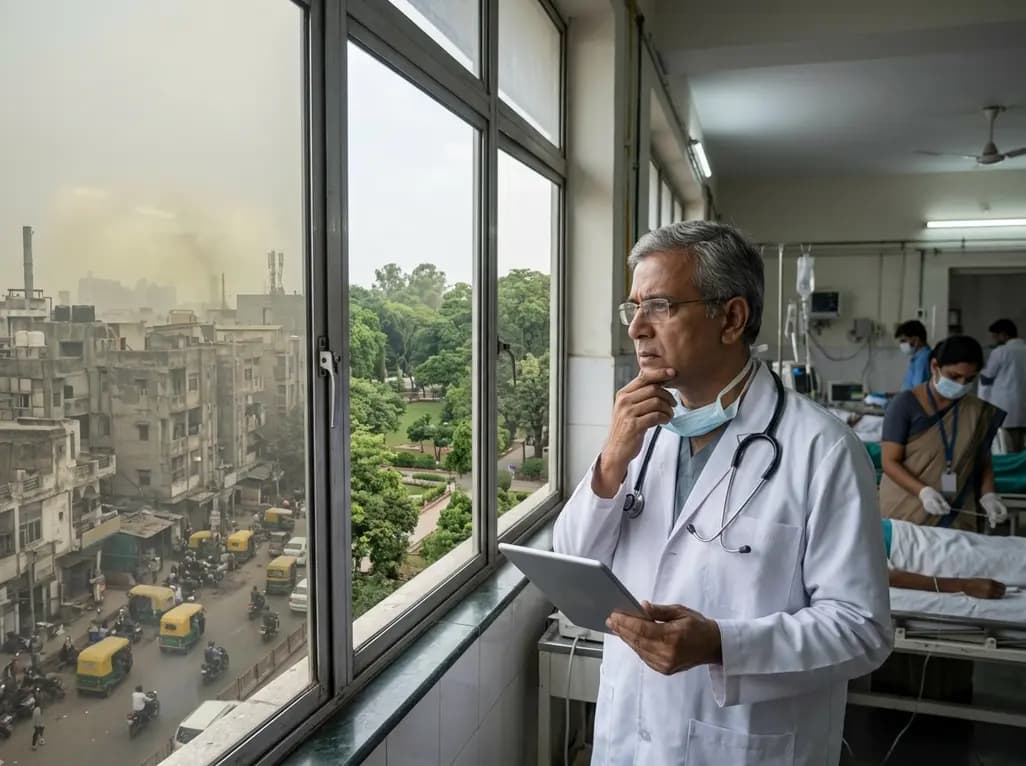
Recent scientific evidence confirms a profound relationship between environmental air quality and viral respiratory infections. Specifically, a groundbreaking nationwide study from India highlights how long-term exposure to ambient air pollution may have significantly increased the spread and severity of COVID-19. This extensive analysis examined data across 640 districts in India between April 2020 and November 2022. Consequently, researchers discovered that districts with elevated particulate matter (PM2.5) and nitrogen dioxide (NO2) suffered much worse clinical outcomes. These findings provide a crucial biological and epidemiological perspective on how chronic respiratory stress compromises the immune response. Furthermore, this study demonstrates that environmental factors are not merely secondary concerns but are central determinants of public health outcomes. Therefore, understanding the intersection of air pollution and COVID-19 is vital for medical professionals managing respiratory health. Clinicians must now recognize ambient pollution as a significant, modifiable risk factor for severe disease.
This national study, published in the peer-reviewed journal Applied Spatial Analysis and Policy, offers the first comprehensive Indian data on this environmental link. Researchers from the International Institute for Population Sciences (IIPS) in Deonar spearheaded the analysis. They gathered and triangulated satellite-derived pollution data with district-wise COVID-19 infections and deaths. Consequently, the team revealed that higher concentrations of PM2.5 and nitrogen dioxide consistently aligned with elevated infection and mortality rates. This correlation remained robust even after accounting for various demographic, socioeconomic, and healthcare infrastructure differences. Thus, the research fills a major gap in domestic medical literature. While previous international investigations noted similar trends, this Indian study provides context-specific data that is highly relevant to local healthcare providers. Consequently, doctors can now rely on localized evidence to explain regional variations in patient outcomes. Ultimately, this national research shifts our understanding of pandemic vulnerability from purely individual risk factors to broader environmental health indicators.
Interestingly, the study demonstrated that the impact of environmental factors was not uniform across India's vast geography. Instead, the correlation between pollution and COVID-19 severity varied considerably from district to district. For instance, districts with the highest case burdens were concentrated in industrial and highly populated states like Maharashtra, Kerala, Karnataka, and Andhra Pradesh. Districts adjoining major metropolitan hubs like Delhi, Kolkata, Chennai, Bengaluru, and Ahmedabad also reported moderate to high case numbers and mortalities. In contrast, districts within Bihar, Uttar Pradesh, Madhya Pradesh, and Rajasthan reported relatively fewer infections and deaths during the studied period. However, Maharashtra's districts, alongside Delhi, Punjab, and Haryana, emerged as the absolute worst affected in terms of COVID-19 mortality. This geographic distribution strongly suggests that industrialization and vehicular density contribute heavily to viral vulnerability. Therefore, public health strategies must be tailored to regional pollution profiles rather than adopting a one-size-fits-all approach.
To understand why these pollutants worsen viral outcomes, clinicians must examine the underlying cellular pathophysiology. Chronic exposure to PM2.5 and NO2 severely impairs basic pulmonary function. Specifically, these microscopic particles penetrate deep into the alveoli, triggering chronic systemic inflammation and macrophage dysfunction. Consequently, this persistent inflammatory state upregulates the expression of angiotensin-converting enzyme 2 (ACE2) receptors in alveolar epithelial cells. Since the SARS-CoV-2 virus utilizes these exact receptors to enter host cells, increased receptor density directly facilitates viral entry and replication. Additionally, air pollution compromises the mucociliary escalator, which normally clears pathogens from the airway. Therefore, inhaled viral particles remain in the respiratory tract longer, increasing the initial viral load. Furthermore, systemic inflammation impairs the host's primary immune response, making it difficult to clear the infection quickly. As a result, patients exposed to high pollution levels are far more likely to develop severe complications.
Conversely, the study highlighted a powerful protective factor: environmental greenness. Researchers measured vegetation cover using the Normalized Difference Vegetation Index (NDVI) and compared it to mortality data. Remarkably, districts with greater green cover experienced significantly lower case fatality rates during the pandemic waves. This protective effect was particularly evident in urban centers like Mumbai, which historically suffer from high pollution and low vegetative cover. Green spaces act as natural biological filters, actively absorbing gaseous pollutants and settling particulate matter. Additionally, urban vegetation mitigates the urban heat island effect and promotes physical activity, which improves overall cardiovascular and metabolic health. Consequently, individuals living in greener areas often possess stronger baselines of cardiopulmonary reserve. This physical resilience helps them withstand severe viral infections much better. Therefore, increasing urban green cover is not just an aesthetic improvement but a critical public health intervention. Clinicians should advocate for urban forestry as a preventive health measure.
For healthcare practitioners, these findings underscore the need for a paradigm shift in patient management. First, clinicians should routinely assess environmental exposure when taking a patient's medical history, especially in polluted districts. Second, patients with pre-existing lung conditions should receive tailored counseling on minimizing exposure during high-pollution days. For example, using high-efficiency particulate air (HEPA) filters indoors and wearing appropriate masks can offer substantial protection. Additionally, physicians should emphasize the importance of lifestyle modifications that bolster lung health, such as regular physical activity in green spaces. Furthermore, vaccination campaigns should be aggressively prioritized in highly polluted industrial corridors to offset environmental vulnerabilities. Finally, medical associations must play an active role in advocating for cleaner air standards at the policy level. After all, clinical interventions can only do so much if patients return to toxic environments daily. By addressing these environmental determinants, the medical community can better protect vulnerable populations.
Q1: How does long-term air pollution increase the risk of contracting COVID-19?
Long-term exposure to air pollution, specifically fine particulate matter like PM2.5 and nitrogen dioxide, damages the respiratory tract's natural defenses. These pollutants impair the mucociliary clearance system, allowing viral particles to remain in the lungs longer. Furthermore, chronic exposure causes cellular inflammation and increases the expression of ACE2 receptors. Consequently, the virus can easily bind to lung cells, facilitating a higher rate of infection and increasing overall disease transmission.
Q2: Why did districts with more greenery experience lower COVID-19 death rates?
Environmental greenness, measured by the vegetation index, acts as a natural buffer against severe disease. Green spaces improve air quality by absorbing gaseous pollutants and trapping harmful particulate matter. Additionally, access to green environments encourages physical activity and reduces psychological stress. Consequently, residents in greener districts often have better cardiovascular health and stronger immune systems. This physiological resilience ultimately helps patients survive severe respiratory infections.
Q3: Does this study prove that air pollution directly causes COVID-19 deaths?
No, the study establishes a strong epidemiological association rather than direct causation. The researchers analyzed district-level data across India but could not control for individual factors such as vaccination status, personal behavior, and healthcare access. However, the strong correlation between high pollution levels and elevated mortality rates strongly suggests that poor air quality is a significant risk factor. Therefore, improving air quality remains essential for reducing pandemic severity.
Disclaimer: This content is for informational and educational purposes only. It does not constitute medical advice or replace professional judgment. Refer to the latest local and national guidelines for clinical practice.
References

Read summarized clinical updates, watch expert medical content, and earn CME certifications right from your smartphone.
Open your smartphone camera to scan and install.





An Indian nationwide study reveals that chronic air pollution significantly worsened COVID-19 infection and death rates, whereas environmental greenness offered a protective effect.
3 months ago

Discover the crucial role of glymphatic dysfunction in stroke, where perivascular clearance failure and neuroinflammation exacerbate cerebral edema and post-stroke brain injury.
Today

A prenatal case highlights severe glutaric acidemia type II presenting as bilateral hyperechoic cystic kidneys at 18 weeks. Whole-exome sequencing revealed a novel homozygous ETFDH frameshift variant, demonstrating the power of rapid genetic testing in fetal renal anomalies.
Today

Review how tailored exercise programs benefit frail older patients with heart failure. Explore pathophysiological mechanisms, individualized training prescriptions, and strategies to overcome adherence barriers in clinical practice.
Yesterday

This comparative study evaluates posterior labral tears with and without glenohumeral instability, highlighting distinct demographic patterns, MRI underestimation in stable shoulders, and successful arthroscopic repair outcomes.
Yesterday

A clinical study demonstrates that early intervention with tocilizumab, either as monotherapy or bridged with corticosteroids, achieves significant proptosis reduction and resolves active inflammation in treatment-naive thyroid eye disease.
Yesterday
