.webp&w=384&q=75)

Loading, please wait...
Loading, please wait...
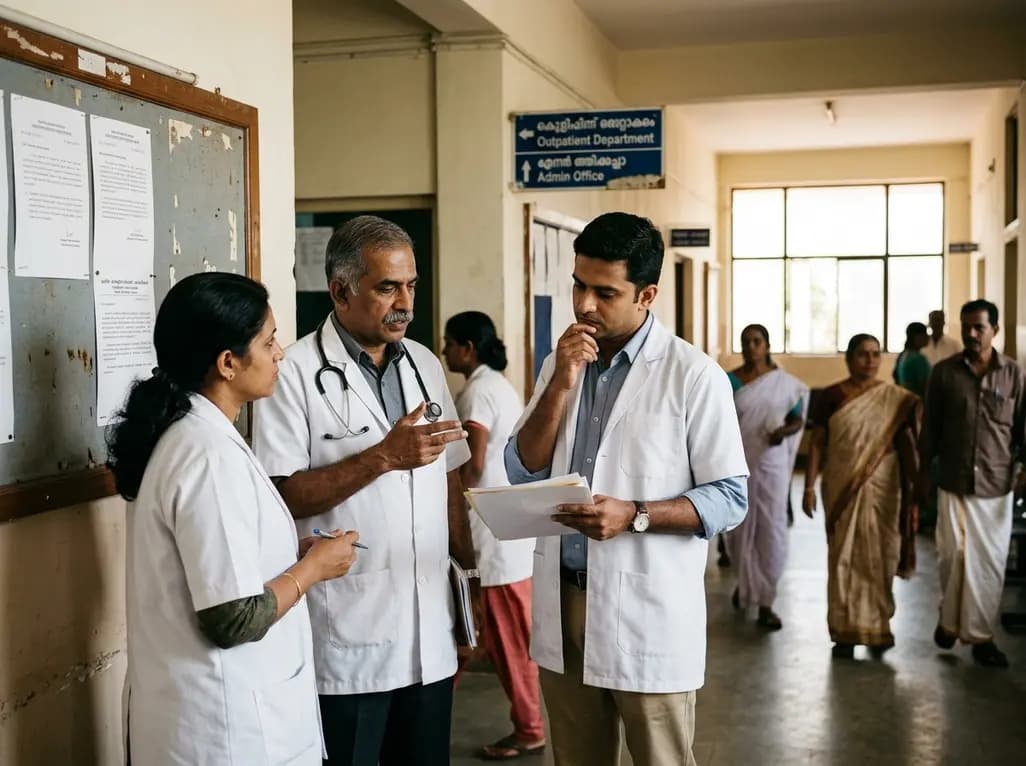
The debate surrounding the proposed AIIMS in Kerala has intensified following recent submissions before the judiciary. Specifically, the Central Government informed the Kerala High Court that the project has not been included in any Union budget announcement to date. This formal statement arrived during legal proceedings examining public petitions that demand equitable access to advanced tertiary healthcare. While administrative evaluations continue at the national level, doctors and health administrators are closely analyzing the broader policy implications. Furthermore, the court highlighted that high population density requires continuous expansion of affordable medical infrastructure across the state. Consequently, the ongoing judicial scrutiny underscores the vital connection between federal budget allocations, medical education expansion, and patient care delivery.
The Central Government recently submitted a detailed counter-affidavit before the Kerala High Court. Specifically, Deputy Solicitor General of India OM Shalina represented the Union during these critical court proceedings. The affidavit clarified that the state proposal has been under discussion since 2016. However, authorities have not included the institution in any official Union budget announcement so far. Furthermore, central officials explained that the extension of the Pradhan Mantri Swasthya Suraksha Yojana is currently undergoing inter-ministerial consultations. Consequently, formal decisions regarding new apex medical centers cannot proceed without final administrative sanction. The Union emphasized that budgetary allocations must precede any cabinet note for new institutes.
Meanwhile, the Kerala government had previously proposed multiple potential locations, including Thiruvananthapuram, Kottayam, and Ernakulam districts. In 2025, the state formally expressed its preference for Kinaloor in Kozhikode district. Nevertheless, central authorities have not yet granted in-principle clearance for land acquisition or construction. Therefore, the long-standing demand remains locked in bureaucratic and financial review stages. Public action committees continue to advocate strongly for Kasaragod and other underserved northern districts. As a result, the legal bench directed the Union to resolve pending decisions without further postponement. Healthcare professionals view this prolonged uncertainty as a hurdle to strengthening tertiary medical networks.
The Pradhan Mantri Swasthya Suraksha Yojana represents India's flagship program for establishing apex medical institutes. Originally launched in 2003, the scheme corrects regional imbalances in affordable tertiary healthcare services. Additionally, the policy aims to augment domestic facilities for high-quality medical education and clinical research. Under this initiative, the Union Government has approved 22 AIIMS institutions across several states. However, the Centre informed the High Court that it strictly prioritizes regions with weaker healthcare infrastructure. In its affidavit, the Union argued that Kerala already possesses superior health indicators and private hospital networks.
Consequently, states with deficient primary and secondary systems receive higher priority during national fund allocations. Nevertheless, legal representatives argued that high population density creates intense pressure on existing public infrastructure. The scheme guidelines clearly mandate that tertiary capacity must match regional patient load. Moreover, the proposed extension of the PMSSY scheme for another five years remains under active review by the Finance Ministry. Thus, national health administrators must reconcile macroeconomic budgetary limits with emerging state healthcare demands. Ultimately, transparent criteria remain essential to guide the selection of future healthcare projects. Medical practitioners emphasize that equitable regional development must account for growing demographic challenges.
Although a standalone institute has not received budgetary approval, the Centre highlighted alternative investments under the PMSSY program. Specifically, central funds supported the construction of dedicated super speciality blocks at key government medical institutions. For example, authorities approved modern specialty facilities at the Government Medical Colleges in Thiruvananthapuram and Kozhikode. Furthermore, the Government T D Medical College in Alappuzha secured significant infrastructure expansion under the same national framework. In addition, the central government upgraded the Sree Chitra Tirunal Institute for Medical Sciences and Technology in 2017.
This Phase V-A intervention added a dedicated 170-bedded super speciality block to the premier autonomous institute. Consequently, these major projects enhanced local capacities in specialized surgical care, neurosciences, and cardiac treatment. However, healthcare advocates point out that existing government hospitals face severe overcrowding and bed shortages. Daily patient footfalls consistently outstrip the available inpatient resources in urban government medical colleges. Therefore, while targeted college upgrades provide measurable relief, they do not replace an autonomous national apex research hospital. Clinicians emphasize that integrated super specialty complexes require continuous staffing and recurring operational budgets to remain viable over time.
A Division Bench comprising Chief Justice Soumen Sen and Justice Syam Kumar V M evaluated the central submissions closely. Importantly, the judges questioned whether Kerala's strong healthcare performance had paradoxically become a policy disadvantage. The bench observed that superior public health indices should never disqualify a state from receiving an apex central hospital. Furthermore, the court emphasized that high population density creates exceptional burdens for state-run medical facilities. Private corporate hospitals remain prohibitively expensive for economically disadvantaged families across the state.
In their spoken observations, the judges remarked that ordinary patients cannot routinely afford treatment at expensive private institutions. Consequently, the High Court urged central authorities to prioritize vulnerable citizens who rely completely on subsidised government care. The bench instructed the Union to evaluate state requirements holistically rather than relying solely on comparative inter-state statistics. Moreover, the judges stressed that administrative deliberations must reach conclusion without indefinite delay. Legal representatives for citizen action groups reiterated that northern districts like Kasaragod face persistent deficits in critical tertiary care. Therefore, judicial oversight has placed intense focus on social justice and public hospital accessibility.
For clinicians and medical educators across India, this prolonged development carries important systemic ramifications. First, establishing an apex medical institute expands advanced postgraduate and doctoral residency programs. It creates vital seats in critical super specialties, including oncology, nephrology, and surgical gastroenterology. Furthermore, an autonomous central institute attracts substantial national funding for multidisciplinary biomedical research and translational clinical trials. Consequently, young medical practitioners gain access to advanced academic pathways without leaving their home states.
In contrast, relying exclusively on upgraded state medical colleges limits faculty development and academic independence. State colleges frequently face state budgetary constraints, heavy clinical workloads, and administrative bottlenecks. Meanwhile, patient referral networks continue to funnel complex, multi-organ clinical cases into crowded district centers. Establishing an apex central institute would relieve massive patient congestion in neighboring tertiary centers. Additionally, it would provide standardized protocols and high-tier intensive care for lower-income patient populations. Therefore, healthcare policy experts urge central and state leaders to accelerate collaborative consultations. Resolving these procedural impasses will strengthen India's tertiary care ecosystem and expand equitable training for emerging physicians.
Q1: Why has the proposal for an AIIMS in Kerala not been approved in the budget?
The Central Government informed the Kerala High Court that the proposal has not appeared in any Union budget announcement because the PMSSY extension is still undergoing inter-ministerial consultations. Additionally, central policy guidelines currently prioritize states with weaker healthcare infrastructure. Furthermore, formal cabinet proposals require confirmed financial sanctions before authorities can approve new institutions. Consequently, officials cannot clear an apex hospital for Kerala until administrative reviews conclude successfully.
Q2: What alternative healthcare upgrades has Kerala received under the PMSSY scheme?
Under the PMSSY initiative, the Central Government funded major super speciality blocks across established state institutions. Specifically, upgrades were completed at Government Medical Colleges in Thiruvananthapuram, Kozhikode, and Alappuzha. Furthermore, Phase V-A funded a modern 170-bedded super speciality block at the Sree Chitra Tirunal Institute for Medical Sciences and Technology in Thiruvananthapuram, thereby enhancing specialized regional tertiary capabilities significantly.
Q3: What specific concerns did the Kerala High Court raise regarding healthcare access?
The Kerala High Court emphasized that Kerala's superior health indicators should not become a handicap for establishing premier public institutions. Chief Justice Soumen Sen pointed out that high population density places severe pressure on government hospitals. Moreover, ordinary citizens cannot afford treatment at costly private medical centers. Therefore, the bench directed the Centre to consider regional welfare needs without further postponement.
Disclaimer: This content is for informational and educational purposes only. It does not constitute medical advice or replace professional judgment. Refer to the latest local and national guidelines for clinical practice.
References

Read summarized clinical updates, watch expert medical content, and earn CME certifications right from your smartphone.
Open your smartphone camera to scan and install.





The Central Government informed the Kerala High Court that the proposal to set up an AIIMS in the state has not received budgetary approval under PMSSY. While the Centre cited stronger existing state healthcare and inter-ministerial reviews, the High Court emphasized the urgent tertiary care needs of poor citizens.
Today
A large UK cohort study of 1.4 million women shows that pregnancy complications, including gestational diabetes, hypertension, and preterm birth, substantially raise long-term risks for hypertension, chronic kidney disease, type 2 diabetes, and cardiovascular events, highlighting early postpartum intervention needs.
Today
A landmark single-cell study reveals that MEHP, a major phthalate metabolite, damages human ovarian tissue beyond follicles. By disrupting glial-stromal communication, cellular adhesion, and mitochondrial respiration, environmental plasticizers impair ovarian integrity at realistic exposure levels.
Today
The Delhi High Court granted interim relief to beverage manufacturers against the FSSAI ban on the energy drink descriptor. Discover the regulatory dispute, caffeine safety thresholds, metabolic concerns, and the vital clinical recommendations for healthcare practitioners advising young consumers in India.
Today
A scoping review reveals severe gaps in long-term assistive technology provision following humanitarian emergencies. Addressing post-disaster rehabilitation requires systematic follow-up, workforce training, and integration into national health systems to sustain mobility and recovery.
Today
The World Health Organization has issued its first global guidelines for managing child and adolescent obesity. The recommendations strongly endorse family-based dietary interventions, regular physical activity, and behavioral support as frontline therapy, reserving GLP-1 therapies and surgery for select cases.
Today
