.webp&w=384&q=75)

Loading, please wait...
Loading, please wait...
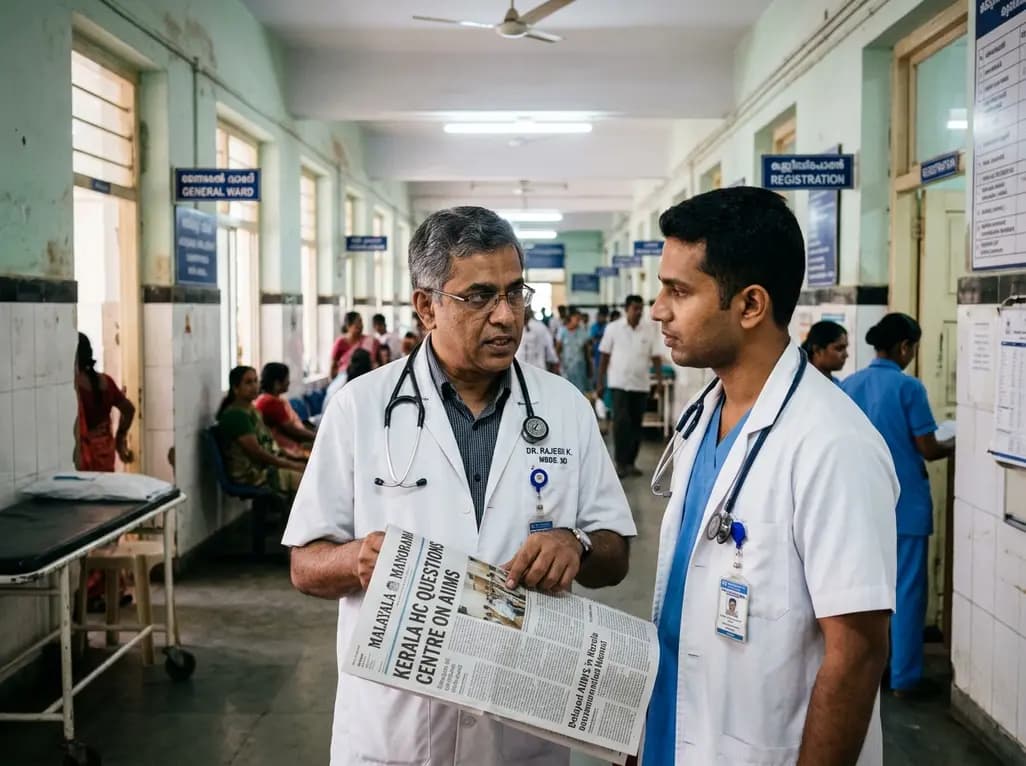
The legal demand for establishing an AIIMS in Kerala has reached a critical turning point. A Division Bench of the Kerala High Court recently challenged the central government regarding its decade-long delay. Furthermore, the court questioned whether the state's robust healthcare indicators were serving as an unfair penalty. Consequently, the bench granted the Union Government six weeks to present a clear policy response. This judicial intervention addresses long-standing petitions seeking equitable tertiary healthcare for the state's citizens.
The High Court raised serious concerns regarding the Centre's indecision on the proposed AIIMS in Kerala. Historically, the state government submitted formal proposals for an apex healthcare institute in 2016. However, the proposal has languished without decisive central sanction for nearly ten years. AIIMS Kasaragod Janakeeya Koottayma initiated public interest litigation demanding the institute's establishment in northern Kerala. In response, the Deputy Solicitor General submitted that the Centre is prioritizing states with weaker healthcare systems.
Nevertheless, the Division Bench strongly questioned this official reasoning. The judges orally asked whether the Union Government believes Kerala does not require an apex institute. Additionally, the bench observed that other states have received multiple premier institutions over recent years. For instance, the capital city of Delhi hosts an established AIIMS despite having affluent residents. Therefore, the court emphasized that a decade of administrative delay warrants comprehensive judicial examination. The bench directed central authorities to identify the exact qualifying parameters that Kerala has failed to meet. Moreover, public health advocates emphasize that Kasaragod district urgently needs specialized healthcare infrastructure. The bench noted that timely administrative action remains critical for regional equity. Thus, the court demanded complete transparency regarding central project evaluations. Consequently, healthcare professionals await this judicial review with high expectations.
During the proceedings, the court rigorously analyzed the argument regarding Kerala's existing medical infrastructure. The central government contended that Kerala already possesses superior public health indicators compared to other regions. However, the bench remarked that progress in healthcare cannot become a practical handicap for future development. Specifically, judges asked whether the large footprint of private medical centers disqualified the state from central funding.
Furthermore, the bench emphasized that private healthcare options do not resolve issues of public access. As the judges observed, poor families cannot easily afford expensive private tertiary hospitals. Consequently, relying on private commercial enterprise fails to ensure universal healthcare for economically vulnerable populations. In addition, secondary government facilities cannot always handle complex tertiary care cases. Therefore, public healthcare institutions must continue to expand even in comparatively advanced states. Many marginalized citizens require subsidized, high-level clinical interventions that private facilities cannot provide affordably. Thus, the high court rejected the premise that strong health achievements should penalize a state. The bench reiterated that public welfare requires persistent state-level investment across all regional jurisdictions. Moreover, equal opportunity in advanced tertiary medicine remains an essential constitutional right for every citizen. Accordingly, the court urged the central government to reassess its restrictive assessment criteria.
Kerala exhibits one of the highest population densities in India, creating immense strain on local clinics. Consequently, government hospitals routinely operate beyond their structural capacity to treat incoming patients. In rural areas, patients often travel long distances to reach urban tertiary medical centers. For instance, residents of northern districts such as Kasaragod lack comprehensive local super-specialty services. As a result, these patients frequently cross state borders into Karnataka to access necessary emergency treatments.
Furthermore, demographic aging significantly amplifies the demand for complex geriatric and oncology care in the state. Chronic lifestyle diseases, including cardiovascular disorders and advanced diabetes, present substantial burdens across Kerala's communities. Therefore, existing district hospitals cannot adequately shoulder this escalating clinical load on their own. Establishing an apex medical institute would bridge this critical gap in specialized care delivery. Additionally, an advanced institute provides integrated clinical infrastructure that elevates primary and secondary healthcare tiers. Specialized clinicians can coordinate complex management protocols while mentoring district practitioners across the state. Hence, high population density clearly reinforces the necessity for establishing top-tier medical centers. Ultimately, clinical accessibility must match the geographical and demographic reality of the state's expanding populace. Thus, modern public facilities remain indispensable for sustaining comprehensive long-term patient outcomes.
The legal arguments also highlighted the procedural dynamics of the Pradhan Mantri Swasthya Suraksha Yojana. The central government introduced this national scheme to correct regional imbalances in advanced tertiary healthcare. Under this program, the Centre establishes new autonomous medical institutes and upgrades selected state medical colleges. However, central authorities confirmed that the Kerala proposal has never featured in any Union Budget announcement.
Moreover, the Deputy Solicitor General explained that the scheme's extension requires prolonged inter-ministerial consultations. Specifically, establishing any new institute depends entirely on formal scheme continuation approval and dedicated fund allocations. Once administrative ministries conclude consultations, the proposal requires formal consideration and clearance by the Union Cabinet. Nonetheless, the Kerala government has already identified and recommended suitable land parcels for the project. For example, state authorities have previously highlighted suitable locations in Kozhikode and other districts. Therefore, administrative inertia rather than local land availability has delayed project execution. The high court consequently directed the central administration to act proactively rather than prolonging procedural deliberations. Furthermore, clear communication between central and state health ministries remains vital for expediting healthcare projects. Accordingly, the judiciary expects a comprehensive status report within the mandated six-week period. In addition, administrative coordination must accelerate to prevent further institutional delays.
The establishment of an apex medical institution carries far-reaching consequences for clinical education and professional training. Autonomous central institutes provide postgraduate training, advanced research infrastructure, and super-specialty fellowships for physicians. Consequently, establishing an institute in Kerala would dramatically expand local opportunities for aspiring medical specialists. Doctors would train in modern subspecialties without requiring relocation to distant northern institutions.
Furthermore, apex institutes foster clinical research that addresses state-specific epidemiological patterns. For instance, Kerala experiences significant burdens from emerging viral fevers, non-communicable diseases, and antimicrobial resistance. High-level clinical research at an autonomous facility generates evidence-based protocols tailored to local populations. Additionally, the influx of federal funding stimulates regional public health systems through improved clinical governance. Private healthcare providers currently dominate advanced subspecialty treatments throughout the state. However, an apex public hospital establishes standardized treatment benchmarks and prevents escalating out-of-pocket medical expenditures. Thus, clinicians across India view the pending judicial determination as a critical milestone for health equity. Expanding tertiary medical education ultimately strengthens the broader public health foundation for future generations. Moreover, structured residency programs at such centers produce highly skilled healthcare professionals who support regional hospitals. Therefore, the medical community eagerly awaits the central government's upcoming affidavit. Consequently, developing premier public health infrastructure remains vital for national medical advancement.
Q1: Why has the establishment of an AIIMS in Kerala faced substantial delays?
The proposal has faced delays primarily because the central government prioritizes states with weaker healthcare infrastructure under the Pradhan Mantri Swasthya Suraksha Yojana. Furthermore, central authorities confirmed that the proposal has not appeared in any Union Budget announcement. Consequently, establishing an institute requires continuing inter-ministerial consultations, formal scheme extensions, and cabinet clearance. These prolonged procedural steps have prevented prompt administrative sanction despite state government recommendations.
Q2: Why did the Kerala High Court question the Centre's prioritization criteria?
The Kerala High Court questioned the criteria because penalizing a state for better public health indices seems counterintuitive. Furthermore, the bench noted that private hospitals do not guarantee affordable treatment for low-income citizens. The judges emphasized that high population density creates immense public demand that existing government hospitals cannot meet alone. Therefore, the court asked the Centre to clarify specific benchmark disqualifications and reconsider the state's genuine need for an apex institute.
Q3: How would an AIIMS enhance healthcare delivery across the region?
An autonomous national institute introduces advanced super-specialty departments, modern diagnostic technologies, and subsidised tertiary clinical care for economically disadvantaged patients. Additionally, the institute expands postgraduate medical seats and residency training for doctors. It also fosters cutting-edge clinical research addressing regional epidemiological challenges, such as chronic non-communicable diseases and recurring viral outbreaks. Consequently, this facility would elevate clinical standards across regional networks and reduce the patient burden on secondary district hospitals.
Disclaimer: This content is for informational and educational purposes only. It does not constitute medical advice or replace professional judgment. Refer to the latest local and national guidelines for clinical practice.
References

Read summarized clinical updates, watch expert medical content, and earn CME certifications right from your smartphone.
Open your smartphone camera to scan and install.





The Kerala High Court has directed the Union Government to clarify its stance on establishing an AIIMS in Kerala. Responding to PILs, the bench questioned whether the state's existing healthcare infrastructure and high presence of private hospitals should disqualify it from receiving a premier public medical institute.
Today

Subcutaneous infliximab provides stable steady-state pharmacokinetics and reduces immunogenicity in inflammatory bowel disease. This clinical review explores pivotal trial evidence, therapeutic drug monitoring recalibration, immunomodulator de-escalation, and real-world switching strategies.
Today
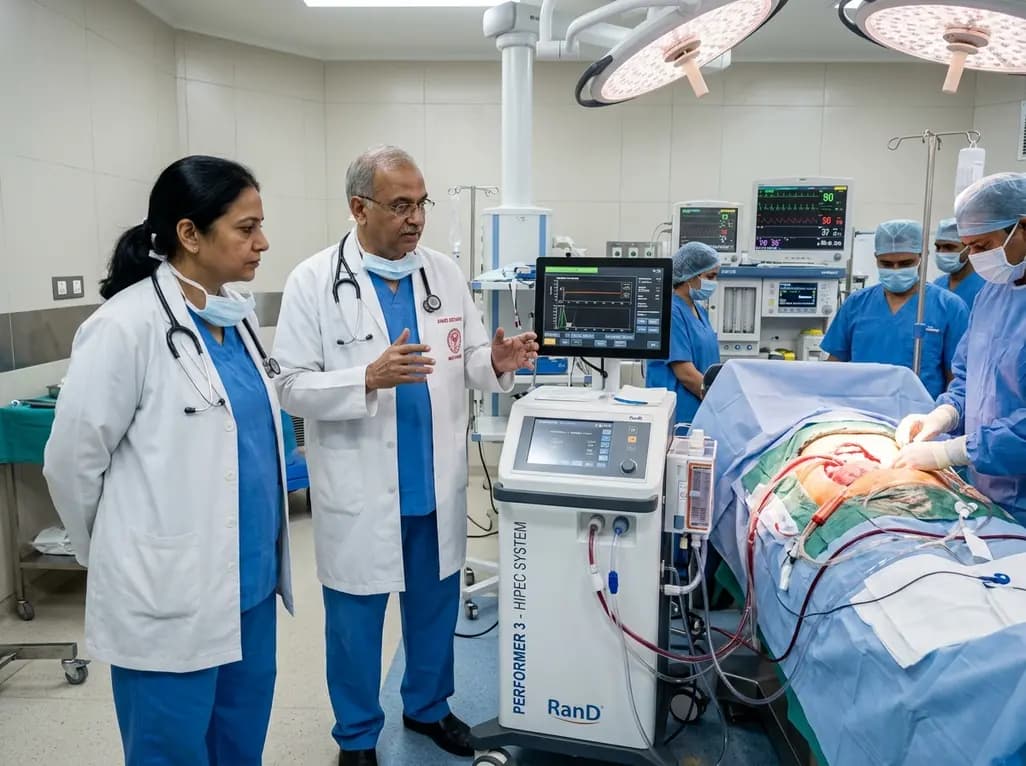
AIIMS Bathinda has inaugurated a specialized peritoneal oncology service featuring the RanD Performer 3 HIPEC platform. The facility offers cytoreductive surgery alongside hyperthermic intraperitoneal chemotherapy, transforming regional management for advanced ovarian, colorectal, and appendiceal malignancies.
Today
A cross-sectional study reveals that hypertension knowledge, illness perceptions, depression, and substance use significantly predict self-care behaviors. Addressing mental health and cognitive beliefs in primary care is crucial for optimal blood pressure control and cardiovascular disease prevention.
Today
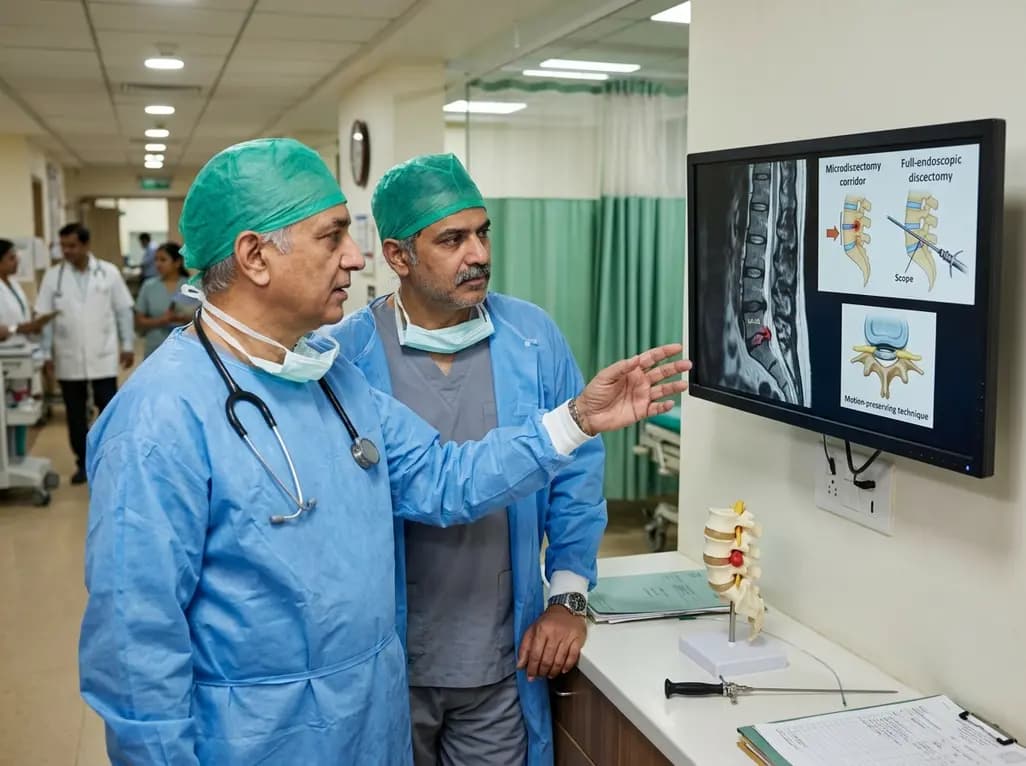
This clinical overview examines recent advancements in lumbar disc herniation surgery, comparing microscopic and full-endoscopic discectomy while highlighting biportal techniques and emerging motion-preserving innovations for spine specialists.
Today
A breakthrough study reveals that loss of SELENOT in hypothalamic POMC neurons triggers premature cellular senescence, ATF6α stress activation, and ER calcium depletion, linking neuroendocrine decay to metabolic disease.
Today
