.webp&w=384&q=75)

Loading, please wait...
Loading, please wait...
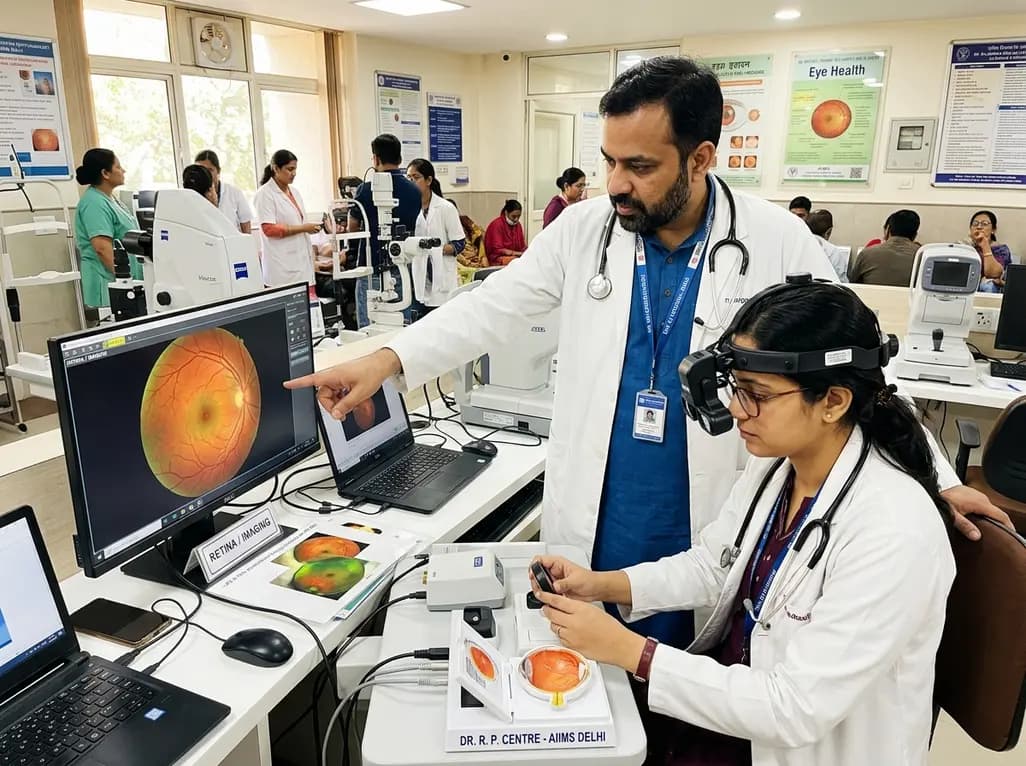
The Dr Rajendra Prasad Centre for Ophthalmic Sciences at AIIMS Delhi has launched a comprehensive retina training programme. This innovative initiative aims to strengthen clinical capabilities in retinal care across India. Consequently, the program directly addresses the critical shortage of trained vitreo-retina specialists in regional healthcare networks. Developed in collaboration with the Roche India Healthcare Institute, this academic venture establishes a sustainable pathway for continuous clinical skill enhancement.
India currently faces a profound public health challenge regarding posterior segment eye diseases. According to data from the Vitreo-Retina Society of India, only around 1,700 retinologists practice nationwide. Therefore, this limited specialist workforce cannot adequately serve the needs of over 1.4 billion people. In addition, an AIIMS survey revealed that one ophthalmologist serves an average population of 65,000 citizens. This disparity disproportionately affects rural and semi-urban communities where advanced retinal care remains scarce.
Consequently, thousands of patients experience irreversible visual impairment before receiving a proper diagnosis. Retinal disorders represent leading causes of avoidable blindness across diverse demographic cohorts. Therefore, health authorities must bridge this operational gap through targeted educational interventions. By equipping general ophthalmologists with advanced diagnostic competencies, healthcare networks can deliver timely clinical interventions at primary and secondary care facilities.
The newly inaugurated retina training programme operates through the National Retina Skill Development Centre at AIIMS New Delhi. This first-of-its-kind facility focuses on translating theoretical ophthalmic knowledge into real-world diagnostic proficiency. Specifically, the initiative intends to train more than 100 ophthalmologists over the next three years. Program coordinators will primarily select practitioners working within government hospitals and public healthcare delivery systems.
At the center of this initiative lies the Retina Skill Lab CORE, which provides state-of-the-art simulation equipment. Participants receive intensive hands-on experience using high-resolution optical coherence tomography platforms, fundus photography cameras, and operating microscopes. Furthermore, the structured curriculum contains eight dedicated modules covering essential diagnostic skills. As a result, trainees acquire standard protocols for recognizing early microvascular changes, assessing macular integrity, and initiating appropriate patient referrals.
India is widely recognized as the diabetes capital of the world, housing over 100 million diabetic individuals. Consequently, diabetic retinopathy has emerged as a severe threat to working-age adults across the country. Because early stages of diabetic retinopathy remain asymptomatic, many individuals defer clinical screening until permanent structural damage occurs. Therefore, widespread screening by skilled medical retina practitioners is vital for preserving functional vision.
General ophthalmologists trained through modular curriculum pathways can readily identify microaneurysms, intraretinal hemorrhages, and macular edema. Furthermore, early detection enables clinicians to administer timely panretinal photocoagulation or intravitreal pharmacotherapy before proliferative changes develop. Dr Radhika Tandon, Chief of the Dr Rajendra Prasad Centre, emphasized that medical expertise must combine with practical skills to prevent vision loss. Thus, decentralized screening capabilities significantly reduce long-term morbidity associated with diabetic microvascular complications.
The collaborative model between AIIMS Delhi and the Roche India Healthcare Institute illustrates the impact of public-private partnerships in healthcare. This joint endeavor unites premier academic faculty with institutional resources to expand clinical capacity nationwide. Moreover, the partnership establishes standardized training protocols that academic institutions can replicate in other regions.
Rajji Mehdwan, Director of RIHI and CEO of Roche Pharma India, characterized retinal conditions as an invisible national crisis. However, strategic capacity-building platforms provide scalable mechanisms to overcome existing human resource constraints. By investing in practical education, this partnership elevates the baseline standard of ophthalmic practice across district hospitals. Consequently, public healthcare infrastructure gains resilience, ensuring vulnerable populations receive prompt and equitable vision care.
Decentralizing specialized retinal expertise will transform the ophthalmic referral architecture throughout India. When district-level clinicians master optical coherence tomography interpretation and indirect ophthalmoscopy, tertiary eye centers experience fewer unnecessary referrals. As a result, advanced surgical centers can focus valuable resources on complex vitreoretinal interventions, such as retinal detachment repairs and macular hole surgeries.
In addition, this modular educational blueprint creates opportunities for integrating tele-ophthalmology networks and artificial intelligence screening tools. General ophthalmologists with solid foundational training can effectively validate automated image analysis algorithms in community settings. Therefore, this educational framework strengthens the entire continuum of eye care. Ultimately, continuous skill upgrading protects productive vision and enhances quality of life for millions of citizens.
Q1: What is the primary objective of the new retina training initiative at AIIMS?
The primary objective is to upskill general ophthalmologists from the public healthcare system in practical retinal diagnostics and management. By providing hands-on training on optical coherence tomography and fundus imaging, the program aims to address India's specialist deficit and prevent irreversible vision loss.
Q2: How many ophthalmologists will undergo training under this program?
The National Retina Skill Development Centre plans to train more than 100 ophthalmologists over the next three years. The training prioritizes medical officers and eye surgeons serving in government and public health facilities across various Indian states.
Q3: Why is expanding retinal care training crucial for public health in India?
India has only about 1,700 vitreoretinal specialists to manage widespread conditions like diabetic retinopathy and age-related macular degeneration. Equipping general eye doctors with modular retinal skills enables earlier diagnosis and timely management at district levels, drastically reducing preventable blindness.
Disclaimer: This content is for informational and educational purposes only. It does not constitute medical advice or replace professional judgment. Refer to the latest local and national guidelines for clinical practice.
References

Read summarized clinical updates, watch expert medical content, and earn CME certifications right from your smartphone.
Open your smartphone camera to scan and install.





Dr Rajendra Prasad Centre at AIIMS Delhi has partnered with Roche India Healthcare Institute to launch a modular retina training initiative. The program provides comprehensive hands-on skill development in advanced retinal diagnostics to over 100 public sector ophthalmologists, curbing preventable vision loss.
last month

Chronic eosinophilic pneumonia can present with atypical bronchoalveolar lavage findings and an organizing pneumonia pattern, necessitating surgical lung biopsy.
Today

Discover the crucial distinctions between mesonephric and mesonephric-like proliferations of the female genital tract. Learn the key histomorphologic, immunohistochemical, and molecular differences essential for accurate diagnosis and clinical management.
Today
Kikuchi-Fujimoto disease rarely presents with refractory shock and sinus bradycardia in children. This case report highlights life-threatening hemodynamic instability requiring intensive care, preserved cardiac contractility, and the critical diagnostic role of early excisional lymph node biopsy.
Today
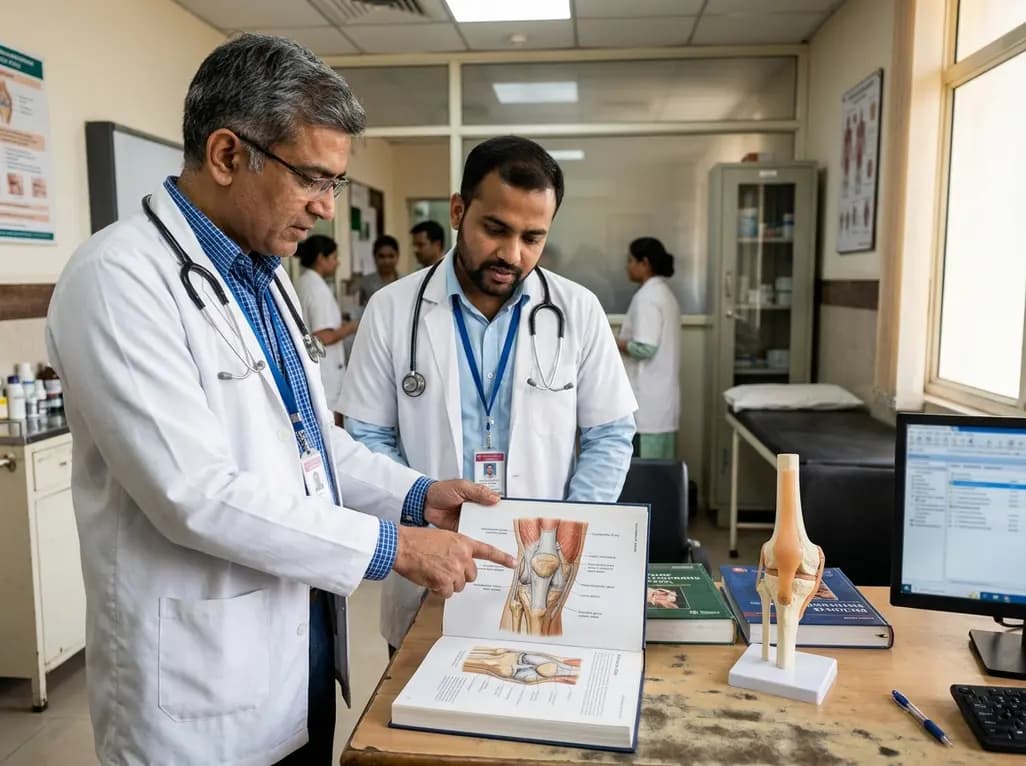
A narrative review investigates whether the articularis genus muscle functions as an independent anatomical entity or blends with the vastus intermedius. We evaluate its morphology, role in retracting the suprapatellar bursa, and direct clinical significance in anterior knee pain and arthroplasty.
Today
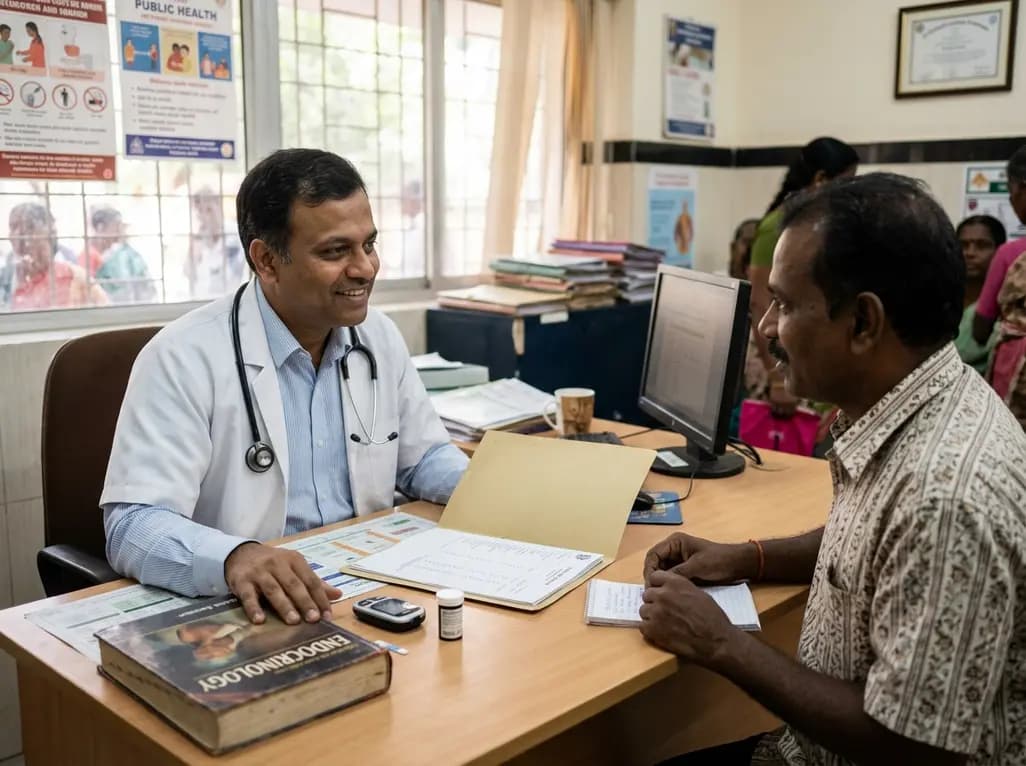
A Bayesian multilevel meta-analysis reveals that aerobic training combined with moderate carbohydrate restriction modestly lowers HbA1c in type 2 diabetes. However, sparse data and very low certainty leave incremental benefits over exercise or diet alone unproven, highlighting the need for individualized care.
Today
