

Loading, please wait...
Loading, please wait...

Accurate surgical instrument counting remains an indispensable safeguard during invasive procedures across all surgical specialties. Operating teams routinely depend on vigilant manual tallies to prevent retained surgical items. However, human error, clinician fatigue, and fast-paced operating room environments can disrupt manual counting workflows. Retained instruments represent catastrophic medical errors that trigger severe patient morbidity, emergency reoperations, and intense medico-legal consequences. Consequently, surgical departments worldwide seek automated solutions that systematically reinforce counting protocols without slowing procedural cadence. Recent advances in artificial intelligence offer promising capabilities to support scrub nurses and surgical teams. Specifically, deep learning models can automate visual tracking across defined instrument zones. By introducing continuous surveillance over surgical trays, hospitals can systematically curb human miscalculations. Moreover, automated verification establishes objective oversight during high-stress procedures, such as emergency laparotomies or complex trauma interventions. In addition, digital documentation streamlines institutional accreditation reviews and simplifies post-procedure reporting. As clinical case volumes increase, automated surveillance emerges as a vital adjunct to manual vigilance. Therefore, evaluating robust computer vision algorithms represents a crucial milestone for advancing perioperative safety.
To establish automated tracking, researchers frequently utilize the You Only Look Once, or YOLO, architecture. This cutting-edge convolutional neural network delivers rapid, single-stage object detection across real-time video feeds. In a recent benchmark investigation, investigators trained a YOLO-based framework using simulated open surgical procedures. The research team recorded one hundred minutes of surgical video capturing six hundred distinct instrument transfer events. In addition, the researchers gathered one thousand annotated images depicting various surgical tools from online repositories and simulated cases. Human experts meticulously labelled all tool locations and device classifications to establish reliable ground-truth data. Subsequently, eighty percent of the collected dataset trained the neural model, while twenty percent served for algorithmic validation. The YOLO framework continuously monitors a predefined region of interest, such as the Mayo stand or back table. Because the algorithm processes entire video frames simultaneously, it provides instantaneous positional feedback to theatre staff. Furthermore, the architecture sustains high frame rates without introducing burdensome computational latency. Thus, the system can seamlessly observe tool transfers between circulating staff and surgeons during active procedures.
During validation testing, the YOLO model achieved a 72.7% overall success rate for instrument detection and enumeration. The system reliably recognized diverse surgical instruments when personnel moved tools within the calibrated region of interest. However, performance metrics varied substantially across different tool dimensions and geometries. The model demonstrated superior detection accuracy when classifying larger instruments with distinct silhouettes. For instance, broad retractors, large curved clamps, and major tissue forceps produced clear visual signatures that facilitated rapid bounding box alignment. Conversely, the model encountered frequent difficulties when identifying smaller instruments within crowded trays. Fine mosquito hemostats, surgical needles, and delicate micro-scissors presented significant recognition hurdles. Their slender metallic profiles often blended into visual backgrounds or suffered partial occlusion under surgeon hands. Additionally, specular reflections from overhead surgical luminaires occasionally distorted instrument boundaries on camera sensors. Therefore, while the baseline accuracy confirms technical feasibility, notable diagnostic gaps persist for micro-instrumentation. Operating teams require extreme precision because even the smallest retained needle poses severe clinical hazards to patients.
Retained surgical items represent classic 'never events' that undermine institutional trust and patient outcomes. Operating room nurses currently bear the stressful cognitive burden of tracking every sponge, needle, and instrument. During protracted operations, fatigue and emergency distractions sharply elevate miscount probabilities. Consequently, an autonomous computer vision assistant can serve as an invaluable secondary safety barrier. Rather than replacing scrub nurses, this technology acts as a redundant digital auditor. For example, if a surgeon fails to return an arterial clamp before wound closure, the system flags the discrepancy immediately. Such automated alerts empower the surgical team to resolve missing items before reversing general anesthesia. Furthermore, avoiding intraoperative counts reconciliation delays saves precious operative time and reduces patient anesthetic exposure. Ultimately, integrating artificial intelligence into theatre workflows enhances compliance with standard surgical safety checklists. Health systems in emerging economies can particularly benefit from scalable digital surveillance to mitigate legal liabilities and improve clinical audits. Thus, intelligent automation safeguards both surgical patients and hospital staff.
Deploying automated visual models into live operative environments involves navigating multifaceted operational hurdles. First, real operating theatres present dynamic optical obstacles, including shifting staff shadows, bloody drapes, and saline puddles. Furthermore, instruments frequently overlap in chaotic trays during critical bleeding management. Under such circumstances, computer vision algorithms must avoid false-positive classifications that trigger disruptive alarm fatigue among surgeons. In addition, developers must train neural networks on diverse surgical specialties, including orthopaedics, laparotomy, and cardiovascular surgery. Expanding dataset diversity beyond simulated mannequins is essential to ensure high generalizability across diverse hospital settings. Moreover, hospitals require edge-computing hardware that securely processes local video streams without compromising confidential patient data. Finally, clinical adoption hinges upon designing intuitive user interfaces that present clear count summaries to scrub nurses. Addressing these technical constraints will bridge the critical transition from simulated surgical laboratories to active human operative care. Therefore, multidisciplinary collaboration between computer scientists and practicing surgeons remains imperative for clinical translation.
Manual instrument counting remains the global standard, yet it remains vulnerable to human error, cognitive exhaustion, and communication lapses during chaotic emergencies. Miscounts occur in approximately one out of every few hundred complex operations, occasionally causing severe retained foreign object complications. Automated computer vision provides a continuous, objective digital safety net. By immediately reconciling tool movements on instrument tables, the artificial intelligence system relieves nursing stress and prevents costly procedural delays.
Small instruments present minimal pixel footprints and thin metallic profiles on overhead video feeds, making visual extraction technically challenging. Furthermore, surgical hands or larger retractors easily obstruct small needle holders and hemostats during rapid operative transfers. Glare from powerful surgical lights also creates reflective artifacts that distort tool contours. Consequently, object detection algorithms require higher image resolution, specialized training datasets, and multi-angle camera configurations to identify tiny devices reliably.
Artificial intelligence systems are designed to augment perioperative nurses rather than replace their clinical judgment. Scrub and circulating nurses perform multifaceted patient safety tasks, sterile field maintenance, and dynamic crisis management that algorithms cannot replicate. The computer vision model serves strictly as an automated co-pilot, alerting the scrub team to count discrepancies in real time. This technological synergy enhances institutional accountability while preserving the essential role of trained nursing professionals.
Disclaimer: This content is for informational and educational purposes only. It should not be used as a substitute for professional medical advice, diagnosis, or treatment. Always seek the advice of your physician or other qualified healthcare provider with any questions you may have regarding a medical condition or procedure. Refer to the latest local and national guidelines for clinical practice.
References

Read summarized clinical updates, watch expert medical content, and earn CME certifications right from your smartphone.
Open your smartphone camera to scan and install.





A study evaluated a YOLO computer vision model for automated surgical instrument counting in simulated open surgery, achieving a 72.7% validation success rate. While large tools showed robust recognition, detecting small instruments remains a challenge, marking a vital step toward preventing retained surgical items.
Today
New insights into right hemisphere language recovery highlight how early neural plasticity preserves speech after perinatal stroke, while adult stroke survivors demonstrate distinct, adaptive reorganization mechanisms.
Today

A landmark study evaluates artificial intelligence models and prompting strategies in qualitative lupus pregnancy research, revealing that few-shot prompting in advanced LLMs reliably captures maternal experiences, clinical anxieties, and perinatal outcomes across diverse languages.
Today
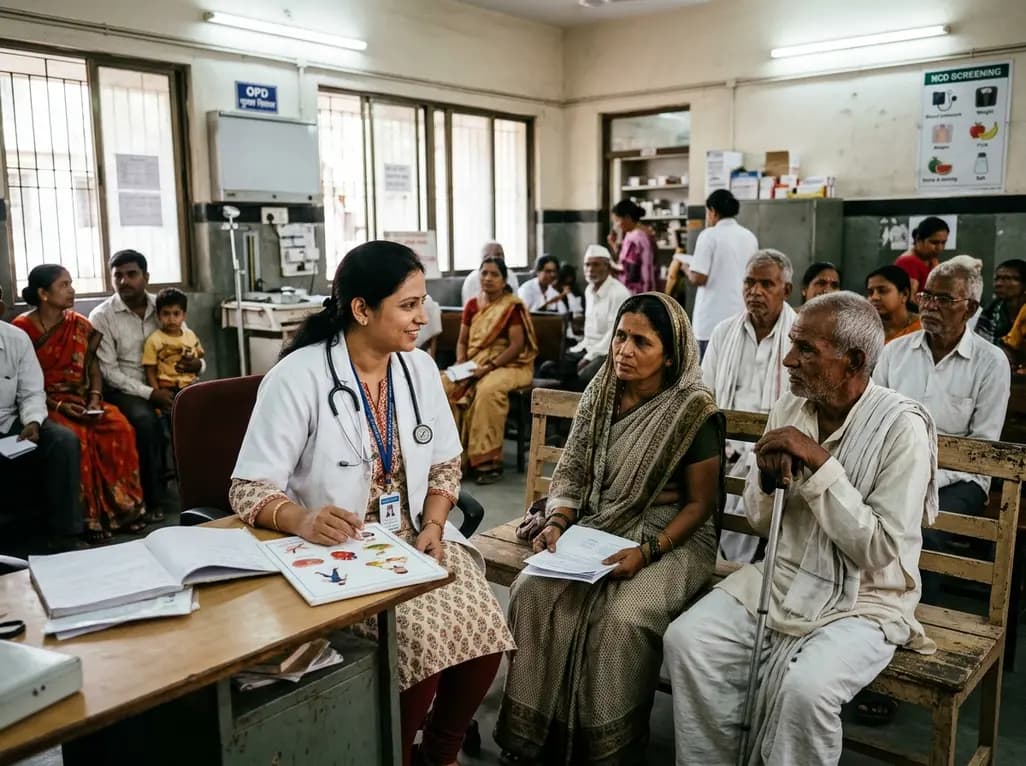
A landmark ten-year WHO report reveals how socioeconomic status, geography, and gender disparities profoundly aggravate chronic disease risks, diagnosis delays, and therapeutic outcomes globally. Discover actionable primary care strategies to bridge screening divides and optimize vulnerable patient management.
Today
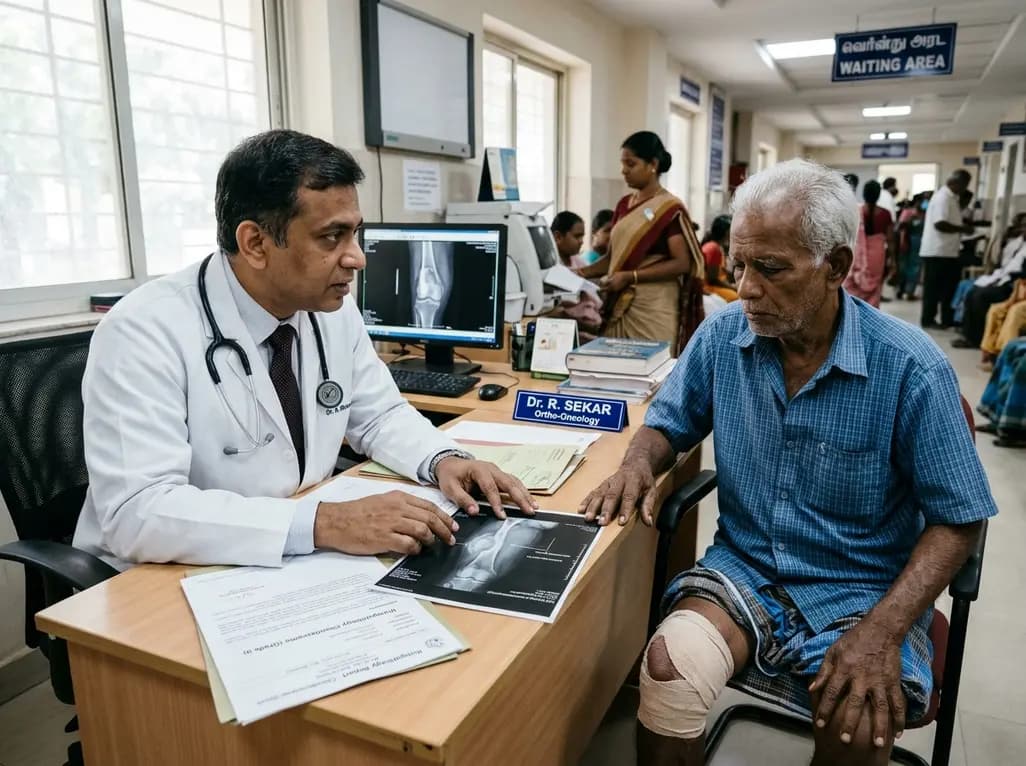
A recent single-institution analysis identifies advanced patient age and progressive systemic disease as primary negative prognostic factors for five-year survival in chondrosarcoma, underscoring the urgent necessity of precise risk stratification, clear surgical margins, and dedicated oncologic follow-up.
Today

As millions adopt GLP-1 receptor agonists, patients frequently combine unverified dietary supplements to mitigate gastrointestinal side effects. Clinicians must understand delayed gastric absorption, supplement quality risks, and evidence-based nutrition strategies to protect patient outcomes during medical weight loss.
Today
