.webp&w=384&q=75)

Loading, please wait...
Loading, please wait...
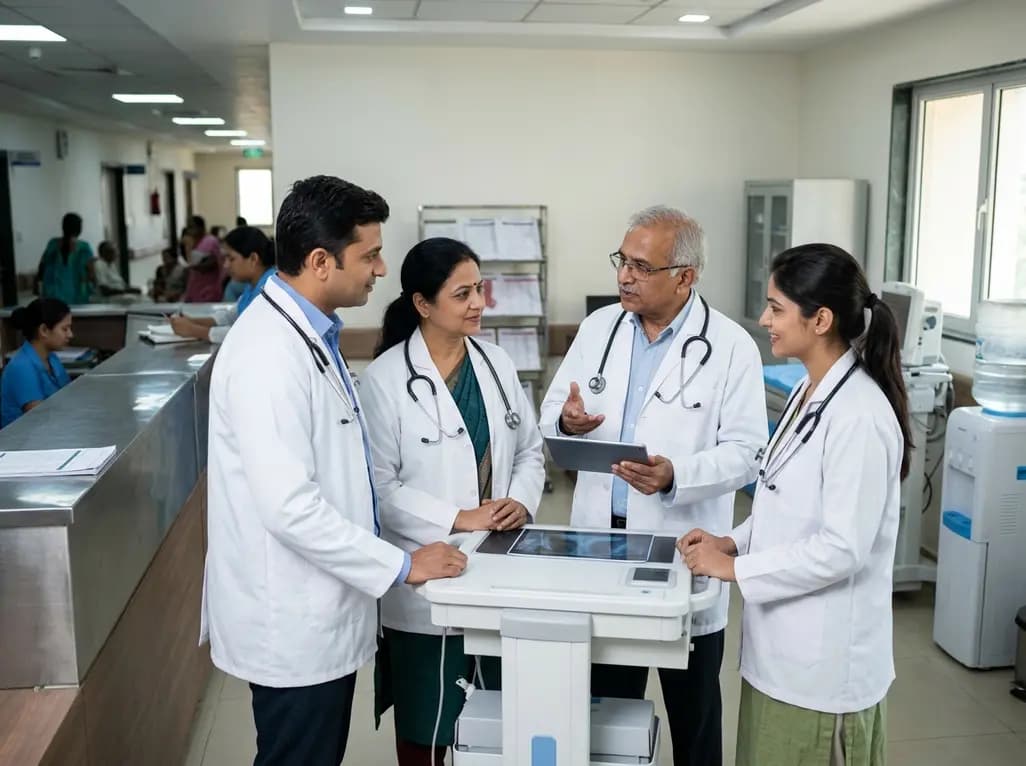
In the rapidly evolving landscape of modern healthcare, the safety of confidential and highly sensitive organizations has become a paramount concern. Hospitals and clinical facilities are no longer just places for healing; they are complex infrastructures that house expensive equipment, sensitive patient data, and controlled substances. Consequently, the demand for efficient security systems has reached a critical point. Traditional surveillance methods are often insufficient to meet these modern challenges. To address this gap, researchers have developed an intelligent artificial intelligence (AI)-powered system that utilizes AI video anomaly detection. This technology allows for the seamless identification of suspicious activities without the constant need for manual effort. By leveraging deep learning frameworks, specifically the Video Masked Autoencoder (VideoMAE) model, healthcare facilities can now transition toward a more proactive security posture. Furthermore, these systems offer a level of accuracy and vigilance that far exceeds human capabilities. As high-stakes environments continue to grow in complexity, the integration of automated monitoring becomes essential for maintaining operational integrity. This transition represents a significant leap forward in how we perceive and manage safety within the medical industry, ensuring that critical events are never missed due to oversight or fatigue.
Traditional security systems in many Indian hospitals rely heavily on manual monitoring, which presents several logistical hurdles. Imagine a surveillance room filled with dozens of monitors, yet managed by only a small team of observers. This scenario is often chaotic and overwhelming, as maintaining constant vigilance is virtually impossible for the human brain over extended periods. Human limitations, such as fatigue and distraction, inevitably lead to a risk where critical events or security breaches are overlooked. Moreover, the manpower required to monitor every corner of a large hospital campus is prohibitively expensive and often inefficient. However, the introduction of AI-driven systems changes this dynamic entirely. Instead of simply recording footage for retrospective review, these smart systems interpret visual data in real-time. They act as a digital brain, identifying behavioral precursors to violence or unauthorized access. Because the system does not suffer from exhaustion, it provides 24/7 coverage with consistent performance. Additionally, this technology allows security personnel to focus on responding to confirmed threats rather than squinting at screens for hours on end. By automating the detection process, healthcare organizations can optimize their workforce while simultaneously enhancing the safety of patients, staff, and visitors.
At the core of this technological revolution is a sophisticated deep learning framework known as the Video Masked Autoencoder (VideoMAE). This model is specifically designed for complex video understanding tasks, making it ideal for the high-density data generated by CCTV surveillance. Unlike simpler algorithms, VideoMAE utilizes a transformer-based architecture called Video Vision Transformers. This approach allows the system to process temporal and spatial information simultaneously, enabling the effortless detection of suspicious activity across different time frames. Furthermore, the model is trained to recognize patterns of normalcy within a specific environment. When an activity deviates from these established patterns, the system flags it as an anomaly. For example, if an individual enters a restricted area at an unusual hour or displays erratic physical behavior, the AI immediately identifies the occurrence. Researchers have also focused on making this technology accessible through simple and attractive web interfaces. Users can upload footage, and the model quickly displays the type of anomaly alongside the exact time frame of the incident. Consequently, this technique is remarkably effective for finding suspicious activities more quickly and efficiently than ever before. This level of technical sophistication ensures that hospitals can maintain a high security standard with minimal technical overhead.
Hospital environments are unique because they contain multiple zones with varying levels of risk. Areas such as pharmacies, neonatal intensive care units, and server rooms require stringent access control and constant oversight. AI video anomaly detection serves as an invisible guard for these sensitive locations. In a pharmacy setting, for instance, the system can detect unauthorized personnel near controlled substances or recognize unusual movement patterns that suggest theft. Similarly, in emergency departments where tensions often run high, the AI can identify the early signs of aggressive behavior or workplace violence. This early warning system allows security teams to intervene before a situation escalates into a physical confrontation. Moreover, the technology is highly scalable, allowing it to cover sprawling campuses including parking structures and external entry points. By integrating these AI models with existing CCTV infrastructure, hospitals can protect their physical assets without needing to replace every camera. This cost-effective approach is particularly beneficial for large public health institutions in India that must balance security needs with budget constraints. Ultimately, the goal is to create a secure environment where medical professionals can focus entirely on patient care without worrying about their personal safety or the security of their equipment.
Beyond traditional security, AI-powered surveillance offers transformative benefits for direct patient safety. One of the most significant challenges in inpatient care is the prevention of falls, which often lead to serious injuries and prolonged hospital stays. Traditional bed alarms are frequently reactive, sounding only after a patient has already moved. However, systems utilizing AI video anomaly detection can recognize the subtle movements that precede a fall, such as a patient struggling to sit up or reaching for a bedrail. These behavioral anomalies trigger immediate alerts to nursing stations, enabling rapid intervention. Additionally, the system can monitor for elopement risks among patients with cognitive impairments or dementia. If a vulnerable patient wanders toward an exit unaccompanied, the AI can identify this as an anomalous event and notify the staff instantly. This passive, continuous monitoring respects patient privacy by processing data locally or using anonymization techniques while still ensuring a high level of safety. Furthermore, the technology can be used to monitor the use of personal protective equipment (PPE) or adherence to clinical protocols in sterile environments. By providing a comprehensive view of hospital activity, AI surveillance acts as an essential tool for quality assurance and clinical risk management, helping to reduce medical errors and improve overall patient outcomes.
As we look toward the future of healthcare administration, the role of big data and AI will only continue to expand. Implementing a system based on VideoMAE is not just a temporary fix but a long-term investment in hospital infrastructure. These models are capable of learning and adapting to new environments, meaning their accuracy improves over time as they process more data. Furthermore, the integration of these systems with other hospital management software can lead to even greater operational efficiencies. For instance, analyzing movement patterns in waiting areas can help administrators identify bottlenecks and optimize patient flow. Although the initial setup requires careful planning regarding data privacy and HIPAA compliance, the long-term benefits in terms of reduced liability and improved safety are undeniable. Consequently, many forward-thinking healthcare leaders are already exploring ways to incorporate AI-driven visual analytics into their digital transformation strategies. By staying ahead of the curve, Indian hospitals can set new benchmarks for safety and efficiency on a global scale. The magic of AI lies in its ability to turn vast amounts of raw video footage into actionable intelligence, ensuring that the healthcare environment remains a sanctuary for both patients and the dedicated professionals who care for them.
Standard motion detection is a reactive tool that triggers alerts for any movement within a frame, often leading to numerous false alarms from shadows or inanimate objects. In contrast, AI video anomaly detection uses deep learning to understand context and behavior. It distinguishes between normal activities, like a nurse walking down a hall, and anomalous events, such as a patient falling or an unauthorized person entering a restricted zone. This reduces alert fatigue and ensures that security teams respond only to genuine threats or safety incidents.
Yes, one of the primary advantages of AI-driven systems like VideoMAE is their compatibility with existing infrastructure. Instead of requiring specialized hardware for every location, the AI software can process video feeds from standard IP cameras. This allows older hospitals to upgrade their security capabilities without a total system overhaul. By connecting existing cameras to a central AI processing unit or a cloud-based framework, facilities can implement advanced surveillance features cost-effectively, making it a viable solution for many Indian medical institutions seeking digital modernization.
Modern AI surveillance systems are designed with privacy-by-design principles. Many models perform "edge computing," where the video is analyzed locally, and only the metadata or specific alerts are transmitted, rather than the raw footage. Additionally, advanced algorithms can automatically blur faces or identifying features in real-time while still detecting anomalous behaviors or movements. These measures help hospitals remain compliant with data protection regulations, such as HIPAA, while still benefiting from the enhanced safety and security that automated video analytics provide to the clinical environment.
Disclaimer: This content is for informational and educational purposes only and does not constitute medical, legal, or professional security advice. The application of AI in healthcare settings must comply with local regulations and patient privacy laws. Refer to the latest local and national guidelines for clinical practice and data management.
References
Manasa P et al. Big Data-Driven Video Anomaly Detection Using VideoMAE for Visual Analytics in CCTV Surveillance. Big Data. 2026 Jun 30. doi: 10.1177/2167647X261463938. PMID: 42378009.
Milestone Systems. Video analytics: Improving hospital safety, efficiency & patient care. 2025 Dec. Available from: https://www.milestonesys.com
VOLT AI. Healthcare AI Video Surveillance: Ensuring Patient and Staff Safety. 2025 Jul. Available from: https://www.volt.ai

Read summarized clinical updates, watch expert medical content, and earn CME certifications right from your smartphone.
Open your smartphone camera to scan and install.





Traditional CCTV monitoring is limited by human vigilance. New AI-powered systems using VideoMAE and vision transformers offer a proactive way to detect anomalies in real-time, improving hospital security, protecting sensitive assets like pharmacies, and enhancing patient safety through automated behavior analysis.
3 months ago

Discover the crucial role of glymphatic dysfunction in stroke, where perivascular clearance failure and neuroinflammation exacerbate cerebral edema and post-stroke brain injury.
Today

A prenatal case highlights severe glutaric acidemia type II presenting as bilateral hyperechoic cystic kidneys at 18 weeks. Whole-exome sequencing revealed a novel homozygous ETFDH frameshift variant, demonstrating the power of rapid genetic testing in fetal renal anomalies.
Today

Review how tailored exercise programs benefit frail older patients with heart failure. Explore pathophysiological mechanisms, individualized training prescriptions, and strategies to overcome adherence barriers in clinical practice.
Yesterday

This comparative study evaluates posterior labral tears with and without glenohumeral instability, highlighting distinct demographic patterns, MRI underestimation in stable shoulders, and successful arthroscopic repair outcomes.
Yesterday

A clinical study demonstrates that early intervention with tocilizumab, either as monotherapy or bridged with corticosteroids, achieves significant proptosis reduction and resolves active inflammation in treatment-naive thyroid eye disease.
Yesterday
